25 Best Video Games Of The 90s

16. Castlevania: Symphony Of The Night
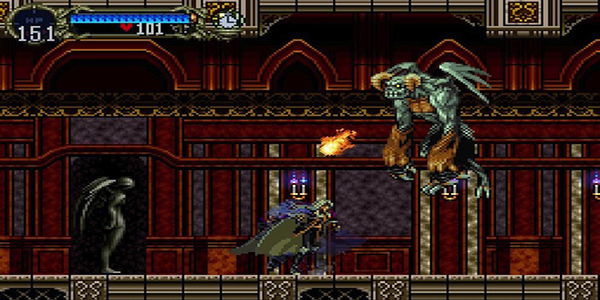
You can't talk about Metroid without Castlevania, Konami's gothically-tinged hack n' slash masterpiece from 1997. Like Super Metroid, it tends to be the one game in its respective series fans point to as perfecting what its past entries aimed for, yet were technologically limited by - and as the production budget for Symphony lined up with creator Koji Igarashi's genius whims, the end result was the best 2D slasher of the decade. Continuing the past games' (and there were many, if you count the re-releases) barmy plot, you instead would play as the supernaturally gifted Alucard for the first time in a starring role, a string of abilities unlocking across the course of the game. However, although gameplay was a total highlight, it was the architecture, presentation and overall world-design that really makes Symphony so endlessly playable. The score is positively haunting in spots, yet gracefully epic in others, playing into the Shakespearean exchanges each character would have with one another across the campaign. It's a real shame Konami are moving away from the games industry, but Igarashi is set to wow us all again with his first 2D-style Castlevania in years, Bloodstained: Ritual of the Night. Here's hoping it'll get somewhere close to the majesty of this iconic 1997 release.

15. Tony Hawk's Pro Skater

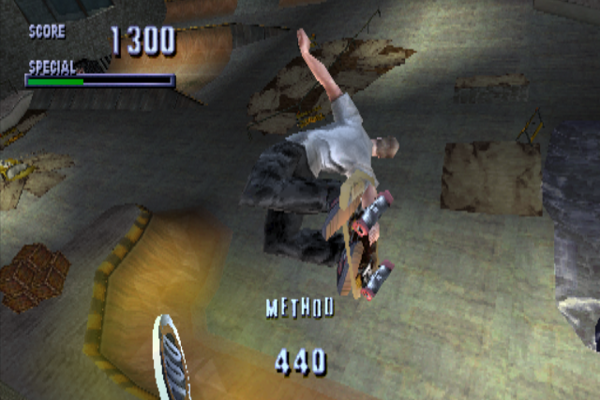
Few games come along and genuinely inspire a full-in cultural movement, but as thousands of us ventured outside to try our hands at real skateboarding (only to fail miserably), it was a testament to how enjoyable this portrayed the sport, that for a good few years at the close of the 90s and into the 2000s, we were completely enraptured with replicating it. And for good reason, Neversoft's extremely arcade-feeling attempt at the genre was a resounding success. Tricks and riders could be customised, the tracks themselves felt like they had endless amounts of things to see and do, and the actual feel of gameplay encouraged and dared you to go faster, rack up higher combos and challenge yourself to see what you were capable of; just like the real thing. THPS 2 and 3 would go on to be even greater games that this first take, but for everything Tony Hawk's accomplished and proved could be done with such an underrated extreme sport as skateboarding, that was mighty special indeed.

14. Super Mario Kart

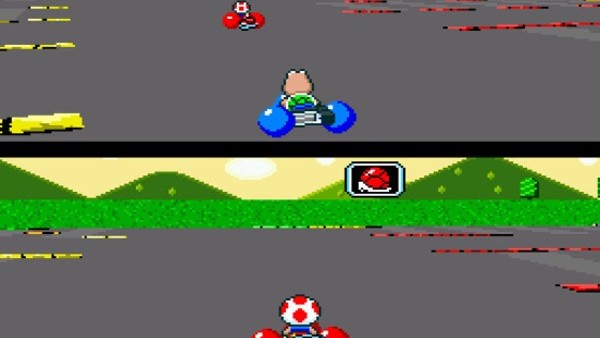
Crash Team Racing or Sonic and his All-Stars may be easier to play in the modern climate thanks to more rounded graphics and fully 3D game engines, but we wouldn't even have them if SMK didn't set everything in motion. That's besides the fact that although gameplay might look ridiculously primitive in any screenshots, playing the original Mario Kart and getting the hang of just how much you can swing the track around your rider is a sensation totally unique to this entry in the series. A technical marvel at its time, the courses themselves are the only thing that's rendered in 3D, as due to the technical limitations of the SNES, Nintendo really had to think outside the box to get their vision of a split-screen racer to fruition. That meant keeping the racers and tokens on the tracks in 2D, whilst essentially letting you rotate the polygonal track around your character - meaning when you're steering left, you're actually 'pushing' the course right; hence why your kart never moves from the centre of the screen. Pretty incredible, no?

13. Gran Turismo

Some franchises just come along at a point in time and deliver on every single one of their expectations, leaving a legacy that even their future selves can never live up to. Gran Turismo came close to emulating its original success in its third instalment, but for the first one with its landmark "Look what the PlayStation can do!"-graphics and weighty handling physics models, it'll never be beaten. Coming complete with racing wheel support, it became the first time on PS1 critics and consumers started to buy add-ons that would create virtual reality spaces in their homes, and when the game itself sported all sorts of customisation options for hardcore petrol-heads, it meant they could deep-dive on engine tweaks and exhaust types to their heart's content. For the rest of us who just wanted to grab a Dodge Viper and tear off down the highway, that was in there too after a bit of work to unlock it, making GT an iconic addition to the 'PlayStation family', and one that's barely aged outside its prototypical graphics. At the time though... phwoaaarr.

12. Half-Life

Half-Life 2 would be the one to truly define the series thanks to an exquisite physics model and interactive story like no other, but all that execution on a given formula wouldn't of come about if Valve's first iteration hadn't existed. Putting you in the shoes of one Gordon Freeman and arming you with a now-iconic crowbar, it's not until you go back and journey through the Black Mesa Research Facility (and beyond) that you'll truly breathe in just how influential this unassuming masterpiece really was. 'Cutscenes' that let you control the camera as actions play out? That was Half-Life. Hybridising gameplay and puzzle solving, the former of which being entirely physics-based, its large set-piece battles can still be seen as influencers to this day. These are just two indicators of Valve's contribution to the industry, and considering we almost didn't get it at all when development assets went south and the whole thing had to be rebuilt, it's yet another case of a video game success story everyone should pay tribute to when they get the chance.

11. Soul Edge/Blade

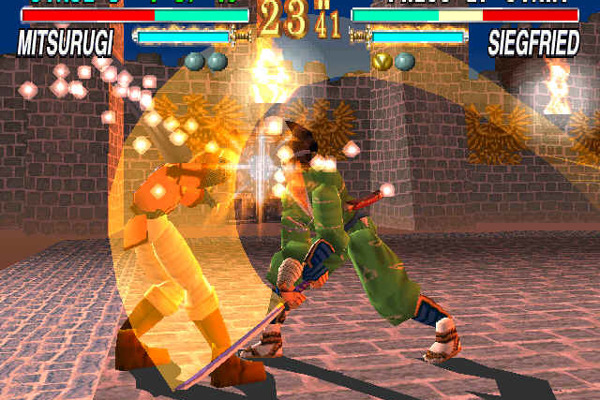
Alongside Capcom, Namco really are the masters of the fighting genre. As such, they elected to break away from the norm of mapping two punches and two kick attacks to the face buttons, instead building another gameplay style from the ground up - one that favoured weapons, dodging and placement on the field more than simply learning combos and hoping for the best. Now you had to worry about stepping out the ring as such a thing would be an instant loss, you had weapon lengths and angles to consider when fighting, and a reduced roster from that of Tekken made character balancing even more important. This would go on to become the renowned Soul Calibur series, but was also the beginning (alongside Virtua Fighter) of fighters that separated the button-bashers from those wanting to really learn and master their characters.

10. Mario 64

From Spyro to Banjo, Grow Home to Crash Bandicoot, Nintendo's morphing of planes from 2D to 3D came with a laundry-list of headaches conceptually (imagine trying to think on a completely different plane), but also meant their dogged dedication to the company's 'Mark of Quality' produced a landmark experience the industry would continually learn from. Sure, it might have started out featuring Yoshi as a partnership with Argonaut Games, but following some contractual hoo-har'ing, the version of M64 that hit shelves was always going to be a huge success. Pretty much existing as the blueprint for both the open-world concept and how to make characters react and move believably in three-dimensional space (until Link and his Ocarina came along, anyway), if you happen to revisit this now, the sensation of just moving Mario feels like you're advancing game design itself with every footstep. At the time the N64's camera-button'd controller was pretty cumbersome by comparison to the PS1's newly-minted DualShock, but for the sheer fact of seeing a once 2D-only genre make the leap to three dimensions and retain every ounce of its initial appeal, quadrupling the charm and fun factor along the way? That all factored into Mario's first 3D adventure being one of his finest.

9. Street Fighter II

There's a good reason people rarely talk about the original Street Fighter, as aside from laying the groundwork for the fighting genre, its animation and feel of combat would later be bested by this sequel; the absolutely phenomenal, legendary and endlessly replayable second instalment. As testament to just how ready we were to embrace a game that let us slap the tar out of our fellow man (something Mortal Kombat would follow up on by letting you tear a spine out or two along the way), that SF II's sales would eventually surpass the billion mark, resulting in five variations on the original across the following six years. Needless to say, anyone who visited an arcade across the 90s has played a game of this against their friend, before then purchasing the home console version to keep going. It's SF II that got us all familiar with Hadoukens, quarter-circle fireball attacks and cheap button-mashing electric-surge defence moves, and as a pillar of gaming's history it'll always be one of the most resilient.

8. Sonic The Hedgehog

The Blue Blur himself, Sonic's first foray into the world of gaming remains his best. Sonic 2 would sadly double down on the one level from the first that everyone hated, putting underwater sections everywhere seemingly for the sake of a challenge, whilst the third's level and boss design left a lot to be desired from anyone who just wanted to sprint faster than light, collect rings and destroy the occasional creature along the way. It's testament to the power of a game's charm that this one game helped Sonic stay on the right side of peoples' reverence for his adventures over the years, as we've had some truly shocking iterations on the character since. However, when you've got one of the best themes in gaming history, a character born to be the attitudinal response to the sanitised Mario and a game engine that pushed locomotion and speed above all else, the positive impression Sonic left on the 90s generation will never, ever be forgotten.

7. Pokémon Red & Blue

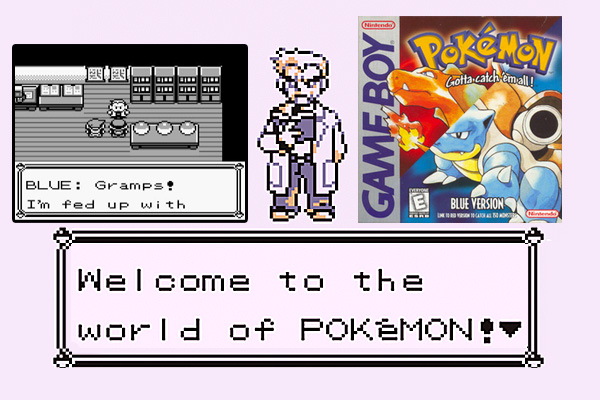
Final Fantasy VII tends to get all the credit for bringing Japanese RPG game design to the West, but that's forgetting the double-whammy of Pokémons Red and Blue; some of the finest, most enjoyable and perfectly packaged turn-based role-players of all time. For anyone with a Game Boy this was the title to own, and aided by the overwhelming success of 'Pokémon fever' that spread from TV screens to merchandise and even Hollywood for a second, the games embodied the spirit of the original show in earnest. You were free to name your character, your nemesis (damn you, Boobman) and every creature you came across. There were gym leaders to take down, badges to earn, rare Pokémon to catch, items to collect and a whole world that oozed character in every pixel. Its score was positively delightful, and even if you look at the newest entries in the series, they're still completely faithful to everything these originals set in motion way back in 1996. Now that's good game design.

In this post: 
Tekken 3
 
First Posted On: 
Gaming Editor
Gaming Editor

WhatCulture's Head of Gaming.