7 Huge Video Game Story Details Revealed In Spin-Offs
You need to hear the story of Deimos.
In a gaming industry obsessed with online multiplayer, squad mechanics and loot systems, we haven't had any new lore-heavy titles in quite some time.
The last major new IP that felt as though it could support supplemental stories was Death Stranding, and before that perhaps Horizon Zero Dawn, with the likes of Assassin's Creed, God of War and The Witcher carrying forward over a decade's worth of existing narrative.
Point being, any longtime fan of any sizeable chunk of lore loves a good spinoff; something to bulk out a mythos with a side character now taking the spotlight. Maybe an accepted part of the timeline can be witnessed first-hand, a duel talked about from before a main instalment is now made playable.
Alongside comes the possibility to refine, retcon or bolster existing canons. Whilst it's hard to maintain a sense of authority across multiple high-stakes video games when development teams are often hundreds of people, there are scores of important talking points tucked away in these titles.
When PUBG and even Fortnite are slowly bulking themselves out with recognisable characters and intercrossed story elements, you owe it to yourself to experience the essentials.
7. Why Sub-Zero & Scorpion Hate Each Other - Mortal Kombat Mythologies: Sub-Zero

Mortal Kombat's iconic showdown between two palette-swapped ninjas has spanned over 25 years of mythology, to the point where it's just accepted that Sub-Zero killed Scorpion's family, sorcerer Quan Chi was involved somehow, Scorpion then killed the original Sub-Zero, and that was that.
Well, in the shockingly bad Mortal Kombat Mythologies - a godawful action platformer where you play as Sub-Zero in between some of the best/worst live action cutscenes ever - we actually spend time fleshing out this specific feud.
Now, the whole thing was a retcon, put in place to prep audiences for Mortal Kombat 4 that was arriving one year later on home console, but regardless, at least there was some sense of clarity to what went before.
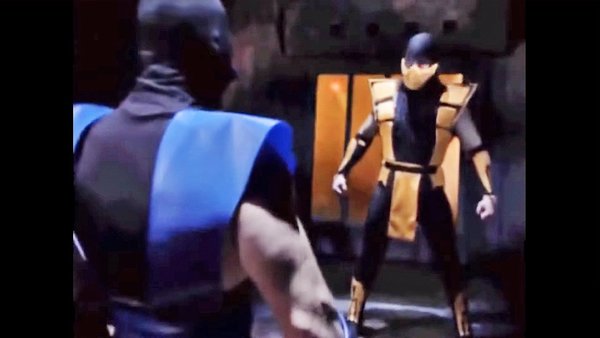
Turned out, Sub-Zero was hired in secret by Quan Chi to retrieve a map that would lead to powerful sorcerer Shinnok's amulet. Quan Chi ALSO hired Scorpion for the exact same mission, then wiped out his clan while he was away, trading the bones for payment to Sub-Zero's master. As Sub-Zero killed Scorpion on the mission and the pair met back up in Netherrealm i.e. Hell, Scorpion wrongly thinks that Sub-Zero also killed his clan, that Quan Chi is his master, and proceeds to fight Sub-Zero for decades to come.
Mortal Kombat 4's horrifically voiced and acted arcade endings follow on from this, but completely lack the key information setting up Scorpion and Sub-Zero's history. It wouldn't be until 2015's Mortal Kombat X and 2019's Mortal Kombat 11, that the wider MK fandom would be brought up to speed.
6. Saren Wasn't Crazy - Mass Effect Andromeda

The original Mass Effect remains a masterpiece in branching narrative pathways, letting you approach various key junctures in the story however you like. Certain alien races can be set free, characters live or die, and depending on how your Commander Shepard is specced, the final showdown against Saren can be bypassed altogether, providing you're "Paragon"/"good" enough to talk to the "real" him.
For the latter, this required specific dialogue choices and hours of playing a certain way, but the talking point amongst fans - and one of the reasons Saren is such a memorable villain - is the discussion around how much the Reaper Harbinger was controlling him all along.
In Mass Effect Andromeda then, talk to Avitus Rix after your main story encounter and he'll reveal that he actually worked alongside Saren years before the Reapers were on the scene. Rix confirms many fans' perspective that the "real" Saren was worth saving, saying he "was ruthless" but "not crazy", and that it was something more regarding his actions as a Spectre enforcing galactic rule that made him "snap".
5. Jak & Keira FINALLY Kiss - Jak X: Combat Racing
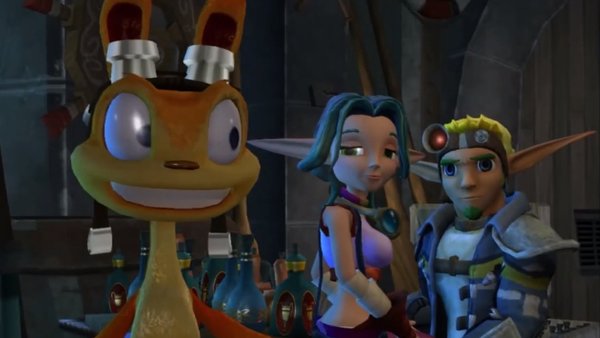
Something of a love story that was far from the focus across all the Jak & Daxter games, look into the various scenes between Jak and Keira and you'll see Naughty Dog were building to a payoff between the pair.
Twice over in Jak & Daxter and Jak II, the pair to go in for a kiss and Daxter interrupts them - either getting right between the two and telling Jak off, or being too much of a distraction. This later leads to Jak making out with Ashelin, only for Jak 3 to abandon the arc altogether as Tara Strong didn't return to voice Keira, and the character instead appeared largely mute.
However, in Naughty Dog's final Jak game, Jak X: Combat Racing, Jak & Keira get together at the very end, as a big fan-gratifying finale. Even Daxter refers to the moment as a "Photo finish!", before we hit credits.
If you didn't play this Crash Team Racing-style additional instalment though, all that preamble was for nothing.
4. Why Big Boss Lost Faith In Governments - Metal Gear Solid: Peace Walker
Maybe some day we'll get a Snyder Cut-style re-release of Metal Gear Solid V, as clearly Hideo Kojima was so close to the finish line, many in-progress final cutscenes were instead included on a bonus collector's edition.
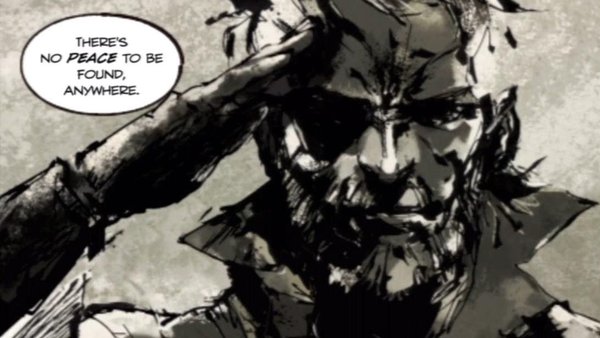
Still, the marketing and core thrust of the narrative centred around the notion of Big Boss completely separating from any sense of regional, governmental authority. We're told in later games in the timeline that Big Boss was something of a nuclear weapon-equipped tyrant, and with trailers and marketing saying MGS V would be the "missing link" between the hero of MGS 3 and the villain of what came after, Keifer Sutherland's mostly mute "Venom Snake" almost stayed away from this subject matter entirely.
For the answers, you had to venture onto former PS Vita-exclusive offering, Peace Walker, the game that dove head-first into Naked Snake's psyche after finding out The Boss' mind had been recreated digitally, to algorithmically decide when nuclear weapons should be fired.
Big Boss has a full-on meltdown dealing with killing his mentor all over again, and with the overriding sentiment of her teachings being that an enemy is only whoever your government points the finger at, it cements Boss as wanting to create a nation of his own, for soldiers around the world.
The Boss being the ultimate manifestation of patriotism and sacrifice for your country is also key to everything that happens in Metal Gear Solid 4, but without this wider context, Kojima's message is even harder to parse out.
3. Geralt Is A Knight - The Witcher Tales: Thronebreaker
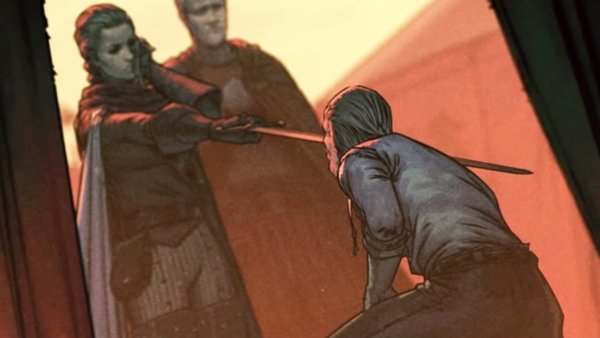
Canon between The Witcher books and games is essentially that there is none. The games can be said to take place after the books, as Geralt is wounded so badly he loses all memory, but CDPR have then recreated specific questlines or character exchanges that Geralt has already been through.
Regardless, CD Projekt RED's Gwent-fuelled spin-off Thronebreaker, besides being a fantastic card-based take on an adventure game - features Geralt in a brief but important cameo.
Now, this game takes place before all three games - around the events of the Time of Contempt and Baptism of Fire novels if we're being fancy - but features Geralt helping out protagonist Queen Meve, and receiving a knighthood because of it. Also worth noting is the origin of his "Of Rivia" title - given during the ceremony for his actions helping the queen.
Whilst a neat, fleeting appearance in Thronebreaker, the fact Geralt attained knighthood status before his amnesia could've helped reintegrate him into the world across those later games, when Witchers themselves are largely cast out of most conversations.
"Sir Geralt, of Rivia" certainly sounds far more regal.
2. Why The Villains Matter In Halo Infinite - Halo Wars 2
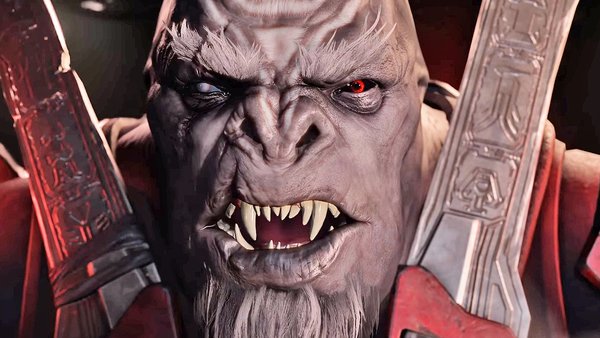
At this stage we all know the tale of Halo Infinite - the half-finished trailers, the promising gameplay demos and the genuinely heartwarming old-school look to Master Chief - but as for villain Escharum, he was the laughing stock of an early trailer and little else.
Whilst it's impossible to say how much of Infinite has been retooled or overhauled since original trilogy writer Joseph Staten came on board, any self-identifying Halo fan should know about Atriox and The Banished - the group of brute outcasts who Escharum mentions during his monologue.
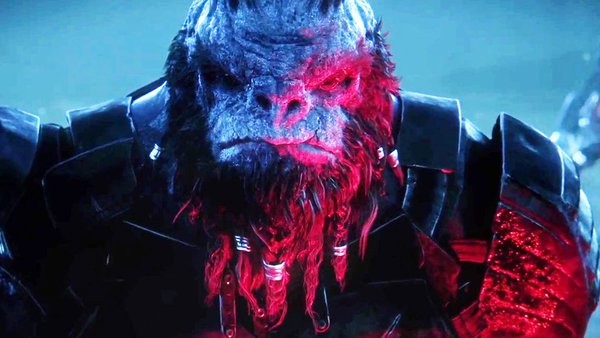
First appearing in Halo Wars 2 in a genuinely terrifying surprise attach, Atriox is one of the best Halo villains in the franchise. Ostensibly the Thanos of the piece in regards to being a calculating, intimidating warlord with a master plan, Atriox was cast out from even the Covenant themselves, only to survive his own execution and form The Banished, who newcomer Escharum now works with.
Escharum's monologue refers to Atriox's will, but with the character not being confirmed dead at the end of Halo Wars 2, mainstream Halo fans could be about to meet someone they'll never forget.
1. Kratos Has A Brother (And It Changes Everything) - God Of War: Ghost Of Sparta
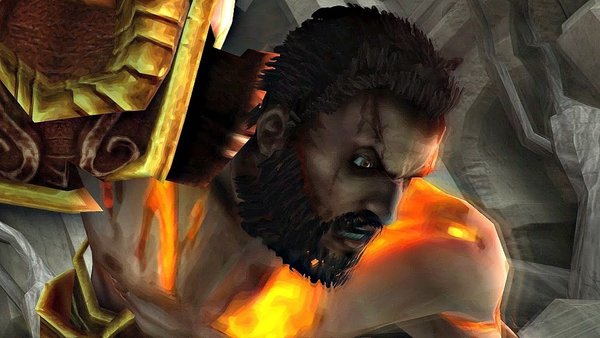
For the vast majority of his character writing, Kratos is a lone wolf. A violent, out-for-himself tornado of decapitations, fuelled by the death of his family by his own tricked hand, and on a mission to rid the world of all Gods because of it.
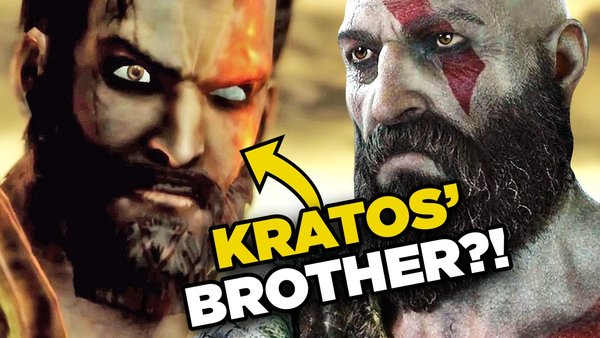
In one of the two PSP God of War games though, Ghost of Sparta, developers Ready at Dawn were allowed to expand pretty meaningfully on Kratos, by introducing his brother, Deimos.
Existing as the reason behind Kratos' iconic red marking - a tattoo self-inflicted as a reminder that his brother was taken when the pair were children - Deimos rounds out Kratos' motivations other than sheer rage.
We find out that Deimos was the "other one" Zeus and Gaia later refer to as who the entire franchise could've been about in God of War 3, and after Deimos is killed in Ghost of Sparta's final duel, a very sombre, touching moment shows Kratos once again contemplating suicide, and questioning "what he's become".
Lastly, it's because Deimos was Kratos' last tie to the mortal world that Athena could finally make him a God, as he appears in God of War 2. All of this expands and refines Kratos' motivations in ways the core trilogy don't go anywhere near, and I'd argue it's essential to the God of War canon.