7 Video Game Plot Twists That Divided EVERYONE
Surprising plot moments that broke entire fandoms.

Alright, let's talk plot twists.
Not the kind of plot twists that come out of nowhere, reveal your main character's actually a wizard living inside a hamster's brain and your party are an assortment of nuts. No, let's drill down on those specific plot twists or story beats that genuinely cleaved a fandom in two.
The sorts of "Omg WHAT?!" realisations that you knew in the moment were going to be divisive from here on out.
Going forward, that franchise or instalment was never the same again, and should it ever be brought up in conversation, you can GUARANTEE this inescapable divisive element will swiftly follow.
So, although the likes of Bioshock's "Would you kindly?" or Dead Space's Nicole twist only enhance the overall experience, the following made sure you were in the "for" or "against" column forevermore.
Whether that's still a positive ringing endorsement of how much you care, is up to you.
--
Notable recent spoilers for The Last of Us 2 and Final Fantasy VII Remake within.
7. The Last Of Us - Joel Is The Villain
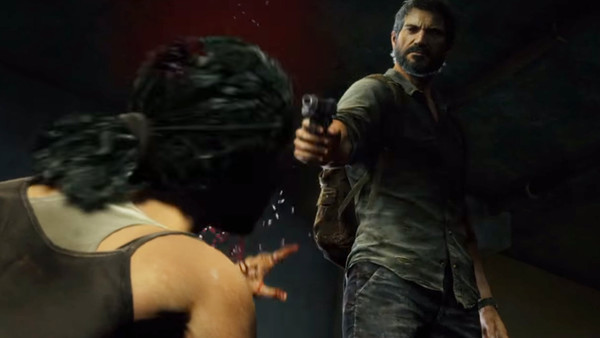
Opening on something that's hard to pin down to a "good" or "bad" paradigm, as the entire point of The Last of Us' final moments are to make you question what you'd do in the same situation.
Regardless, the idea of Joel choosing to save Ellie - thereby dooming the rest of the world who were hoping for a potential cure - split Last of Fans down the middle.
Either you think Joel is the "villain", and how could he choose an individual over the needs of the many, or you have to be honest with yourself: You couldn't choose to sacrifice your child or loved one in the moment either.
Fascinatingly, for as thoroughly enjoyable all this grey subject matter was - with a heavy leaning towards Joel's actions being bad, thanks to how brutally they're depicted - Last of Us 2 completely doubled down. Naughty Dog make it clear that saving Ellie was the worst thing Joel could have done, and... well, I'll get to that in a moment...
6. Metal Gear Solid 2 - Raiden

Talk about monumental twists, and talk about vocal fandoms that were cheering from the rooftops as to how much of a genius Hideo Kojima was, and how unbelievably powerful and envelope-pushing Metal Gear Solid was, for a late 90s video game.
All that is to say, that once Kojima pulled the rug out from under us and revealed that the game's entire two year marketing campaign was a lie, to this day there are those who never forgave him.
The lie itself was that the foppish rookie Raiden was the actual main character, and while the "against" argument mostly ends there, those in support of Raiden recognise Kojima's intent:
To purposefully force a weaker perspective around Solid Snake; to view Snake's actions as even more heroic and genuinely legendary, because away from direct control, you could fully appreciate just how capable he was.
It might be bygones now as Metal Gear hasn't had an instalment since 2015 and Kojima has moved on, but would the character of Solid Snake be quite so memorable if not for this bold attempt at narrative framing?
5. The Templars ARE The Assassins - Assassin's Creed III
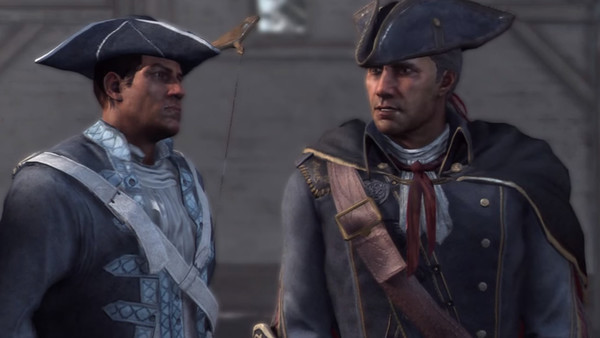
Assassin's Creed lore started in a fascinating place, reached what most fans think of as the peak with AC 2's "Minerva twist", then forked in the road with Assassin's Creed III.
It wasn't enough that Ubisoft pulled a Metal Gear and hid Haytham Kenway in marketing, or that his opening section took WAY too long before we could play as Connor. No, the biggest icing on this double helix of a twist-cake came from something that upended the entire Assassin's Creed canon:
That Haytham himself was a Templar, and that the Templars at this point in the timeline, had begun to move and operate just like Assassins.
From this moment on, either you were totally up for a philosophical breakdown of how two ancient factions were now co-adopting each others' methods, or it blurred those dividing lines too much, and the franchise no longer had clear-cut villains.
Assassin's Creed is in a far more, all-out anime place right now, following Odyssey and Valhalla's final twists being some of the barmiest business in gaming history, but with each title being around 50 hours long, it's pretty clear a mainstream audience are yet to catch up.
If they had, we'd ALL be talking about what happens at the end of Valhalla.
4. The Ghosts Are Manifestations Of The Original Game - Final Fantasy VII Remake
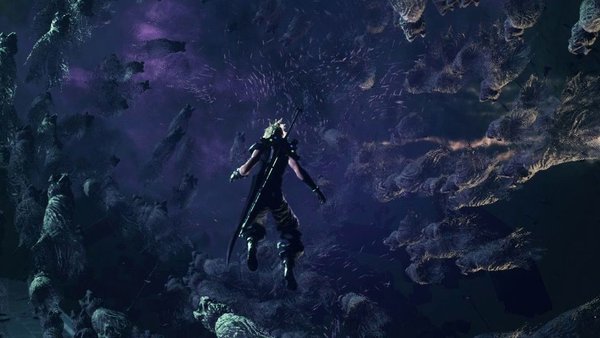
Almost everything about Final Fantasy VII's Remake is divisive by nature.
At its core it fundamentally is not a remake of the original game in terms of structure, with Square Enix opting to sell what amounts to a tutorial as a full game, stretched out.
Marketing deception aside though, it's the aftermath of the story that fans are still grappling with.
See, FF7R's titular "remake" refers to an in-game, in-canon "remaking" of the events of the original game, by iconic villain Sephiroth.
This meta, fourth wall-shattering twist comes at the close of the new game, breaking away from the source material entirely and seeing Cloud and the gang fight manifestations of destiny itself, eventually emerging in a new space where formerly dead characters are now alive, but Sephiroth still needs to be taken down.
Supporters of this twist say it's a bold, fresh way to even "do" a remake. It unites new players and veterans on the same playing field as none of us know what happens next, and means we're collectively trading theories powered by speculation and source material in equal measure.
Conversely, you can easily say creative lead Tetsuya Nomura - known for going banana sandwich on the regular with Kingdom Hearts - has already played every meaningful story card possible.
With Zack introduced tens of hours ahead of time and Sephiroth already shown to be defeated, the specific beats of FF7's legendary story can no longer be hit.
3. Joker's Return - Batman: Arkham Knight
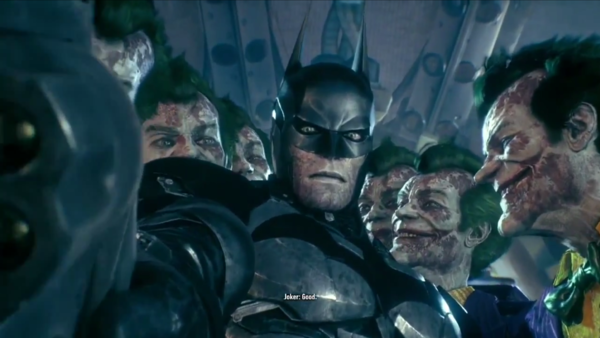
Arkham Knight has aged so weirdly, in the grand scheme of things. Where Arkham Asylum and City are treasured and recommended, Arkham Knight - despite its gameplay being outstanding and the best of the bunch - sits firmly in the "meh" category.
A lot of this comes from its many pretty naff endings and the inclusion of tank battles, but there's one aspect that was dividing all who played across the story itself:
The return of Joker.
Coming after Rocksteady swore blind that Joker was dead and there's no way he was coming back, we got the exact opposite.
Mark Hamill reprised the role one more time, and Joker had more screentime here than in both previous titles combined.
Appearing as an entity inside Bruce's mind, it meant The Clown Prince popped up inside ventilation shafts, could be spotted on the sides of buildings as you were flying around, or would just get in the way of otherwise serious story beats, by mugging to the camera.
Either it's one last victory lap for one of the best character performances of all time; an immortally appealing character you just can't do a Batman game without - or it's a damning indictment on the writers and the titular Arkham Knight, because how expansive and forward-thinking is this mythos, if we're all forever dogged by the past?
2. The Last Of Us Part II - Joel's Death

The Last of Us 2's launch window controversies were a big ol' thing, but now the dust has settled, the leaks were mostly proven wrong and more people have actually played through the entire story... we've still got two split camps of thumbs up or down.
Yes, Joel's abrupt death at the very beginning of the game will forever be the linchpin of why Naughty Dog should be celebrated as one of the riskiest creatives in the business, or berated for removing one of the most fascinatingly complex characters in gaming history.
Reframing the events of the original to show that the head surgeon Joel killed was a beloved father and community member, we now played everything out from their daughter's perspective.
The result is either a 40 hour exploration into how perspective and time spent in another's shoes can make you reconsider any conflict, or it's the same "Your enemies have families too, y'know!" parodic takeaway that even Austin Powers was doing in 1997.
Does the idea of fleshing out the lives of the Goombas being stomped on by Mario elevate that fiction, or break it entirely?
1. "It's Not A Lake, It's An Ocean" - Alan Wake

The always-surprising and so-stupidly-suave Remedy are always putting out stylish action shooters with awesome concepts and memorable characters.
However, where Max Payne 1 and 2 took off massively thanks to a 2000s audience being obsessed with Matrix-style bullet time, their followup Alan Wake became an Xbox exclusive, and its tale was far more cerebral.
With the whole game extrapolating the idea of a horror writer struggling to finish their latest work, this manifested in reality as various shadowy demons and possessed individuals coming after Alan and his wife.
Cut to the end of the game and as Alan attempts to defeat his own inadequacies as a writer by metaphysically using a disconnected light switch (just go with it), his final line while being stuck underwater is that "It's not a lake, it's an ocean".
For 10 whole years, fans marinated on this twist. This idea of Alan sacrificing himself to a "Dark Place" with no Garth Merenghi in sight, and how on a creative level, sometimes the greatest writers - especially in horror - are those who have lost a part of themselves to the pursuit of the macabre.
I say 10 years because, as Control revealed itself to be a shared universe, 2020's DLC brought Alan Wake back into the fold and finally offered some clarification on what Remedy were going for.
Whether you're then up for paying for these answers, or if they're satisfying, is a whole other story.