7 Video Game Villains You Didn't Realise Actually Won
The Joker always gets the last laugh.

For the most part, video games haven't been all that big on ambiguous endings. Usually, the main character beats the bad guy and saves the day, and you can leave content in knowing everything is going to be alright. However, a closer look at these apparent cut-and-dry finales often makes them far more interesting than they seem, as there's usually some narrative implications which muddy the waters.
In fact, in some of the most popular single-player games, you might not realise the villain actually won. Yeah, the hero might have killed them or thwarted an evil plan, but there's often larger machinations at work which imply that thematically the protagonist lost, or their actions didn't effect all that much in the grand scheme of things.
It might not be immediately obvious, but these apparent "happy" endings have pretty horrific implications for the wide-reaching narrative which doesn't simply end when the game does, and will completely change the way you look at some of the medium's most iconic stories.
7. Edgar Ross - Red Dead Redemption

Wait, wait, before you all run to the comments to say "well obviously the end of Red Dead Redemption is a bummer, John Marston is literally gunned down in his own home", the game's true ending finale comes after this scene, picking up with John's son, Jack, years later, seeking revenge.
The title offers some closure by allowing you to kill the man responsible for the murder, ambushed in a similarly vulnerable state as John was, achieving justice in the process. While that's all well and good though, by actually attaining this revenge, Jack has become the same kind of man his father tried so desperately to keep him away from.
The entirety of Red Dead Redemption is about John's attempt to hang up his gun belt and live a quiet life in the dying embers of the Wild West, raising a family who can live away from shootouts. Jack becoming as bad as his father, then, while cool, is essentially John's biggest nightmare brought to life, another victim of the unforgiving, cyclical nature of the Old West.
6. The Patriots - Metal Gear Solid 2

Few Metal Gear Solid games end on a totally happy note, but none award the player with a victory quite as hollow as the one at the end of the second release. Though you do ostensibly "win", killing Solidus and uncovering the Patriots' conspiracy, while allowing Raiden to escape his child soldier past, you don't really achieve anything tangible.
The world is still as bad as it was at the start, only now you're aware that you're battling against a corrupt system far grander than a single man. Likewise, Arsenal Gear gets away and Olga's child is still being held hostage, with the only proper victory being that Snake planted a tracking device on the Metal Gear, and might be able to stop it in the future.
Even worse, this was supposed to be the finale of the story, painting a rather downbeat picture of Snake's constant battle against an evil he could never truly conquer. If that wasn't bad enough, MGS 4 even retroactively stripped away some of 2's happier resolutions, showing that Raiden wouldn't be able to escape war at all, and would was literally transformed into an artificial killing machine after the credits.
5. Ruvik - The Evil Within
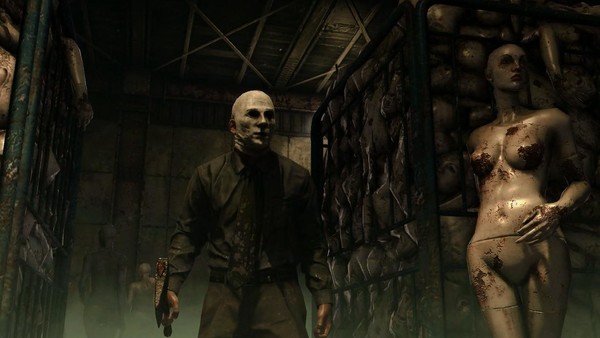
You need a spreadsheet and a couple walkthroughs to figure out the entirety of The Evil Within's plot, and that goes double for its ending. In part, that's because the majority of the game actually takes place in the mind of Ruvik, a serial killer, with the main actors all plugged into a machine that transfers them into his consciousness.
Eventually realising what's happening, the player hunts down the super-powered criminal, attempting to both free themselves from this twisted reality as well as stop Ruvik from causing more harm - which protagonist Sebastian seemingly accomplishes by stamping on his brain. Eventually free from the simulation and out in the real world, the horror ends with Seb walking outside and breathing some real fresh air.
That's not entirely it though, as Seb sees Leslie, another victim of the brain hacking, walking through the police blockade and into the night. After a brief headache - the same searing pain inflicted upon him while his brain was connected to Ruvik's - he looks up and Leslie has vanished.
More than just a hangover from the experiment, the ending implies that Ruvik has actually escaped using Leslie's body, and is now free to use his powers in the real world.
4. Pagan Min - Far Cry 4

Unlike other games in the series, Far Cry 4's final story decisions don't make it clear which path is "good" and which is "evil". Instead, you have to decide who should be in control of Kyrat, choosing either the current leader, Pagan Min, or Amita or Sabal. The only problem is, when you stop to think about it, they're all pretty bad.
Min is currently keeping order, but he's obviously a terrible guy who isn't averse to torture, inequality and oppression, but the so-called freedom fighters aren't perfect substitutes. Sabal is all for stopping the tyranny of Min, but his adherence to tradition and making people atone for their sins won't make for a more progressive country under his watch.
Amita doesn't have the same focus on tradition, however some of her more progressive stances could open up Kyrat to corruption and crime that would simply replace Min's authoritarianism with chaos, while her reliance on families to make sacrifices isn't exactly fair. There's no easy option, and it's impossible to properly fathom just how any of them will change the country for the better.
3. The WAU - SOMA

SOMA is a ridiculously bleak game from the word go, with the consciousness of a dying man being unearthed hundreds of years into the future and put into the body of a robotic husk. If that wasn't bad enough, the entire world is on the brink of being totally uninhabitable, with the few remaining humans forced into underwater facilities which are themselves being destroyed by a rogue A.I. called the WAU.
In a last ditch effort to save what's left of humanity, the plan is to launch the downloaded consciousness of a few humans into space on an "ark", which will allow humanity to "survive" in digital form away from the dying planet. After a gruelling journey, this resolution is actually achieved (but not without a few casualties along the way), except the digital utopia in the sky isn't entirely all that different from what the WAU had in store underwater.
In its distorted attempt to keep the humans alive, the A.I. began to forcibly merge them with machines, keeping their consciousness technically alive, but their bodies totally immobile, doomed to live out eternity (or until the Earth exploded) at the bottom of the ocean.
Though the ark simulates freedom and a paradise, it's merely an illusion and only saves the human race in a marginally better way than going insane at the bottom of the ocean - and even then, who's to say a rogue asteroid won't take the ark out anyway?
2. The Joker - Arkham Knight

Arkham Knight's ending is weird. After having his identity revealed to the world, Bruce Wayne fakes his own death by blowing up Wayne Manor (with him inside) on national TV, leaving the streets in the safe hands of the soon-to-be mayor, Jim Gordon.
This is of course a victory, as Bruce can go off to live a life away from the limelight and his crime-fighting alter-ego, having finally achieved a sense of peace and trust in the official government channels. That said, though Bruce is gone, the spectre of Batman lives on, and criminals are kept scared by the illusion of a Batman - more terrifying than ever - who still appears to be on the prowl thanks to the Scarecrow's fear toxin.
Wait, what?
It's ambiguous, but the ending indicates that either somebody has taken on Batman's mantle and adopted the toxin into their arsenal, or Gordon has been happily pumping it into the streets to keep criminals scared. This isn't exactly "peace", then, as it either suggests that Batman has begun using a weapon he knows the deadly effects of, or that Gotham's stability is maintained through fear, meaning Bruce changed absolutely nothing during his time as The Dark Knight.
1. The Institution - Inside
You'd be forgiven for thinking that Inside didn't have a story at all, never mind obvious heroes and villains. The abstract indie is purposefully vague when it comes to its narratives and themes, relying on iconography and inference to piece together its dystopian world.
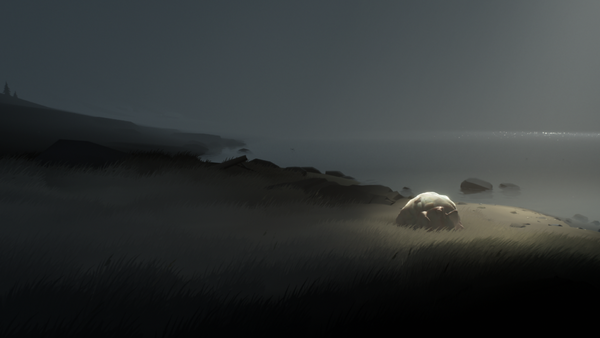
That said, its climax has all the hallmarks of a happy ending. After merging with a creature to form an amalgamation of bodies, you transform from the hunted into the hunter, causing untold destruction and firmly sticking it to the scientists working to literally dehumanise the people of this oppressive world. The title ends with you not only freeing this blob of husks from their confines, but bursting out of the walled city in general, rolling into a spot of hopeful light on the coast.
That's all well and good, but there's a major hint tucked away that this is exactly what the scientists had planned for you to do in the first place. Tucked away in the facility is the model of a constructed seaside setting - which just happens to perfectly mimic the final shot of the whole game. It indicates that you weren't on a path of revolution at all, but simply confirming a scientific hypothesis had expected to happen.