8 Alternate Endings In Famous Video Games You Won't Believe Got Cut
Going out in style... on the cutting room floor.
They say war is Hell - and it most definitely is - but crunch time on a video game, with the pressure of the world cracking those whips and forcing you to meet deadlines, work 15+ hour shifts, deprive yourself of sleep and forgo mealtimes in favour of yet more coding... yeah, it's not the most ideal way to make a living.
To that end, tons of proposed features get planned, talked about, gutted, put back in and removed again, all over the course of a multi year-long production cycle. The end result is something that may not resemble what you saw years prior, to the degree where heavily-advertised things like plot points get skewed and reworked, and even due to the nature of how a game's various parts get assembled, an ending can be a complete afterthought.
The following titles are all well regarded... but not especially their endings. In fact, all have best laid plans that went to waste, only to get detailed and analysed long after release. Let me know in the comments which are your favourites, and if they make you reconsider your opinion on the game overall.
8. The Reapers Are The 'Good Guys' - Mass Effect 3
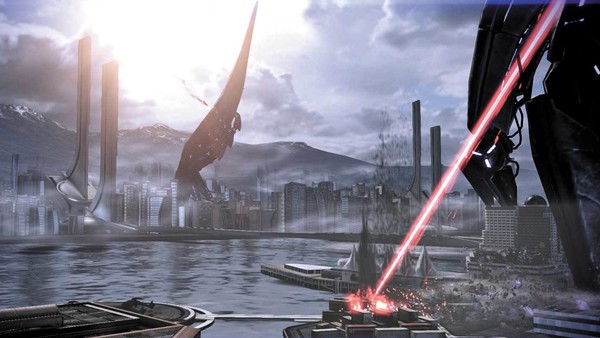
Call it EA meddling, Bioware infighting, a combination of the two or something else entirely, Mass Effect 3 didn't conclude in a manner anywhere close to what the majority demanded. Immediately after release and to this day, it remains one of the most fascinating tales of hype, expectation and reality setting in thereafter, resulting in writer Drew Karpyshyn (who you can think for Mass Effect 1, 2 and a trio of novels) spilling the beans on how the ending was originally supposed to go down.
Keep in mind he's discussing the version of the ending in a fairly rough state (Karpyshyn would leave Bioware for a time after ME 2, only to return for Mass Effect Andromeda), but I guarantee it still sounds better than the Starchild madness we received instead. The 'Dark Energy' he refers to comes from it being mentioned in Mass Effect 2, only to be forgotten about entirely in the shipped version of ME 3.
"Dark Energy was something that only organics could access because of various techno-science magic reasons we hadn't decided on yet" [...] "Maybe using this Dark Energy was having a ripple effect on the space-time continuum."Maybe the Reapers kept wiping out organic life because organics keep evolving to the state where they would use biotics and dark energy, and that caused an entropic effect that would hasten the end of the universe. Being immortal beings, that's something they wouldn't want to see.
"Then we thought, let's take it to the next level. Maybe the Reapers are looking at a way to stop this. Maybe there's an inevitable descent into the opposite of the Big Bang (the Big Crunch) and the Reapers realise that the only way they can stop it is by using biotics, but since they can't use biotics they have to keep rebuilding society - as they try and find the perfect group to use biotics for this purpose. The Asari were close, but they weren't quite right, the Protheans were close as well.
Going off this version of events, it almost paints the Reapers as the good guys, trying to fight an inevitable destruction caused by the now intergalactic-travelling human race. It's very Matrix, and very... well, Mass Effect, considering how the original game was entirely about mankind's place in the cosmos.
7. Master Chief & Arbiter Team Up To Finish The Fight - Halo 2

Halo 2's hellish development has become well documented over the years, but back in 2004 you couldn't move for an unrelentingly negative backlash, following its damp squib of an ending. No sooner were you ramping up to a big finish, tracking down the Ark with the help of the Arbiter... that The Chief responded to an enquiry as to his progress with the line, "Sir... finishing this fight" and it was all over. Black screen, no fireworks display, roll credits.
The whole thing felt entirely unnatural given the pace established beforehand, and it wasn't until early 2016 when fans finally get some concrete answers, as now ex-composer Marty O'Donnell spoke out in an interview with IGN, stating;
"Basically, you were supposed to go back to Earth City, find the Ark, and at that point, that was the Ark that opened up... that was where the Ark was, it wasn’t some other place. That thing on the Earth was where the Ark had been buried by the Covenant and the Prophet of Truth had come back to there and the ending was you and the Dervish chasing the Prophet through the Ark and having a grand and glorious conclusion on Earth, finishing the fight right there on Earth.”
And the reason for all this? Bungie drastically over-estimated their own ambition and abilities coming out the original. Eurogamer spoke to multiplayer designer Chris Butcher, who confirmed, "The crunch on Halo 2 was, 'Oh my god, we're f***ed. We're all going to die.' Months and months of that emotional, negative tone was really hard to deal with - but at the same time, we did a lot of awesome work [...] We were still cutting features only four to five months before the game went gold."
The biggest takeaway - which is indicative of how the industry works, and remains relatable in light of No Man's Sky - came from lead designer Jamie Griesemer, "If the creative process is easy, it probably means you're not doing anything interesting [...] It's just whether you're really working on something great, or whether it doesn't come out that well... You never really know until the end."
6. Sonic The Hedgehog's Secret Credits

Okay, granted it's not something that was cut out the game entirely, but the original Sonic - as far as Sega were concerned - still had a chunk of its ending left on the cutting room floor. Namely, the developer's credits.
And why? Because for some reason, Sega had a 'rule' on development teams including credits in their games. To that end, studios were prohibited from including themselves - possibly so the only name you ever associate with a given title is 'Sega' as an entity, and nothing else.
Across development, lead creative designer Yuji Naka was completely fed up of such treatment, and covertly asked his team to program credits into Sonic regardless. This resulted in a totally black screen at the close of the game with one key element - there was also black text sitting on top.
To the untrained, unknown eye (i.e. Sega's top brass) it was nothing more, but enter a specific cheat code and the background would turn white, revealing those who actually created the game in the first place.
In a world without online patches and no real reason to recall the game, Sonic's creators have remained hidden within the 1991 original since launch.
5. Arsenal Gear Destroys New York - Metal Gear Solid 2: Sons Of Liberty
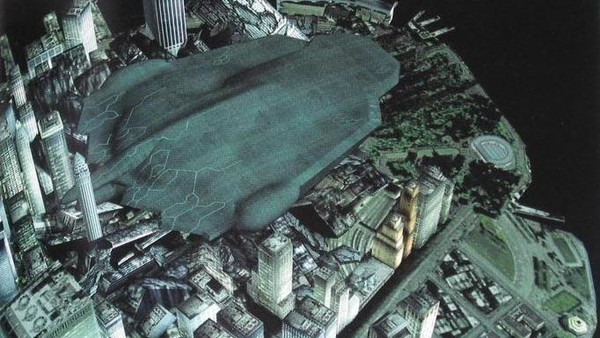
Surprising, for as much as swapping Solid Snake to Raiden infuriated the entire populace, that part was entirely planned. What actually ended up being axed was a big chunk of the game's final scenes, which amounted to Arsenal Gear ploughing straight into New York.
The only thing was, America had been through hell with 9/11 only two months prior, and with so much comparable imagery surrounding dust and debris within the capital, the decision was made to gut anything remotely relatable entirely.
A two month window wasn't enough to design any new assets to replace what was now missing, and so MGS 2 was shipped with a huge continuity error. To this day, the battle between Raiden and Solidus now goes from being atop the ginormous Arsenal Gear, directly to the roof of Federal Hall, with no connecting scenes.
Our minds filled in the blanks, but what are the chances that a video game releasing within only a couple of months of a large-scale disaster would have such comparable material?
Even stranger, according to 1UP, the original spelling for Raiden was altered in-game from 'Katakana' to 'Kanji', as due to the translation, the former actually came out close to 'Bin Laden' in Japanese. Not saying anything, but that's just weird.
4. Aerith Doesn't Die - Final Fantasy VII

Darth Vader's "I am your father" reveal may embody an entire generation of 80s geeks, but Final Fantasy VII's Aerith death takes the cake for those growing up in the 90s. Never before had we grown so attached to a character, only to be suitably devastated when she was wrenched from this mortal coil.
Now, fans have compiled all sorts of evidence pointing to the fact Aerith was actually never supposed to die - enough to support the idea she should've remained for the remainder of the game. In fact, many still believe Square will upend their decision from 1997 by 'resurrecting' her in the upcoming remake.
Let us know in the comments if you think that's the best or worst idea since the Kinect.
Regardless, consider this: Aerith is seen staring up at the Highwind inside the instruction manual that still ships with the PS1 version of the game; a scene whose nearest comparison takes place after the Temple of the Ancients, where she's 'killed'. Second, there's a defined spot in the stonework where your party stands during the final battle against Sephiroth, where Aerith would fit nicely, and finally, she has a ton of individual, unused dialogue left on the disc, that dataminers assume would've played out, had she not been taken out.
Perhaps the closer we get to FF VII's reboot, more light will get shone on the original intentions of Square during the 90s, but for now, there's way more evidence to suggest she should never have died, as oppose to the incredibly vague ending we got instead.
3. Conker Commits Suicide - Conker's Bad Fur Day

The development of all things Conker-related was pretty damn special. Initially starting out with Rare designing a cutesy, mass-appealing fuzzball to contend with the likes of Mario, Crash, Sonic etc., this pitch was inverted completely when initial feedback took aim at everything being that little bit TOO generic.
As a result, all aspects of Conker were inverted entirely. Gone was his happy-go-lucky persona and in was a moaning, foul-mouthed hero-by-proxy. Now, Conker was a drinker who revelled in parodying pop culture with occasionally offensive results. All of which is all still the same in the final build, but a huge change came out of the ending; its first pass saw Conker defeat the evil Heinrich, only to blow his own brains out, ending the game on something of a bum note.
Naturally, Rare realised they'd be canning one of the most original characters in gaming, and it was quickly reverted - but consider how culturally revered this ending would have been: A generic-looking platformer with a "F*ck it" attitude and a suicidal ending? It would certainly have done the character better than the atrocious-looking Hololens incarnation Microsoft are planning.
2. Reviving The Traveller For One Final Battle - Destiny
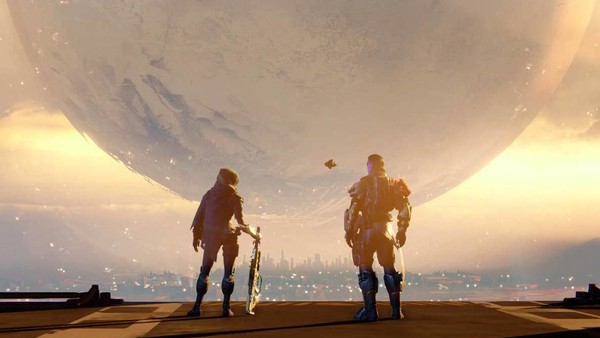
Like Halo 2, Bungie repeated history by hampering a final product with bad development schedules and last-minute production changeups. Unlike Halo 2 though, Destiny emerged as a shell of its advertised self, a major missing component being the complete omission of a story.
All that was left behind were a few lines of dialogue, forever vague, forever alluding to something that would never be fully explained (unless you bought the DLC, of course) - but that wasn't always the case.
Thanks to a beta tester revealing all, following the expiration of their embargo clause, the story went that instead of the pointless 'Stranger' character who pops up a couple of times in cutscenes, we'd have an integral figure named The Crow, who would help the player uncover a conspiracy involving head-honcho, The Speaker. It all culminated with an all-powerful A.I. (they're always involved) attempting to revive the globe-like Traveller, who in this version of the story, would then pose a huge threat to Earth, requiring you to step in and take it down, head-on.
Honestly, everything about Destiny's lore and story is all over the place, and always has been. Even with the various lore videos and entries online, it's about as clear as mud.
1. Big Boss' Downfall - Metal Gear Solid V: The Phantom Pain

It may have been 9/11 that ruined MGS 2's original final moments, but for The Phantom Pain, that became a mix of Hideo Kojima striving for 'the perfect game' to a degree that was impossible, as publishers Konami grew increasingly frustrated with proceedings - not to mention distanced, as they began moving away from the gaming industry overall.
It culminated in a release-day version of MGS V that completely missed out the one key ingredient that was advertised: "The downfall of Big Boss".
Throughout the game we were waiting for one specific life event to turn the raspy hero of Snake Eater and Peace Walker into the dour villain of the original Metal Gear, but it never came. Instead, the game just... ends. Kojima Productions did include a bait n' switch to show that you were actually playing as a glorified clone of Boss all along, but the nearest we got to some connecting tissue that might bind the franchise together, was the original ending being included on the Special Edition bonus disc.
Watching this and delving into a number of assets that have been mined from the PC version of the game, it's clear there was meant to be way more cutscenes, dialogue, and a final area that would lend weight to the idea of Boss slowly losing his mind in pursuit of objective justice. There's no denying the Metal Gear saga had an ending in mind - one that would link 2015's MGS V to the 1990 original - but it was sliced out at the close of production, as neither Kojima or Konami could see eye to eye.
--
Are there any others I missed? Let me know in the comments if what was left on the cutting room floor actually fared better for the game overall!