8 Reasons Mafia 3 Is One 2016's Most Underrated Gems
How does a game nail this many new things, and not get the recognition?

Remember the first time you played Vice City? It was a revolutionary step towards an era in GTA's history that remains its all-time peak: One where Rockstar put just as much effort into crafting immaculate soundscapes and soundtracks as they did gunplay, violence and the script itself.
Flash-forward to 2016, and phenomenal sound design is only the tip of the iceberg. Mafia III is easily one of the most immersive and finest open-world titles in years, one that despite the repetition inherent in its basic gameplay loop, excels thanks to fantastic writing, a risky time period and a cast of characters that all deserve their place in gaming's history books.
So where's the love? It seems like the game's release just came and went in the press, despite high sales figures and consumer response being pretty positive.
Regardless, I'm still having a blast with the intricately-designed world of New Bordeaux, and here are just a handful of reasons why you should be too.
--
8. The Story Is Worth The Price Alone

Yes, there's a lot of neck-stabbing and shotgun blasts in between, but in its fantastic, Band of Brothers-inspired cutscenes, Mafia III weaves a very memorable story.
Told in a documentary style, you'll soon start making connections between certain characters describing specific events, and their actions in said events. It affords developers Hangar 13 a unique narrative framework, cutting away from missions to have individuals detail "what happened next", or to flesh out another's underlying motivations through the lens of retrospection.
All of this factors into the numerous twists and turns that come with Lincoln Clay's dogged rise to dominate the fictional streets of New Bordeaux; one that starts as a fairly basic revenge story and blossoms into a full-on exploration of power, responsibility and the juggling of personal morality in the process.
7. It Doesn't Have The 'Open-World Narrative Problem'

This is a pitfall far too many games have fallen into; most notably Mass Effect 3 and more recently, Fallout 4.
Where ME3 opened with the destruction of Earth - thereby making you feel as though you had to mount rescue missions ASAP, not disappearing off finding lost items, and Fallout 4 saw you attempting to track down your infant son, not leaving any real room for exploration, they both suffered immeasurably if you stopped to think for a second.
Not in Mafia's case. Lincoln's predicament after the first couple of missions leaves him broken, but with a militant view on how to get what he wants. His plan is to overthrow the villainous Sal Marcano, and he draws up a suitable plan of which targets to hit and how.
That said, there's no immediate threat, Lincoln's "back from the dead" position means Sal barely knows he exists for a good third of the story, and that's before you get to work dismantling as many of Marcano's businesses and rackets as possible. You can happily go off and complete a handful of side missions, set up contextual wire taps to bring in more money or explore the Bayou - the overarching sentiment being that Lincoln's plan makes him New Bordeaux's Gandalf: He'll set everything in motion, exactly when he means to.
6. Every Character Is Intelligently Written And Presented

From the get-go, you get the sense that 2K wanted to explore the 'human' side of various challenging subject matters. We see Father James struggling with the fact he betrayed his faith to help Lincoln out, before the game then drip-feeds in elements of his own past that frame why he's a priest in the first place.
The bog-standard 'Irish drunk' stereotype, Burke, has an incredible amount of depth to him that only hits you most likely after you've made a judgement based on the way he initially comes across.
Lincoln himself is given motivations that somewhat fall in line with that of Marvel's Punisher: the notion of "doing what needs to be done" for perhaps the wrong reasons, and the notion of slowly losing himself to that mentality in the process.
Point being, for as much as something like GTA IV wanted you to feel the lament in Niko for getting 'dragged' back into a world of crime, Rockstar never tackled it with any real weight or a more targeted script. Here, everyone from your mission-givers to the main villain are fleshed out and made to feel somewhat relatable, which is something you can't say about 90% of the other big-budget titles on the market.
5. One Hell Of A Visual Presentation
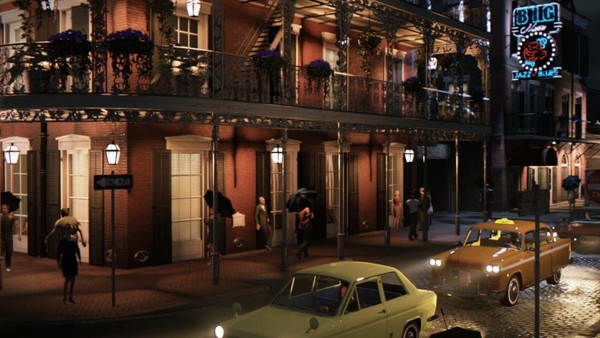
At launch, I saw a ton of commenters complaining that Mafia III's graphics were terrible.
I mean yes, the rear-view mirror rendering still needs work, but as for the sepia-tinged cityscape itself, the crackling neon signs present in richer parts of the world and Neo vs. Smith-style rainfall that batters the pavement and highlights the sun cracking through the trees, Mafia III can provide one hell of a visual punch.
Add in a ton of NPC animations from bands tuning up to partygoers falling over themselves, ancillary dialogue discussing presidential candidates and layer over all the aesthetic traits of 1960s America, and for as different as it is to play, this is the spiritual sequel to San Andreas you always wanted.
4. The Only Game To Continue Shadow Of Mordor's Nemesis System
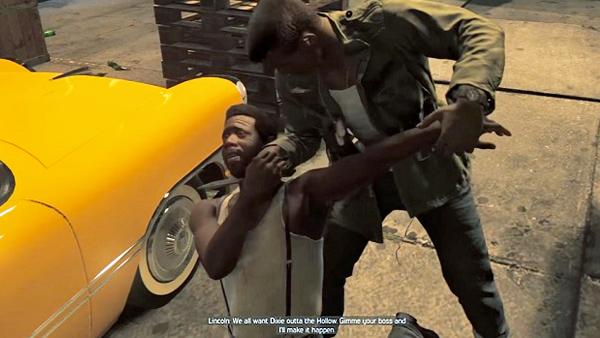
Remember this? Developers Monolith helped create one of the most innovative and unique gameplay systems of the new generation back in 2014, one we thought every developer under the sun would start implementing going forward.
Indeed, the idea of having the game generate its own cast of villains based on which enemies bring you down was genius, as was the idea of turning others to your side as you mount an increasingly large offensive over the course of the game.
It's the latter that Mafia III has adapted somewhat, as once you've taken over any number of Rackets (small businesses within a given district), you'll have to decide whether or not to hire the person in charge or kill them on the spot. Doing the former builds up the amount of cash you'll net once the entire district is taken over, whereas knifing their face off right there and then, gives you a payout immediately.
Choose wisely, as you'll need all the cash you can get for better weapons and loadout options as you head into the next mission.
3. Seriously, That Soundtrack
Call of Duty: Infinite Warfare's Zombies mode is playing the 80s card, Hotline Miami currently has the monopoly on distorted synthwave and Skyrim's Special Edition is a sharp reminder that Bethesda's pipes are some of the most epic in the business, but when it comes to a collection of songs that make you feel like you're in a specific time, Mafia III's is in a whole other league of quality.
Brilliantly, it's not just in vehicles, either. Many outposts or compounds you'll tackle will have radios playing the likes of Fortunate Son or Hendrix's All Along the Watchtower whilst you're cracking skulls, providing an awesome layer of style to whatever you're up to.
Many key missions are set to specific tracks regardless of whether you're in range of a radio or car, too. Trust me, there's something immortally cool about strolling into a roomful of gangsters with a shotgun and a couple of grenades, only for 'House of the Rising Sun' to start up in the background.
2. An Open-World Crime Game With Great Combat
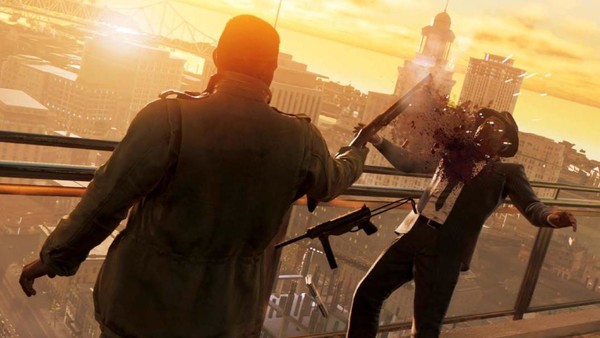
Let's just be honest for a second: GTA's combat has never been its most recommendable asset, and that goes double for anything melee-related. The sword fight on the tanker in San Andreas, or taking a kitana to Lance Vance? They always sounded way more fun in theory than execution.
Whilst Mafia's combat is definitely repetitive, its base framework of combining solid third-person shooting controls with one-button (oftentimes contextual) stealth kills provides an addictive gameplay loop that succeeds far more than the critical consensus seems to admit.
The story paints Lincoln as this righteous embodiment of pure vengeance, and once you start combining brutal knife-to-eye finishers with head-slams, chest-bursting shotgun blasts and face-crushing stomps, you can tear through enemy encampments like nothing else.
It's a level of pure power fantasy wish-fulfilment that GTA never comes close to, and Sleeping Dogs only matched when you were belting out environmental kills every few seconds.
1. A Game That Actually Takes A Risk

You can argue that Battlefield 1 actively took a risk in making a mass-marketed entertainment product out of the greatest war of our time (something I'd say they dropped the ball on), but Hangar 13 engage with the racial prejudices of 1960s America head-on.
Granted, they backed away from having a throwable voodoo doll that saw gangsters react with, "It's that n*gga magic!" (the doll is still in the game, but the soundbites are not), yet it's the little touches that make all the difference.
You'll be ushered out of certain shops as "No blacks allowed" signs hang in the window, you'll notice the police awareness HUD markers pop up regardless of anything you're doing, just to show they're watching your every move. You'll realise the police response times are faster in more affluent areas, whereas in any 'blacker neighbourhoods', most dispatch calls will end with "...if you can be bothered."
Lincoln Clay's path of destruction across the city is almost like the physical manifestation of the rage that forms from years of racial abuse. It's more an exploration of uncorking that latent anger and letting it run amok, but Mafia highlights the tumultuous - and disgustingly still relevant - racially intolerant attitudes of society, and does it with intelligence at every turn.
--
What did you make of Mafia III? What worked, and what didn't? Let us know in the comments!