8 Video Games That Prove The Industry Has Learned Nothing
We're in an era where the second best-selling game of the year is a "financial disappointment."
The video game industry is one strange beast. Despite being relatively young in comparison to other art forms, it's quickly become the most profitable, bringing in an overwhelming amount of money each and every year. Video game properties are some of the most valuable IP out there, and it's a testament to just how successful the biggest names are that they can make more than three times the amount of money that a major film like Avengers: Infinity War can across the same period of time.
However, when you really dig down into the business practices both inside and outside of the products developers and publishers are actually shipping, it's almost like they're so successful in spite of themselves. There's no shortage of big-name failures that balance out the big hitters like Red Dead, Call of Duty or Assassin's Creed, but that's expected. The really surprising thing is how few of those in the industry actually learn from the mistakes of these critical and commercial flops.
Time and time again there have been major examples of how to not make a video game, yet publishers keep churning out releases that are full of the same old problems.
8. Anthem

The Lesson: Looter shooters need good loot.
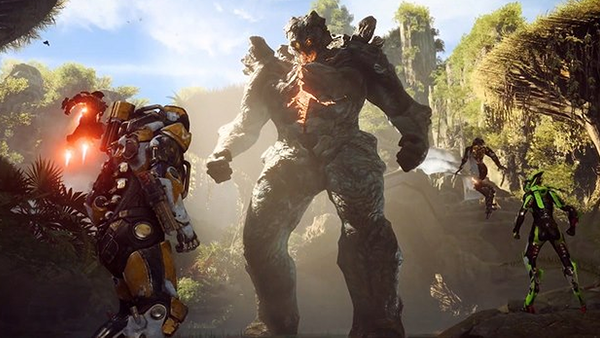
Even though it's been out less than a month, hating on Anthem already feels old. At this point everyone knows that the game - while mechanically sound and beautiful - is incredibly disappointing. That dissatisfaction hasn't only been felt because of the laborious loading screens, lack of story, and frustrating money-grubbing from EA though, but because it repeated the same mistakes both Destiny and The Division made years prior.
Both of those games also felt barebones, with their respective developers promising that the best content was yet to come. They shared the same loot problems, where players were grinding for hours to acquire marginally better weapons (or in The Division's case, a set of different coloured gloves) that were just basic re-skins with improved stats. Both suffered from repetition in the quests as well, with them being copied-and-pasted hundreds of times to the point where players were just expected to grind out missions they'd already completed.
The fact EA either didn't look at these games for pointers or ignorantly thought they were bigger than them is genuinely astounding. So many of these games-as-service titles come out feeling unfinished, and Anthem is just the latest example.
7. Command And Conquer Rivals

The Lesson: Core fans don't care about mobile.
What is it with publishers getting fans excited for a new entry in a beloved franchise, only to eventually end up revealing a mobile game? There's no denying that millions of people play these games, but the assumption on the part of publishers that the core fanbase will fawn over a mobile version of a series they adore constantly lands them in hot water.
The industry saw it happen when Dungeon Keeper was revitalised as a monetised mess of a mobile game, and when Command and Conquer was brought back on the platform with a massive blowout at E3, and when Blizzard caused a s**storm by announcing Diablo Immortal last year. Having these mobile games on the market is of course fine, but companies continue to market them in the worst way possible by assuming they're the version of these franchises that players actually want.
One of the few major success stories of a big franchises going mobile and being positively received was Fallout Shelter, and that's because Bethesda knew exactly how to market it. Not as a replacement for a main game, but as a supplementary experience that didn't have intrusive nickel-and-diming. The fact other publishers continue to ignore that strategy and continue pissing off fans is mindblowing.
6. Crackdown 3

The Lesson: Open-world games need variety.
Open-world games have come a long way this generation. While just having a huge sandbox for players to explore and fight over used to be enough to maintain their attention for tens of hours, developers today need more than that to impress.
Consequently, the sub-genre has exploded in a whole load of different directions, for instance in the depth and complexity of Rockstar's worlds, which double down on their simulation aspects, and Ubisoft nailing the perfect formula of giving players an overwhelming amount of content to take on across their supremely detailed environments.
However, there are still games that refuse to change with the times, and are content to push out cookie-cutter sandbox experiences that feel like they've been pulled straight out of the mid-2000s. Crackdown 3 is the latest example, an extremely dated shooter which barely feels like it's advanced from 2007's original. After 10 years, you're still jumping around uninspired urban areas, collecting orbs, engaging in uninspired combat and repeating the same mission types over and over again.
5. Call Of Duty: Black Ops IV

The Lesson: Players don't want microtransactions and season passes forced on them.
As expected, even as a lot of games and publishers are trying to put a positive spin on loot boxes, microtransactions and DLC (or at least package them in a way which seems less obviously exploitative), Activision continue to capitalise on them in the most insidious way possible.
The first issue comes with the publisher's handling of the sequel's post-release DLC, which requires players to buy into a season pass, as the expansions and maps won't be sold separately. The reasoning is that it will keep players together and not splinter the community between individual map packs, but anyone with a brain can see that's just PR spin, especially in an era where most other multiplayer shooters offer new maps for free for the same reason.
Even worse is that on top of this paywall are microtransactions, which Activision snuck into the game post-launch. Fans, of course, have been vocal with their disappointment, but the publisher - and many others - are blindly continuing to push forward with these practices because, at the end of the day, the amount of money they bring in is worth any backlash.
4. Marvel Vs. Capcom: Infinite
The Lesson: Fighting games need robust modes.
When it comes to fighting games, NetherRealm are putting everyone else to shame. While they might not make the most complex or deep entries in the sub-genre, fans know that every one of their releases - be it Injustice or Mortal Kombat - will be packed with content. From a cinematic, lengthy story to a robust multiplayer suite to a whole load of extras and mini-games, there's always so much to dive into.
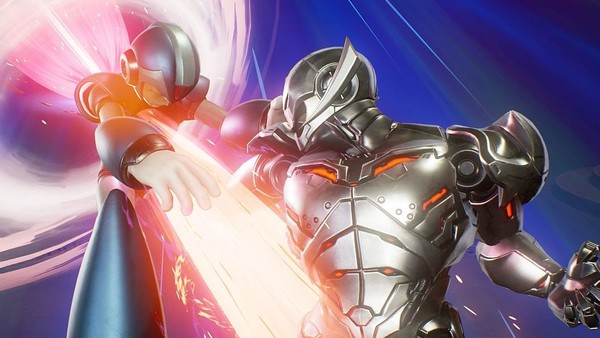
Sadly, they're an anomaly, and despite receiving the same criticisms for years now, the other major fighting game publishers haven't seemed to take any of them to heart. Six years after Marvel vs. Capcom 3 released to backlash over how few modes it had at launch, Marvel vs. Capcom: Infinite came out with a limited roster and once again a general lack of content to be found in the different modes.
Street Fighter V fared even worse. Already frustrating fans by releasing exclusively on PS4 (and PC), the game was a barebones "live service" that the devs planned on updating as time went on. That might have been fine if it shipped with a robust amount of features, but it lacked even the standard Arcade mode that's the bare minimum you'd expect to see included.
Fighting games have kind of faded away, but it's no wonder considering how little effort seems to be going into them.
3. Fallout 76

The Lesson: 'Shippable' bugs are still bugs.
One of the biggest trainwrecks of 2018, Fallout 76 is still unfinished. Well, sure, all the content is there, and you can play the game from beginning to end, but you can't play even five minutes of the multiplayer shooter and come to the conclusion that Bethesda had finished development.
Plagued by an endless amount of bugs and glitches that either render the game outright unplayable or break it to the point where enemies (and the floor) might as well not be there, 76 cemented Bethesda's reputation as one of the least reliable developers out there when it comes to polish. It's a complete shambles that's barely improved in the months since launch, and it begs the question: how the hell did they think this was a fit state to release a game in?
For years, the industry has adopted a "release now, patch later" mentality, found in the likes of Battlefield 4 and Assassin's Creed: Unity, right the way up to 76. The idea is that as long as the bugs don't break the game, then it can ship with them intact, a practice which only punishes those hungry enough to buy games at launch - aka, the most diehard fans. The worst part is, Bethesda didn't even have to look to other games to realise this was unacceptable, but their own past releases.
2. Radical Heights (And Every Battle Royale Clone)

The Lesson: Copying trends doesn't work.
Even though it's happened time and time again, video game publishers just can't seem to understand that chasing a booming trend that's already dominated by a handful of leaders and innovators will doom them to forever being in their shadow.
Back in the modern-military boom of the 2000s, where every game wanted to be another Call of Duty or Battlefield, countless original titles and franchises were reshaped to fit into this mould, and ended up falling by the wayside. Even hugely popular names like Medal of Honor ended up being killed in the pursuit of this insane level of success.
What killed them was the fact that players were already invested in Call of Duty and Battlefield, and it would take more than simply aping their style for a publisher to bring them over to their own game. The same thing is currently happening in the battle royale space, as every release tries to be another Fortnite or PUBG, chasing the trend at the expense of genuine creativity, and always being one step behind.
That desperation was perhaps best summed up with Radical Heights, a battle royale title obviously inspired by Fortnite's colourful take on the sub-genre. In order to capitalise on the booming interest, the title was released in what the devs called "x-treme early access" (seriously), obviously incomplete and nowhere near up to snuff. It didn't do anything new, and nobody was convinced to jump ship.
1. Destiny 2

The Lesson: Publishers need realistic sales expectations.
Every year there's reports about how well the video game industry is doing. The UK has seen record-breaking revenue over the past year, while Red Dead Redemption 2 made $750 million in a mere three days.
The problem is, this ridiculous success is entirely relative, and despite a booming market, publishers continue to announce that their releases haven't met their sales expectations and projections, which leads to layoffs and franchises being put on ice.
We saw it with Dead Space 3, where EA demanded the sequel sell 5 million copies in order to warrant a sequel, but most recently we've seen this disappointment effect Destiny 2. The former Activision franchise came under fire for its "disappointing" sales, with the publisher eventually splitting with Bungie and discarding the IP. Now, that might make it seem like the sequel was a financial disaster, but in actuality it was the second highest-selling video game of 2017 in North America, behind Activision's own Call of Duty: WW2.
That's the biggest example, but this disappointment from publishers happens time after time, regardless of how well a game seems to do.