9 MORE Video Games That Broke Their Own Rules
Your friendly neighbourhood... serial killer?

Actually managing to make a video game is one of the hardest things in any creative medium. More than filming actors on schedules, meeting publisher deadlines or ensuring every last brushstroke on a canvas lands in the right spot first time, the journey of a few million numbers and symbols from data to controllable art is - at least for me - truly something special.
That said, such a massive development period requires a ton of spinning plates, and in a medium where control, feel and satisfaction are often key, narrative throughlines or plot threads can take a back seat.
In development, rules are established one month or year, and ultimately discarded the next, but the tumultuous nature of game design means all those overarching connective elements are left behind.
Combine all this with some of the most ruthless fanbases on the planet - ones who'll play their favourite experiences for thousands of hours until they can understand every last morsel of code - and you have a recipe for the tiniest of molehills becoming mountains we'll never stop staring at.
9. Bane Knows Batman's Identity - Batman: Arkham Origins

The Rule:
In terms of plot elements for any given story, Batman's identity is one of the most important things in comic book history. Centre of iconic Batman arcs like The Dark Knight Returns and Hush, if any writer is going anywhere near the idea of unmasking the Bat, it has to be for a damn good reason.
In Rocksteady's case, they mostly kept things locked down - save for Hugo Strange knowing who Bruce was in Arkham City, but being killed before doing anything with it.
Overall, the Arkham series' treatment of Bruce's identity was respectful, and makes sense across all the games.
Wait A Minute...
In Arkham Origins - a surprisingly brilliant prequel that never got its due thanks to being developed by Warner Bros. Montreal, rather than Rocksteady - Bane straight-up finds out Bruce's identity.
It's done more because of plot convenience than anything else; the assumptions ranging from him tracing a tracker placed on him by Batman, to realising both Bruce and Bats say "You just ran out of time" in front of him, but all of that is besides the point:
Bane doesn't do anything with this information other than abducting Alfred, and though him telling literally ANYONE would've destroyed Batman's identity and power in the long run, it doesn't happen.
Everything is made worse by Origins being a prequel, as later in the timeline, Bane never lets on to the likes of Joker or anyone he's working for that he knows who Batman really is. The whole plotline is largely chalked up to "Well, he probably forgot when he took more of the Venom serum", and it's never addressed again.
8. The Rules Of Time Travel - Mortal Kombat 11

The Rule:
Mortal Kombat 11 is the first game in the series to REALLY delve into time travel, alongside multiple timelines converging within the same isolated story to create one hell of a brain-frying set of plot points.
Newcomer Kronika is the out-of-nowhere master of time itself, and as she somewhat inadvertently combines the old with the new to bring multiple versions of Johnny Cage, Liu Kang, Kung Lao etc. together, the script outlines a set of rules as to how they can co-exist.
Essentially, it boils down to direct causality.
We see a young Johnny Cage get wounded, only for a scar to simultaneously appear on his older self's face. We also see Sonya shoot a young Kano through the head, instantly killing the older version to get out of a hostage situation.
So far, so understandable.
Wait A Minute...
With these rules in place, the scene towards the close of the game where older, Revenant Liu Kang absorbs and kills his younger self to power up no longer works.
At the very point where older Kang begins to literally drain the soul and life from his younger self, he too, would degrade and die.
Instead, Revenant Liu powers up to become something altogether more powerful, only to then merge with Raiden and a resurrected younger self to become Fire God Liu Kang.
Spin it any way you like, Liu Kang is definitely dead, and definitely brought back by Raiden, but Revenant Kang doesn't go anywhere until then.
Even if we say that Shinnok's magic making the characters into Revenants means they were always dead... why do the other heroes try to save them in the first place?
7. Mega Man Can't Kill Dr. Wily... Until He Can - Mega Man Series

The Rule:
Brutally hard, expertly crafted platform shooters where your timing must be exquisite or you're cut to ribbons, the basic premise of Mega Man comes from a world of robots run amok. Basically, Mega Man himself is a good-natured robot created by the kindhearted Dr. Light, tasked with hunting down the evil Dr. Wily's robots, which are trying to help him take over the world.
The only issue - and the reason we can have endless sequels - is that Mega Man can never kill Dr. Wily, because in this world, robots cannot harm humans.
It's the cornerstone of the fiction, and why Wily always gets away; breaking out of prison or otherwise resetting the playing field, allowing for another game.
Wait A Minute...
Cut to Mega Man 7, and... Mega Man can totally now kill, or at least think about it.
Not only does our favourite good-natured hero get aggressive and murderous about doing "What he should've done a long time ago", but after being reminded of his coding, he yells to Wily about being "More than a robot!", screaming "Die Wily!" as he backs up and raises his arm cannon for the final shot.
The only reason this doesn't go ahead comes from Bass descending and saving Wily, but the idea of Mega Man slaughtering his nemesis was clearly going to go ahead.
Thankfully, this has largely been put down to a regional mistake, as it only happened in the American version of Mega Man 7, and after Mega Man 8 restored the trope of Wily getting away, the notion of 'Mega Man killing' has never been flirted with again.
6. The Kryll Are Indiscriminate Killers - Gears Of War

The Rule:
Essentially a flying swarm of buzzsaw blades, the Kryll are introduced to Gears of War in the original as a force of pure terror. The only way to survive is stay in the light, and for various levels you'll be pointing spotlights their way, diving from place to place - essentially doing as much as possible to stay illuminated, for fear of being seared to ribbons.
Both humans and Locust fall prey, and the Kryll are mostly played up as a phenomena of the planet Sera itself, feasting on anything they can get sink their teeth into.
Wait A Minute...
Though we can say General RAAM can control the Kryll - inasmuch as he doesn't get devoured by them in the game's final fight - in Gears of War 3 DLC, RAAM's Shadow, the rules are different.
Presumably to continue the visual of Kryll swarms hounding your vision as additional enemies flood in underneath, entire platoons of Locust are shown surviving amongst these flying foes, not being attacked whatsoever as they go for your squad instead.
It's a direct contradiction to what we know, and although RAAM's generals can also command the Kryll, it doesn't explain why all the other foot soldiers are left unharmed.
5. Kratos' Suicidal Plan Wouldn't Work - God Of War
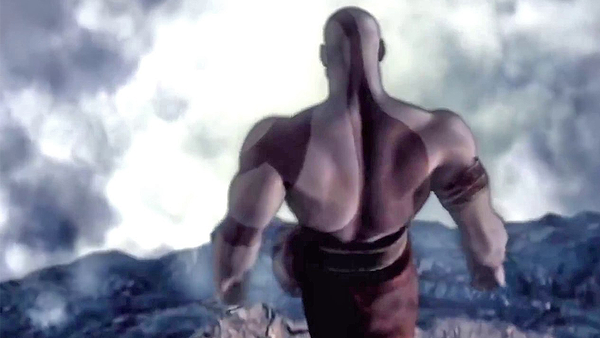
The Rule:
God of War's introductory sequence is one of the most iconic in action game history.
Kratos, the statuesque mound of muscle with a grudge we'd seen ripping things into tiny pieces across the game's advertising... was now about to commit suicide.
We gather this is clearly the end of his journey, and with one line - "The gods have abandoned me", he flings himself off the cliff and down onto the rocky shore below.
Wait A Minute...
Why does Kratos think that attempting to kill himself in this way would do anything?
We know from earlier in the game - and earlier in his life, before this suicide attempt - that "death" in God of War just results in a person physically falling into the Underworld, where they can attempt to claw their way back out again.
Kratos knows this, because it just happened to him. The only way it worked thematically, was because on the game's opening title screen, we didn't know the full context of how he ended up there.
In the game we get Athena/the Gods' intervention to pluck Kratos out the water and up onto Mt. Olympus, but even if he hadn't hit the water and Athena had left him on the rocks, Kratos would've ended up in the Underworld again anyway.
4. Max's Confusing Time Powers - Life Is Strange

The Rule:
Responsible for de-throning Telltale as the name in dialogue-driven point n' clicks, Dontnod's Life is Strange excelled thanks to innovative mechanics that actually let you explore gameplay options during any given conversation.
Coming from protagonist Max, besides visions of the future, her powers revolve around the idea of rewinding everyone and every thing, but she stays in the same physical space. Across the entirety of the game, this is the case - Max can even move somewhere she never was, then rewind time to find out what was happening beforehand.
Plot-wise, at the beginning, Max accidentally stumbles upon her friend Chloe being shot, prompting her to rewind time in a bid to save her. She successfully ends up in an earlier class lesson, and proceeds to win the day.
Wait A Minute...
Going off the rules established, Max rewinding time in the bathroom would only change the events in that bathroom.
She would be able to reset the shooting and successfully intervene, but at no point would her consciousness travel back to an earlier point in her time where she's back in the classroom.
This strange breach in the rules only happens at the very beginning, and likely because we were still getting used to the game's mechanics, it's very easy to miss.
3. Aerith's Pointless Death - Final Fantasy VII

The Rule:
One of the most beloved characters in gaming history, Aerith goes on an epic journey from the slums of Midgar to, well, the skies themselves, being she gets stabbed by Sephiroth at the game's midpoint, transferring over to a being of pure spiritual energy that helps defend the world in the game's closing few cutscenes.
Needless to say this is initially one of gaming's biggest and saddest moments, provoking a ton of speculation around the idea that Aerith wasn't actually supposed to perish, and that she could've been brought back.
Things like the original game's instruction manual showing Aerith next to the Highwind, an empty pedestal on the path to the final fight or even the assumption that a Phoenix Down could bring her back are all touted as reason to believe Aerith didn't have to die. Still, all of these are explainable as deleted scenes/never planned in the first place, or that a Phoenix Down only revives someone who's unconscious.
Wait A Minute...
What about Revive materia??
As mentioned, the majority of items that might do the job actually read as "Reviving a KO'd character", but Revive materia? That literally states it "Restores life to target", targeting "an ally".
It can even be upgraded to give them a chunk of health too, so Aerith could've been back to casting Healing Wind in no time.
Fix that in your FF7 Remake, Square Enix.
2. The Ballad Of... Immortal Luis? - GTA IV

The Rule:
The star of sizeable DLC, The Ballad of Gay Tony, Luis Fernandez got to inject the otherwise dour GTA IV with some old-school GTA flavour. Where Niko could barely interact with the world in the same way as San Andreas' CJ, Luis could base jump, he had access to a ton of hefty military firepower, his cars could get a nitrous-powered overhaul, and he could go golfing.
Even the game's aesthetic changed to provide a brighter colour palette and the skies themselves were clearer blue - all harkening back to the previous trilogy on PS2 and Xbox.
All round, Luis additions to GTA IV are exemplary, and even before this, he pops up in three of Niko's missions: Three Leaf Clover, Museum Piece and Diamonds Are a Girl's Best Friend.
Wait A Minute...
Luis... is somehow immortal.
In Three Leaf Clover - before he's fleshed out as more of a character - Luis can totally be shot to pieces with no game over. Packie comments that you "shouldn't kill anyone else", but Luis lies dead on the ground, covered in blood.
Only... he then pops up in the next missions regardless, as if nothing has happened.
These newer times he plays a role in the missions so he's invulnerable, but that's besides the point:
Why did Rockstar include Luis as an NPC in the bank heist, if he could be shot, only to resurrect him like it was nothing?
1. Spider-Man Doesn't Kill People - Spider-Man PS4

The Rule:
As integral to Spidey as Batman's true identity is to his foundational setup, aside from a handful of exceptions, Spider-Man has been sparing people since day one.
That carries into his game on PS4 too, as developers Insomniac made a point of saying you couldn't kill any of the thugs in the game, despite fighting at great heights; sometimes on construction equipment.
Even if you try to punch and kick foes over the edge of buildings, the game will automatically web them to the nearest wall as they plummet down - as if Spidey had connected a Trip Mine to his particular person ahead of time.
Wait A Minute...
Besides the pernickety-as-hell fact that Spidey doesn't acquire Trip Mines until the Dual Purpose mission; thereby meaning he's sticking people to walls with a gadget he forgot he already had until later in the game, there is still a way for Spider-Man to kill.
Just launch foes into the air and swing kick or attack them multiple times. The auto-stick web won't trigger as it's proximity based, and once you're out the safe zone, your opponent will sail through the air, likely colliding with a car or lamppost on the way down.
Either of these things - or just the height of the fall - definitely ends their life.