9 Reasons The Odds Were Stacked Against Titanfall 2
Wrong place, wrong time, wrong publisher.

Titanfall 2 has not done well. Despite being substantially better than its prequel, and available on more platforms, its sales figures are worse. Many are already branding it a flop, and for a game hoping to attract and sustain a sizeable multiplayer community, that label is a curse.
It’s a terrible shame. The game itself is being praised from all quarters – praised for one of the best FPS campaigns in recent years, and with a multiplayer experience which has been refined, reshaped, and rebalanced into something which meets the promise and ambition of its predecessor. It doesn’t just deserve to succeed: It deserves to thrive.
But the series famed for its fast, free, and fluid movement seems to be stalling. Its momentum has been sapped by a handful of wrong turns, while its footing slipped on shifts in the gaming landscape. In truth, Titanfall 2’s cards were marked long before it launched. Read on to see why.
9. Terrible Timing

This is the big one, so let’s get it out of the way. Releasing one week after Battlefield 1 and one week before Call of Duty: Infinite Warfare, Titanfall 2 placed itself in direct competition with the two biggest FPS franchises of modern times. Whether it was suicidal bravery or a scheduling arse-up, it was a very bad decision.
But FPS players don’t just play shooters – at least, not most of them. For the month prior to Titanfall 2’s release, the gaming landscape was dominated by its own titans. Starting with FIFA 17 on September 27, we were then served Mafia 3, Gears of War 4, the arrival of Rise of the Tomb Raider on PS4, Civilization VI, and Skyrim: Special Edition. Big name games, most of them excellent, collectively whittling away gamers’ time and bank balance.
Then there’s BF1. And then there’s CoD. And then, in November, we’re getting Dishonored 2, Watch Dogs 2, Pokemon Sun and Moon, and Final Fantasy XV. Has there been another period this generation which is so packed with triple A titles?
They say that timing is the secret of comedy. Sometimes it’s the secret of tragedy, too.
8. Platform Exclusivity

Success builds. In gaming, a sequel’s sales are often directly affected by the popularity of its predecessor and the word of mouth generated as a result. The more people who fall in love with your game, the more people they’ll recommend it to their friends – and that helps to grow the potential audience for a sequel. In short, exposure is crucial.
But platform exclusivity limits exposure. Titanfall was announced as an Xbox and PC exclusive at E3 2013, back when Microsoft and EA were getting pretty snuggly. EA was betting big on Xbox dominating the next generation of consoles.
That Christmas, Sony and Microsoft’s new machines went head to head, and the former nudged in front, gaining a lead which it has held ever since. EA backed the wrong horse.
It wasn’t all bad news. During that early dearth of quality Xbox One games, Titanfall became a must-buy, and sales were buoyant as a result. But it built no player base on PS4 – and that meant Titanfall 2 released without a pre-existing fan community on 2016’s dominant console.
7. Titanfall’s Broken Levelling
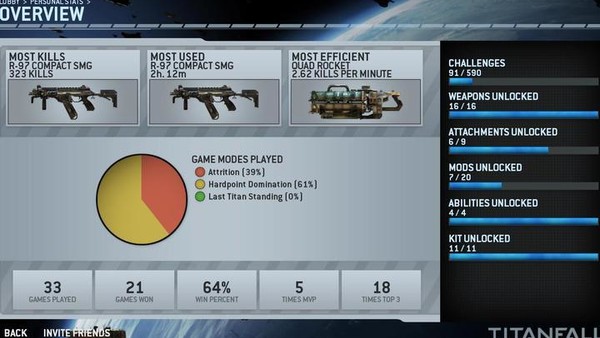
The original Titanfall burned like a match – brightly but briefly. It arrived to huge critical acclaim, giving Xbox One owners a bona fide reason to be smug about their platform, which was a feeling in short supply in those first six months of slow releases and operating system bugs. For a while, Titanfall was the game of the moment.
One month later, it wasn’t. Players who justifiably fell in love with its sublime movement controls, ingenious level design, and mech power fantasies found themselves tailing off, their interest waning despite the fact the game felt so good.
At the time, it was tough to put your finger on why. With hindsight, most agree that it was because the progression felt empty. There weren’t enough weapons, customisation was very limited and, crucially, the level cap was too low. You’d level swiftly to 50, then ‘prestige’ and reset to 0, restarting the cycle again with little to show for it besides an icon upgrade. Levelling only works when it feels like you’re heading somewhere. Titanfall’s was very obviously a loop – and that made it feel pointless.
With compelling unlock systems, frequent DLC releases and annual instalments, Call of Duty has typically managed to keep many people playing all year round. For them, the new instalment is less like a traditional sequel, and more like an upgrade to an active hobby. In contrast, much of Titanfall’s active audience was lost before its first new map even had a chance to land.
6. Overwatch
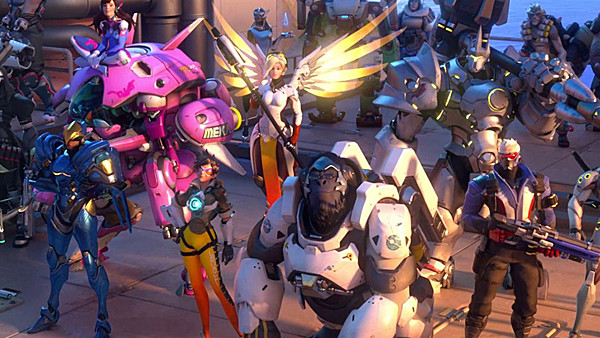
When Titanfall launched in March 2014, it did so as a multiplayer game. It had a nominal campaign, but as little more than a series of multiplayer maps stitched together with a light narrative thread, that felt like an afterthought. The audience Respawn was targeting was very clear: it wanted a share of the huge multiplayer FPS scene, and the developer’s ambition and pedigree put the genre’s two great pillars, Battlefield and Call of Duty, firmly in its sights.
But that was 2014. In 2016, there’s a new kid in town – and its name is Overwatch. And however much Blizzard’s superb multiplayer-only shooter may have coaxed FPS newcomers into the warm bosom of this relatively hardcore genre, its massive success has also eaten into the existing player bases of its rivals (a term we’re using loosely, given that Activision Blizzard own both CoD and Overwatch).
Blizzard’s trademark polish, along with a particularly responsive series of balance tweaks and free content updates, has helped the game to stay almost as compelling an experience six months into its life as it was at launch. It means Overwatch has created and retained a very large audience – and while CoD and Battlefield can probably take the hit, it's not good news for the underdog.
5. Bungie

Respawn Entertainment wasn’t the only top tier FPS developer that had freed itself from the shackles of its publisher. In 2007 - three years before Infinity Ward’s founders split acrimoniously from Activision – Halo developers Bungie parted ways with Microsoft. Though that break was superficially more amicable, there was a clear parallel: a publisher whose commercial vision didn’t gel with its developer’s creative dreams.
Destiny launched in late 2014 to mixed reactions. It has a terrible story and a structure which left some cold, but as far as shooting monsters in the head went, it was phenomenally satisfying. It wasn’t the second coming many expected, but thanks to its MMO leanings and strong co-op content, it hooked a very loyal audience.
So when a Destiny expansion drops, Destiny fans play Destiny. And Destiny: Rise of Iron dropped on September 20, immediately creating a large number of people who won’t be needing a new futuristic FPS any time soon.
4. Ghosts From The Past

Call of Duty 4: Modern Warfare boasts one of the greatest FPS campaigns ever created. Together with Modern Warfare 2, it marked Infinity Ward out as one of the genre’s top tier developers – and it helped to set a quality bar which none of the other studios working on the series have ever managed to reach.
Treyarch, Sledgehammer, and the version of Infinity Ward which remains have all produced work which is mechanically solid. By iterating on the series’ perennially solid multiplayer foundations, and adding some of their own twists, they have maintained CoD’s place as Activision’s great annual cash cow. But they have never made a world class campaign.
So while familiarity may have dulled the impact of CoD's multiplayer for some, the allure of a great CoD solo experience remains elusively high – and that appeal has only increased as the series’ singleplayer highs have receded further into the past.
Activision knows it, and it's why the remaster of Modern Warfare is so perfectly timed. If the publisher’s current flock of developers can’t recapture CoD’s heyday, then why not just copy and paste the heyday itself – plus a heavy coat of 2016 varnish, of course. For any solo players upset with the quality of modern day CoD, the reason to defect to Titanfall becomes a lot less compelling.
When Michael Jackson released Bad, he didn’t have to go head to head with a remastered version of Thriller. Respawn, however, are in direct competition with their own greatest hit.
3. EA’s Marketing Budget
EA owns DICE and Battlefield, but its deal with Respawn is a partnership. We’ll probably never know exactly how the profits are split – such figures are for the boardroom – but it stands to reason that the publisher has more to gain financially from a copy of Battlefield 1 selling than a copy of Titanfall 2. Essentially, EA takes home more cash from its own game.
If you were a business with a pair of flagship FPS games launching within a week of each other, where would you spend your marketing money? Battlefield 1’s promotional campaign reeked of investment, from the incredibly well produced launch trailer to the expensive press packs full of replica WW1 rations and even a dedicated extra page added to the Xbox One navigation menu.
BF1 exploded with a bang, while TF2 landed with more of a whimper – and marketing spend explains the difference.
2. The ‘Tech Test’

Whether you call your multiplayer beta a demo, a preview, a trial, or a tech test, it’s all the same thing – a chance for you to run a large scale test on your servers and game balance choices, and a chance for players to try out your game for free. A good beta builds hype.
Titanfall 2 did not have a good beta. Critically, the people it flopped with were existing fans. It made three core mistakes. First, the player’s titan meter didn’t tick up over time, but exclusively through performance. It made titans rarer – in fact, it was possible to play a match without getting one at all, which was unheard of in the original. The fact they were also easier to kill compounded the problem.
Second, the maps weren’t great. The tech test’s battlegrounds offered central clusters of buildings surrounded by wide open space, losing some of the empowering urban playground feel of the original. And third, there was no sign of Attrition, Titanfall’s very popular core gameplay mode.
Titanfall 2 fixes those flaws, offering Attrition mode, great maps, and a titan meter that builds through time and performance. For many, however, the game had already lost their faith.
1. The Best Battlefield In Years

Battlefield has a passionate following - but its most recent releases have not been smooth. Battlefield 4 launched with a host of connectivity problems and a dull campaign, and Battlefield: Hardline's take on cops 'n' robbers fell flat with many fans. Even Star Wars: Battlefront, Battlefield's sci-fi cousin, cast doubt over the DICE shooter template after facing heavy criticism for a lack of content.
Battlefield's unique combination of solid gunplay, vehicle combat, and vast open maps is always going to draw a crowd, but DICE isn't immune to shooting itself in the foot. Battlefield 1, then, was not a guaranteed slam dunk.
But the developer has outdone itself. The FPS genre's current fondness for modern and future settings has left many pining for the mud and blood of the early 20th century, and Battlefield 1 has delivered that in spades. It boasts a very solid campaign, exceptional multiplayer, and some of the most striking visuals we’ve seen this generation. Who’d have thought that one of 2016’s most awe-inspiring gaming sights would be watching a century-old zeppelin crashing into a hillside? Not us.
Battlefield 1’s first week UK sales outstripped BF4 and Hardline combined. The series’ retreat into the past has gained it a wealth of new fans.
Respawn's history means Titanfall will always be seen as a contender for CoD's crown. This year, however, its biggest rival may lie closer to home.