Alien: Isolation - 10 Ways To Create The Perfect Experience

Perfect terror, perfect isolation, perfect betrayals.
With the bitter aftertaste of Aliens: Colonial Marines still lingering on the edge of public consciousness, fans of xenomorphs everywhere are now putting their faith in the efforts of The Creative Assembly. Ignoring the trend of basing all titles off of James Cameron's famous outing, Alien: Isolation is set to return to the themes of the original film, with the characters fleeing from a single creature they have no way of gunning down. Drawn to the derelict Sevastopol space station, Amanda Ripley (yes, Ellen's daughter) is tasked with hunting down the Nostramo's black box recorder supposedly brought there. However, as they travel deeper into its labyrinth of hostile automatons, malfunctioning systems and broken metal, it soon becomes clear something very inhuman lurks on-board the vessel. Feedback and opinions of early demos have been extremely positive, as has the apparent level of transparency on the company's part. Keeping the fandom constantly updated and allowing journalists to play through early sections of the game, it is clear the developer is going the extra mile to assure buyers this will not be a repeat of Gearbox's bait and switch. What has been shown so far has been extremely promising, offering a great deal of freedom, terror and threat which no Aliens game has ever truly captured. However, what's there is not perfect, nor has it assured that certain past errors will not be repeated. There are certain genre mistakes and genre problems which could easily hold back this game from real greatness if they are not truly addressed and confronted. As such, here's ten ways Alien: Isolation could be truly turned into the perfect xenomorph experience.

10. The Ever-Illusive Xenomorph

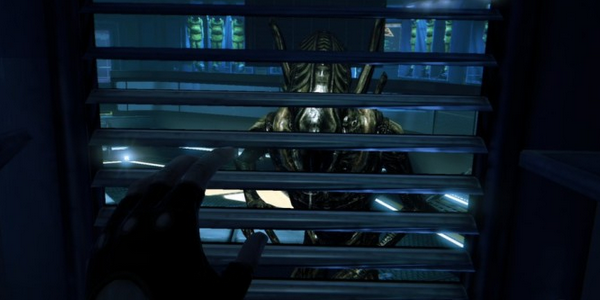
One core defining element which made Alien such an outstanding horror film was its use of tension. Like any truly great production of its genre it used its monster sparingly, building up to each appearance and keeping the audience guessing as the heroes tried to develop new plans. Even the action heavy Aliens limited their presence to a few running battles rather than risk overexposing the monsters, and was all the better for it. This can be incredibly difficult to carry over to a video game but it is ultimately something Creative Assembly desperately need for Alien: Isolation to be a success. While the pulsing sense of terror of a hulking monster stalking the environment will be this game's biggest strength, if every level features the xenomorph then it will rapidly become less the nightmare product of H.R. Giger's brilliance and more of a mechanical obstacle in the eyes of player. Even the big successes which have brought the horror genre back into the spotlight like Amnesia and Outlast suffered from this shortcoming. Their iconic abominations were unstoppable, offering no way to beat them beyond cowering until they skulked away, yet after several hours the impact of this wears very thin. The act of hiding from them became so frequent that the high-risk struggle for survival devolved into busywork to further progress towards the end. The Creative Assembly does seem to be taking steps to avoid this problem by adding secondary threats, with rogue androids and scavengers which can be fought off. How effective this will truly be remains in question, as the xenomorph will still show up to fight them and hunt Ripley, still risking overexposing the creature. Furthermore, recent horror titles which have attempted to mix things up with limited combat (namely Daylight) were greeted with a lukewarm reception at best, meaning this is a risky move on the developer's part.

9. Noise And Learning From Mistakes

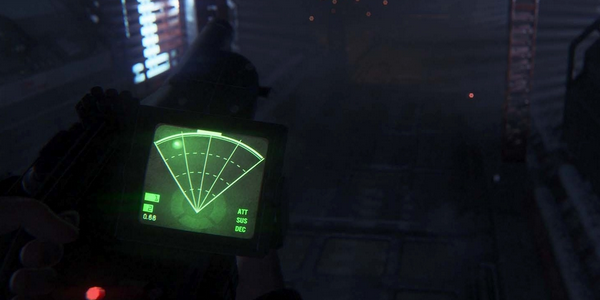
Even in a film where the first victim dies from a monster exploding out of his chest, the fates of Lambert and Parker as they hunted for supplies stood out as an especially grisly end. Drawn by the noise the duo were making as they were completely focused upon their task, Lambert was caught unprepared and pinned down by the creature. A bloody slaughter soon followed. It's a situation countless players have found themselves in before in horror games, where the unstoppable monster lurks on the room's threshold and there is no way out, and it's a situation the developers seem to be making an integral part of their game. Along with encouraging stealth above all else, press events have emphasised how sound will carry, as the xenomorph will actively investigate strange disturbances. This can be anything from the quiet ping of the player's motion tracker, the decompression alarms of an air lock's outer door swinging open and even the noise of an grate being pulled away, all of which have varying chances of drawing it in. Allowing the player to realise they have completely damned themselves is easily one of the most effective scares thanks to video games' unparalleled of interactivity, accomplishing something film and television can never replicate. What exactly the alien will go out out of its way to look into however - that differs from level to level. Early showings have revealed that the xenomorph is seemingly drawn at random to certain disturbances. On some levels it will come running to find out just what caused a pipe explosion, while on others the player can engage in a lengthy melee without it ever rearing its multi-mouthed head. This is a step towards what made the films so great, forcing the players to continually learn and pay attention to their enemies rather than become complacent, but there is a wealth of opportunity behind this gameplay element. Imagine for a moment that this also carried over to the environments as well as certain enemies or even specific items. It would be a chance to really force the player to alter their tactics every playthrough, with certain alarm systems being inactive in some runs of a level but fully functioning in others. Perhaps the game could even offer the chance for cobbled together items Ripley carries to fail or misfire while using them. It would boost the game's replay value and seriously force players to treat every environment as a new, hostile area no matter how many times they had played the game; elements which would help it truly capture the desperation of the original film's predicament.

8. Player Ingenuity And Choice

For all its importance in every cinematic instalment of the franchise, one area which the video games have never truly adapted successfully is the sheer degree of ingenuity the heroes needed in order to flee with their lives. With so many based around the colonial marines, the criminally overlooked 1894 Alien video game was the only release to fully embrace the desperation of having no way to fight back and instead requiring tactical thinking. Now Alien: Isolation now has an opportunity to not only deliver a modern take on its strengths but take things a step further. Early information has already confirmed you'll be scavenging resources to build necessities, helping Ripley survive the nightmarish environment within the station. These range from makeshift weapons to help deal with some of the lesser foes which now stalk about the Sevastopol, killing everything in their path, to noisemakers and equipment which might draw the xenomorph's attention to elsewhere in the environment. It's a big step up from before, where the closest many Aliens games got to this sort of personal innovation was setting up sentry guns in certain areas. However, this ability to construct equipment and choices in approach could be taken several steps further in how they complete their mission. There are a wealth of ideas behind this concept alone, each having the potential for a wide variety of choices and some real freedom to plan out an approach. Imagine for a moment if specific items could be used to create booby traps, with corpses or piles of junk set up to set off certain devices. There could be things that attract one type of enemy only to explode, maiming them or drawing the xenomorph down upon their location as a distraction. What has been shown so far is excellent, but it could easily be pushed that bit further to create something truly outstanding and a real game-changer for the whole genre.

7. Signs Of Life Long Gone

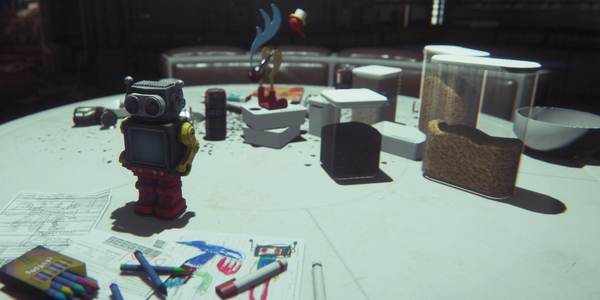
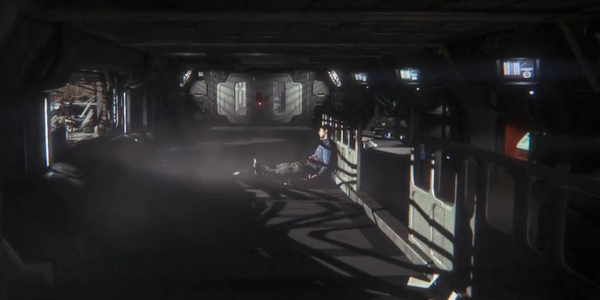
What truly made the environments of Dead Space and Bioshock so memorable were the small reminders of normality; fragments found here and there that proved that that the Ishimura and Rapture had once been home to countless people. While both were now habitats prowled by monsters, splattered with blood and ruined beyond almost all recognition, surprisingly human remnants could be found amongst the bloodshed. These were elements which were so out of place among the carnage that they only enhanced the horror of the situation, from an untouched children's playroom to a happy audio diary lying amid wreckage. After all, there's few things more scary than arriving in a place where, only a few days before, life had been going on same as it always had. We have already seen small signs of this in the promotional material for Alien: Isolation, with the above table and living area presenting a few familiar items; things which are recognisable even today and wouldn't be out of place on a family kitchen table. Others could be abandoned tools left by a technician working on an open access panel, a personal poster taped up above a bunk or even a half finished meal left somewhere to rot; all minor details left here and there to make the place seem as if it was once a true hub of activity. It would desperately help make the place far more alive and be a subtle way of drawing links back to the original film without replicating whole scenes or areas.

6. Jump-Scares

When it comes to horror, jump scares tend a bad reputation. Often associated with bad slasher films and seen as a cheap way to get the audience to jump in fright, visual media is now praised for completely avoiding them. However, this is not entirely fair and Alien: Isolation would be extremely lacking without these to help break up the tension of sneaking about the ruined space station. More or less all successful horror games have used these to some degree, with enemies dropping in on the player unawares or emerging directly before them at the most unexpected times. Its effectiveness and how well it would compliment the atmosphere would ultimately come down to its execution in combination with the building tension. To paraphrase Hitchcock, show an audience four men sitting at a table talking about baseball for five minutes and then a bomb goes off. You have several minutes of boredom followed by a few seconds of shock. Show the audience the bomb under the table and the conversation now contains suspense. The audience will be drawn in, waiting for the moment everything kicks off, hoping the characters will see it and survive. The same thing goes here; from the cover and the name, the player knows that there is a xenomorph on the station, constantly close by and constantly hunting people down. The player will be nervous now, edging along and watching, waiting for when it might show up and ruin their day. It would deliver much needed pay-off to the constant tension, and it's a tactic many other games have used successfully. Outlast had Chris Walker providing these moments in spades along with a number of other characters, each twisting the knife further as the player descended deeper into the bowls of the asylum. Dead Space was similarly brimming with these from the very beginning, often foreshadowing the appearance of new monstrous necromorphs or making the player realise that every last corpse truly was a potential threat. Even Aliens: Colonial Marines, as rightfully panned as it was, began by attempting to build up a single xenomorph's presence with blips on the motion tracker, and the creature stalking around the player until it finally jumps on them. To reach its full potential, Alien: Isolation needs a few well delivered shock moments to truly give some pay-off to its constantly building tension.

5. Space Station Of The Damned

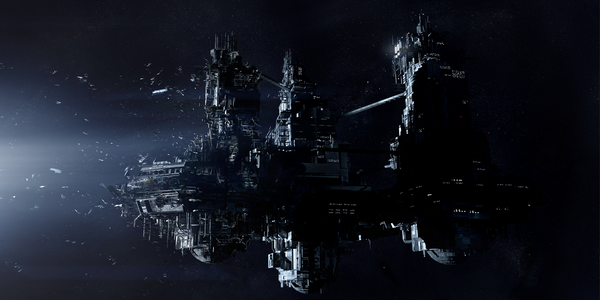
The environments of the first two Aliens films have long stood out as classic locations of the genre, evoking a near perfect mixture of horror and science fiction with their aesthetics. Many aspects are evocative of classic horror conventions from the deep shadows to maintain a semi-gothic look to the almost completely empty corridors, with reviewer Chuck Sonnenberg infamously describing the Nostromo's outwards appearance as looking like "a Star Destroyer knocked up Dracula's castle." It's important that Sevastopol - which already outwardly resembles the Starfreighter's basic design - maintains the sort of industrial pragmatism of the original films' locations. Yet at the same it also needs to evoke this horror element as much as possible and distance itself from being merely a copy of Ron Cobb's work. One easy way the developers could do this without relying too heavily upon the visual imagery of Alien would be taking a look into the works of the game's writer Dan Abnett. Best known for his work in Marvel Comics and Black Library, many of Abnett's books feature industrial locations or seemingly normal places which have a truly horrifying unearthly quality to them. The mutant slums in Malleus stood out as with their unearthly quality and constant rain, heavy industrial equipment and despite their human behaviour, the sheer description of the physical disfigurements of the population. The Gaunt's Ghosts series offers a wealth of such environments which prove his skill too; the warzone of Vervunhive kept Chaotic influence to a minimum yet delivered some creepily unsettling details before the fighting had even started. Hinzerhaus meanwhile was riddled with moments where the character suffers hallucinations, communications echoes and the lights within pulsing as if the building were breathing. Allowing Abnett to have a greater say in the overall look of the game, or taking inspirations from his works, could be the key to giving the game a real edge upon release - offering some points which could ultimately make it stand out as something truly memorable.

4. The Awaiting Threat Of Weyland-Yutani

Beyond chest-bursting and acidic blood, one plot element of the Aliens' franchise which will appear almost no matter what the story is about is the malevolent obsessions of Weyland-Yutani. Along with the first three films, the Aliens vs. Predator video games, and the trilogy of novels by Steve Perry all focus on efforts by the company (or other rogue human organisations) to use as bio-weapons and betray the heroes. Despite being used to the point of predictability, it has developed to become a core staple of the franchise and a reminder of the dark nature of the Aliens universe, and it has a chance to shine through here. Early information has already confirmed the identity of a figure known as Samuels. Approaching Amanda Ripley he confirms that he works for "the company" and attempts to recruit her with promises of "shutting the book" on her mother's fate; primarily by retrieving the Nostramo's black box, which has ended up on Sevastopol. Combined with an early promotional shot of the character and the fact Ripley is now working as an employee of Weyland-Yutani, and the story is ripe for a possible betrayal. With Samuels possibly operating out of his own initiative or on orders, the constant threat of him backstabbing the player would be another element they would need to be thinking about. Depending upon his role he could prove to be a major threat similar to that of Big Boss in the original Metal Gear. Even as Samuels seems to be talking you through a level or how to survive, he could be providing unreliable or outright false information to draw the xenomorph into a trap at the cost of Amanda's life. Even if Samuels himself proves to be reliable, there is still the possibility for the company to arrive or maintain some presence upon the station, concerned with capturing the xenomorph and silencing survivors. It would help to provide a dynamic gameplay shift in the Alien: Isolation's last few hours and perhaps even change the role of the alien, with the player having to draw it into groups of hired mercenaries blocking their escape.

3. Total Isolation

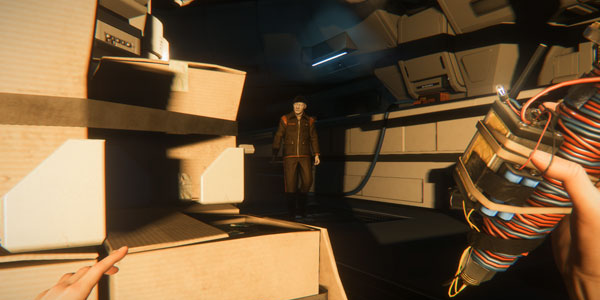
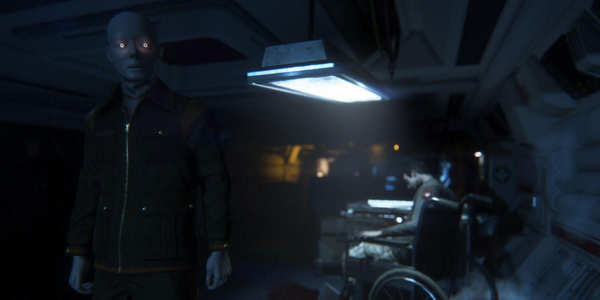
Despite its title, one thing early information about Alien: Isolation has made clear is that you are not alone. Even ignoring the invincible exoskeletal monster wondering about the space station, E3 demos have shown that human scavengers, rogue androids and a small number of other human characters are all on-board the installation, with some willing to speak to the player. While just about all of them are still a threat, it's difficult to maintain a sense of real isolation when the player is constantly surrounded by other people, hostile or not. Very few games have managed to escape the failing of making the player feel too familiar with the environment, or build a chilling sense of isolation while at the same time offering plenty of enemies. System Shock 2 is a rare example of this being successfully pulled off, primarily thanks to its sheer number of foes lacking even the slightest resemblance to humans and many being vastly more powerful than the player. By comparison Bioshock's splicers only managed to stand out in a few controlled moments and audio diaries, often being far too human to truly terrify anyone. With enemies often lacking any vocal distortion or spouting lines, they seemed more like mildly deranged individuals than true monsters. The Creative Assembly will need to be very inventive in order to maintain a constant sense of isolation and loneliness while at the same time offering a wide variety of enemies. Methods to prevent players from feeling too at home within the crumbling station thus far have been random behavioral patterns and shifting environments, meaning you won't run into the exact same kind of enemy twice. While this will leave players second guessing how to approach certain foes or levels, the question is if it will be enough to truly make the player feel scared and alone.

2. Knowing When Horror Outstays Its Welcome
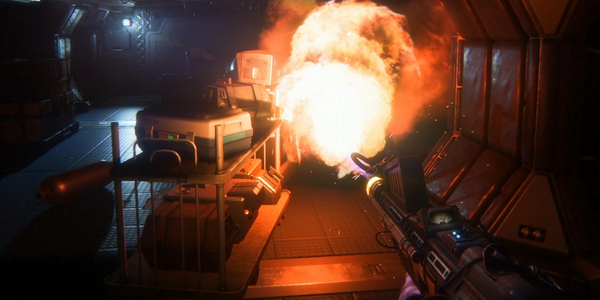
For all the praise they were rightfully given, a key problem many gamers found with the likes of Amnesia and Outlast was that they were too long for their own good. While delivering excellent stories, scares and terrifying environments, the common problem was that the scares never fully developed. After several hours, hiding in a closet and sneaking around an enemy became less frightening and far more of a chore. Both games started with great concepts and delivered them in fantastic ways, but they never changed nor escalated enough for the fear factor to remain fresh in the player's mind. If Creative Assembly wishes to avoid this fate for Alien: Isolation, it needs to really find a way to shift the game's dynamic at a point or keep the player from becoming complacent, allowing them to adapt as the rules around them shift. The supreme example where this worked for the best was Call of Cthulhu: Dark Corners of the Earth. Despite starting off as a mystery title where the player has no means to truly fight back against the locals of Innsmouth, merely fleeing and hiding from them, after the first three hours or so the player is given the opportunity to start returning fire at the locals. While otherworldly foes still emerged which could not be beaten via conventional means, it helped to build up a sense of the true threat around the player and offered great satisfaction when they could turn the tables. Alien: Isolation has already taken the first steps towards this with the limited amount of weapons and secondary enemies present in the game. However, the developers need to carefully consider how they are used. If added into the mix too early, running from/picking off such foes will still drag on, but if added too late it risks drawing out the sections of hiding and fleeing from the xenomorph. If they are too easily killed, numerous or supplies are too plentiful, it will completely destroy the tense atmosphere built up beforehand.

1. Be Loyal To The Source Material, Never Reliant Upon Nostalgia

Of all the critical mistakes made by Aliens: Colonial Marines, Gearbox's sheer reliance upon nostalgia was the crowning turd in the water pipe. Even if the game did have fully up-to-date graphics, the xenomorph mechanics promised, sound quality which did not consist of drawn-out film clips and all the bugs removed, the story and attitude towards the source material would still have ruined the experience. Adding little to nothing to the mythos, the entire campaign proved to be little more than an excuse to throw Easter eggs at the player and hope it would all work out for the best. It was almost entirely set in Hadley's Hope (despite it being destroyed), Hicks was brought back from the dead, a power loader was arbitrarily thrown in to fight a large alien, the plot redirected itself so it could have the Derelict as a level and the Queen was defeated by being ejected from the ship. Whole mechanics such as the motion tracker offered nothing to the experience, and were added purely because they had been in the films. To put it bluntly, the entire campaign was little more than a theme park ride going from one tribute to the next. It was reminding players of how good those films were, but added nothing of substance to back them up or enjoy the game itself. A few potential warning lights have been thrown up that The Creative Assembly might be going the same way. Even ignoring the bonus content on the Nostromo Edition - offering players the opportunity to play out parts of the original film - many aspects seem to be being recycled or added purely as fan-service. These are small but quite visible elements thus far, with the protagonist being Ripley's daughter, the drinking bird toy from the beginning of Alien cropping up in early promotional material, the android's kill by strangulation and the space station's uncanny resemblance to the Nostromo. While nothing quite so blatant as Gearbox shoving Bishop's severed legs into the first few minutes, it's still enough to raise an eyebrow at. The trick will be to offer just enough there to please fans with minor nods and tribute elements, but never going so far as to have Ripley destroy the Sevastopol by overloading its reactor. It can be a surprisingly fine line to go down, but it's one which The Creative Assembly needs to fully understand to truly make this an instalment worthy of the franchise.

Do you have your own thoughts on what Alien: Isolation needs to be a perfect game? Please leave your own suggestions in the comments below!


Contributor
Contributor

A gamer who has played everything from Daikatana to Dwarf Fortress. An obsessive film fanatic valuing everything from The Third Man to Flash Gordon. An addict to tabletop titles, comics and the classics of science fiction, whatever media they are a part of.