Anthem: 8 Ways EA Could Still Mess It Up
Loading (95% Complete)

It’s definitely too early to call EA’s upcoming Anthem a failure. Yet, by the same token, what we’ve seen of the game so far doesn’t exactly inspire total confidence, either. Dedicated BioWare stalwarts may well point the finger at the publisher or do their best to shift the blame elsewhere, but the fact remains that the team’s soon-to-release epic sci-fi looter shooter has garnered a ton of negative press over the past few days.
From infinite loading screens to inept servers, few were pleased with Anthem’s VIP demo, and things were so bad that BioWare had to issue a second javelin vinyl skin to players in an attempt to make amends.
Both EA and BioWare have been in hot water before, but the stakes have never felt quite as high as they are now. Should Anthem fail, it’s hard to know what will happen to either organization, though, given EA’s track record of dismantling studios, it may well be curtains for the dev team should the game go belly up.
Electronic Arts is relying on this title to quell investor’s fears and right the ship, but they still have plenty of opportunities to mess it up.
8. Tiered Release Dates

EA seems to be at the forefront of gaming’s newest manipulative trend: tiered release dates. In the old days, a game would have one set-in-stone release date (or perhaps several for international releases) and that would be it. Today, those too impatient to sit by and mark days off of the calendar can pony up some extra dough for early access.
Tiered release dates may become the new normal for AAA games in 2019, and it’s quickly becoming a headache for budget-conscious gamers. Anthem was first made available via an exclusive closed demo in early December, but was more recently playable over last weekend’s VIP premium demo.
It doesn’t stop there, though. Everyone will have access to an open demo from the first to the third of February, and Origin Premier Access subscribers can go hands-on with the title starting February fifteenth.
The poor saps of the world who weren’t gracious enough to pay Electronic Arts for the privilege of early access will have to wait until the twenty-second of February to play the game. This may seem like a minor gripe, but tiered releases are certain to become the industry’s next big controversy.
7. Market Saturation

Those who have been paying attention to modern gaming industry trends will no-doubt have noticed that live service looter shooters are all the rage right now. While survival crafting games like Rust or The Forest were the in-thing a year or two ago, FPS loot-em-ups like Bungie’s Destiny or Digital Extremes’ Warframe seem to hold the lion’s share of the AAA market at the moment.
Much like the abundance of recent battle royale cash-in games, there’s a desperate “me too” motive behind BioWare’s Anthem. Loot-based MMO-lites are easy to develop content for and are totally susceptible to in-game monetization schemes. After all, those who don’t want to put in the in-game hours to unlock legendary skins can always drop a few real-world dollars instead.
But what can Anthem do to stand out amongst it’s samey competitors? The Iron Man-esque javelin system is a neat enough conceit, but it likely won’t be enough to lend the game an entirely unique feel.
It may hold players' attention for now, but what’s going to stop the majority of them from jumping ship once The Division 2 drops a month later? They may not be totally analogous titles, but it’s a concern nevertheless.
6. Server Struggles

Ordinarily it wouldn’t be entirely fair to criticize a publisher for server issues while their game is still in a pre-release state, but gamers’ good will tends to go out the window when that publisher offers early access at a premium. Tons of BioWare fans pre-ordered Anthem in part to get a peak behind the curtain during the VIP demo, only to be sorely disappointed.
One could argue that server issues were to be expected during this stage in the game’s development, but it’s hard to justify issues this egregious when the publisher had the gall to charge for the experience. Waiting for hours to join a game was a common occurrence, and there are a few players who simply couldn’t get past the first few loading screens at all.
Anthem’s infamous infinite loading error will be a meme among the community for quite some time, and it seems to be another example of Electronic Arts putting the cart before the horse. Though it isn’t necessarily reflective of the finished product, this guffaw was certainly a red flag given EA’s past negligence.
Will Anthem’s servers be more stable come mid-February? We can only hope.
5. Loot, Shoot, and Grind
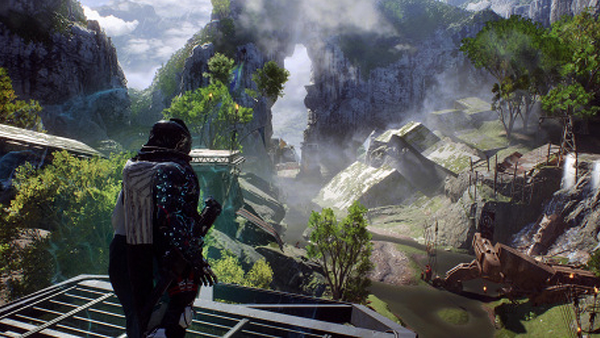
Grinding in gaming isn’t an inherently bad thing, and there are some dedicated weirdos out there who really enjoy the act of slowly chewing through samey side quests and combat sequences to level up their characters. That said, it can usually do more harm than good, and such is the case with most modern day MMO-lite titles like Anthem.
Live service models and looter shooters pair together so well because it’s easy to lock new content behind a massive grind and then offer players purchase options to circumvent it. Destiny 2 was particularly guilty of this tactic when Activision was at the helm, and it’s certainly a scheme Electronic Arts has attempted to employ in previous games.
Of course, the publisher has made it known that there will be no loot boxes in Anthem and that the only microtransactions available in the game will be cosmetic. Unfortunately, that doesn’t entirely solve the problem, and players may still have to grind for hours to get certain skins or emotes.
What’s more, with rumors circulating that certain in-game purchases are planned to cost at least twenty bucks, EA’s greed may ruin yet another otherwise promising title.
4. BioWare's Last Gasp
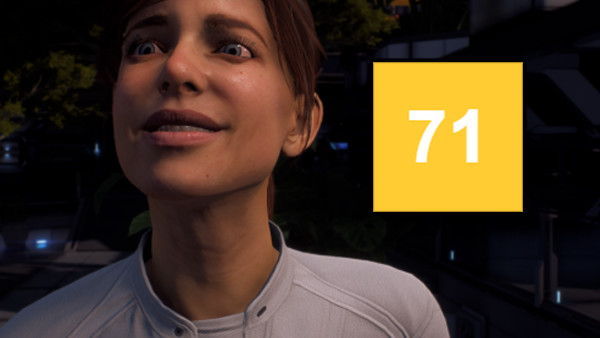
Concern for BioWare’s future rose dramatically when their long-awaited Mass Effect follow up, 2017’s Mass Effect: Andromeda, was pretty much a total disaster at launch. Buggy, lifeless, and devoid of the passion which made previous games in the series so great, Andromeda implied that BioWare had become a shell of its former self.
There’s a ton of pressure on the developer to prove that they can bounce back after that tremendous failure and deliver a game similar in quality to some of their older titles. EA has a long history of dismantling studios they deemed to have underperformed, with Dead Space developers Visceral games having been their latest victim. Should Anthem fail, EA may just consider the nuclear option.
If Anthem does fail, it will most likely be a result of EA’s demanding schedule and near-unrealistic expectations. Even a passion project can turn into a chore after a few eighty-hour work weeks, and it could be that the publisher has simply choked the life out of this once-proud developer.
This is all speculation, of course, and only time will tell if BioWare has what it takes to make this concept pan out in the end.
3. Microtransactions

Electronic Arts has proven themselves time and time again to be among the most dishonest, avaricious publishers in the industry, and, in 2018, their various loot box fiascos found them in legal hot water in several countries around the world. That’s not exactly a great look for a company reliant on the good will of its consumers.
Yet, EA has long held the interests of investors above the interests of its clientele, and that isn’t likely to change at the drop of a hat. Yes, the removal of loot boxes from what is likely to be their biggest game of 2019 seems like a step in the right direction, but, with EA, it often feels like one step forward leads to two steps back.
We already know that Anthem will be pulling that tremendously annoying two in-game currencies strategy whereby players earn one currency—coins, in this case—through gameplay, and the other—known as shards—by coughing up real-world money.
As far as we know, shards can’t be earned in game, and it could very well be that this premium currency will be emphasized by a controlled lack of coins in Anthem—it all depends on how greedy EA wants to be.
2. Can't Get It To Work In Frostbite

Despite their relative lack of morality when it comes to monetizing their games, there is no denying that Electronic Arts has had a hand in some of the best-looking titles released over the past few years. Battlefield 1, Need for Speed, and even Star Wars Battlefront II were all visually stunning, and that’s due in part to the triumph of DICE’s Frostbite engine.
Unfortunately, though it worked wonders for certain games, BioWare has stated in the past that they had trouble getting Anthem to work on the engine. Though it performed well in many first person shooters, open world third-person RPGs are another story, as the ill-fated Mass Effect: Andromeda proved.
Video game development, especially in the AAA space, can be excruciatingly difficult, but things become even harder when a project refuses to operate under the given parameters. From what we know, EA forced the Frostbite engine on BioWare, and they aren’t all that happy about it.
Frostbite can deliver some stellar games, but it isn’t universally perfect. EA likely didn’t want to foot the bill for the development of yet another engine, and that may end up greatly hurting Anthem in the long-run.
1. Crisis Of Identity

Though it still seems like an amazing concept and it’s received a good amount of praise from those who’ve gotten to play it, there’s no denying that Anthem wasn’t the game BioWare wanted to be working on. It doesn’t seem like the sort of thing the developer would voluntarily produce, and it has an air of designed-by-committee lifelessness to it.
Mass Effect: Andromeda was more or less what would have happened if EA took Mass Effect 3 and sandblasted all of the personality off of it; a boring husk of a game which never seemed to justify the reason for its own existence. This, unfortunately, may also be the case with Anthem, though none save for devout BioWare haters would wish that fate on the title.
When it was first announced, Anthem received backlash from fans of the developer because it didn’t come across as one of their own games—it lacked a distinct BioWare authenticity. It could very well be that EA’s boardroom development strategies have hindered the developer and reduced the quality of the overall experience of Anthem.
Hopefully this isn’t the case, but it’s tough to develop a great game while being smothered by a money-hungry publisher.