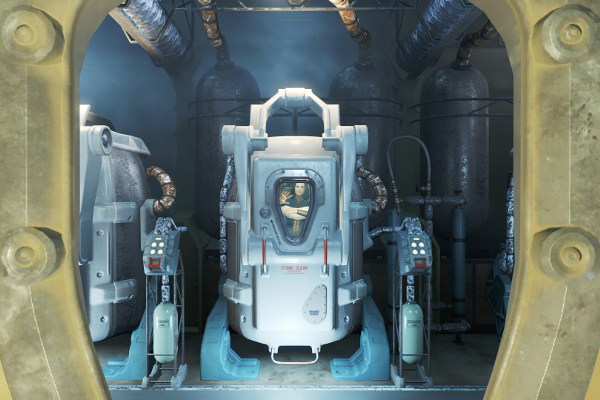
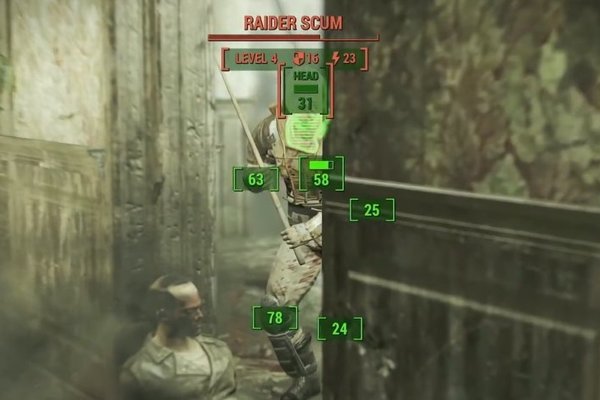
Rating: Not long into playing Fallout 4, you'll become acquainted with the feeling of struggling for survival in the mazey bombed-out ruins of Boston, and find yourself creeping amidst ramshackle raider outposts, hollowed-out buildings doubling as super mutant camps, and mutated dogs ravenous for your flesh. As you meander through the hostile husk of Boston, you find some stairs down a side-street that lead you out of the hostile streets onto the roof of a tall building, which opens out onto a spectacular panoramic view. The sun's setting, the ruined - yet still vertically impressive - city sprawls before your eyes, and an incredible sense of danger and adventure sweeps over you as you take a deep breath of satisfaction (then begin spluttering and gasping from the noxious, irradiated air in your lungs). Being on that rooftop and seeing the rich, rewarding world of Fallout 4 all around you of those sublime video game moments - embodying the wasteland fantasy that millions of people were seeking in one of the most anticipated games of the year. At its best, Fallout 4 transports players to that special place of post-apocalyptic beauty. Ironically given its moribund state, the Boston Wasteland really feels alive, brimming with opportunity and adventure in every direction you go. It may not be the biggest open world out there, but its among the most packed with possibilities. You dont need to pick up quests or head into urban centres to find adventure; just spin a bottle, wander off in the direction it points, and youll soon find some vast factory complex, abandoned town, or other intriguing landmark thats bound to contain myriad opportunities for adventure. The condensed world is brilliantly designed, with a striking contrast between traversing central Boston and the rest of the wasteland. In the rural regions of the map, you can get from A to B relatively quickly, avoiding hostile encounters if you so wish. In the shell of central Boston, however, progress is slow, tactical and tense, as you scurry from cover to cover hoping not to get caught by a random snipers bullet. Should you find yourself in a combat situation (which youll no doubt be seeking out with typical gamer bloodlust), then youll quickly notice the vast improvement in gunplay in Fallout 4 over its predecessors. Bethesdas cooperation with Doom developer id Software clearly paid off, with shootouts feeling visceral, crisp and satisfying. Unlike in previous Fallouts, you don't have to rely on VATS to enjoy the combat. The new sprint button is a long-overdue addition, shooting enemies feels less HP-based and less RPGish than before, and the new slow-mo VATS flows nicely to and from the real-time action. These elements combine for a cinematic, suspenseful experience - one thats not notably inferior to a full-on FPS. How good you are at handling yourself in a gunfight is, of course, largely dependant on how you develop your character using the new and simplified Perks system. This is where Fallout 4 really shines as an RPG The central narrative in Fallout 4 - that of the player coming out of a 200-year cryosleep to go in search of their missing son - is "Yeah... fine" in itself, but it's hard to care much for the newly-voiced protagonist, who just sounds like too much of a generic Mr. Nice Guy to be feel like you can play a truly nasty character with any conviction. The female voice is actually much more convincing, striking a confident tone that leans neither towards good nor evil.
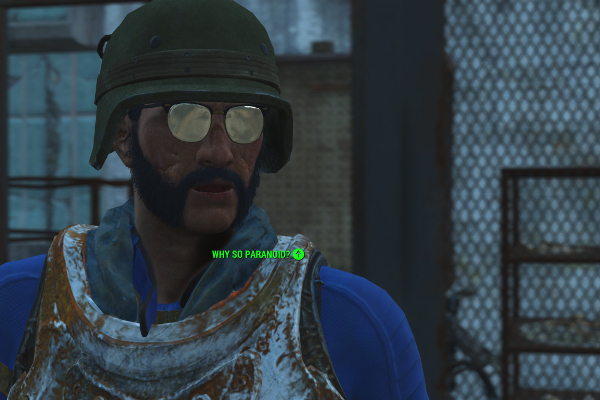
Another Mass Effect-style touch that doesnt come off is the new dialogue system. It feels too restricted and predictable, sometimes forcing you to answer every dialogue option to progress the story, and with right or wrong answers for given situations being too clear-cut. Even if you do select the more callous dialogue options, the protagonist delivers them with about as much menace as Ned Flanders, and if you upset an NPC with what you say, then you can usually just kick up another chat with them a second later and say the opposite - all your past digressions forgotten. All this is not to say that Fallout 4 is lacking in character. You meet some real eccentrics in the wasteland, such as the synth detective Valentine, the pirate-clad ghoul John Hancock, and the Sentry Bot admiral of the USS Constitution. The companions are fun to have around too, and even though their AI can be outright detrimental at times, they're a pleasure to have by your side, build relationships with, and join on personal quests to tie up their loose ends (and maybe land you in bed with them). Making up for the take-it-or-leave-it main thread are the side-quests, which are strange and engaging, ranging from stealthy detective work, to conventional outpost-clearing, right the way through to gripping horror stories capped off by well-designed bosses. Bethesdas Fallout games have always had solid quest designs, but theyve been taken that little bit further here, offering plenty of choice in how you approach them along with some sparingly but effectively utilised scripted events. True to Fallout tradition, there are several factions you can work for, each with their own motivations and questlines. Its also refreshing for me to be able to say that the world looks pretty in a Fallout game. Of course its still a radiation-ridden hellhole, but there is a forlorn kind of beauty about it. The vivid colours and mildly cartoonish visual style work well together to create an almost Bioshock Infinte-style ambience, and you'll have plenty of profound moments just admiring sunsets and morning mists - usually seen through the branches of ubiquitous leaveless trees, or amidst the formidable pillars of great ruined overpasses. Despite its decent looks, I couldn't shake the feeling that Bethesda couldve tried harder in the technical department. Animations are stiff, characters faces are almost expressionless save for the mouths and eyes uncannily moving around in their sockets, and textures look blurry from up close. Its great to see that Bethesda took cues from the mods of previous Fallout games for inspiration, but it does seem like they over-relied on these at the expense of making their own innovations. Fallout 4 may look pretty, but that doesnt stop it from looking outdated. In the run-up to its release, Fallout 4 looked like a more polished version of the Fallouts that came before, rather than a confident progressive step into the future for the RPG genre. On some level, that's essentially what Fallout 4 is, and yet the world feels so tightly constructed and packed with adventure that it still manages to win you over, beckoning you to continue uncovering its disparate nooks and crannies over the coming months. The iconic Fallout 4 tagline of War. War Never Changes springs to mind, because on some level, Fallout never changes either. Many of the old problems exist, particularly on a technical level, but have been masked well by the increased levels of style, colour, and vivacity in the world. Its a tentative step forward for the series and the Bethesda RPG - if not necessarily the revolution Id have hoped for from one of the most revered video game franchises around.
Gamer, Researcher of strange things.
I'm a writer-editor hybrid whose writings on video games, technology and movies can be found across the internet. I've even ventured into the realm of current affairs on occasion but, unable to face reality, have retreated into expatiating on things on screens instead.
 At its best, Fallout 4 transports players to that special place of post-apocalyptic beauty. Ironically given its moribund state, the Boston Wasteland really feels alive, brimming with opportunity and adventure in every direction you go. It may not be the biggest open world out there, but its among the most packed with possibilities. You dont need to pick up quests or head into urban centres to find adventure; just spin a bottle, wander off in the direction it points, and youll soon find some vast factory complex, abandoned town, or other intriguing landmark thats bound to contain myriad opportunities for adventure. The condensed world is brilliantly designed, with a striking contrast between traversing central Boston and the rest of the wasteland. In the rural regions of the map, you can get from A to B relatively quickly, avoiding hostile encounters if you so wish. In the shell of central Boston, however, progress is slow, tactical and tense, as you scurry from cover to cover hoping not to get caught by a random snipers bullet.