Final Fantasy: The 150 Greatest Moments/Scenes
55. A Brotherly Goodbye (IV)

'Farewell...my brother'Throughout Final Fantasy IV, the villain of the piece always appears to be Golbez, the enigmatic individual who conquers the planet in order to acquire Crystals and summon the Giant of Babil, an android-like creature that is capable of killing everybody in the world. Why he wishes to do this is unclear, until the player's party, led by Cecil, travel to the moon (the origin of the Giant) and learn that Golbez is being controlled by an entity known as Zemus. Both are members of an advanced (and homeless) race called the Lunarians, whose surviving numbers predominantly wait in stasis for the people of the world to evolve to a point where their two races can coexist peacefully. Unwilling to wait, Zemus seeks to kill all of the world's inhabitants so that his people can immediately have a new home, but is opposed by Golbez, who is freed from Zemus' control by another Lunarian named Fusoya. Together, Fusoya and Golbez defeat the latter's former controller, only to see his hatred reborn as an entity called Zeromus, which knocks them down and forces Cecil's party to step in and finish the job. In a somewhat rushed execution of the 'twist ending' formula (though still better than any of M. Night Shyamalan's recent efforts), it is revealed that Cecil is also a Lunarian, brought to the earth along with his brother Golbez (otherwise known as Theodor) by their father Kluya (Fusoya's brother), who taught mankind magic and a number of other advanced technologies in an attempt to accelerate their evolution before dying, after which Theodor came under Zemus' control and abandoned his brother outside the Kingdom of Baron. Knowing that he cannot return to the world after the atrocities he has committed, Golbez opts to enter stasis with his uncle Fusoya, but not before he is able to solicit Cecil's forgiveness and say goodbye.
54. Holding Back The Void (V)

'The only ones who can save the world from the power of darkness are the warriors of light! That's you! Now, go!'Its easy to class Exdeath from Final Fantasy V as a somewhat lazy villanous creation, given that he is a being of pure evil (formed from a tree in a forest where the souls of corrupted individuals were sealed) with little to no motivation for wishing to turn both of the game's worlds into nothingness. The consequences of his malevolence, however, make him far more memorable than he arguably deserves to be. First defeated by four warriors named Dorgann, Galuf, Xezat and Kelger, Exdeath was sealed away, but manages to escape from his captivity during the course of the game, merging its two worlds into one and wreaking havoc upon it. He is opposed by the player's party, which includes Galuf (though he is eventually replaced by his granddaughter Krile), as well as Dorgann's son Bartz and two women named Lenna and Faris, who turn out to be sisters. Though initially regarding them as insignificant, Exdeath eventually realises the threat posed by the party and uses his power to destroy what they hold dear, cruelly sucking their homes and the homes of their allies into the void in an attempt to break their will and spirit. Undettered, they soldier on and continue the fight, aided by the spirits of Alexander (Lenna and Faris' father), Dorgann, Xezat and Kelger (the latter two of whom sacrifice their lives for the party during the game's events), who stall any further destructive consumption by the void long enough for the heroes to prevail and cause Exdeath's defeat, reversing the negative consequences of his actions in the process. Fallen characters also popped up to provide assistance at the end of Final Fantasies III and IV as well, though V's use of the plot device seems the most relevant and impactful.
53. Weapon Attacks (VII)

'Weapon's attacking! Run for your lives'Final Fantasy VII was the first game in the franchise to be rendered in 3D and was the first to be released on the PS1, which was considered an extremely powerful system in the mid-nineties when the game was released. Owing to the console's capabilities, full motion video was used to depict a number of sequences, most of which fail to disappoint. About halfway through the game, five biomechanical engines of destruction known as Weapon are introduced, being awakened by Sephiroth's calling of Meteor. Though ostensibly designed by the ancient Cetra race to protect the planet from threats such as him, the machines fail to sense his presence and instead turn their attention to the world's two largest consumers of the planet's limited supply of Mako energy the cities of Junon and Midgar both of which are Shinra strongholds. Though Junon successfully fights off a head-on attack from Sapphire Weapon, Midgar is not so lucky, being on the receiving end of an attack from Diamond Weapon. This devastates the Shinra headquarters, the tallest building in the city, seemingly killing Rufus, the company's President, in the process when his office becomes engulfed in flames. All of this is shown in a cinematic that whilst dated now, was a phenomenal technological feat at its time and served to show just how dangerous that the Weapons could be, making players tremble in fear before they engage the green one (an optional superboss) that floats around under the sea...
52. The Garden Takes Off (VIII)

'Everybody hold onto something!'Following their escape from a Galbadian prison at the beginning of Final Fantasy VIII's second disc, lead character Squall and his companions learn that their former homes, Balamb and Trabia Gardens, are to be the victims of missile attacks as retribution for their failed attempt on the life of Galbadia's new leader, Sorceress Edea. Splitting into two groups, Squall takes two people with him and heads for Balamb Garden to warn them of the impending attack whilst former Trabia resident Selphie leads a team to the base set to handle the launch of the missiles in an attempt to jeopardise proceedings. Disaster seems imminent when Squall and company arrive to find the garden embroiled in something akin to a civil war as individuals affiliated to either the institution's headmaster or its benefactor NORG battle it out in the corridors, particularly when Selphie's group fail to stop the missile launch (though they do tamper with it) and barely escape with their lives. Discovering, however, than the garden is an ancient structure that can be made mobile, Squall's team head into its innards as destruction looms, managing to make their home take flight in the nick of time. As a result, they narrowly avoid obliteration at the hands of the missiles, living to fight another day.
51. Cyan's Last Goodbyes (VI)

'This is not possible... This cannot be happening!'Once you get over his bizarre status as a honourable samurai who inexplicably speaks in a Shakespearian style of old English (saying words like 'thou' a lot), Cyan Garamonde is one of the more engaging secondary characters found within Final Fantasy VI. He is first encountered when his homeland, Doma, comes under siege by Gestahlian forces led by General Leo, who is called away from the frontline and replaced by Kefka. Not quite as honourable as his fellow commander, Kefka is impatient and unwilling to prolong the siege, opting to poison Doma's water supply and kill everybody within it except for Cyan, who has snuck past the Empire's barricades to eliminate another commander. The deceased include Cyan's wife Elayne and his son Owain, prompting him to infiltrate the nearby Empire camp in search of revenge, despite being vastly outnumbered. Allying himself with the Narshe-bound Sabin and his ninja companion Shadow, who also find themselves in the camp, the three escape from the clutches of their enemies into a forest, boarding a train that turns out to be the vessel for transporting the souls of the dead to the afterlife. Disembarking from the train owing to his still-living status, Cyan is made to bear witness to his fallen wife and son boarding it, helpless to do anything to reverse their fate. It's one of the games saddest moments and is one of the only times that the series has broken the taboo of showing a child's death. Much later on in the game, Cyan's dreams can be entered (Inception style) and cleansed of the fear, rage and despair that he continues to feel for his loss, allowing him to focus his energies on the ongoing fight against Kefka's tyranny. Elayne and Owain make a final appearance, but due to the trippy nature of the scenario (as well as the appearance of expies of the three stooges, of all things), his defining moment remains the sombre forest scene.
50. The Wedding (X)

'You would play at marriage just for a chance to send me? Your resolve is admirable. All the more fitting to be my lovely wife'It could be argued that Final Fantasy X has a strong anti-religious subtext, given how the Yevon faith is portrayed as being corrupt and built on false pretences. The concept of forced marriage also plays a part in the plot, as the summoner Yuna is kidnapped by the Guado following their attack on the Al Bhed Home and made to partake in a wedding ceremony with their leader Seymour, who wishes to use her as his Final Aeon in his quest to become Sin. Having escaped from Home's destruction on Cid's airship, the rest of the party plan a rescue attempt, arriving at the ceremony in an excellent sequence that includes some rail grinding that Tony Hawk would be proud of. Despite fighting their way through several waves of enemy soldiers, the party is thwarted and threatened with execution, something that is stopped only by Yuna's intervention. This is as it becomes apparent that she has gone along with the marriage without resisting thus far in an attempt to get close to Seymour, seeking an opportunity to send his unsent soul to the Farplane and stop his plot. The ceremony resumes and the party is forced to watch as Seymour kisses his new bride before reneging on his promise not to kill her friends, ordering their deaths. This prompts Yuna to threaten suicide, falling from the temple rooftop to the shock of everybody present. Summoning Valefor, one of her Aeons, in freefall saves her life and gives the party enough of a distraction to fight their way free, allowing their quest to continue.
49. Laguna Rescues Ellone (VIII)

'I told ya I'd come save you... Sorry I'm a little late'Laguna Loire's story runs parallel to Squall Leonheart's during Final Fantasy VIII, though their two quests are separated in time by a number of years. Though it isn't initially clear why Squall is bearing witness to Laguna's life through dreams, a constant becomes apparent in the form of Ellone. A young woman in Squall's timeline, Ellone possesses a supernatural power that allows her to send people's consciousness to different points in time. As a result, she is responsible for having Squall view a number of events from Laguna's life. One such event sees Laguna acting as a surrogate father to Ellone's childhood self, before she was taken by soldiers from the nation of Esthar, then ruled by the villainous Sorceress Adel, in order to be experimented on. This prompts Laguna reunite with his former comrades-in-arms Kiros and Ward to infiltrate the secretive Estharian nation and rescue her, becoming part of a resistance movement that ultimately topples Adel's tyrannical rule and entombs her in space. As a result of his heroics, Laguna is elected President of the now free country, but the most heart-warming consequence of his success is his reunion with Ellone, who he proceeds to see comparatively little of for the next seventeen years due to the seclusion and politics of his new nation, as well as the need to keep her safe from the game's primary antagonist Ultimecia, who requires her power to complete her goal of suppressing time, remotely possessing Edea and manipulating Seifer in an attempt to locate her.
48. Kain Breaks Free Of Mind Control (IV)

'My mind...is my own again. I cannot expect forgiveness'Mind control plays a big part in Final Fantasy IV, as the villainous Lunarian Zemus manages to control the actions of Golbez, who in turn is able to manipulate people such as Cecil's allies Baigan and Yang at different points throughout the game. Of particular note is the character of Kain, a dragoon who is Cecil's best friend at the start of the game but vanishes after an earthquake in the village of Mist. Returning to Baron, he too becomes a puppet of Golbez and is appointed as his second-in-command. Appearing in an antagonistic capacity on several occasions after this, he breaks free of Golbez's spell to help Cecil rescue Rosa (despite being the one responsible for her kidnapping) and joins the party about a third of the way through the game, only to have his mind manipulated once again later on. This results in Golbez taking possession of all eight of the Crystals that will allow him to call forth the destructive Giant of Babil from the moon. Kain comes good once and for all in the game's final confrontation, however, finally managing to maintain control of himself by resisting Zemus' attempts to manipulate him and fighting alongside the man he once considered a brother to decide the fate of the world.
47. Kain's Redemption (TAY)

'I've been held back all this time by the past. I thought those days had been buried for good... But things didn't work that way. My past is as much a part of me as any part of my body. The happiness, the sadness... And all the hatred...'At the end of Final Fantasy IV, Kain is the only main character not to receive a 'happy ending' of sorts, as he feels great guilt over his past treachery and its consequences, isolating himself from his friends as a result. He neglects to attend the wedding of Cecil and Rosa that takes place during the game's conclusion, instead seeking to banish the darkness from his soul as Cecil did during the game's events. He disappears during this quest, and it is later revealed that the dragoon was overcome by his dark side, which manifests into a separate being and assists the Maenads in doing the bidding of the villainous Creator during The After Years some seventeen years later. The original Kain opts to provide assistance to Ceodore, Cecil and Rosa's son, appearing as the 'hooded man' and opposing his other self. This culminates in a final showdown, where at the second time of asking, Kain is able to conquer the darkness within him and become a holy dragoon complete with a new look (though at the risk of sounding like Gok Wan, I must say that it's a step down from his previous one, given the resemblance to Edward). His redemption complete, Kain finally becomes able to fight on the side of light, removing Cecil from Maenad mind control and rekindling his friendship with the man to bring an end to a character arc spanning seventeen years of time both in game and in the real world.
46. Love Immortalised In Crystal (XIII)

'When prayers turn into promises, not even fate can stand in their way'After being turned into l'Cie at the beginning of Final Fantasy XIII, it is initially unclear as to whether their focus of the player's party is meant to be the destruction or the preservation of the world of Cocoon, though it involves the summoning of a legendary (and supposedly destructive) being known as Ragnarok. After learning from Cid that their path has been manipulated by Cocoon's fal'Cie overseers, who wish for Cocoon's destruction in the belief that it will bring about the return of their creator from the afterlife, they are understandably unwilling to obliterate the world despite the prospect of turning into undead Ci'eth. They nevertheless oppose the self-proclaimed fal'Cie leader, Barthandelus, over his actions, only for him to trick them into fighting and defeating Orphan, the being that keeps Cocoon afloat. With Cocoon's support destroyed, it seems inevitable that it will fall from the sky, fulfilling Barthandelus' wishes. This prompts Vanille and Fang, two enigmatic members of the party from the distant past who have recently awoken from crystal statis, to join hands and summon Ragnarok in the belief that their true focus is the world's preservation. Seemingly adhering to its destructive legend, Ragnarok engulfs the falling Cocoon in a pillar of lava, only to crystallise it and form a pillar that keeps it safe and securely supported. Lives are saved, but Fang and Vanille's are seemingly ended (for the considerable future, at least) by the fact that they too are crystallised once again. The moment is made all the more poignant by the fact that, throughout the game, the two are heavily implied to be gay lovers, perfectly willing to remain in stasis for all eternity as long as it means that can be entwined together. Final Fantasy XIII wasn't a great game, nor was it a terrible one (a bit like Tottenham, really), but this was a fantastic way to bring things to a climax.
45. Tidus Learns That Yuna Will Die (X)

'Was I the only one who didn't know? Tell me why! Why were you hiding it? Why didn't I know?'Many games in the Final Fantasy series have explored the existence and development of romantic relationships between characters, from Cecil and Rosa in Final Fantasy IV to Vanille and Fang in Final Fantasy XIII. Considerable emphasis was placed on the growing love between leads Tidus and Yuna throughout Final Fantasy X. It's somewhat unconventional, given that he is from a city that predates her existence by a thousand years, but is believable and far from cringeworthy most of the time (if we all agree to forget the terrible laughing scene). During the game, the party becomes partial to the knowledge that a number of summoners like Yuna have been vanishing during their pilgrimages. They discover that the Al Bhed race are responsible (though it is not initially revealed why) when Yuna disappears following a Sin attack, venturing to the race's desert Home only to find it under attack by the Guado, who have kidnapped Yuna for her marriage to Seymour. During events in this location, other summoners previously encountered during the party's travels, such as Dona and Isaaru, are met as Tidus (something of a 'rabbit in the headlights' given his unfamiliarity with the world) wonders what interest the Al Bhed have in taking summoners in the first place, reasoning that guardians such as himself can protect them. Everybody is silent for several seconds before the bombshell is dropped and it is revealed to him that the completion of Yuna's pilgrimage and the defeat of Sin will come at the cost of her life. Players can easily put this together by themselves (given that every summoner said to have defeated Sin, including Yuna's father, is deceased), but prior knowledge fails to take away any of the magnitude (POP POP!) from the situation.
44. Interactions With Ultros (VI)

'Oh, all right, Uncle Ulty REALLY wants you to paint his portrait!'What the f**k? That was the likely reaction of many players around the world when, a few hours into Final Fantasy VI, they were accosted by a talking octopus. Little did they know that they had had their first encounter with one of the most humorous (and ridiculous) characters to ever grace the series. Inexplicably appearing at a number of points throughout the game, Ultros doesn't have any motivations for his actions, being more of a nuisance than a true villain. He is nevertheless capable of lightening any scene he is in with his bad jokes and lecherous behaviour towards female party members though. His highlights include working as a receptionist in a coliseum in order to pay off debts, attempting to disrupt an opera with Wile-E Coyote style anvils and trying to steal some golden statues from a cave, the latter of which results in him making party member Relm (a young girl) cry when he refuses to allow her to paint his portrait, relenting when he is berated for this and being defeated by his own image. I don't know who dreamed this guy up (I suspect hallucinogens may have been involved), but their creation has gone down in history as one of the series' most memorable characters.
43. Fighting For Alexandria (IX)

'I cannot face the Princess until we destroy all these beasts. On my honour, I vow to protect the Princess, the citizens of Alexandria, and... Beatrix! I...I shall protect you!'One of Final Fantasy IX's most notable deaths comes when Queen Brahne, the ruler of Alexandria, is killed by her supposed underling Kuja after she has outlived her usefulness. This prompts the accession of her daughter, Princess Garnet, to the throne, making the outlook for the world optimistic given her capability to reunite its warring nations in peace. Unfortunately, the villainous Kuja isn't willing to let things be so simple, perceiving Garnet as a threat to his scheme to become the ruler of both the Gaian and Terran planets due to her ability to summon Eidolons and seeking to kill her. He does this by calling forth a horde of hideous monsters called Mistodons and commanding them to indiscriminately attack Alexandria. Despite initially possessing a mutual dislike for one another due to their professional rivalry, Steiner (the commander of the lowly Knights of Pluto who joins the player's party at the beginning of the game) and Beatrix (the commander of Alexandria's all-female arm) fall in love with one another soon after Garnet's accession and team up to defend both their home and their Queen, engaging monster after monster in a glorious show of both unity and one-upmanship.
42. Fighting The Aeons (X)

'Strike me down', 'Extinguish me', 'End it right here', 'Please defeat me', 'Soon...eternal rest', 'Take my life', 'Thus I atone', 'Stop the suffering', 'Don't cry', 'Gotta say my goodbye'In most games in the Final Fantasy series (barring Final Fantasies VI and VIII), summons are merely battle accessories that, whilst awesome to look at, contribute very little to the plot. As Aeons, however, they are an important part of Final Fantasy X, as Yuna travels across the world of Spira to acquire their services. In the game's climax, the player's party ventures inside the monstrous Sin to defeat it from within. At the end, they encounter Sin's creator, Yu Yevon, who proceeds to make things personal by taking possession of every Aeon in Yuna's collection. The tides are then turned as every single one must be fought by the player in turn, with the process made all the more haunting by the fact that each one pleads for the release of death. More tragic still is the fact that the Aeons are all human, being individuals who have voluntarily sacrificed their souls and become sealed in statues as 'Fayth' in a process known only to those that inhabited Zanarkand. Preserved in a permanent dream state, they have offered their services to righteous summoners time and time again in the endless and futile battle against Sin, though their final defeat ensures that after a thousand years they and their counterparts across the world of Spira can finally be at peace. Their downfall also allows Yu Yevon to be engaged and defeated, ending the vicious cycle of his creation once and for all.
41. Wiegraf's Downfall (T)
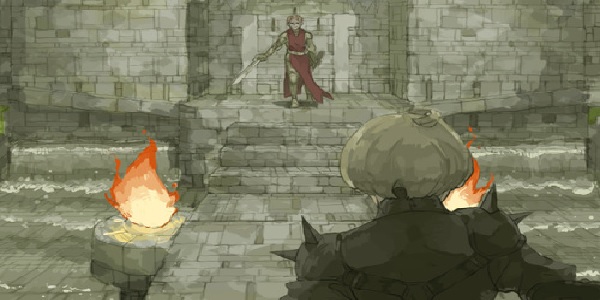
'I sow the seeds of chaos in the world of men, and reap the anguished cries of the weak. But worry not, Ramza. Yours is a special case. I shall kill you myself!'First appearing as the leader of the Corpse Brigade, a terrorist group formed by peasant soldiers denied their pay after the Fifty Years War that acts as a precursor to the events of Final Fantasy Tactics, Wiegraf Folles is an ambitious individual that seeks to end the noble classes' control of Ivalice and put power into the hands of the people. He first comes into contact with lead character Ramza when Gustav Margriff, one of his senior officers, makes an unsanctioned kidnap of a high-ranking nobleman and the youngest member of House Beoulve launches a rescue attempt. Bad blood between the two doesn't develop until shortly after, however, when Wiegraf's sister Milleuda confronts Ramza on the battlefield and is slain. This prompts him to try and settle the score, but he flees after failing to best Ramza in battle and seemingly disappears, leading to the disintegration of his organisation. It is not until one year later that he reappears, being approached at his sister's grave by a member of the Knights Templar and convinced that they share his goals of ridding the world of the aristocracy. He later faces Ramza in battle and loses once more, dying only to be revived by the Lucavi in order to flee and return during the Horror of Riovanes. Here, in a tragic turn of events, Ramza tries to convince Wiegraf that Milleuda would not have wanted him to become a monster, only for him to counter that he no longer cares about his sister, his people or his somewhat honourable revolutionary intentions, now wanting only to bring chaos and destruction to the world. This forces Ramza to individually take on the man one final time, finally putting his rival to rest with his dreams unrealised in one of the game's most dramatic and emotional battles.
40. The Destruction Of Sector 7 (VII)

'They destroyed an entire village just to get to us! They killed so many people....'After thwarting the AVALANCE's group destruction of a second Mako reactor early on in Final Fantasy VII, the Shinra Company seeks to permanently eliminate the threat by using a sleazy underworld figure called Don Corneo to obtain intelligence about where its members call home. This happens to be the sector seven slums, a small and insignificant part of one of eight sectors of the city of Midgar, which consists of eight elevated plates inhabited by the affluent that revolve around a central structure (the Shinra building) and stand above polluted shanties inhabited by the impoverished. Shinra's operatives destroy the pillar that supports the sector seven plate, making it fall onto the slums below. The number of fatalities, both rich and poor, is unimaginable and though player characters Cloud, Barret and Tifa manage to avoid the destruction after learning of it and trying to prevent it, their comrades Biggs, Wedge and Jessie (who all look up to Cloud despite his dismissal of their attention) are amongst those killed fighting in vain for the survival of their home. The game needed to do something early on to instil a hatred of Shinra into players, allowing them to share its character's motivations for opposing them. With this, they succeeded, showing that the company are inhumane enough to condemn an eighth of their city to death in order to try and eradicate a mere few troublesome individuals.
39. Cloud Versus Sephiroth, Mark II (AC)

'I will...never...be a memory'At the start of Final Fantasy VII: Advent Children, it is unclear why the villainous trio of Kadaj, Loz and Yazoo seek to resurrect Sephiroth by collecting the world's remaining sources of Jenova cells, until it is revealed that they have been formed as physical manifestations of his will from the afterlife. Taking the alien being's head from its holder, Rufus, the trio then proceed to gather citizens (mostly children) of the world who are infected with Geostigma, a new and widespread disease that transpires to have been born from the release of Sephiroth's (and by extension Jenova's) cells into the Lifestream that flows below the planet. Using his body as a vessel, Kadaj becomes Sephiroth, forcing Cloud (himself afflicted with Geostigma) to engage him in combat as he did previously in the game. What follows is a highly impressive and lengthy computer-animated spectacle as the two battle on foot and in the air, all whilst an excellent rearrangement of 'One Winged Angel' plays in the background. Rarely in the series has there been a scene that personifies good versus evil as much as this one does and given the impressiveness of the graphics, it's a shame that it had to end.
38. Squall Rescues Rinoa (VIII)

'I don't want the future. I want the present to stand still. I just want to stay here with you...'At the start of Final Fantasy VIII, you'd consider it a long shot that stoic protagonist Squall would become part of a love story. After considerable character development over the space of two discs, however, he begins to realise his love for Rinoa, who begins to open up his cold demeanour and have him express his feelings rather than bottle them and suffer in silence. The two are introduced during a beautiful dance sequence early in the game, but they develop a mutual dislike for each other shortly afterwards when she hires him and his companions to assist a resistance movement she is a part of. This is eventually eroded, though the fact that Rinoa was previously in a relationship with Squall's rival Seifer continues to both complicate matters and makes them more interesting. Rinoa is rendered comatose after inheriting the powers of Sorceress Edea, who is broken free from the mind control of Sorceress Ultimecia after a battle with the party. This devastates Squall, who single-handedly carries her to the advanced city state of Esthar in search of a way to wake her up. Storyline developments lead to Rinoa being awakened and then herself possessed by Ultimecia, who makes the young woman release Esthar's former tyrant Sorceress Adel from her tomb in orbit before relinquishing her control and abandoning Rinoa in the cold, black vacuum of space. This prompts a selfless Squall to abandon his own vessel (an escape pod from a lunar base destroyed by Adel's release) to pursue her, leading to an annoying space rescue mini-game that undoubtedly had many throwing their controllers at the screen in frustration. Upon its completion, however, Squall and Rinoa are left alone in an airship, finally free to admit their feelings for one another despite the uncertain future that lies ahead for both of them. There's no actual kiss between the two until the game's ending, but this is certainly the game's most romantic moment and is scripted superbly.
37. The Kiss (X)

'I'll continue. I must. If I give up now...I could do anything I wanted to, and yet...Even if I was with you, I could never forget'Some call them soppy, but deep down we're all suckers for a good love story and the one featured in Final Fantasy X is unquestionably the deepest and most emotional that has ever been featured in the series. Having reunited with her friends after being rescued from an unwanted wedding, Yuna seeks to be alone when they come to a halt in a forest, wishing to contemplate the future of her journey to defeat Sin after she has been branded both a heretic and a traitor for her actions against the Yevon faith. She is joined in a spring by Tidus, who attempts to talk her out of continuing their quest, wishing for the two of them to be together. Ultimately though, she decides that her responsibility of defeating Sin is too great and she must continue for the sake of the rest of the world, even though it will come at the cost her life and she will not be acknowledged for it. She breaks down into tears, which end only when Tidus moves in to comfort her and their mutual feelings are finally expressed in a long and passionate kissing sequence. Whilst tame, the scene is the furthest that the series has ever gone with regards to displaying romantic affection, serving effectively to emphasise the beauty yet seemingly ultimate futility of the love that the two hold for each other.
36. Tellah Casts Meteor (IV)

'I brought this...on myself...letting hate consume me so... please...avenge...Anna...'The sage Tellah is something of an oddity in combat in Final Fantasy IV, failing to gain stat points when he levels up. The reason for this is initially unclear when the game's lead character, Cecil, fights alongside him for the first time, which culminates in Tellah confronting the bard Edward over his daughter Anna's death before exiting proceedings. It becomes apparent the second time he is encountered, however, when Tellah states his intention to avenge Anna's death by eliminating Golbez, the man responsible, with the legendary Meteor spell, which he learns but is restricted from using in normal battles due his fixed MP total of 90 (the spell costing 99 to use). Accompanying Cecil on his quest to rescue Rosa from the clutches of Kain and Golbez, Tellah comes into contact with the latter and musters the strength to use the mighty spell just once, severely wounding (but not killing) his daughter's murderer, who flees. Unable to handle the effects of the magic's power in his old age, Tellah passes away out of exhaustion, his quest for revenge unfulfilled and passed on to the rest of the party. Unlike Palom, Porom, Yang and Cid, whose supposed deaths are all later reversed, Tellah is the only character in the game that stays dead, making his passing hit home much harder, particularly considering how pointless it was in the grand scheme of things.
35. Squall Meets Laguna (VIII)

'Ward. Kiros. And that's probably...'It was always inevitable that Squall would meet Laguna at some point during the events of Final Fantasy VIII, given his experience of events from the man's life during a number of dream sequences. It doesn't happen until quite late in the chronology of the plot, but the moment where the game's two stories finally become one does not disappoint. After Rinoa returns to earth after being rescued in space by Squall, she is surrounded by Esthar soldiers due to the threat she may pose to mankind, given her susceptibility to Sorceress Ultimecia's possession skills. Scared of her powers, she acquiesces to their demands to be sealed away, only for Squall to reject the idea and rescue her after initially going along with it. Invited to meet Esthar's President after this, Squall comes face to face with Laguna, the man who was elected to the position seventeen years earlier, and the two develop a plan in tandem with scientist Dr. Odine to defeat Ultimecia once and for all. The fact that the game all but flat out confirms (through dialogue with Kiros and Ward, as well as the fact that there would be no reason for Ellone to make Squall bear witness to the life of a man not connected to him in any way) that Laguna is Squall's father makes their meeting all the more fateful and rewarding.
34. An Assortment Of Sacrifices (II)

'All those who live must someday die. It is our fate'In terms of death and destruction, Final Fantasy II is one of the darkest games in the entire series. As mentioned earlier on, almost every supporting character perishes at some point, accompanied by an emotional scene that motivates the party (and the player) further in their quest to oppose the malevolent actions of the Palamecian Empire. It begins with Scott, a Prince who perishes in the game's first hour after passing information about Borghen's betrayal of the Kingdom of Fynn to player character Firion. Next comes Josef, a resistance sympathiser who escorts the party across a snowfield in search of an item they require, only to use his immense physical strength to hold up a large boulder (triggered by Borghen) long enough for the rest of the party to escape from a cave, leaving behind a young daughter. Minwu comes next. Having earlier accompanied the party on their travels for a period, the mage is dispatched by the dying King of Fynn to locate the tome for the powerful Ultima spell, using the last of his immense magical power and dying to break the seal around it for the party's use after they are tasked with locating him when he doesn't return. Other supporting characters such as the airship creator Cid are then killed by a creation of the Empire known as the cyclone, inside which the party meets a dragoon named Ricard. His demise is perhaps the most tragic of all given that he is the last dragoon of the Kingdom of Deist, as he sacrifices himself to get the party out of a tough spot despite promising his friend's widow and her son that he would return. Unlike many other games in the series (most notably Final Fantasy IV), the dead in this instance stay dead and do not come back (though they do appear in the previously mentioned afterlife adventure called the Soul of Rebirth in remakes of the game), making each heroic demise all the more hard-hitting.
33. The Nibelheim Incident (VII)

'Out of my way. I'm going to see my mother'The story of how Sephiroth's insanity began is narrated by Cloud in a first-person flashback sequence early on in Final Fantasy VII, as his allies seek to understand his connection to the superhuman being that they become aware of during their escape from Shinra's headquarters. Cloud tells the story falsely, believing himself to have been an elite member of SOLDIER tasked with accompanying Sephiroth to the Mako reactor in his hometown of Nibelheim, where monsters had been appearing. It is later revealed that this was actually Zack; a friend of Cloud's whose identity he assumed in the mission's aftermath, though the game's spiky-haired protagonist was present as a helmeted infantryman. With Cloud's childhood acquaintance Tifa hired as a guide, the superhuman Sephiroth effortlessly completes his task before discovering both Mako-infused humanoid creations and a sealed door in the reactor marked 'Jenova', the name he has been told belonged to his mother. Wondering if he was created artificially like the humanoids, Sephiroth immerses himself in a week of research in a mansion in the town once used by Shinra, discovering Jenova's origins and formulating his belief that he is the last of the ancient Cetra race and should be a godlike figure rather than a military pawn. Setting the town on fire (resulting in the iconic image of him walking through the flames), Sephiroth sets off for the reactor once more to reunite with his 'mother', immobilising Zack and Tifa (whose father is killed in the blaze) when they separately attempt to stop him. He is then opposed by the lowly Cloud, who somehow manages to send Sephiroth into the Lifestream, a place where he subsequently spends five years acquiring knowledge and power to aid his future quest for world destruction.
32. Rachel's Brief Revival (VI)

'I have to go now. I'll always love you. You must now cast off the anguish you've been harbouring inside for so long. Today I set your heart free. You must learn to love yourself again, and regain your self-respect'Treasure hunter Locke Cole is introduced early in Final Fantasy VI as a member of the anti-Empire resistance movement (the Returners) sent to exfiltrate the mysterious Terra from the town of Narshe, where the Empire's forces are searching for her in the wake of her breaking free from their mind control. Viewed as a common thief by most (a characterisation he despises), Locke is actually a brave individual dedicated to his goals. After successfully getting Terra out of her predicament he rescues Celes, a supposedly disgraced General of the Empire, from captivity during his escape from a city under siege. Despite initially questioning her loyalty, he begins to develop affection for her, though it is complicated by his past. This past is explored towards the end of the game, as following Kefka's reshaping of the world, Locke, not knowing of Celes' fate, seeks to spend whatever time he has left with his first love, Rachel, a woman killed by the Empire (but preserved in state by a herbologist) after being injured in an accident that was Locke's fault. Hearing of an Esper named Phoenix that can revive the dead; he seeks it out and succeeds in acquiring its power, only to discover that it will give just Rachel a few minutes of life before she passes on once again. With these moments, she selflessly tells him not to feel guilty and dwell on the past, imploring him to move on with his life and give his love to the person who now dwells in his heart Celes who has grown to love him too.
31. Gabranth's Redemption (XII)

'Even a stray has pride! Here I pay my debt'The concept of conflict between two brothers wasn't exactly new to the series when the writers of Final Fantasy XII decided to use it, but the relationship between identical twins Basch and Noah (Gabranth) is perhaps the franchise's best use of sibling rivalry, and its development is one of the game's best elements. Separated in their youth by the invasion of their home, Basch became a knight of Dalmasca whilst Gabranth became a Judge Magister of the Archadian Empire, accelerating the Archadian conquest of Dalmasca by posing as his brother and murdering its King, ensuring the Kingdom's downfall and Basch's imprisonment for regicide. Despite this, Gabranth is not completely without honour, seeking (in tandem with Judge Drace) to protect his emperor's youngest son, Larsa, from becoming as merciless and destructive as his heir Vayne has become. Vayne's murder of the emperor and assumption of his position forces Gabranth to display loyalty to the man, however, beginning with the execution of the dissenting Drace. Meanwhile, Basch joins the player's party after being freed from captivity, seeking to clear his name and triumphing over Gabranth in battle on two occasions before the Judge realises the error of his ways and turns on Vayne, who, in a Nethicite-enhanced form, effortlessly cuts him down. Basch and the rest of the party eventually triumph over Vayne, but Gabranth is past the point of no return. On his death bed, having reclaimed his pride and honour, he implores his twin brother to take his place and continue his mission to protect Larsa, who can unite the world in peace as the next Emperor.
30. Tietra's Death (T)

'Gods have mercy...'The endings of Final Fantasy Tactic's second, third and fourth chapters have all been previously examined, but it is perhaps the climax of the first, a flashback that details the origins of lead character Ramza and his friend Delita, which is the most spectacular. As allies in the Order of the Northern Sky, the two study together at an educational institution and are dispatched to oppose the operations of the Corpse Brigade, rescuing a nobleman with the assistance of one of his servants, the much-despised Argath. Another Corpse Brigade attack led by an operative named Gragoroth Levine targets Ramza's family home, intent on kidnapping his sister Alma. This results in Ramza's eldest half brother Dycedarg being injured, though his sister is kept safe by his other half-brother Zalbaag, prompting Gragoroth to take Delita's common-born sister Tietra instead. Dycedarg initially promises not to launch a counterattack on the Brigade whilst they hold Tietra, causing friction between Argath and Delita when the former states his belief that she has no value and shouldn't deter their response. This prompts Ramza and Delita to part ways with their ally, who formulates a plan with Zalbaag to lead a head-on assault on Gragoroth's location despite Dycedarg's promises. Ramza and Delita proceed to instigate their own rescue attempt, only to bear witness to both Tietra and Gragroth perishing when Argath mercilessly fires at them. This action subsequently leads to a battle that results in the supposed deaths of both Argath and Delita, the latter of which, combined with Zalbaag's approval of Tietra's murder, is what prompts Ramza to abandon his family and become a sellsword.
29. Nanaki Learns About His Father (VII)

'I am Nanaki, son of Seto. Warrior and protector of Cosmo Canyon!'Almost everybody in the world of Final Fantasy VII is human with the exception of the red wolf-like Red XIII, who sticks out like a sore thumb and is experimented on by Hojo before he joins the party. A trip to his home of Cosmo Canyon reveals that he is believed to the last of his nameless species and considers his late father to be a coward, believing him to have fled when the settlement was attacked by a group called the Gi Tribe a few decades prior. Red (actually named Nanaki) was raised by the town's elder, Bugenhagen, who decides to show his former charge the truth when he learns of these feelings. Taking him and the party to a sealed cave infested with undead Gi Tribe remnants, he reunites Nanaki with his father, Seto, who is petrified and filled with arrows. Learning that his father took on the entire tribe of invaders singlehandedly to defend his home even though his species was already near-extinct, Nanaki is absolved of shame, wishing to become a great warrior like his father, whose petrified remains shed tears at the announcement. Inspired by Seto's immense courage, Nanaki opts to join Cloud until the very end, presumably finding another member of his race at some unseen point in time given the appearance of three of his species in the game's ending, which takes place five hundred years after the main narrative.
28. Terra Transforms (VI)

'The Esper... It's responding to her!'Following her escape from Narshe with Locke in the aftermath of Final Fantasy VI's prologue, green-haired Terra Branford becomes an asset of great interest to the Returners, the anti-Empire faction that he is affiliated with, particularly when she displays the ability to use magic shortly after being introduced to Edgar. Though not forced into joining their cause, Terra is taken to the Returners hideout and pledges her support to their leader, Banon, returning to Narshe with him in an attempt to prevent the Empire's continued attempts to get their hands on the town's frozen Esper. Reacting once again to the presence of the godlike being that removed her from the Empire's control previously, she transforms into an Esper herself, to the shock of her companions and (presumably) the player. Out of fear and confusion, she flies away shortly after, only to be found by the party in a dire state where she cannot remember anything and cannot control her transformations, accompanied by an Esper called Ramuh. Needing to locate her Esper father, Maduin, to restore her to an optimal condition, the party succeeds in acquiring his Magicite, which proves sufficient to restore Terra's memory and provide the party with a member that can transform into a godlike figure at will.
27. Rescued From Limbo (VIII)

'Am I...alone? Rinoa? I want to hear your voice. Which way...do I go? I can't make it back...alone. Rinoa? Am I...all alone again? Where...am I?'Part of Squall and Laguna's plan to defeat the evil Sorceress Ultimecia at the end of Final Fantasy VIII is to actually let her instigate the compression of time and space before having Ellone manipulate events to halt its advancement and ensure that the player's party are sent to a point in time where they can confront their adversary head on. This they do, succeeding in defeating both her and Griever, a powerful being she creates from Squall's mind, in an epic battle that spans the space/time continuum. In the aftermath, however, when the party must make their way back to their own time period, Squall and the dying Ultimecia are sent to Squall's childhood, where he bears witness to the defeated Sorceress passing on her powers to Edea, setting the events of the game into motion after Squall paradoxically mentions the concept of SeeD to her, prompting her to form the organisation in tandem with her husband even though it will eventually oppose her. Displaced from time, Squall ends up in a feature-less limbo, consigning himself to his fate as the landscape around him gradually slips into nothingness. It's a bleak destiny akin to 'I Have No Mouth And Must Scream' and the scene is quite trippy at times, incorporating hazy memories and the nightmare-inducing faceless Squall frame that is pictured. As he struggles to recall his love Rinoa's face, she is able to make her way to him, presumably through the use of the Sorceress powers she inherits from Edea during the course of the game. This rescues Squall from a fate worse than death, allowing the two of them to return to the real world and begin a life together free from the threat of Ultimecia.
26. In The Lifestream (VII)

'You're searching, aren't you, Cloud? Searching for yourself? I can help too. We'll work together to try and get the real you back!'At the beginning of Final Fantasy VII, lead character Cloud believes himself to be a former member of Shinra's elite SOLDIER division, though this is eventually revealed to be a lie (along with most of Cloud's other memories), making him undergo a crisis of identity. At a point of the game where he is suffering from Mako poisoning and is unable to speak or move, companion and childhood acquaintance Tifa stays by his side and is painfully forced to watch as the man she has grown to love suffers hopelessly, before the two of them are caught in a Weapon attack and are sent plunging into the Lifestream. Somewhat bizarrely made to explore Cloud's subconscious, Tifa pieces together what is real to repair his fractured mind, discovering that although he wanted to join SOLDIER to impress her, he failed to make the grade and became a mere infantryman. Nevertheless, he managed to befriend someone who did make the cut, a man called Zack, and idolised his lifestyle, hiding his face from Tifa out of the shame of failure when the two visited Nibelheim with Sephiroth. Found by Shinra after Sephiroth's razing of the town, both Cloud and Zack were imprisoned (Tifa managed to escape to Midgar) and experimented on as potential Sephiroth replacements by Hojo for four years as the company sought to cover up all traces of his atrocious actions. Cloud's body shatters during the process, but Zack manages to stay strong, breaking his friend out of captivity despite his hopeless state. Despite this, Zack is the one killed when the two are pursued, which results in Cloud assuming his saviour's memories when his mind breaks down afterwards. The sequence is pure exposition, but seeing the truth behind the game's storyline is highly rewarding, making Cloud a more sympathetic figure and likable hero as he and Tifa become free to act on their mutual feelings for one another later on in the game as they oppose Sephiroth together with the rest of their friends.
25. I Want To Be Your Canary (IX)

'Bring my beloved Garnet to me!'The end of Final Fantasy IX sees players square off against Kuja for the final time, permanently putting a stop to his malevolence. Humbled in defeat, he uses his magical power to transport the player's party out of danger. Unwilling to leave Kuja behind despite his actions, however, lead character Zidane (again adhering to the mantra of 'you don't need a reason to help people') sets off in search of the man he was originally created to replace, ordering the rest of the party (including Garnet, with whom he finally seems set to begin a relationship) to depart as he sets off on his dangerous mission, finding a dying Kuja, who accounts for his sins. He seemingly dies himself in the process, as the next scene shows a depressed Garnet serving in her role as Queen of Alexandria one year later. In a repeat of the game's opening, the Tantalus group that Zidane was once a part of puts on a theatrical performance for her that is attended by the rest of the party, in which the character of 'Marcus' (ostensibly played by the Tantalus member of the same name) appears under a black hooded cloak. Towards the play's climax, this is removed, shockingly revealing Zidane underneath. Astounded, Garnet rushes to the stage, not caring about the loss of her expensive royal necklace in the process as she embraces Zidane and the two finally express their mutual love as their friends and the rest of the audience cheer them on.
24. Interactions With Gilgamesh (V)

'Enough expository banter! Now we fight like men! And ladies! And ladies who dress like men! For Gilgamesh, it is morphing time'Power Rangers reference aside, Gilgamesh was perhaps the single best thing to come out of Final Fantasy V, being a secondary villain that was both formidable as a foe and downright hilarious. Initially appearing as a mere minion of primary antagonist Exdeath, he shows up to battle the party on a number of occasions, armed with an impressive array of swords and witty quotes (as well as an epic battle theme entitled 'Clash On The Big Bridge') each time. The final encounter with him takes the cake, however, when he shows up during the party's battle with a demon called Necrophobe and interacts with it as follows: Necrophobe: Enough of this. Die! Gilgamesh: *snort* I believe that's MY line!!! Having been banished by his master for his failures, Gilgamesh joins the side of the party, aiding them in their fight against the demon and sacrificing himself to end the battle quickly. So popular was Gilgamesh that he appeared in a number of subsequent games in the series, showing up as a summon in Final Fantasy VIII, a treasure hunter in IX and an optional boss in XII, XIII-2 and a host of remakes of early games in the franchise (it is always implied to be the same character as well, suggesting that he can traverse worlds and that the entire series takes place in the same universe). Regardless of his relevance to any particular game, his appearances seem to be welcomed by fans and long may they continue.
23. The End Of Magic (VI)

'Bleh! You people make me sick. You sound like lines from a self-help book!'Despite being an abhorrent and thoroughly despicable villain, Kefka has his funny moments in Final Fantasy VI, whether it's berating a pair of minions for the presence of sand on his boots in the middle of his desert or calling somebody the son of a submariner. Never does he strike comedic gold like in the game's climax, however, when after listening to the player's party deliver a 'Patrick Stewart Speech' about why they are all opposing him and how they will prevail, he opts to savagely mock them before resorting to violence. This violence is countered by the party, however, as they split into three separate groups to fight Kefka's assorted forms, ultimately prevailing and undoing the damage that his ascension to godhood has caused. This has the side effect of removing the essence of magic from the world, placing the half-Esper Terra's existence in jeopardy. Using the last of her power, she manages to ensure the party's safety by removing them from Kefka's crumbling tower residence, before managing to continue existing purely as a human because of the emotional connections she shares with not only her friends, but with a group of orphaned children she mothered after Kefka's initial destruction of the world. Cop out? Sure. But it resulted in a much needed happy ending after several hours navigating the bleak and barren world that resulted from Kefka's actions.
22. Cloud Versus Sephiroth, Mark I (VII)

'To the settling of everything!'Despite not being judged as suitable enough to join him in SOLDIER, Cloud did what Zack could not and managed to overcome Sephiroth during the 'Nibelheim Incident' that occurred five years prior to the beginning of Final Fantasy VII, pushing him into the Lifestream. Hojo's experiments in the aftermath of the incident resulted in him not only being rendered hopeless and losing his memory, but also infused with Sephiroth's cells, creating a connection between the two when Sephiroth returns to the world after five years of being presumed dead. As a result, he and the other onetime inhabitants of Nibelheim that were also experimented on are all inadvertently drawn to Sephiroth's presence, though unlike the others (who are killed), Cloud manages to override the superhuman being's manipulative will and live to fight on. This culminates in a final encounter that occurs as Meteor's collision with the planet is imminent, which sees Cloud and the party fight to vanquish Sephiroth's increasingly demonic forms after making their way through the game's final dungeon. It's a more than satisfying conclusion to the tale of two individuals made equal by scientific experimentation, with good triumphing over evil. Sephiroth is eventually resurrected in Advent Children, but Cloud is on hand to defeat his nemesis once again, seemingly for good, or at least until Square decide to milk what is still one of their hottest properties and add more entries to the Compilation of Final Fantasy VII.
21. Squall And Seifer Duel (VIII)

'Fithos, Lusec, Wecos, Vinosec'The dynamic between the characters of Squall and Seifer in Final Fantasy VIII has already been covered somewhat extensively. Rivals in the classroom, for Rinoa's affections and eventually over the fate of the world, the two are so similar yet so different, shown by how Squall wears black and Seifer wears white, as well as by their mirrored facial scars. These permanent wounds are both the result of a formidable battle that the two engage in during the game's opening cinematic. The duel incorporates fire, blood and extensive swordplay, so it is something of a shock to learn that the two were merely sparring as part of their schooling at a military academy, though it effectively foreshadows the brutality and importance of the showdowns that the two will have later on. The scene itself is a fantastic introduction to what is one of the franchise's more underrated entries, setting the standard high for the rest of the game as it makes the best possible use of the PS1's graphical capabilities. Some of the game's supporting characters (-cough- Irvine -cough-) may be lacking a little in depth, but Squall and Seifer were written to near perfection and it is never evidenced better than by this opening moment.
20. Sin Attacks Zanarkand (X)

'This is it. This is your story. It all begins here'The year was 2001 and a human voice had been heard in a Final Fantasy game for the first time, though somewhat surprisingly it was uttered by the vocalist of a heavy metal group. A man is shown playing Blitzball in a dome of water, before the scene pans out to another man standing on the edge of an elevated point in the city of Zanarkand. In time, players would learn that the two were Tidus and Auron respectively, two of Final Fantasy X's playable characters, but for now they were merely the centrepieces of an incredible cinematic sequence. Out of nowhere, a large wave approaches the city that the two inhabit, in which is the being that will soon be revealed as Sin. The landscape is then suddenly and completely obliterated, starting the game in stunning fashion as players are left on the edge of their seats, eager to begin what will become a one hundred hour project. Such high scale graphics had never been seen in the series before, making the scene doubly impressive. It will certainly be one to look out for once again when the game is re-released in HD later this year.
19. Lost In The Music (Various)
 One of the standouts of the Final Fantasy series, without a shadow of a doubt, is the music. Almost every scene in every release has been accompanied by a beautiful and fitting musical accompaniment for which one man is predominantly responsible pictured composer Nobuo Uematsu. Uematsu was responsible for the creation of almost every track featured in Final Fantasies I through X, where it was almost always an enjoyable experience to temporarily ignore game progression at the expense of listening to one of his compositions. He left the company in 2004, resulting in subsequent games in the series having somewhat underwhelming scores, though his successors have been responsible for the occasional great composition. The music of Uematsu and his fellow composers has been used for Olympic routines, mixed into more mainstream compositions (such as Rock the House by Dutch DJ Afrojack) and voted into the Classic FM Hall of Fame (beating works such as Barber's Adagio For Strings, Vivaldi's Four Seasons, Tchaikovsky's 1812 Overture and Mozart's Requiem), amongst other things, so it is only right that enjoyment of it should feature as one of the franchise's defining moments. For those unfamiliar with it, here is a list of twenty five great pieces to get you started: Chaos Shrine (Uematsu, from I), The Dark Crystals (Uematsu, from III), The Final Battle (Uematsu, from IV), Clash On The Big Bridge (Uematsu, from V), Aria Di Mezzo Caraterre (Uematsu, from VI), Celes' Theme (Uematsu, from VI), Forever Rachel (Uematsu, from VI), Terra's Theme (Uematsu, from VI), Aeris' Theme (Uematsu, from VII), Judgement Day (Uematsu, from VII), One Winged Angel (Uematsu, from VII), J-E-N-O-V-A (Uematsu, from Advent Children), The Burdened (Ishimoto and Toyama, from Crisis Core), Rivals (Uematsu, from VIII), The Extreme (Uematsu, from VIII), The Landing (Uematsu, from VIII), The Oath (Uematsu, From VIII), Dark Messenger (Uematsu, from IX), You're Not Alone (Uematsu, from IX), Ending Theme (Uematsu, from X), To Zanarkand (Uematsu, from X), Memories Of Lightwaves (Matsueda and Eguchi, from X-2), Zanarkand Ruins (Matsueda and Eguchi, from X-2), Blinded By Light (Hamauzu, from XIII), Shock! (Sakimoto and Iwata, from Tactics)
18. Vivi's Fate (IX)

'I'm so happy I met everyone... I wish we could've gone on more adventures. But I guess we all have to say goodbye someday'After he discovers that he was created solely as an instrument of warfare, the character of Vivi begins to question the meaning of life (insert obligatory '42' reference here) as Final Fantasy IX progresses, learning from a number of other sentient mages that live in a forest village outside of Kuja's control that other members of their kind have 'stopped', usually around a year after their creation. Though it is suggested that, as a prototype, Vivi may live longer (the game's manual actually lists him as being nine years old, though no mention of this is made in the game itself), he comes to accept his fate and tries to make something of the time he has left by successfully opposing Kuja with rest of the party. Several of his species appear in the ending, conversing with Puck, a character Vivi met at the start of the game, and declaring themselves as his sons, though Vivi himself is noticeably absent. This, combined with the fact that he appears to be narrating proceedings (saying personal farewells to each individual character in the process) makes it apparent that he has died by this point, though it undoubtedly goes over many players' heads given the distraction that Zidane's return brings. Given that he is one of the most loved characters in the history of the franchise, it's somewhat depressing to realise that Vivi has passed away unceremoniously off screen, but the black mage's narration indicates that he has no regrets about the life he has lived.
17. Fratricide (T)

'F-farewell, my brother. And...Thank you'Final Fantasy Tactics initially seems to imply that Zalbaag is the more malevolent of lead character Ramza's half brothers, being complicit in the death of his best friend Delita's sister, though the revelation that Dycedarg is the man behind the murderous intentions of Gaffgarion suggests that they are both as bad as one another. Zalbaag later meets with Ramza once again, refusing to believe of Dycedarg's involvement in any sort of plot, though he begins to formulate his own suspicions about his brother when Dycedarg kills the man they have been fighting for, Duke Larg, and puts himself in a position to assume the regency of Ivalice's throne. With his last words, Larg informs Zalbaag that Dycedarg was responsible for the death of their father. He discovers the accusation to be true, as well as the fact that his brother is in league with the Knights Templar, and confronts Dycedarg about his actions, killing him only to then witness his transformation into a Lucavi demon. Dycedarg effortlessly kills his brother in this new form, though his half-brother Ramza subsequently arrives and manages to get the better of him, mourning little for his passing. Ramza appears to be the last male in the Beoulve line, until Zalbaag is revived as an undead being by the Templar's leader Folmarv. Unable to control his actions, he attacks his younger half-sibling, but retains control of his voice, imploring Ramza to end his life before he can hurt him. Ramza succeeds, prompting Zalbaag to express regret and apologise for the actions he was responsible for in life before passing. The loss is a crushing one, but the revelation that Ramza had at least one honourable half-brother is a ray of light in a period of the game marred by dark happenings.
16. The World Is Yours (I)

'There is a legend that says a ship that flies in the sky, called an "Airship," is buried somewhere...'The original Final Fantasy begins on a small landmass that is sufficient to contain merely the Kingdom of Cornelia and the Chaos Shrine in which the four heroes defeat Garland for the first time and rescue Cornelia's Princess, Sarah. Out of gratitude, Cornelia's King orders the reparation of a broken drawbridge, allowing players to access and explore another section of the map before they take possession of boat and then a canoe to reach more areas. This combined with storyline developments then allows the leading quartet to discover an ancient piece of technology that will grant them access to the remaining areas of the world, something that has become as strongly associated with the series as Chocobos and Cactuars an airship! Airships have appeared in every game of the franchise (though the removal of the world map in recent games means they can't actually be flown manually any more), but never has the acquisition of an airborne vessel been more memorable than the first time, when players were given the unfamiliar freedom to traverse a large virtual world at their leisure and discover hidden content (in an era before the internet was available to reveal everything).
15. Bahamut Versus Alexander (IX)

'It's so beautiful...Alexander...the legendary Eidolon...So, you wish to defend the castle with your brilliant wings? How admirable...your powers even transcend Bahamut's...Alexander, I've been waiting for you'The summonable beings known as Eidolons are utilised as a powerful weapon by Brahne and subsequently Kuja during the events of Final Fantasy IX, as the former uses their power to destroy cities on the planet of Gaia and the latter seeks to utilise them in his mission to overthrow Garland and take his place as the ruler of the planet of Terra. One of the most powerful is Bahamut, which Brahne attempts to use on Kuja when he turns on her, only for him to take possession of it and use it to kill her instead. He then proceeds to use the being in an attempt to kill Brahne's daughter, Garnet, (who poses a threat to him as an individual capable of summoning herself), whilst her guardians Steiner and Beatrix are preoccupied with his Mistodon minions. Her fellow summoner, Eiko, (whose community, a home of summoners, was destroyed by Kuja before the start of the game), returns to her side after a trip to the city of Treno with Zidane, however, helping Garnet to summon the seraphic robot Alexander. Alexander and Bahamut, two iconic summons of the series that represent the forces of light and darkness respectively, proceed to duke it out in a blistering sequence. Alexander prevails by blasting his opponent with a beam of holy light, only to be obliterated himself soon after by Kuja's creator, Garland, who has caught wind of his creation's plan and is trying to stop it. Watching the two fight is simply breathtaking, though it is somewhat disappointing that Alexander can never be summoned by the party in battle as a result of his destruction (though Bahamut can).
14. Vincent's Lie (VII)

'Lucrecia...Sephiroth is dead...'Unlike most of the other love stories featured throughout the series, Vincent Valentine's is one-sided, as he harboured an unrequited affection for a scientist named Lucrecia Crescent several decades prior to the beginning of Final Fantasy VII. His rival for her affections was Hojo, who married and impregnated Lucrecia before experimenting on their unborn child, who became Sephiroth. Opposed to the use of humans as test subjects, Vincent confronted Hojo, only to be shot. Rehabilitated by Lucrecia, Vincent believed himself responsible for an illness she developed shortly after Sephiroth's birth, sealing himself away in a coffin as penance, where he can be found by the party after thirty years of solitude. Learning about what Sephiroth has become and how he may encounter Hojo once again, he joins their fight and can reunite with Lucrecia, who has lived in solitude in a cave for a considerable amount of time after being left by her husband and never allowed to even hold her son, having failed to succumb to death even after a suicide attempt because of the Jenova cells in her body. Asking Vincent about the fate of Sephiroth, who she frequently dreams about, he doesn't have the heart to tell her the horrifying truth, lying to the woman he has loved for so long in an attempt to preserve her already ruined psyche. If anybody has ever deserved a happy ending for their suffering, its Vincent, though even in Dirge of Cerberus (his own game), he receives almost nothing in the way of consolation for his pain.
13. Garden Versus Garden (VIII)

'We gotta win, no matter what!'Disc two of Final Fantasy VIII is action-packed almost all the way from start to finish, encompassing a prison break and a missile attack before slowing down to incorporate a lengthy exposition sequence about the backstory of several main characters that feels very convenient and out of place. What follows, however, is perhaps the game's best series of action sequences as the mobile Balamb Garden (the side of good) encounters the also mobile Galbadia Garden, which is playing host to the then-possessed Sorceress Edea and her guardian Seifer (the side of evil). A battle ensues between the two structures, beginning with the party fending off an assault from their adversaries that includes infantry, aerial combat, rocket-propelled motorbikes, jet packs and paratroopers before planning and executing a counterattack. This incorporates a visually spectacular head-on collision, Squall battling an enemy soldier for control of a jet-pack with fighting erupting all around them and the rescue of Rinoa from a near death situation, before Seifer and Edea are eventually located, confronted and defeated. The event is a rollercoaster from beginning to end, and is perhaps the game's finest hour.
12. Cecil Becomes A Paladin (IV)

'Forsake the darkness you once embraced, or the light will find no hold. Vanquish the dark knight! You and he are one no more!'Cecil Harvey (sounds more like a member of the House of Lords than a hero from fantasy fiction, but I digress) begins Final Fantasy IV as a 'dark knight', wielding the power of darkness in his blade, a weapon that he continues to use even after he sees the error of his ways and wishes to stop his Kingdom of Baron's quest for Crystal acquisition. Washing up on the shores of Mysidia following an accident at sea, he is informed by the magical town's elder that he is still corrupted by darkness and cannot truly succeed on his mission until he casts it aside and accepts the power of light, becoming a 'paladin'. To do this, he is tasked with the ascension of Mount Ordeals, a holy mountain that has a mirrored room at its summit. Entering this room, Cecil is addressed by a mysterious voice that refers to him as 'son' (hinting at his status as a Lunarian) and is pitted against an avatar of his dark knight self in combat. A frustrating part of the game for non-logical players, the only way to emerge victorious in the battle is to refuse to raise a sword against darkness. Cecil does so, conquering his hate and becoming a holy knight, complete with a sword of legend, in the process. The transformation is a somewhat spiritual and surreal moment, but serves as the highly memorable point where Cecil truly becomes a hero, even if his new look does come with the inexplicable addition of blue lipstick.
11. Kuja Destroys Terra (IX)

'Why should the world exist without me? That wouldn't be fair. If I die, we all die!'To carry out his plan of overthrowing his creator, Garland, and ruling over Final Fantasy IX's two worlds (Gaia and Terra), Kuja initially seeks to use the power of Eidolons, only for Garland to catch wind of his plan and thwart it by destroying Alexander, the most powerful of the beings. This forces Kuja to formulate another plan involving Trance, a powerful magical state brought on by emotional surges. Though without emotions himself, he absorbs several captive souls from the pool of Gaia's deceased (including Queen Brahne) and harnesses the power, wishing to kill enough people and absorb enough souls to sustain the state (which is achieved by party members in battle from time to time in lieu of a Limit Break system) permanently. He travels to Terra, encountering the party after they have fought Garland in battle and kicking his creator from a high ledge before casting a powerful spell and departing. Garland, however, remains omniscient despite dying, speaking to Kuja from the afterlife and informing him that his intentions are meaningless, as he was created mortal and will inevitably die. Kuja rages at this revelation, destroying the entire Terran planet in an impressive sequence before he seeks to do the same to Gaia, his original plan now overruled by his insane wish to destroy all life, as he doesn't believe it deserves to continue without him.
10. Tidus Fades Away (X)

'Yuna, I have to go...'The endings of Final Fantasy games are usually happy affairs, as the successful heroes celebrate their triumph over evil and players are shown the positive consequences that their actions have had upon the world. Final Fantasy X's was much more bittersweet than its predecessors, despite the player's party managing to enter Sin's core, beat Seymour for the final time, defeat Tidus' father Jecht (an unwilling part of the being since his involvement in its previous 'defeat') and eliminate both their Aeons and Sin's creator Yu Yevon to finally bring lasting peace to the world. This is because the latter ensures the end of Tidus' living existence, which is facilitated by the memories of his Zanarkand and its people that are dreamed by the world's Fayth, who are all finally put to eternal rest by Sin's permanent defeat. Having revealed this to his companions, he begins to fade away in front of their eyes, bidding them farewell as Yuna runs towards him. For dramatic effect, she passes straight through his now non-corporeal form as he accepts his fate and reminds her of his love before diving into the Farplane, where he is reunited with his father and the also recently-departed Auron. The whole scene (and its aftermath) is certainly a tearjerker, given how much time and effort players have invested in the story at this point, but by God is it powerful, giving people a motivation to play through Final Fantasy X-2 in an attempt to reunite the two.
9. Kefka Destroys The World (VI)

'On that day the world was changed forever...'We've already had a rundown of several dastardly Kefka moments, but this one (itself already touched upon on multiple occasions) takes the cake. Unlike villains throughout the series history that have attempted world domination only be thwarted by the heroes, Kefka actually succeeds about two third of the way through Final Fantasy VI. Rendered a hysterical psychopath by magical experimentation at an early age, Kefka becomes a valuable member of the Gestahlian Empire's bid for world domination despite his condition, unafraid to commit great atrocities. He tires of being second to Emperor Gestahl, however, and enhanced by the powers of numerous Espers that he has killed, murders his master in a location called the Floating Continent, taking control of the power wielded by three gods (known as the warring triad) to become one himself. The consequences of his ascension to godhood are catastrophic, as the world is reshaped and many individuals (including the Returners faction and all but one of the world's Moogles) die in the process as towns are destroyed, plants stop growing and magic-infused monsters begin to roam the landscape. Ruling over the new planet with an iron fist, the evil clown mercilessly destroys settlements when they oppose him, or when he is bored. With the player's party scattered after failing to stop Kefka on the continent itself, hope seems lost until they reunited and are ultimately successful in toppling his tyranny, though nothing can take away from the fact that Kefka actually succeeded in doing what none of his villainous counterparts in the series could do and will forever live on in infamy as a result.
8. Galuf's Last Stand (V)

'All the hatred in the world could never defeat me'The Final Fantasy series has never shied away from death. Indeed, many of the previous entries on this list have involved the demise of supporting characters from a number of games in the franchise. Permanent party members always seem to be immune from meeting their maker, however, with the exception of two. The first of these was Galuf. Beginning Final Fantasy V as an old man suffering from amnesia, Galuf eventually realises that he was one of the four warriors to defeat the evil Exdeath many years ago, having travelled to the world inhabited by Bartz, Lenna and Faris in order to prevent his return. Unsuccessful at fulfilling his objective, Galuf returns to his own world and rescues his friends when they follow him there and are captured by Exdeath, after which he reveals himself as a King with a number of powerful allies. Ambushed by Exdeath later on, the party are immobilised and Galuf's granddaughter Krile, who has shown up to provide assistance, is trapped in a ring of fire. Motivated by the power of love, the old man alone breaks free of his restraints and confronts Exdeath, fighting him with seeming invincibility even after being reduced to zero hit points, to the shock and disbelief of his adversary. Nearing defeat, Exdeath flees, leaving Galuf drained of energy and on the brink of death. He passes (despite the party attempting to use Phoenix Downs and the like), but not before saying his goodbyes and inspiring his granddaughter to continue the fight in his stead.
7. Ovelia Stabs Delita (T)

'How could you? You...you used them, and all the others! And someday you'll cast me aside'Delita Heiral proves to be the ultimate chessmaster throughout Final Fantasy Tactics, as he succeeds in manipulating anybody and everybody in order to achieve his goals. First appearing as an ally of lead character Ramza, he seemingly dies in an explosion shortly after his sister Tietra is murdered, but returns to kidnap Princess Ovelia from his former companion's grasp, telling her of his ambition to overthrow all of the corrupt powers that govern Ivalice and rebuild it all in her name. He does this by playing people and organisations against one another, rising through the ranks of the Order of the Southern Sky only to kill their leader, Duke Goltanna, on the orders of the Church of Glabados, who he also double crosses by helping Ramza defeat their leader in battle. Having developed romantic affection for Ovelia, Delita then become King when she is crowned as Queen. With all of their opponents removed by either his manipulation or the actions of Ramza, the Orders of the Northern and Southern Skies or the Church, it seems that he has succeeded at playing the 'game of thrones' in Ivalice, only for his Queen to stab him in the final scene of the game's ending as a result of being used as a pawn, resulting in her being stabbed back. Combined with the ambiguous fate of Ramza and Alma, this certainly made the game end on a 'wtf' note, as the result of almost everything that had happened over the course of the story was undone in an instant with the simple thrust of a knife. It was a brave move on Square's part to end the game in such a way, but by showing that almost nobody of significance (given that Orran is burned at the stake and assuming that Ramza, Alma and their allies such as Agrias, Mustadio, Meliadoul and Orlandeau didn't survive their final battle) lived happily ever after, they subverted one of the fantasy genres most persistent tropes and created the most impactful ending in the history of the franchise.
6. Zack's Death (CC)

'Continue living. You are proof that I existed. My dreams and pride, I give it all to you'It could be argued that, as players know that it's coming, Zack's inevitable death during the events of Crisis Core shouldn't have much of an emotional impact. When it actually happens, however, it doubles as one of the most heroic and tragic moments ever included in the series. Having broken himself and his friend Cloud out of Shinra's captivity four years after the 'Nibelheim Incident', Zack is determined to return to the city of Midgar and reunite with his girlfriend, Aeris, despite the extent of his absence. His mission is complicated by Cloud's fragile state, as well as the fact that he is pursued by Shinra's army, the Turks and the still-alive Genesis, who believes he can halt his still-ongoing degradation with the cells of Sephiroth infused into Zack during his incarceration. After first defeating the accomplice of his onetime mentor, Zack is found by the Turks, only to be let go due to his amicable relationship with their leader Tseng. The Shinra army is not so friendly, however, setting up an ambush outside Midgar. Fending off an initial assault, Zack hides the unresponsive and delirious Cloud out of sight before embarking on a last stand. He soon becomes overwhelmed by the opposition numbers, but is spurred on out of worry for Cloud's safety, as well as thoughts of both Aeris and his former mentor Angeal. Eventually he falls and is left for dead, though he is comforted by Cloud in his final moments before passing on. It's a truly moving and powerful scene, which sets up the events of Final Fantasy VII as Cloud picks up his fallen friend's Buster Sword, though his memory of the man's existence is short-lived.