Mass Effect 4: 10 Past Mistakes It Must Avoid

With a long road ahead, Bioware should be well aware of what's behind them.

Although the franchise has since become one of the most beloved video game series of all time since its debut in 2007, it€™s not a crime to say that the original Mass Effect games €“ yes, even Mass Effect 2 €“ were all far from perfect. But for a time the series was essentially given a free pass; players and critics alike didn€™t dwell on the negatives too much because when Bioware got it right, they really got it right. Boasting some of the most memorable characters and set-pieces of the last generation, any downsides that might have reared their ugly heads in these epic RPGs were often overlooked, because when it came down to it, these annoying little blemishes weren€™t prominent enough to hold back such a well-polished franchise. However, with a new team taking over development duties on the upcoming fourth iteration and the bitter taste of the third entry's ending still fresh in the mind of any who've played it, Bioware simply cannot let these past mistakes get the better of them if they want to successfully relaunch this adored franchise into the next generation. With new rumours bursting onto the internet every single day about the upcoming relaunch, it seems that whatever Mass Effect 4 turns out to be, we€™re going to be finding out about it sooner rather than later - and everyone better hope that Bioware€™s has sorted out these crippling series-spanning problems in the process.


10. The Stilted Animations

Although the voice acting and writing in every Mass Effect game was decidedly superb all around, the emotional heft of every line and character nuance always seemed to get lost in a scene because of clumsy characters who all moved and spoke like they were made out of cardboard. Unlike most other cutting-edge games, while the series was always graphically impressive the animations for playable characters and NPCs looked to be stuck in 2007, and that meant everyone always moved with a stiffness and overall awkwardness that often felt at odds with the high-octane action that was taking place on-screen. While Bioware improved this somewhat with Dragon Age: Inquisition, it was still rarely up to snuff even in such an otherwise fleshed out experience. Everyone can only hope that going into this new title the developers can finally deliver high-caliber, detailed animations that don€™t make every character walk like an action figure.

9. Releasing Essential Content As DLC
Although Mass Effect 3 made the biggest error in this regard, the practice of withholding extremely important story events behind a paywall had been going on in the series ever since the second game. You only have to look at the pivotal Arrival DLC that came out shortly after the release of the second entry to see that essential story content was being sold at a premium outside of the base experience. Although extra content can be a fantastic way to keep audiences engaged in your product (and off a Used Game shelf), it can pose a real problem - especially in a series so lore-focused as Mass Effect - when integral story events or vital characters aren€™t included in the main game. Take Javik's inclusion in the third title for instance, you€™d think that the inclusion of a Prothean in the this trilogy-ending entry would be hugely important to the series' overall plot; you know, considering they€™re just about the most mysterious and influential race to be featured in the franchise other than the villainous Reapers. Yet unless you paid extra for Mass Effect 3, to this day you wouldn€™t even have an inkling into Javik or his species' background - which would be fine, if information on this didn't form the crux of essentially all three games.

8. No More Fetch Quests

While every Mass Effect title always delivered some of video gaming's greatest side-quests when it came to the character loyalty missions, the optional quests found in each often took a huge hit in quality when they weren€™t focusing on specific teammates. And unfortunately, by the time the third game rolled around, most of these optional side-missions amounted to little more than running around the Citadel collecting hidden items or information and relaying them back to people you didn't even know €“ hardly the most exciting use of your time when you're literally supposed to be saving a galaxy. The lack of any important side-quests also marred Bioware€™s Dragon Age 2, so the company really has quite a bit to prove when it comes to this aspect of gameplay. Fortunately, last year€™s Dragon Age: Inquisition made great strides to inject a sense of importance into some of its optional missions, yet there€™s still plenty of work to be done if Mass Effect 4 wants to deliver consistently high quality quests that can be tackled separate from the main story.

7. Better Boss Battles

Mass Effect Saren Although each game attempted to rejuvenate the formula when it came to boss battles, none of the entries in the series really ever managed to deliver a truly amazing final showdown. Hell, Mass Effect 3 even removed the idea of a final boss altogether, citing the feature as €œtoo gamey€ and inadvertently birthing the now iconic Marauder Shields meme. And it's a shame, because a franchise like this has the potential to create some truly spectacular boss battles - and honestly, with the repetitious nature of most of the combat, the series could really do with the shot of variety and adrenaline-pumping action that great boss fights provide. Look, over the years the series has given players some of the greatest bad guys in video game history; from Saren to Sovereign to the Illusive Man, the franchise isn€™t lacking in well-written and terrifying villains €“ but it's imperative that this new game gives us a worthy showdown with these characters if it doesn€™t want to deliver another deflating and disappointing anti-climax.

6. More Intuitive Combat Scenarios

mass effect 3 demo Although the combat mechanics overall went from strength to strength with each new title, the setup of every gunfight rarely changed at its core. Unlike the dialogue sections that became more seamless and dynamic as the series wore on, combat encounters followed the same predictable pattern of stumbling into a clearly market battlefield in just about every game. If you were exploring a room and suddenly came across a part of the map that was populated with a suspicious amount of chest-high walls, it didn€™t take a genius to guess that you were walking into a fight. While this signposting of action always felt jarring when you had such natural transitions between exploration and dialogue, the biggest problem was that not only were these combat sections counter-intuitive, but that the small fighting areas themselves offered little room for imagination and interactivity. Honestly, if you disregard the few special biotic or tech powers that can be used here and there, Mass Effect€™s combat essentially played like an exercise in cover-shooter box-ticking.

5. Strike A Perfect Balance Between RPG And Shooter
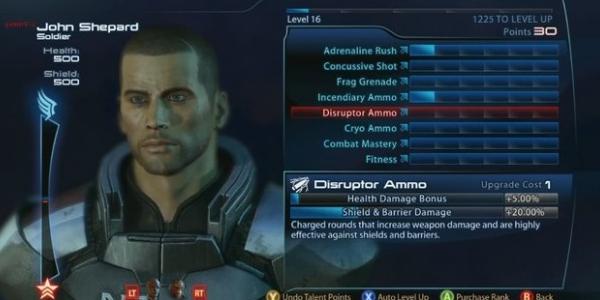
As the Mass Effect series wore on it became apparent that the deep RPG systems featured in the original game were being stripped back more and more with each new release, in favour of a more action-focused style. In itself this transition wasn't a necessarily terrible thing, but the fact that that the series could never decide whether it wanted to be a full-blown shooter or deep character piece meant that it always felt like it was going through a major identity crisis with each game. While the franchise would often sway either too close to classic RPG systems or cover-shooting bombast, if ME4 really wants to impress fans it finally needs to strike the perfect balance between the two. Or failing that, these opposing systems just need to be given more focus; if you can't synergise the two then just focus on one. Neither should feel like a tacked-on feature just so the devs can tick a corporate box.

4. Deeper Dialogue Trees

For as much as Mass Effect 3 got wrong, the biggest fault of the game was just how weaker its dialogue trees were compared to the second game. Instead of opting for the classic three-tiered response that fans of the franchise had become accustomed to, this third entry ripped out the ability to react neutrally in many conversations, essentially boiling communication down to binary responses that were strictly nice or aggressive in nature. But in the modern day of the dominating Telltale games, this lack of choice and basic variation in the dialogue simply won't cut it anymore. In a series that defines itself on player agency and creativity, giving the audience a measly two responses to every piece of dialogue feels lazy. Even then, it's not only the amount of dialogue though that€™s the problem though, it€™s the very way it€™s implemented. Again, to take a page from Telltale, Bioware wouldn't be being innovative if it wasn't adding more dynamic interactions in the dialogue trees. Simple things like creating scenarios that are time-sensitive and where failure to respond could have catastrophic implications would do wonders to add another layer of intensity to this side of gameplay.

3. No Black And White Morality System

While it was pioneering and incredibly innovative at the time, the basic black-and-white morality system of the original Mass Effect feels dated already in 2015. Quite frankly, it's no longer acceptable to have simple good or bad decisions colour-coded for players in games anymore. Moving forward, the series need to delve into more morally grey areas, with player choices not having any obvious right or wrong repercussions. An added layer of uncertainty in the way a player tackles a certain scenario could prove to be exhilarating, and ultimately it only adds a sense of weight to the choices you have to make throughout your newest adventure. Because let€™s face it, all you had to do in the original games to be a good or bad Shep was to either hit all of the blue options or all of the red options the dialogue trees gave you to choose from. There was never really a moment in the first three games where you had to consider whether you were doing the right or wrong thing, and nine times out of ten there was always an option that would please everyone, preventing you from dealing with any negative consequences your choices may have had anyway.

2. Expansive Exploration

Say what you will about the original game€™s Mako, but you have to admit, that awful floaty vehicle at least allowed you to partake in the exciting prospect of exploring new worlds and jumping off the highest peaks of newly discovered planets. While the first entry€™s driving sections were mechanically disappointing, and hell, the explorable worlds themselves were mostly just the same map re-skinned over and over, you can€™t deny that the feeling of wonder and intrigue that these optional sections facilitated didn€™t completely fill you with excitement. For a series that takes place in its own richly detailed and expansive universe, it's a shame that you're rarely ever given free reign to delve into the game€™s history in a meaningful way that doesn't just involve reading hundreds of pages of codex entries. If the upcoming fourth entry wants to deliver the same sense of palpable excitement that came with exploring an uncharted galaxy, then a variety of open environments and richly detailed areas will be essential in consolidating a colourful and vibrant living universe.

1. Seeing The Ramifications Of Your Individual Actions

While the original games boasted deep and engaging interactivity between recurring characters across numerous games, when it came down to it - and contrary to the developers claims - the big decisions that you made in these titles rarely, if ever, drastically changed the world around you. Sure, you could fall out of favour with certain people and you were given the illusion now and again that you were making large, meaningful choices, but what should have been gigantic defining decisions in each game - like the ability to cure the genophage - never hit as hard as they should have because you were rarely given an insight into how these actions actually changed your own individual gaming experience. It just sucks to be told how much you're supposed to be making a difference in this interconnected universe, yet never actually seeing real impact or change take place in the game. Going back to the genophage business, if you decided to cure the Krogans of their affliction, other than a brief cut-scene showing the delight of the species across the planet (which admittedly was a damn good moment) you never actually got to experience the way this decision effected the world around you in a substantial way. This was despite for three solid games nearly every character you talked to told you how much of an impact this would have on the entire universe. What do you want to see Bioware fix from the past games? Let us know in the comments!

Contributor

Josh has over 11 years of experience as a published writer, having worked nine of those years as a full-time content producer at WhatCulture. In that period he has created hundreds of articles, videos and podcast episodes for multiple WhatCulture channels, specialising in gaming, horror and film & TV. He now primarily works as a senior content producer and presenter on WhatCulture Gaming where he co-hosts the WhatCulture Gaming Podcast, a top 3 UK most listened to gaming podcast that he co-created in 2018. Over the years he has reviewed several high-profile gaming releases, covered industry events with on-site reporting, opined on breaking news, and even kicked off his interviewing career by chatting to childhood hero, Tommy Wiseau.