Mortal Kombat: Ranking All The Main Games From Worst To Best

A rundown of the best and worst in the bloodiest franchise in gaming history.
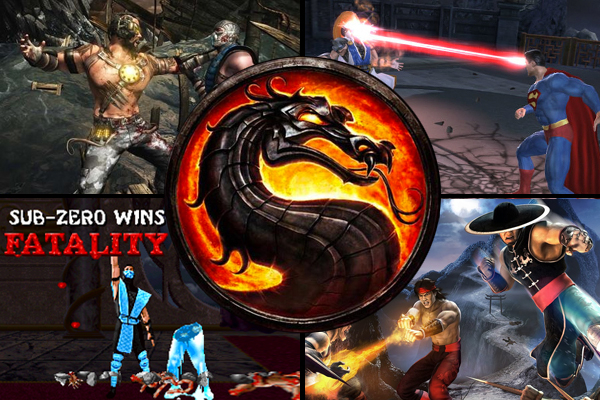
Mortal Kombat is one of the most popular and culturally influential franchises of all time. The success of the original birthed an enormous series of games that has just recently seen the release of its tenth main instalment. Thanks to a rabid and loyal fanbase, it has survived and thrived for nearly 25 years, with no signs of slowing down anytime soon. Given this length of time, it should come as no surprise that MK has experienced many ups and downs as it was forced to adapt to an ever-evolving marketplace. Indeed, Mortal Kombat has run the gamut from critically acclaimed successes to colossal failures, and the result is a series of games with varying degrees of quality. While many of the main titles are genuinely excellent, others are mediocre and uninspiring. Now that Mortal Kombat X has been out long enough to establish itself comfortably within the overall gamut of releases, it€™s time to once again take a look at the main run and see how they stack up against each other. The following are all the major Mortal Kombat games, ranked from worst to best.

10. Mortal Kombat: Armageddon (2006)

Mortal Kombat: Armageddon should have been the greatest Mortal Kombat game ever made, at least in theory. It contains every character from previous games, 62 in total, which is the largest roster of any in the series to date. It also allows players to create their own custom fighters, and it even introduced custom Fatalities, which sounded very promising. Unfortunately, the execution of these ideas didn€™t quite meet their ambition. The sheer amount of characters makes them all feel and play too similarly. Most of them don't feel very distinct from each other, no doubt the result of character overload. It feels like not enough time was spent making each Kombatant feel unique. The replacement of character-based Fatalities with custom Fatalities only serves to make them even more generic, which strips away all the theatricality and creativity that makes Fatalities so much fun. Ultimately, Mortal Kombat: Armageddon suffers from a classic case of quantity over quality. The developers were so focused on packing the game with content that they forgot to give it the proper attention to detail so as to leave any lasting impact. It failed to advance the series to the next level, and in some ways even regressed, but while you can€™t fault it for its ambition, you also can€™t deny how disappointing it was by comparison to its potential.

9. Mortal Kombat 4 (1997)

Mortal Kombat 4 was the franchise€™s very first step into 3D gaming, and as such, was highly anticipated leading up to its release in 1997. After having been limited to 2D for so long, many hoped that this technological leap would be just the jolt needed to create the best and most visually stunning entry so far. Instead what we ended up getting was more of a mixed bag. The transition to 3D was difficult for the development team, and you can feel it in the final game. It feels like it is a bit confused about what it wants to be, like it can€™t decide whether to stay 2D or to completely embrace 3D, the result of which is a mishmash of different design choices that don€™t quite work together. It€™s use of a 2D fighting style on a 3D plane feels clunky, and the action overall has a slower pace compared to earlier games. However, MK 4 can be credited for expanding the mythology and introducing some interesting new characters like Quan Chi and Shinnock, alongside a good assortment of classic fighters. It€™s incorporation of weapons is also an inspired addition. In the end though, while not a completely terrible fighter, Mortal Kombat 4 was a disappointment relative to the hype due it its inability to reconcile its past with the future, something the series would achieve to much greater effect going forward.

8. Mortal Kombat Vs. DC Universe (2008)

This has to be one of the strangest combinations of all time. The two franchises couldn€™t be any different in terms of their appeal, so you€™d be forgiven for thinking their merger is a mistake, which makes the game€™s achievements all the more surreal. This game was the first in the franchise to feature an extensive and engaging story mode, something fighting games rarely ever do. It was largely successful, and can be credited with the beginning of the series€™ foray into cinematic storytelling. The actual fighting is fast and powerful, enhanced by destructible and interactive environments. Overall, despite the bizarre nature of the game€™s concept, it did advance the series in some key areas while mostly maintaining the quality of its gameplay. Unfortunately, despite these achievements, Mortal Kombat vs. DC Universe is crippled by censorship. In order to accommodate the DC universe, the violent content, a signature of the franchise, was watered down. There is little to no blood, and Fatalities are restrained and uninspired. This lack of over the top blood and gore makes the game feel all wrong. It alienates hardcore Mortal Kombat fans, and the result is a game that, while a decent fighter on its own, doesn€™t feel like it belongs in the Mortal Kombat franchise.

7. Mortal Kombat: Deadly Alliance (2002)

Not only did Mortal Kombat: Deadly Alliance realize the potential of a 3D Mortal Kombat better than its predecessor, it brought the franchise forward in many substantial ways. Firstly, the game opens with the death of Lui Kang, a genuinely shocking development that shook things up in all the right ways. This premise opened the way for Konquest Mode, which, while not amazing or groundbreaking, was a refreshing inclusion for a fighting game. Deadly Alliance was also the first game in the series to introduce the Krypt, a mode for unlocking collectibles which has since become a tradition. Some good advancements were made to the combat, too. Every character has three different fighting styles that can be strung together to create brutally effective and complex combos. Weapon combat was drastically improved, allowing you to bleed out your opponent over the long haul. These additions changed the way Mortal Kombat played without sacrificing everything that came before and, most importantly, helped make every fighter feel even more unique. The game does have flaws. Many of the new characters just aren€™t very interesting, and every fighter only has one Fatality instead of the normal two, which makes them more repetitive. Still, Deadly Alliance is a solid instalment in the Mortal Kombat franchise and can be credited with successfully rejuvenating it at a time when it was at risk of being lost amid the expanding console market.

6. Mortal Kombat: Deception (2004)

Mortal Kombat: Deception, a direct sequel to Deadly Alliance, built upon the foundation of its predecessor and made it better. It continued the story developed in the previous entry, and in doing so expanded the mythology even further. Its Konquest Mode is bigger and more expansive than the last, giving fans the first open world in a Mortal Kombat game. Furthermore, death traps were added to arenas, adding yet another bloody element of strategy to combat. Deception also saw the inclusion of Hara-Kiri, which allows the loser of a fight to kill themselves, robbing their opponent of the satisfaction of finishing them with a Fatality. It is a grotesquely humorous way to troll your opponent, which fits right in line with the tone and sense of humour of the franchise. Once again, like Deadly Alliance, Deception suffers from a lack of many new interesting characters, though this is tempered some what by a decent roster of classic characters. It also has extra mini-games like chess and puzzle combat, which can be fun but are mostly forgettable. Overall though, Deception is a worthy sequel to Deadly Alliance, and the best entry in the second generation of Mortal Kombat games.

5. Mortal Kombat III (1995)

Depending on whom you ask, Mortal Kombat 3 is either the best of the original trilogy of games or the worst. The third game took more risks and started experimenting with new features to varying degrees of success. A run button was added to give offensive players a chance to close the distance. Another new feature is the ability to chain combos together, which, if successfully pulled off, can secure victory in an instant. Both of these additions make Mortal Kombat 3 even faster than the previous games, which can make facing an experienced opponent more daunting than ever before. Also introduced were a bunch of new fighters, most of which have become classics - however, at the time they were at the expense of fan favourites like Scorpion and Kitana. This omission upset fans so much that they were later added to the roster in Ultimate Mortal Kombat 3. Technically the game is far superior to the previous two. Environments are more detailed, and many of them are multilayered. However, there is a lack of attention to detail in some areas that temper its accomplishments somewhat. And something has to be said about the Fatalities, many of which are just too strange to be satisfying, especially the beast-morphing Animalities. In the end though, Mortal Kombat 3 does more right than it does wrong. It contributed a great deal to the franchise and is certainly one of the better Mortal Kombat games, even though it doesn't quite live up to the previous two.

4. Mortal Kombat (1992)

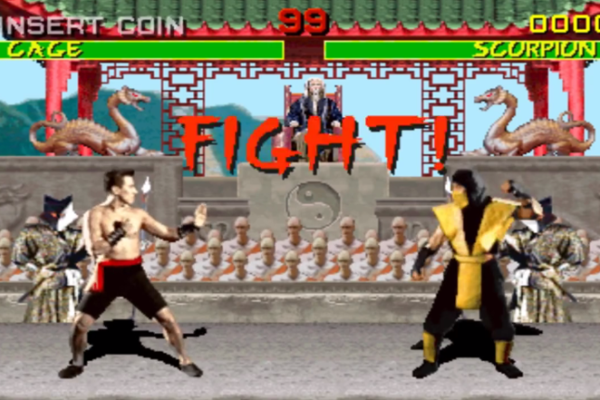
What can be said about the original Mortal Kombat that hasn€™t been said a thousand times already? This is the game that started it all, setting the standard for all future installments to come. Mortal Kombat is a violent, blood-soaked ode to grindhouse-era martial arts films, a fact made clear through its use of familiar and archetypal imagery. It€™s small roster of fighters have all become iconic both within the scope of the franchise and the entire video game industry. The fighting system is simple but satisfying, thanks to its focus on brutality; a key aesthetic choice that separated Mortal Kombat from other popular fighting games at the time. And of course the Fatalities, a staple of the series now, added a gruesome air of mystery to the game. Everyone wanted to know how to pull them off, and envied those who did. Yes, Mortal Kombat truly lives up to its name, and is one of the games that caused enough controversy so as to lead to the creation of the ratings system. Its influence on the video game industry cannot be overstated, and while it may not be the best Mortal Kombat of them all, it still remains one of the best, deserves all the accolades it receives.

3. Mortal Kombat X (2015)

As a direct sequel to the 2011 reboot, Mortal Kombat X not only maintains the excellent standards set by that game, but in many ways surpasses it. The storytelling is the best the series has even been. While it continues to remain just as ludicrously cheesy as it always has, it manages to actually contain some genuinely effective twists and turns, even though the story itself ends up being underwhelming. The gameplay is better than ever. While the formula isn't changed too much in Mortal Kombat X, it's fine-tuned to near perfection. The return of different fighting variations adds a ton of variety for each fighter and speaking of which, Mortal Kombat X introduced a large number of new characters, many of them being worthy additions to the mythology. Sadly though, once again, this comes at the cost of the inclusion of several fan favorites. It does have a few niggling issues though. The online multiplayer isn€™t nearly as robust as the previous game, and is framed with the confusing and superfluous Faction Wars. It also contains obscene amounts of microtransactions and DLC characters, which only frustrates. These problems are negligible when compared to the overall quality of Mortal Kombat X. It may not be perfect, but as a fighting game it is an absolute joy to play, and its success ensures that the next Mortal Kombat won€™t be too far away.

2. Mortal Kombat II (1993)

After the explosion of success and controversy generated by the first game, the second was everything an MK sequel needed to be; taking what fans loved about the original and making it better, birthing a classic in the process. Mortal Kombat II has more of everything. More characters, more levels, more Fatalities, and more modes, all of which are great. All the new fighters fit perfectly alongside the originals, and together make up arguably the greatest roster of any of the games to date. The fighting is vastly improved from the original. New special moves were added to every character, and the fighting in general is faster and more intense. Fatalities were further emphasized and more creative, while stage Fatalities, a universally welcomed addition, only added to the increased brutality. And of course you can€™t forget the ridiculousness of Babalities and Friendships, first introduced here to humorous effect. But the best thing about Mortal Kombat II is that it still holds up today as a great fighting game. While other entries in the series may feel a bit dated, this is near-universally praised and upheld as one of the best by fans. Its critical and commercial success cemented Mortal Kombat€™s hold over the imaginations of gamers, and in doing so made it clear that this franchise would stick around for years to come.

1. Mortal Kombat (2011)

The 2011 reboot of Mortal Kombat - or Mortal Kombat 9 as some call it - is without question the magnum opus of the franchise. Despite being 19 years removed from the original, it managed to recapture the glory and heart of the series in a way that is respectful of the past whilst making big strides towards the future. Essentially both a reboot and a sequel, MK 9 retold the story of the first three games through the use of a time travel twist. This decision allowed the game to return to the roots of the series and bring back all the favorite characters, whilst telling a legitimately engaging and wildly entertaining story. It€™s the first Mortal Kombat where you can actually get involved with the narrative, and that gets more intense as it goes on. Mortal Kombat 2011 was also the first game to perfectly merge the classic 2D fighting style with modern game design. It plays just like the older games without feeling dated, a fact helped by the addition of new features like the X-Ray attack, which are so incredibly satisfying in their brutality. It just looks and plays amazingly well, all while dripping in nostalgia. Lastly MK 9 is just packed with things to see and do. Between the story mode, versus modes that can support up to four people, an extensive online multiplayer, the Krypt and the Challenge Tower - more than enough kontent to keep you playing for a long time. There really is no question that the 2011 Mortal Kombat reboot is the best game in the series. The way it was able to remain faithful while also moving the franchise forward is its greatest strength, signalling the beginning of a new era in a series that had survived two decades-worth of change in a relatively young industry. It€™s a fantastic fighter, a great video game, the best Mortal Kombat by far, and it'll take quite the impressive release to top it. What do you think are the best and worst Mortal Kombat games? Let us know in the comments!

Contributor
Contributor

Film and video game obsessed philosophy major raised by Godzilla, Goku, and Doomguy.