The 20 Worst Games Of 2025
Running down the 20 worst games released in 2025, from the boring to the utterly unplayable.

It has been an okay year overall for games and gamers, despite GTA VI being pushed back again and Warner shuttering Monolith. Indeed, we have managed to enjoy games of all genres, shapes and sizes - from indie to triple-A efforts - including Clair Obscur, Hollow Knight, Ghost of Yotei and Donkey Kong. But, alas, where there is one great game brought into the light, there are always two more duds lurking in the shadows.
2025 has seen more than its fair share of disappointments, upsets and downright stinkers: some games fell at the first hurdle, some didn't live up to the hype and some were never expected to be good. Big IP efforts from Star Wars, Game of Thrones and Lord of the Rings have lacked the wow factor; unnecessary cash-ins like FBC: Firebreak and Splitgate 2 have failed to advance their franchises; and pretty much everything purporting to be a stop-gap for Grand Theft Auto has wound up being a stain on that game's name.
Technical issues and bugs have been everywhere, stories and characters have lacked the qualities we need to get invested, and so many title we've been psyched for have wound up being boring as hell. It's time to take a regretful glance back at the 20 worst games of 2025.
20. Star Wars: Beyond Victory

Star Wars fans have never enjoyed more content than they do at the moment, from TV series, to a new slate of film projects, to an array of video games - many of which have been given the kind of thought and development to make them last years beyond the typically short lifespan of other franchise tie-ins. And the opportunity to actually enter the galaxy far, far away, via VR feels like it has come a long way since the Rogue One X-Wing VR Mission in Battlefront.
Indeed, we now have a list of standalone VR titles from the saga, which allow us to explore hidden corners of the galaxy and well-trodden battles alike. Star Wars: Beyond Victory is more the former, as you step into the shoes of podracer Volo Bolus, under the tutelage of racing legend Sebulba.
The game makes use of both pure VR and MR, depending on the scene, and it looks just as brilliant as you would hope, allowing an up close exploration of expertly animated environments. However. Beyond Victory is painfully short. Even Call of Duty fanboys will be casting this one into the ether, when after an hour and a half of campaign story, it all comes to an end. While it can be (limited) fun to dip back into the arcade mode, there is not nearly enough to justify its existence as a standalone game.
19. Deliver At All Costs

Far Out Games and Konami took on the isometric action-adventure game again in Deliver At All Costs, in which we play as Winston Green, a peppy super-courier who will stop at nothing to deliver his packages on time, and who leaves no bottles of urine by the roadside…
Kind of like a cross between Dead Nation and Crazy Taxi, the graphics and perspective really pop, and the environments are satisfyingly obliterateble. But, like many promising games this year, its Achilles’ heel is its lack of follow through.
The game is a blast for the first hour or so, but once you understand how it works there’s nothing waiting for you on the other side. Like Dead Nation, there are upgrades to make the experience more impressive, but like Crazy Taxi, the narrative is barebones, and so left to stand on the gameplay alone Deliver At All Costs falls.
Nonetheless, there is potential here for future instalments, if Far Out are willing to use the game as a template for something that they can put a proper story behind and give it the staying power this game sorely lacks.
18. Game Of Thrones: Kingsroad

In the six years since the show ended, Game of Thrones hype hasn’t died. This is in part thanks to spin-off show House of the Dragon, and more so thanks to the Warner Bros. marketing behemoth - but it means we continue to get extra helpings of a series most of us can’t leave behind (and which George R R Martin may never let us finish).
However, as we learned from the original show - whose early seasons were the epitome of fantasy entertainment, and whose latter seasons are best left on the shelf - with each success comes an equal disappointment. And Netmarble’s action-adventure RPG Game of Thrones: Kingsroad is just that: a bit of a disappointment.
In Kingsroad you explore the seven kingdoms of Westeros, coming face-to-face with the types of rotters, oiks and vicious marauders that made the show so watchable. It looks fantastic and feels authentic, but what should have been an easy win is instead a gruelling nightmare of progress-hampering roadblocks and microtransactions.
Your in-game Momentum Score regularly stalls your progress, forcing you to grind and graft on side missions for hours if you want to get to the next step of the story. And the only easy way through this? Your bank card. You can literally buy your way out of the monotony at every turn - but this isn’t what we signed up for.
17. Tales Of The Shire: A The Lord Of The Rings Game

In 2023, The Lord of the Rings: Gollum set the floor for LOTR games, as the absolute worst any studio could do to the property. Thankfully, no developer since has gotten close to repeating that travesty, but that doesn’t mean everything has been perfect in Middle Earth either.
Tales Of The Shire: A The Lord Of The Rings Game was much-hyped for one main reason: it was developed by Wētā Workshop, the people who literally made the sets, costumes, weapons, creatures and miniatures for Peter Jackson’s film trilogy. And yet, to look at the game, you wouldn’t know it. It’s not dissimilar in feel and mechanics to the 2002 Fellowship of the Ring game (which itself broke from the films’ aesthetic), but with a much brighter palette and an visual flavour that is reminiscent at times of Zelda, and at other times Animal Crossing.
A life simulation game set in the Shire, Tales of the Shire lets you take control of your own Hobbit in Bywater and attend to Hobbit matters, like cooking, fishing, gardening and decorating your hole. But if you were hoping for much more than this, you need to look elsewhere. It’s boring, it’s underwhelming, and it doesn’t offer anything to fans of either Jackson’s films or Tolkien’s books.
16. Star Wars Episode 1: Jedi Power Battles Remastered

Star Wars: Jedi Power Battles returned to our consoles this year, after a 25-year absence. And a lot has changed in that time. We’ve had seven new films, seven live-action TV shows, and innumerable games, moving from those that paint by numbers to satisfy a film-related demand, to those that stand as galaxy-spanning adventures works of art in their own right.
The original Jedi Power Battles was closer to the former category than the latter, but it built up a strong fanbase as a go-to couch multiplayer that allowed you to smash armies of droids, play as jedi who never got off their asses in the films (Plo Koon, Adi Gallia) and enjoy the broader story of The Phantom Menace. And while this is all still true for 2025’s Jedi Power Battles Remastered, it is no longer enough.
As mentioned, gaming has moved on, and while we wouldn’t expect the JPD remaster to be Fallen Order, we were expecting more than this. For the most part, the game plays like it hasn’t been remastered at all. Yes, it looks sharper and shinier and you can play as Darth Maul this time, but it’s not enough to counterbalance the fact that all the original irritating and slow game mechanics are unchanged. This offers a uniquely frustrating experience that reminds us how far games have come this century.
15. Ambulance Life: A Paramedic Simulator

Simulator fans who want to treat patients in the back of moving vehicles but lack the guts to offer amateur, extra-legal treatments to paying customers off the street, turned this year to Ambulance Life, a paramedic simulator that lets you respond to calls, load up patients, treat them in an ambulance that you also get to drive, and deliver them to hospital.
Job’s a good un, right?
Not quite. Ambulance Life may look good and run well, with an open world environment that’s more convincing than any Saints Row game, but its NPCs, their responses and all the dialogue feel thoroughly artificial. Yes, you get to diagnose, stitch, inject and bandage patients with all manner of injuries (blood and gore included), but there is a verisimilitude missing that is surely the point of the greatest simulators. Moreover, while the on-board computer helps you diagnose and treat patients, it is not always right and sometimes advises uses tools you don’t yet have access to, plus the post-shift scoring doesn’t provide any useful info to help you do better next time.
In all, Ambulance Life is average, safe, a bit repetitive (the danger of any simulator) and lacks the kind of next-level gameplay - such as realistic traffic reactions and meaningful road rules - to make it worthwhile in the long run.
14. Fast & Furious: Arcade Edition

Much like the films, nobody expects much from a Fast & Furious game, and yet even the more jaded gamers amongst us are tempted by an at-home arcade offering, promising as it does the rapid gameplay and easy thrills of the arcade proper.
Well, that temptation has been well and truly obliterated by Fast & Furious: Arcade Edition. Yes, the game is what it says, adopting a retro, arcade style gaming model that you can jump straight into, with nitrous boosts and chaotic setpieces from the films. But, like many arcade games, it is fun for a minute but doesn’t stand up to a proper session. It should be no surprise that the gameplay goes no deeper than the premise, and the game ultimately joins the head of a long line of lazy flops designed as cash-ins on the property, which never had any intention of giving us something more worthwhile.
This is a game that would actually work nicely in a real arcade, but without the big chair and the steering the wheel, the sticky floors and screaming cacophony all around, it has zero charm and offers precious few reasons to return to it.
13. Monster Energy Supercross 25 – The Official Video Game

Video games named after non-video game products aren’t exactly the hallmark of great gaming experiences, and yet it was fair to embrace the frisson around Monster Energy Supercross 25 this year, given the scale of the real-life Supercross Championship it’s based on. Oh, and the fact the game was developed on Unreal Engine 5 by Milestone, whose speciality is this kind of racing game tie-in (including all previous iterations of Monster Energy Supercross, with 2022’s fifth entry being a stand-out effort).
Thanks to UE5, Supercross 25 certainly looks the part, and offers a career mode and full customisation, with an expansive set of tracks. Yet, it hasn’t stuck the landing.
Players of the previous games might be okay, but for anyone starting fresh, this is a rare racer that is tough to just jump straight into, with lax tutorials and a lot to learn. The physics of the game are also a bit wonky at times: this outing uses updated riding physics, which when things go right is crazy fun, with added options for stunts and flair, but which aren’t always stable or reliable.
But, hey, odds are there will be another game in the next year or two, and maybe Milestone will have ironed out the issues by then.
12. Tamagotchi Plaza

Every ‘90s kid remembers Tamagotchi fondly - it was the little keyring you carried around in your pocket with a black and white pixelated creature on it, and if you didn’t care for it or feed it regularly, you got your first taste of loss when you returned to find only a gravestone with the spirit Obaketchi floating next to it.
Well, it’s time for another slice of the bereavement pie, because Bandai’s first real attempt to revive the property in well over a decade, Tamagotchi Plaza, is not great.
The premise is simple: You adopt the role of shopkeeper for the shops of Tamahiko Town and serve customers through the medium of minigames; each game enhances the reputation of the shop, and helps you score Gotchi Point upgrades. And this time everything is full colour and vibrant 3D.
Except that’s all the game is - premise. Once you have played half an hour of Tamagotchi Plaza, you’ve played the game. Repetition is its primary feature, and not even the aesthetic variety of the cute little creatures can drag it back from being a mindless slog.
11. Hotel Barcelona

Everyone loves Deadly Premonition and No More Heroes, so when Swery and Suda51 released Hotel Barcelona, everyone jumped at the chance to score the game as soon as it dropped. But, then again, Deadly Premonition and No More Heroes came out years ago, on totally different consoles, at totally different times - so maybe we should have been a little more cautious.
Hotel Barcelona plonks you in a mysterious hotel between Pennsylvania and West Virginia that attracts serial killers. You - Justine, a federal marshal who shares her mind with deranged murderer Dr Carnival - must kill every killer before you get killed, and escape with your life. And this description sounds basically nothing like the game you wind up playing, not because it was mis-sold, but because the actual experience is a crazy, swirling, hallucinatory carnival of chaos that feels like one of the more surreal animes rather than a US federal police story.
But its aesthetic and off-the-wall narrative premise end up being the best part of what becomes a pretty basic and by-the-book dungeon side-scroller that doesn’t live up to its own wild ideas. Except for the addition of phantoms of your character that assist you in completing the levels, the levels are nothing new; the enemies feel samey; and the combat is too clunky to make it a worthy competitor against other games of this type.
10. Splitgate 2
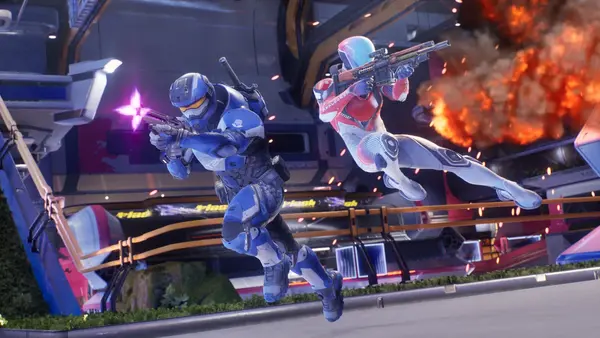
Splitgate: A competitive shooter that seemed to so egregiously rip off Valve’s Portal games that a lawsuit was a certainty. And yet that lawsuit never came.
The free-to-play multiplayer sci-fi shooter lacked polish but was nonetheless embraced by gamers and ignored by copyright lawyers, so much so that it spawned a sequel. But was Splitgate 2 even necessary? As Fortnite has shown, the best FTP MMOs don’t really need sequels, as once you’ve got the platform and the player base, you can build up and out from there.
This is one of the reasons Splitgate 2 was not just a disappointment but a non-event. The game offered no meaningful development of its predecessor’s mechanics. Some of the new features it added, like loadouts, felt unnecessary and cumbersome; and others, like heavy monetisation, felt like a big step back. But that’s not even the half of it.
After a frankly embarrassing reveal and extensive criticism, the game was pulled back to beta in July, just a month after release. It is now about to re-launch as a supposedly totally new title - Arena Reloaded - on the 17th of this month.
9. The Precinct

While enduring the long wait for Grand Theft Auto VI, the gamers who have long since gotten bored of GTA V have turned to anything and everything that they hope will provide that much-needed GTA hit. And that includes The Precinct, an isometric action-adventure game that hearkens back to the original GTA games from the nineties.
The Precinct offers the opportunity to roam the rough streets of 1980s Averno City as Nick Cordell Jr, a rookie cop out to bring justice to the city and avenge his fallen police chief father in the process. It’s a good premise, and on first approach the style, action and gameplay are compelling.
Unfortunately, the game suffers under the weight of too few ideas and not nearly enough variety. The shifts on the beat become repetitive and the missions you are sent on rapidly outstay their welcome – even though the developers specifically tried to avoid this with a so-called “Crime Generation System”. And, honestly, when foiling a bank robbery feels rote and tired, something has gone majorly wrong.
This flaccid delivery was made all the worse by the fact that the game launched too early, with a multitude of bugs and issues, and subsequent patches that brought in further complaints - including a PS5 patch that deleted save files!
8. FBC: Firebreak

One of the biggest upsets of the year arrived in FBC: Firebreak, which was supposed to capitalise on and expand the Remedy Connected Universe (Alan Wake, Control, etc.), but was instead a sort of content-less add-on that bunked out on lore and narrative.
First-person shooter FBC: Firebreak is set six years after Control, and lets you play as the Federal Bureau of Control’s Firebreak special unit as you enter FBC HQ and take out a variety of enemies controlled by the Hiss. And that’s kind of as far as it goes.
The Remedy games are known for their engaging and interlinked storyline, but Firebreak has essentially zero contributions to the narrative. It is also a first-person co-op shooter, which goes against Remedy’s primarily third-person action/ horror style, and has failed even to capitalise on this properly, going live with clunky weaponry and repetitive gameplay.
Apparently a major update is still on the way (including a COD Zombies-style survival mode), but it has been pushed back to early 2026. Whether Firebreak will have many players left by then remains to be seen.
7. Captain Blood
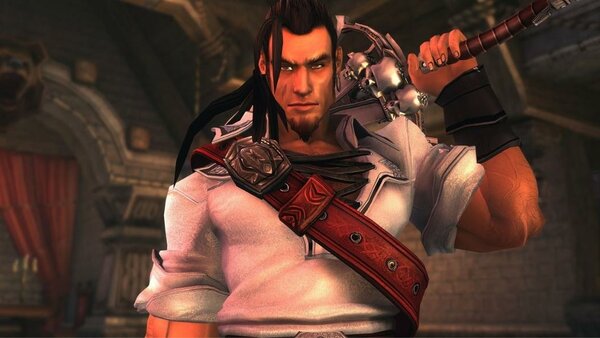
Like cowboys and vampires, pirates are one of these things that have gone in and out of vogue over the years, often dictated by what’s in the cinema at the time - or on streaming, as it may be now. The gaming markets (of the tabletop, board and video varieties) tend to be more insulated from such trends, with pirates an evergreen subject matter so long as the format is solid and the characters engaging.
On the one hand, Captain Blood ought to have been an easy win: a hassle-free pirate hack and slash set in the 1600s and loosely based on Rafael Sabatini’s novel, with all the trappings of the genre, including land and sea adventures, hordes of enemies to cut down, and ship-to-ship battles. On the other hand, its long trudge through development hell, from 2003 to now, might have been a sign of stormy seas ahead.
The game very much feels as though it began development in 2003, and that it never made it past sixth- or seventh-gen gaming. The graphics and aesthetics look like the old PS2 Prince of Persias. The fighting is very old fashioned, lacking grace or nuance and primarily consisting of literally just battering enemies into submission with your sword. And some of the key elements - like the ship battles - border on tedium, without even a strong story to fall back on.
6. Lost Soul Aside

Lost Soul Aside shows just what can be done when a company gerrymanders a development team into existence rather than letting it grow around a project organically. And it’s not great.
The action-adventure RPG puts you in control of Kaser, an orphan of a great fantasy war who sets out to save his sister Louisa and all humanity from the dragon-like Voidrax. You are aided by Arena - a companion character who transforms into weapons and elements (a little like Clair Obscur) - and progress through various environments on your quest.
Lost Soul Aside began as a one-man development from Yang Bing, but Sony took it on and manoeuvred it to become part of its China Hero Project, an initiative designed to prioritise and further the careers and projects of Chinese developers, and thereby changed the course of the game forever. And it is hard not to feel this influence.
The game has a vibe not dissimilar to some of the old Devil May Cry games, or even Final Fantasy, but without the strong, charismatic characters that drove those series to continual success. The combat is decent, but the puzzles are far too easy for a serious gamer, the exploration is generally dull and linear, and the world never sucks you in or feels all that believable.
5. MindsEye

Hailed as the futuristic answer to Grand Theft Auto, and a gem to at least tide us over until VI, if not to usurp it altogether. Such lofty expectations were, of course, never going to be matched, and this is some of the reason why MindsEye has been dragged through the mud this year. But it’s also just not an amazing game.
The third-person action-adventurer lets us become Jacob Diaz, a former soldier with amnesia (honestly, which game character doesn’t have amnesia these days), a MindsEye neural implant, and two missions in the desert city Redrock (a kind of fictional Vegas): 1) to take care of rogue AI robots plaguing the place, and 2) to discover precisely what his deal is.
The aesthetics and gameplay do somewhat call to mind GTA, thanks to the input of ex-Rockstar dev Leslie Benzies, but while Rockstar are generally only interested in putting their games out once they’re thoroughly thoroughly polished, this one seems to have come off the line half-finished. It’s messy, it’s buggy, and there’s just not nearly enough to do in the pseudo-open world environment, leaving players feeling like ghosts in the machine.
4. Hunter x Hunter: Nen x Impact

Hunter x Hunter: Nen x Impact is not the first time the Hunter x Hunter gang have appeared in a fighting game like this, with the crossover Jump games (Super Stars, Ultimate Stars, Force) offering a lasting place for them alongside other big names in anime like Naruto and Dragonball. But this does seem an odd time to capitalise on the IP, given the manga has been going since 1998, and the most recent of its anime series ended in 2014.
Nonetheless, Hunter fans flocked to Nen x Impact when it dropped, hoping this might be the next Soulcalibur or Super Smash Bros, or that it would at least honour the franchise with a smart and innovative approach to fighting that made use of all the IP’s assets - especially given developer Eighting is responsible for plenty other anime-based games, including Tatsunoko vs Capcom. But it should come as no surprise that this isn’t how things panned out.
The 3v3 tag fighter ‘s 2D style makes it distinctive from comparable games, but that’s where the highlights end. Gameplay takes us out of the arena of the carefully timed and crafted combo, and back to the days of whole-fist button mashing. It’s also plagued by lag online, and lacks continuous and fluid animation overall. In all, Nen x Impact is a cheap cash-in, more like a free browser game than one built for ninth-gen consoles.
3. Scar-Lead Salvation

Scar-Lead Salvation sends us into action as Willow Martin, an anime-style, amnesiac soldier of the future, who must escape a strange factory full of hostile killer robots. And there’s not a whole lot more to it.
On the surface of it, Scar-Lead’s visual design and levels look interesting, but once you’re actually in and playing you realise just how simple and uninventive they are, with very basic and blocky layouts, and lack of any real depth, textures or attempts to make something that is graphically worthwhile or impressive.
The levels are procedurally generated, and they don’t just look it, they feel it. The game is mind-bogglingly repetitive, forcing you to face the same rooms with the same enemies over and over again. And it doesn’t have anything to counterbalance this, as the physics are simple and familiar, and the combat basically point and shoot.
Add to this the weird torn suit effect that gradually degrades Willow’s outfit down to her underwear, and this game feels like something you played on Newgrounds back in ‘07, rather than a contemporary release by a serious publisher.
2. Bubsy in: The Purrfect Collection

To those not in the know, Bubsy is like the pre-Crash Bandicoot Crash Bandicoot. Inspired by Mario and Sonic (or a direct rip-off, depending on who you ask), orange bobcat Bubsy hit the gaming world in his own adventure in 1993’s Claws Encounters of the Furred Kind. What followed were a slew of increasingly poorly received sequels, before the series called it in 1997.
But, like all old and terrible properties, the rule of thumb is that if you leave it long enough nostalgia will drive people back into your hands. Bubsy re-entered the scene in 2017’s The Woolies Strike Back, and we haven’t been able to shake him since. Fans of the franchise were treated to The Purrfect Collection this year, which collects the original games from the ‘90s, but suffice to say this hasn’t gone down the way Limited Run Games or publisher Atari were hoping.
Basically nothing has been done to games that were merely passable at the time, and there’s nothing really to sink your claws into in the collection. The controls are awkward, the levels poorly designed and the characters of absolutely no substance - and series closer Bubsy 3D is as bad as ever, making it easy to see why the games got cancelled. To new recruits, converts and die-hard fans alike, this just isn’t good enough. But, hey, Bubsy 4D is on the way next year…
1. Nintendo Switch 2 Welcome Tour

It does seem strange to even be including the Nintendo Switch 2 Welcome Tour as a game, and yet it was sold as such, and so treat it as a game we must.
That’s right, the Welcome Tour is exactly what it says: a hardware exhibition with mini-games - the kind of thing in times gone by that would have been included pre-loaded on the console and be absolutely free. You “play” as a miniature person moving through the Switch 2 hardware and its various accessories (many of which you probably don’t own IRL), and you collect stamps each time you experience one of the console’s features - buttons, ports, etc.
Apart from the fact that it is literally an interactive instruction manual, it serves as an advertisement for the console’s other sold-separately pieces - and you’ve paid money to watch it!
More than anything, this sets a terrible precedent. Monetisation has been the bane of gaming for the past 15+ years, and companies continuously push the boundaries to see just what they can get away with and what people are willing to pay for. A line needs to be drawn somewhere, and it’s on the right side of this. Regardless of whether you can have fun on the mini-games or not, this terrible “game” deserves to be cast back into the boardroom it came from.