10 Horror Movie Plot Twists That Were Totally Pointless
Sometimes, keeping things simple is the way to go.
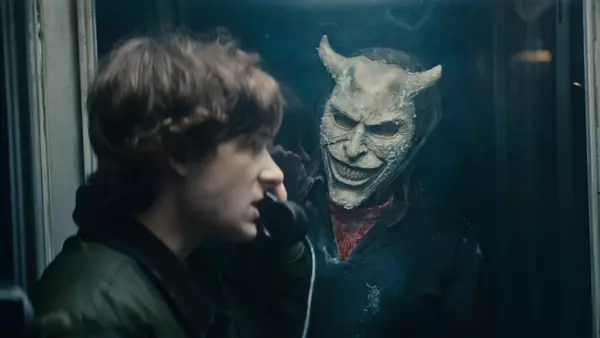
The horror genre is full of plot twists. In fact, what is widely regarded as cinema's first twist ending comes from 1920's The Cabinet of Dr. Caligari, which is one of the earliest horror movies. This device is a great way to frighten the audience and make them question everything, thus furthering the atmosphere of unease that this genre needs.
Furthermore, we all love a good plot twist; it's just an inescapable fact. If you look at the IMDb Top 250, you'll see that movies with a good twist are heavily over-represented there. So, it's easy to see why so many horror features - both modern and old - feature a twist, but that hasn't always been a good thing.
A twist should be there if it's organic and actually adds anything to the film. Unfortunately, quite a few horror pictures throw in a twist just for the sake of it, as if to say, "Look at me! I'm so clever!" This has dragged plenty of horror flicks down, including the following ten movies.
A lot of them are still good, but they would've been better had they not insisted on a distractingly shooed-in rug-pull that added nothing whatsoever...
10. The Call - Michael Is An Incestuous Serial Killer
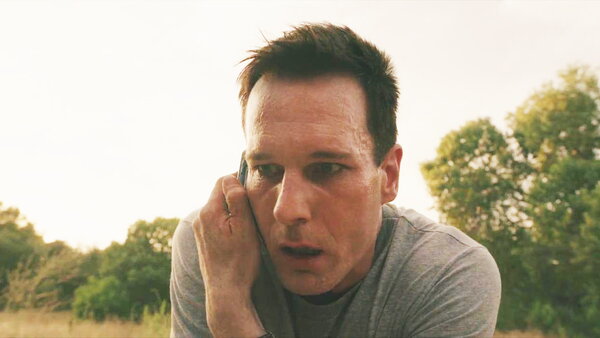
This 2013 flick from The Machinist and Session 9 director Brad Anderson is an outlier on this list, as it doesn't actually start out as a horror film. For the first two-thirds, The Call is a straightforward thriller before a third-act twist morphs it into a horror, and not in a good way.
At first, this is a thoroughly tense low-budget thriller in which Jordan (Halle Berry), a 911 call operator, tries to save the life of Casey (Abigail Breslin), a young woman who's been kidnapped. It was all going so well, and then the movie insisted on taking a left turn into icky territory by revealing that the kidnapper, Michael (Michael Eklund), is a serial killer who scalps women who look like his late sister, who died of cancer, and whom he had incestuous feelings for.
This was just a bit weird, and it drove the story in a far more generic, mediocre direction, eventually culminating in a bog-standard killer's lair finale. Furthermore, at The Call's start, Jordan is traumatized because a teenage girl she was on the phone with was murdered by an assailant, and, in predictable fashion, it turns out that the man who's kidnapped Casey is that same killer.
If The Call had just carried on being the tense, grounded thriller that it initially was, it would've been seen as a success rather than the waste of potential that reviews generally deemed it as.
9. The Conjuring 2 - Valak Is Behind It All

Next up, here's a classic case of a plot element that should've been played straight. It never needed to be a plot twist.
At the end of 2016's The Conjuring 2, it turns out that the demon Valak is behind a haunting unfolding in London, rather than the ghost of the house's former resident, as Ed and Lorraine Warren (Patrick Wilson and Vera Farmiga) had previously believed. There was nothing wrong with this story; the problem was that it was such a predictable reveal, so much so that one wonders why it was even done as a twist to begin with.
Given how much time had been dedicated to Lorraine having visions of the demonic nun, it was evident that the figure would play a part in the movie's story later on. Those plotlines needed to be joined together, after all. Well, a subpar horror flick might dedicate a lot of time to a particular character and then fail to do anything with them, but The Conjuring 2 is an excellent movie and one of the finest horror sequels of the 2010s, so that seemed unlikely.
Let it be said now: not every film needs to have a twist.
8. Last Night In Soho - Ms. Collins Is Sandy

In some ways, Last Night in Soho's twist was successful. It was shocking without feeling completely out of leftfield and yet, when all's said and done, this twist wasn't the right way to go.
Last Night in Soho follows Ellie (Thomasin McKenzie), a fashion student in London who starts experiencing surreal visions of the past, mostly revolving around Sandy (Anya Taylor-Joy), a dancer who was promised a life of glamour only to be abused by the men around her. She was eventually murdered by Jack (Matt Smith), her pimp, as Ellie sees in one of her visuals.
Well, not quite. At the end of the movie, it's revealed that Ellie's seemingly harmless landlady, Ms. Collins (Dame Diana Rigg, in her final film role), is Sandy. In fact, she killed Jack, not the other way around, and she's been a serial killer of men for years. Again, it's a good shock, but where's the logic? Why did the visions lie to Ellie and show her something that never happened?
Worse still, the movie rightly condemns the misogyny Sandy was subjected to, but that's rather undermined when Sandy is turned into a villainous serial killer who tries to murder Ellie. It would've been far better just to play this story out in a more natural direction without insisting on this convoluted, film-breaking reveal.
7. Candyman - William Has Created A New Candyman
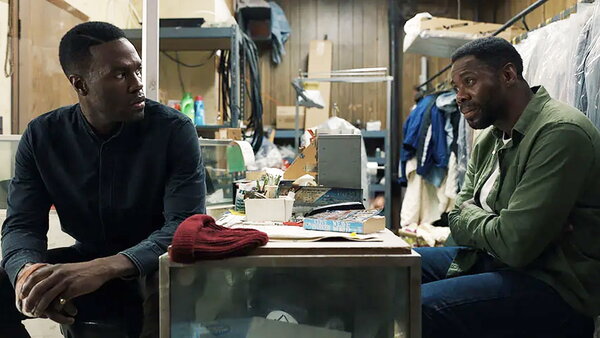
2021's mostly underwhelming Candyman reboot is another movie that shot itself in the foot with a needless twist, and much like Last Night in Soho, it undermined its own themes with this.
In this legacy sequel, Anthony (Yahya Abdul-Mateen II) becomes fascinated by the legend of Candyman, and he creates an art piece that reminds people of the story, unintentionally unleashing a new wave of murders, albeit one carried out by a different Candyman to the one seen in the original films. As is explained in this one, several murdered black men have acted as the Candyman over the decades. And then, after being stung by a bee, Anthony begins to change.
In its risible final act, it turns out a local laundromat owner named William (Colman Domingo) wants to transform Anthony into the latest Candyman by having him gunned down by police, and this is a goal he eventually succeeds in, although William's killed by Anthony's girlfriend Brianna (Teyonah Parris) before he gets to see his creation in action, making this twist feel even more unnecessary.
Having the latest Candyman be the creation of a vengeful African American instead of systematic oppression just felt off, in all honesty, and it's telling that not even an actor as brilliant as Colman Domingo could make this nonsensical twist villain remotely credible.
6. Black Phone 2 - The Grabber Killed Mason & Gwen's Mother
A frustrating trend in movies today is their insistence that everything has to be connected. Far too many movies throw in forced ties to past sequels or connect apparently unrelated events in contrived ways, often via a twist that someone is family - urgh!
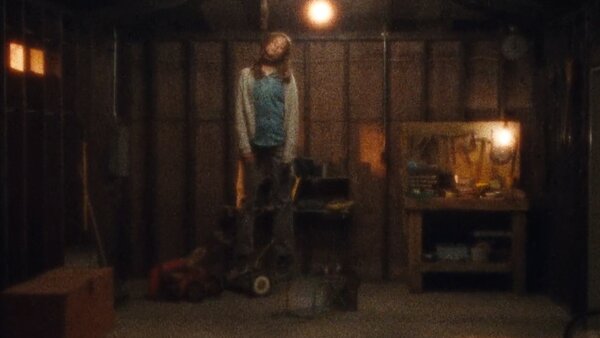
Sadly, Black Phone 2 did exactly that. So, as it turns out, the mother of protagonists Mason and Gwen (Mason Thames and Madeleine McGraw) didn't commit suicide due to being troubled by psychic visions. In fact, the serial killer the Grabber (Ethan Hawke) - who returns in this sequel as a ghost - killed her and then made it look like a suicide.
Once again, there have been plenty of annoying 'Everything is connected' moments in recent films (Mission: Impossible - The Final Reckoning, anyone?), but few have felt as superfluous as this. There was absolutely no need to link the death of the siblings' mother to the Grabber, and the idea of the Grabber as a force of evil that entered the siblings' lives through misfortune was a far more powerful notion.
5. 1408 - The Fake-Out

For a PG-13 2000s studio horror film, 1408 is actually pretty darn good. In this Stephen King adaptation, troubled author Mike Enslin (John Cusack) decides to stay in a supposedly haunted hotel room. 1408 is an affecting horror that works by forgoing gore and jump scares for genuine psychological horror, which is wonderfully conveyed by an absolutely fantastic performance from Cusack.
Nevertheless, for all its strengths, 1408 does feature one of the most predictable twists you'll ever see in a horror movie. The supernatural hotel room messes with Mike's mind, and, at one point, he suddenly wakes up on a beach after a surfing accident, leading him to assume that the whole thing in the hotel room was just a nightmare caused by a head injury.
Of course, it wasn't. He was still in the hotel room, and this couldn't have been more obvious, especially as there's still well over half an hour to go at this point in the film. Throughout this section, which appears to show Mike going back to his daily life, virtually every audience member will be impatiently waiting for the 'reveal' that the hotel room was tricking him.
4. The Gallows - Pfeiffer Is Charlie's Daughter

As if this Blumhouse found-footage horror wasn't already bad enough, it flips its unfortunate audience off one more time with one of the most unnecessary plot twists you'll ever see.
This rancid work follows a group of high school students stuck in their high school at night. They've gone in to sabotage the set of the play one of them is about to star in, as he's now too intimidated to perform. Wouldn't a chat with the teachers have sufficed? Just saying.
Unfortunately for them, they're not alone. During a performance of this school play 20 years earlier, a student named Charlie (Jesse Cross) died when a hanging scene went wrong, and his vengeful spirit is now haunting the group. Charlie's ghost kills most of them, until only Pfeifer (Pfeifer Brown) is left alive, and The Gallows then reveals that Pfeifer is Charlie's daughter... to thunderous apathy.
This wasn't interesting, it wasn't thought-provoking, it didn't enhance the story in any way... just why? Oh, of course, everything has to be connected.
3. The Pale Blue Eye - Landor Is The Murderer

The Pale Blue Eye, a horror-mystery from director Scott Cooper, is another movie that threw in an unnecessary twist in an ill-judged attempt to look smart. In fact, this felt flippant and self-congratulatory more than anything else; once again, a twist just for the sake of it is no good. It has to feel earned and enhance the movie, and this rug-pull did neither.
This one had an awesome premise: detective Augustus Landor (Christian Bale) works with a young cadet named Edgar Allan Poe (Harry Melling) to solve a series of murders at the military academy where Poe is studying. At first, it looks like the three men were killed by Artemus and Lea (Harry Lawtey and Lucy Boynton), both of whom are using black magic to try to cure Lea's epilepsy. It would've been absolutely fine to leave it there.
But no, instead we get an inorganic and tacked-on twist where it turns out that Landor actually killed the three cadets, as they'd assaulted his daughter and caused her suicide. Turning the main detective character into the villain at the end just didn't work, and it invalidated the rest of the story. It might've worked had Edgar Allan Poe been the protagonist instead, but not in this form.
It's a damn shame, as prior to this twist, The Pale Blue Eye was perfectly solid stuff, with Christian Bale and Harry Melling doing strong work. They really deserved better.
2. My Bloody Valentine (1981) - It's Not Harry

My Bloody Valentine, a solid if formulaic '80s slasher, unfolds in a Canadian mining town still haunted by the crimes of Harry Warden. The mine's supervisors neglected their duties to go to a Valentine's dance, and Harry, the sole survivor, later went insane and killed the neglectful employees, before warning the town not to host any more Valentine's dances or he'll kill again.
Inevitably, the town goes ahead with one 20 years later, and a murderer in mining gear starts going around and slaughtering people with a pickaxe. It would appear that Harry has escaped from the asylum... but no. It's actually Axel (Neil Affleck), one of the film's many partying youngsters. A clumsily deployed flashback reveals he was the son of one of the original killer's victims, and the trauma has driven him to become a copycat.
Twists about a slasher villain's identity can work if done well. In this case, it was much better just to leave things as they were. The movie had already done well in building up Harry Warden as a villain, and to negate all of that build-up in the final five minutes was not the right way to go, especially as there hadn't been any sort of hint towards Axel's backstory.
Ironically, the rather weak 2009 My Bloody Valentine remake did actually provide a better plot twist. As for the original, it's honestly one of the better Halloween rip-offs, but the pointless twist came dangerously close to undoing all that good work.
1. Halloween Franchise - Michael & Laurie Are Siblings
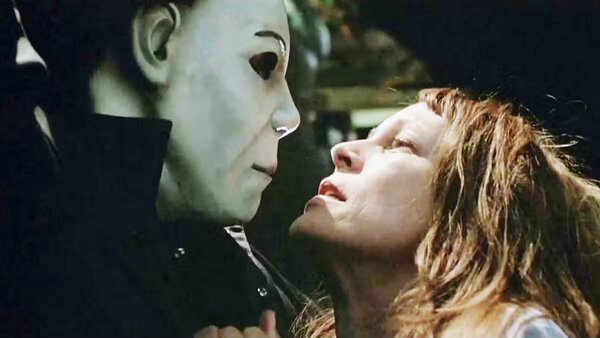
John Carpenter, the man who created Halloween, has openly admitted that this twist was a terrible idea. Apparently, it was something he came up with after too many beers, as he was roped into writing a sequel he'd never planned to make.
So yes, it is revealed in 1981's decent-enough Halloween II that Michael Myers (Dick Warlock) and Laurie Strode (Jamie Lee Curtis) are actually brother and sister, a twist that was never planned for the original film. It was far more powerful to have Michael as a mysterious, unknowable force of evil who went after people for no reason, rather than - once again - insisting on everything being connected.
Not only did this cast a shadow over this first sequel, but it haunted the rest of the franchise for years and years, with this unnecessary familial link meaning that Michael Myers was never allowed to be the mysterious boogeyman he was in the original film.
Thankfully, the 2018 legacy sequel did retcon this reveal, with Laurie Strode's granddaughter (Andi Matichak) describing the sibling link as "just something people made up." In that moment, one could almost hear John Carpenter letting out a huge sigh of relief and finally fixing that mistake after all this time. One can hardly blame him, as this was, after all, the epitome of a pointless plot twist that added nothing to the story.