10 Horror Movies Everyone Watched (But Nobody Remembers)
We may have been mind-wiped because we don't remember these movies at all.

One thing that's arguably worse than a dreadful horror movie is a boring one.
Exorcist II: The Heretic, The Happening, and Troll 2 were hot garbage, but they still managed to leave a massive impression. These abominations were filled with so many ridiculous moments and horrid line-deliveries, it's pretty much impossible to forget about them.
But it does happen. There are several slashers, ghost stories, and found-footage flicks that seemingly disappeared into the ether entirely. There are a couple of horrors that are so impressively bland, it's challenging to recall a single thing about them. Even if you've seen the movies on this list, you may draw a blank when trying to recollect the twist, the ending, or the story in general.
Now, the main reason why certain movies are forgettable is because they're not very good. But even when a horror is solid, it can lack that special something that stops the masses from retaining any memory of it.
Although these ten films range from decent to god-awful, they all share one commonality - we're not 100% sure if we saw them or not.
10. The Ring Two

Ring and Ju-On: The Grudge made serious waves upon their initial release since they were among the first Asian horrors to break into the American mainstream.
These spooky nerve-shredders proved so popular, they both received a Western remake a few years later. When Gore Verbinski's The Ring recouped its budget five times over, it looked like Japanese horror remakes were going to be the next big thing.
Instead, the fad fizzled out just as suddenly as it started. By the time The Ring Two was released in 2005, interest in the property was noticeably lacking. Even though the needless sequel made a profit, it didn't generate the same buzz as its predecessor.
The original contained many iconic moments, including the first death, the tape itself, and Samara's final reveal.
The only thing about The Ring Two that got anybody talking was a bizarre scene involving hostile deer. (The main reason why this sequence stands out is because the special effects are distractingly terrible.)
To be fair, it's understandable why a sequel was greenlit, considering The Ring made a sizeable profit. However, the end-result is such a bore, it would've been better if the brand was left alone.
9. I'll Always Know What You Did Last Summer

Based on the 1973 novel of the same name, I Know What You Did Last Summer follows a group of teens, who find themselves being hunted by the man called Ben Willis, who they left for dead the previous year.
The delightfully campy slasher made a killing at the box-office, encouraging the studio to rush out a sequel the following year. I Still Know What You Did Last Summer was awful, but it's debatably more memorable, thanks to its ludicrous plotholes, dumb twist, and Jack Black's over-the-top performance.
Unfortunately, the same cannot be said about the follow-up. To its credit, I'll Always Know What You Did Last Summer tried doing something different. Rather than churning out the same-old same-old, the story focuses on a new set of characters. Also, having Ben Willis reborn as a vengeful zombie puts a supernatural spin on the dwindling property.
However, the paranormal angle is barely explored in this woeful threequel, since Ben is only revealed as a ghoul during the climax. And thanks to the insufferable ensemble, unimaginative kills, laughable dialogue, and shoddy filmmaking, there's nothing redeemable about this trash.
8. Leatherface: The Texas Chainsaw Massacre III

When a horror film dominates the box office, studios and producers will be quick to turn the IP into a franchise, milking it for everything it's worth. Although these follow-ups are rarely as good as the original, each of them should have something to offer.
However, there's always one that slips between the cracks, and The Texas Chain Saw Massacre is no exception. Tobe Hooper's classic slasher is still one of the most celebrated horrors of all time. The sequel initially received mixed reviews but has since developed a cult-following, thanks to its zany characters, over-the-top action, and elaborate set pieces.
And then there's Leatherface: The Texas Chainsaw Massacre III. Simply put, nothing of interest occurs in this threequel, which is why nobody really talks about it. Even though TCM purists should've seen every instalment in the franchise, nothing springs to mind when discussing this entry.
Despite the fact the follow-up, The Next Generation, is inarguably worse, it's more memorable, due to Matthew McConaughey's ludicrous performance (and that weird Illuminati sub-plot). But since Massacre III can't even be classified as "so bad, it's good," it got lost in the shuffle.
7. Mary Shelley's Frankenstein

After the success of Bram Stoker's Dracula, it was no surprise when Frankenstein got adapted once again to the big screen. With Kenneth Branagh directing, Frank Darabont co-writing, and Robert De Niro portraying The Creature, Mary Shelley's Frankenstein seemed destined for great things.
But much like the Creature itself, what should've been a beautiful creation turned out ugly and malformed. There are nuggets of greatness here and there, but the scenes range from unbearably dull to overbearingly manic, so we're left with a maligned mess of a movie.
Mary Shelley's Frankenstein followed the source material far closer than the Boris Karloff version, but failed to capture the complexity and subtlety of the novel. The birth of The Creature should be a defining moment, and yet proves utterly unmemorable. (For most viewers, how The Creature is brought to life in the first place isn't likely to ring any bells.)
And when Darabont himself called it "the worst movie I've ever seen," you know somebody screwed up big time.
It may not be the worst adaptation, but it's a shame how forgettable Branagh's Frankenstein turned out. (Hell, even Frankenhooker was more memorable.)
6. House on Haunted Hill

The late '90s and early millennium saw a string of 50s horror movies getting rebooted, including The Haunting, Thirteen Ghosts, and House on Haunted Hill. Thirteen Ghosts wasn't received favourably, but has since become a cult-classic. The Haunting remake was atrocious, but is still remembered, mainly because of how unintentionally hilarious it is.
Despite the fact 1999's House on Haunted Hill wasn't as bad as The Haunting and made a reasonable profit, it's fallen off everybody's radar.
Like the original, the supernatural thriller revolves around an eccentric mogul called Steven Price (Geoffrey Rush) who offers five guests a huge fortune if they stay one night in a haunted hospital. When things start going bump in the night, the contestants can't tell if their host is playing tricks on them or if the building is infested with murderous phantoms.
Some moviegoers mightn't know what's going on either, even if they've seen the film, since House On Haunted Hill offers few engaging characters, cool deaths, or interesting twists. Apart from Rush's scene-chewing performance, the spooky B-movie is a schlocky snoozefest.
However, House on Haunted Hill isn't the only remake based on a Vincent Price horror from the '50s on our list (which is weirdly specific...)
5. Curse of La Llorona
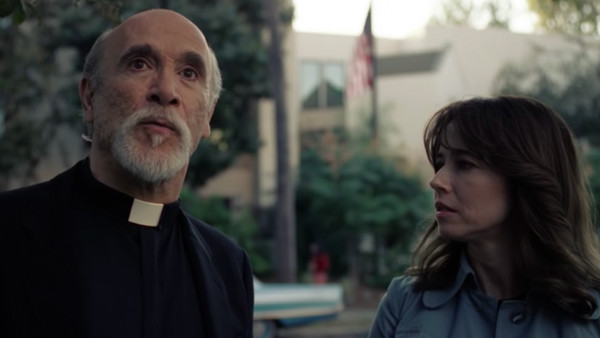
The Conjuring franchise has been a monumental success, raking in over $2 billion collectively, making it the most successful horror series to date.
One of the reasons why the IP did well is because it created a cinematic universe organically, rather than tossing out sequel after sequel. The studio took notice of which characters the fanbase were drawn to, inspiring them to create spin-offs revolving around them. Even though spin-offs can come across as forced, these films were highly profitable since there was an audience for them.
Sadly, that wasn't the case with The Curse of La Llorona. Though the folk horror centres around another ghostly antagonist, it had no real connection with The Conjuring.
But the problem with cinematic universes (and any Marvel fan can validate this) is that Conjuring advocates flocked to the theatres to see La Llorona, believing it would tie into franchise and expand the lore. The Curse of La Llorona made a fortune, but that's only because moviegoers saw it out of obligation rather than genuine desire. But if you had to ask viewers what happened in this unnecessary offshoot, you'll struggle to get a detailed answer.
The Conjuring has had its fair share of misfires, but The Curse of La Llorona is the blandest of the lot.
4. Gothika

Halle Berry was the "it" girl during the early millennium, starring in superhero blockbusters, James Bond, and Academy Award-winning movies. As such, there was a decent amount of hype for Mathieu Kassovitz's Gothika, with Berry playing the lead role.
In this mystery thriller, Berry plays a psychiatrist called Miranda Grey, who becomes an inmate in her own asylum when she's accused of murdering her husband. After speaking to fellow inmates and having multiple ghostly encounters, Miranda starts piecing together the events that led to her husband's death.
Now, the main reason why a film is forgettable is because it's too generic. But Gothika's main problem is how overly complicated the plot is. There's a lot to take in, since the story deals with vengeful spirits, snuff movies, possessions, and an extremely convoluted cover-up.
Also, the glaring plotholes make it hard to pay attention to what's happening half the time. (Who would incarcerate a doctor in her own institution and let her bunk with her ex-patient?)
The only thing that could've stopped Gothika from being a slog was Robert Downey Jr, who plays Miranda's co-worker. Sadly, the Marvel giant is unable to save this film, since he's relegated to a minor role.
3. Diary Of The Dead & Survival Of The Dead
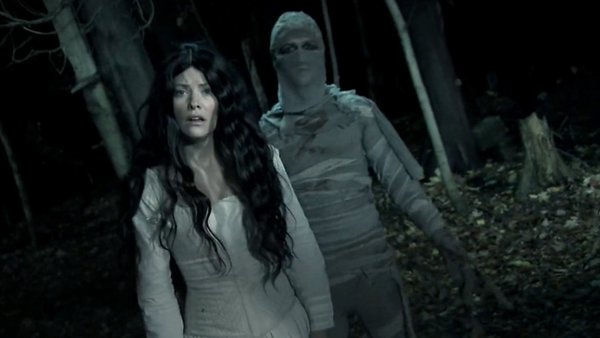
George A. Romero's Night of the Living Dead is responsible not just for launching the zombie maestro's career but jolting the undead genre to life. Though Romero's franchise spawned a slew of copycats, few can compete with his work.
So, when the revered filmmaker returned to the franchise after a 20-year hiatus with Land of the Dead, fans were salivating with joy. And when Romero mentioned he had more Dead films in the pipeline, the hype went through the stratosphere.
Though Romero was true to his word, it's easy to forget the last two Dead instalments ever came out. Diary of the Dead focuses on how the zombie outbreak began, which hasn't been explored since the original. This entry also utilises the found-footage style, which was something Romero had intended for years, due to his fascination with "emerging media".
However, the filming is too slick for a found-footage doc, since shots are constantly intercut and edited. As a result, you have to wonder why Romero was dead-set on applying the real-time documentary method if he refused to commit to it.
Although Diary of the Dead was disappointing, it had some interesting ideas. The follow-up on the other hand, Survival of the Dead, is shockingly devoid of creativity. The characters have zero survival instincts, the zombies have never looked worse, and the kills are insultingly fake.
And since Survival of the Dead was the last movie Romero ever directed, it makes the viewing experience all the more depressing.
2. Night Watch
For the longest time, Timbur Bekmambetov didn't have much luck when it came to directing. Not only did the Russian filmmaker's movies consistently received poor reviews, few of them saw the light of day outside his homeland. As a result, there shouldn't have been much anticipation surrounding 2004's Night Watch, an urban fantasy where the forces of Light and Dark wage a secret war against each other.
But when Quentin Tarantino and Danny Boyle sang its praises, Night Watch started being plugged like crazy. The vampiric thriller ended up earning ten times its budget and became the most successful Russian release ever. It also made Bekmambetov a more prolific director, allowing him to tackle Hollywood pictures, like Wanted, Ben-Hur, and Abraham Lincoln: Vampire Hunter. Looking back, Night Watch seemed like a total success.
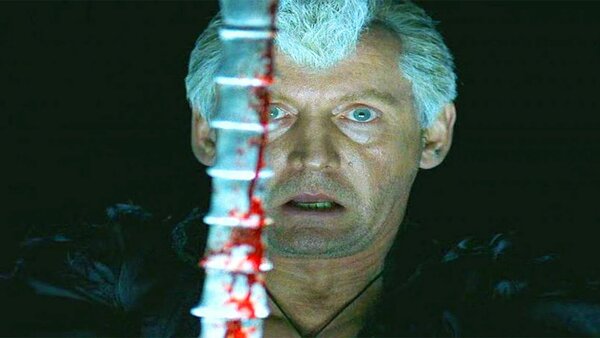
And yet, it hasn't really left a lasting effect. Also, can anyone remember what happened? There was a bad guy who fought people with his spine and... that's pretty much it.
Although there was a lot of pre-emptive excitement for Night Watch, it had completely died down by the time the sequel came out.
1. White Noise

Michael Keaton has had an enormously diverse career over the last four decades, portraying superheroes, supervillains, clones, historical figures, bio-exorcists, a snowman, and the only good character in the Robocop remake. But while reflecting on the Beetlejuice star's acting credits, White Noise rarely gets brought up.
Geoffrey Sax's first theatrical feature centres around an architect called Jonathan Rivers (Keaton) who falls into a depression after his wife drowns. After speaking to a mysterious man called Raymond Price, Jonathan learns the voices of spirits can be detected on sound equipment. Desperate to speak with his wife, Jonathan becomes obsessed with electronic voice phenomena (EVP), which leads to all sorts of problems.
Now, EVP was a fascinating topic in the paranormal community at the time, which is why White Noise ended up earning nearly ten times its budget.
So, why doesn't anybody remember it? Simply put, it's really boring. After watching Keaton's character listening to static for 14 scenes in a row, even the most patient viewers will be bored to tears.
For this reason, White Noise is likely to leave your memory banks for good moments after the credits roll.