10 Near Perfect Horror Movies Nobody Remembers
These films deserve far more love than they get.

One of the biggest creative accomplishments any movie could achieve is sticking in the memory of an audience. This means that it made an impact for one reason or another, enough to be remembered, and there isn't too much more that could be asked than that.
Hell, there are even films that stick out and go down in infamy for all the wrong reasons, but at least they are remembered after the fact. Then there is the other end of the spectrum. Rather than bad movies that are remembered, what about great ones that aren't?
Particularly in a genre like horror where the space is so saturated, even great films can struggle to separate themselves from the pack. After all, how does a genuinely decent slasher break away from the preconception of being a rip-off of Halloween, or a supernatural flick differentiate itself from all the rest?
There are other factors at play as well, whether a project was let down by poor marketing, it suffered from a particularly difficult release date, or, in the case of certain sequels, just couldn't break away from the original's shadow. No matter the reason, there will always be great horrors that get overlooked and forgotten all too easily.
10. The Blackening

The line between horror and comedy can be walked, as proven by the likes of Shaun of the Dead and Zombieland, but it is extremely difficult to get the balance between two such drastically different tones right. This is something that The Blackening managed with stunning effect.
Tim Story's horror comedy, released in 2022, follows a group of black friends being stalked by a killer, and it immediately launches into a hilarious parody of certain tropes and stereotypes within the slasher genre. The tagline of "We can't all die first" speaks for itself.
The movie was buoyed by its wit and charm, as well as a great chemistry between the core group that made it a load of fun. It may not be the first horror film to indulge in poking a little fun at the genre and its clichés, and may well be overshadowed by the likes of Scary Movie and Scream in this arena, but it certainly deserves more recognition.
Though never projected to break any records at the box office, The Blackening wasn't helped by releasing alongside Pixar's Elemental and DC's The Flash, two films that ironically registered as flops for their respective studios, but brought in $750 million between them. This left The Blackening to feed off their scraps, and that probably goes a long way to explain why it has been so slept on for the last four years.
9. My Bloody Valentine

It admittedly may be a bit of a stretch to call My Bloody Valentine perfect, but compared to some of the other slashers inspired by 1978's Halloween, it is a damn fine masterpiece. The issue is that it does not get that recognition.
After John Carpenter brought Michael Myers to life, there came an entire genre littered with poor copycat versions that followed the same formula but without any of the ingenuity or the charm of Halloween. My Bloody Valentine is better than most, and deserves to be in the same conversations as the likes of Friday the 13th and A Nightmare on Elm Street.
Actively looking to subvert some of the more typical slasher tropes, My Bloody Valentine distinguished itself in great fashion. This was not based around sex-crazed teenagers, with director George Mihalka even stepping away from a potential sequel because that was the suggested shift in direction.
Like too many others, the film received a lukewarm (at best!) remake in 2009, but the original still holds up and deserves a place above and beyond the rest of the slashers in the years following Michael Myers' first appearance.
8. His House

For obvious reasons, the cinematic landscape was a weird place in 2020 and suffered greatly. However, streaming was still able to send films out to release where cinemas couldn't, and Netflix, in particular, had some notable successes.
The platform put out the likes of Extraction, The Trial of the Chicago Seven, The Devil All the Time, The Old Guard, and other outstanding pieces, but one that gets slept on far too much is Remi Weekes' His House. Releasing in October 2020, it's not too far to say that it is one of that year's best.
His House's story follows a family fleeing to England from their war-torn home in South Sudan, only to be haunted by a supernatural entity requiring them to pay a debt. The performances are all fantastic, including Wunmi Mosaku, impressing here long before her Academy-nominated turn in Sinners, with a killer twist that will leave jaws on the floor.
While it's not the be-all and end-all, a 100% score on Rotten Tomatoes is an impressive feat not even achieved by the likes of The Shawshank Redemption, The Godfather, or any of the Lord of the Rings trilogy. Even with such an accolade, His House doesn't get nearly the attention it deserves.
7. The Werewolf Of London

Though they may typically underperform when it comes to box office numbers, the Universal Monsters are some of the most legendary characters in the history of horror. The likes of Dracula, Frankenstein's Monster, and the Invisible Man all have storied histories on screen and are as relevant today as ever.
One such creature that arguably hasn't enjoyed the same success as some of its peers is The Wolf Man, with Leigh Whannell's 2025 outing in particular falling short of expectations and potential. It hasn't been all bad, however, as typically its journey can be traced back to 1941's classic of the same name.
This isn't where the cinematic journey started, of course. Though The Wolf Man's influence is comparable to what Night of the Living Dead did for zombies, it was six years earlier in The Werewolf of London that this particular subgenre was introduced to the big screen, though that's in a film that's almost always forgotten about: The Werewolf of London.
Arguably, The Wolf Man overshadows its predecessor in large part because of the design of the wolf itself, as a true beast rather than what could have been mistaken for a particularly hairy human, but The Werewolf of London is far more than just the image of the wolf itself, and deserves the recognition it simply doesn't get as the beginning of this subgenre.
6. The Loved Ones
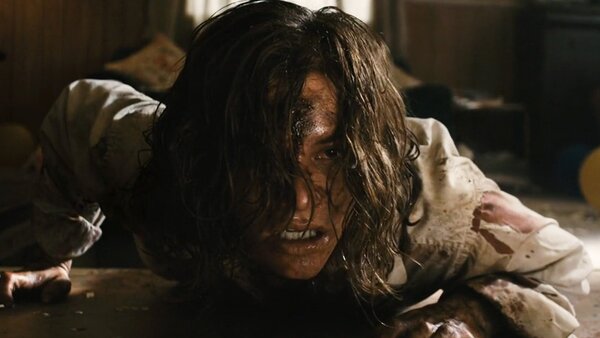
As the horror genre and all the subgenres within it become more and more saturated, it can become harder and harder for any film to stand out among the crowd. This is certainly the case in the world of revenge and torture.
There are plenty of outings - like Terrifier, for example - where the brutality and gore go to the extreme and the shocking seemingly for the sake of it. You could see violence in countless horror films, but there are some that deserve recognition that simply doesn't always come because of the sheer amount around it.
The Loved Ones is one such movie, with the relatively simple premise of Lola (Robin McLeavy) taking her prom invite rejection badly and then begins to torture the boy who was once the object of her affection. As things get deeper, they get far more disturbing, and it does transform into something more than just generic torture and pain for the sake of it.
Something that The Loved Ones' narrative avoids is making Lola a sympathetic character. She wasn't bullied or wronged in the same way as, say, Carrie White, and though Brent (Xavier Samuel) didn't want to go to prom with Lola, he wasn't a bad guy; he was decent enough, making his ordeal so much worse for the audience to watch. This was a fantastic first directing outing for Sean Byrne, and is arguably his best work to date.
5. Stir Of Echoes
There are times you see the assets a film is able to boast, and it becomes unfathomable that it hasn't become more of a success. While Stir of Echoes almost doubled its budget at the box office, it absolutely falls into this category because it is never talked about.
The movie features arguably one of Kevin Bacon's finest ever performances, with a screenplay written by Jurassic Park and Mission: Impossible's David Koepp that was adapted from the Richard Matheson novel of the same name. It had all the pieces in place to be an absolute classic.
Another on this list based in the realms of the supernatural, Stir of Echoes is not a case of being lost in a saturated genre, but rather it suffered from a woeful release date. 1999 was, simply put, a huge year for cinema, leaving Stir of Echoes to compete with the likes of Star Wars: Episode I - The Phantom Menace, The Matrix, and The Blair Witch Project.
However, Stir of Echoes' biggest challenge was being a film about ghosts that released just one month after arguably the most famous and iconic ghost story of all time, The Sixth Sense. That's like trying to follow Jurassic Park with a dinosaur flick, or competing with Jaws when it comes to sharks. Unfortunately, no matter how good it was, Stir of Echoes was always going to be overshadowed and quickly forgotten.
4. The Borderlands
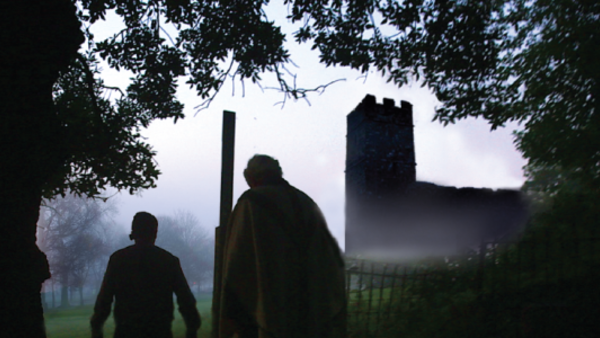
Often when a project underperforms, be it critically, commercially, both, or in any other conceivable metric, there is one major point that the reason can be traced back to. That's certainly the case with many on this list and further beyond.
The Borderlands is slightly different, though, as there are multiple different factors going into why no one really remembers the film. It is an outstanding independent British piece that has garnered comparisons and parallels to The Wicker Man, but has gone wildly under the radar.
To begin with, The Borderlands is, as said before, a British independent horror film, something that was never likely to garner it huge attention, particularly outside of the UK. When it did get a US release window two years after its British run, it was under a different name, Final Prayer, which obviously was never going to help.
Then there is the fact that The Borderlands is an amalgamation of two horror styles that have been done to death, namely a found footage picture revolving heavily around religion. Unfortunately, even if it did find its way to people's attention, it would have had a difficult time shedding the tag of "just another one" before anyone really gave it a chance.
3. The Brood

You can look at the likes of The Prestige by Christopher Nolan, Shutter Island by Martin Scorsese, and The Girl with the Dragon Tattoo by David Fincher as examples of outstanding films that are too often unfairly overshadowed and forgotten about, thanks to the sheer brilliance of the respective directors' filmography.
The same could be said about The Brood. It's not necessarily the first movie that comes to mind when thinking of David Cronenberg, with that title typically going to the likes of The Fly or The Dead Zone, but that doesn't mean that it isn't a stellar effort.
The story was written rather self-reflectively by Cronenberg after going through a divorce, allowing it to go much deeper and more personal than some of his other works. The Fly is a surprisingly character-driven body horror film, as is The Brood, thanks to its deep roots in a dark time of reality.
As well as being overshadowed by other Cronenberg features - releasing in the same 11-year period as seven other projects from the director - and the fact that it bore certain similarities to It's Alive from five years earlier, The Brood too often falls into obscurity when truly it is a fine piece of work from a master of his craft.
2. Creep 2

Never say never, but sequels very rarely live up to or surpass that which came before them. There are the obvious exceptions, the likes of Terminator 2: Judgment Day and The Godfather Part II, and in the horror space there is Aliens, but outside of these, examples are few and far between.
This, and the pre-existing stigma around follow-ups, particularly in horror where too many franchises have far more bad films than good, certainly did not help Creep 2. The original released in 2015, and was well received critically, making it a tough act to follow.
The sequel that came two years later, again written by and starring Mark Duplass, is every bit as good as the original, but has struggled to emerge from the shadow of its predecessor.
It arguably doesn't help Creep 2's cause that it was released in the same year as other Blumhouse projects like Split, Get Out - one of the finest and most important horror films in recent memory - and was sandwiched between Happy Death Day and Amityville: The Awakening. How was it ever going to etch itself into anyone's memory with such immediate competition from within Blumhouse itself?
1. Häxan

There are plenty of movies on this list that have been released within the last few years and have either already been forgotten about or were never known about to begin with. The oldest entry so far has been 1935's Werewolf in London, but Häxan takes the crown, dating back to 1922.
So old is the film that it even predates The Jazz Singer, the first talkie from 1927, so maybe a little more leeway can be allowed for this one being forgotten. At the time, it was at the time a groundbreaking, quasi-documentary-style review of witchcraft, something that audiences may have seen referenced and paid homage to throughout the years, even if they didn't realise it.
Even for a project over 100 years old, some of the depictions of the torture of witches, the satanic aspect, as well as the downright disconcerting imagery are brutal, not to mention the truly unique framing device and cocktail of storytelling styles.
Yes, filmmaking has come a long way in the years since 1922, but this is still a haunting watch. For a Swedish movie perceived to be so offensive that it was banned in the US for a number of years, it feels as though there should be more notoriety for Häxan, but it may be that general audiences have unequivocally moved past such an era.