20 Horror Movies So Good You Overlook Huge Flaws
Psycho is an almost-perfect movie with just ONE terrible scene.

There are so, so many horror movies out there, for it is such a popular genre, and they are easy to make with low budgets. Most horror films fly under the radar to some extent; we tend to remember the really great ones or the notable turkeys. As such, it's easy to forget that most horror flicks aren't amazing or terrible, but they're somewhere in between.
That, alongside the genre's (perhaps unfair) association with sequels, remakes, and duds, is why the best horrors stand out so much. When the stars do align in exactly the right way for a truly awesome horror movie, fans, reviewers, and the general public get justifiably excited, and the work's flaws are more likely to be forgiven.
To give some noteworthy examples, the following 20 horror films all have some huge problems lurking within - poor casting choices, bad characters, questionable writing decisions - and yet, thanks to how strong they otherwise are, all of this is easy to ignore. No movie is perfect, after all, and these gems all compensated for their various shortcomings many times over.
Kicking off with an iconic hit from Blumhouse Productions...
20. Insidious - The Further

To start with, let us wind back the clock to 2010, which was a rough time to be a horror fan. Mainstream western horror was absolutely dominated by subpar studio horror flicks, especially remakes and sequels, and this is why 2010's Insidious was such an incredible breath of fresh air. It was a studio horror film that was, firstly, really good, and secondly, genuinely terrifying.
Thanks to director James Wan's mastery of suspense and jump scares, Insidious was streets ahead of most of its contemporaries, and it was an undeniably exhilarating watch. As such, even though it does lose its way in the final stretch, that's a lot easier to forgive.
The final act unfolds in a spiritual realm called The Further, and this section is distinctly mediocre compared to the rest of Insidious, while the Lipstick-Face Demon - the one who appeared in that jump scare earlier in the movie - looks like a silly Darth Maul cosplay once he properly arrives. Nonetheless, because the earlier sections were so damn good, it's easy enough to overlook this. And besides, Insidious does pull it back at the very end with an unsettling cliffhanger ending that reaffirmed it as, flaws and all, one of the very first horror classics of the 2010s.
19. Frankenstein (1931) - It's A Terrible Adaptation

1931's Frankenstein is among the most iconic horror films ever. Boris Karloff's seminal interpretation of Frankenstein's Monster is one of the most recognizable figures in horror, and this particular work has been paid homage to and parodied by a vast array of movies and shows. It's really taken on a life of its own, so much so that it's a lot easier to forget what a bad adaptation of Mary Shelley's iconic novel it actually is.
Hell, calling it an adaptation feels a little generous, as it basically throws out most of the story while only retaining the central concept. It represents but a surface-level engagement with the story's themes, with the studio prioritizing a fast-paced monster movie over the more philosophical storytelling of the novel.
To be fair, there is the issue of censorship to consider, and they wouldn't have been able to go as hard as later adaptations, but they would've been able to do a bit more than this. In fact, there's a scene in this very film where the Monster accidentally kills a child, a scene which wasn't in the book, and they got away with that despite some resistance.
Nevertheless, despite the studio's unfortunate lack of engagement with the story's philosophical musings, 1931's Frankenstein remains an undeniable horror landmark, and it's one that still works very well in its own right. Besides, thanks to Guillermo del Toro, a faithful film adaptation of the novel does now exist.
18. The Thing - The Limp Final Showdown

John Carpenter's The Thing is an absurdly accomplished horror film that grabs you by the throat from the word 'Go'. From the very beginning, pretty much every single scene piles on the paranoia, the suspense, and the icy drip, drip, drip of dread, so much so that it was always going to be a Herculean task to maintain that flawless sense of escalation all the way to the end.
And sure enough, even something as great as this eventually falters a little. Most of it is brilliant, but the very final showdown between protagonist R.J. MacReady (Kurt Russell) and the titular alien shapeshifter is way too short. Essentially, the Thing pops up through the floorboards, MacReady tosses a stick of dynamite at it, and that's basically all there is.
It's possible that there might be a sense of anticlimax for some, especially on their first viewing, yet such is the strength of the rest of the movie that this disappointing moment is easy to overlook, especially as it's followed up immediately by The Thing's fantastic and legendary cliffhanger ending.
17. The Woman In Black (2012) - Daniel Radcliffe Is Miscast

Much like Insidious, The Woman in Black really stood out because it was a bloody good horror film at a time when such things were dispiritingly rare.
An old-fashioned, traditional ghost story that put atmosphere over gore, this one rose high on its icily bleak vibes, effective jump scares, and terrifying villain, making it a more-than-worthy adaptation of its excellent source material. This was actually the second adaptation of Susan Hill's chilling novel, and arguably the superior one (the 1980s TV film is also good, though), so it was such a pleasantly surprising horror flick that any flaws were much easier to forgive - the most noteworthy one being the main casting choice.
It's easy to see why Daniel Radcliffe was cast, as him doing a Gothic horror story for his first post-Harry Potter outing was an undeniably effective marketing draw, but the harsh truth is that he wasn't right for the role. Radcliffe is an often-underrated actor who's done lots of great work since leaving Harry Potter, yet it was hard to accept him in this role because he was far too young.
The character of Arthur Kipps is a widowed solicitor with a four-year-old son. This part needed an actor in their mid-20s at the very least, but Radcliffe was only 21 at the time of filming. As such, although his performance is solid enough, he is something of a distraction throughout an otherwise gripping watch.
16. Scream VI - You'll See The Twist Coming From Miles Away

With Scream VI, a lot of people will guess who's wearing the Ghostface mask quite early on. Most of the earlier Scream instalments had managed to come up with effective plot twists, but not this one.
In this sixth instalment, a new Ghostface is in New York and leaving behind Ghostface masks at each crime scene. It didn't take a lot to work out that the new killer was Detective Wayne Bailey (Dermot Mulroney). Only a police officer would've been able to access those masks very easily, and when he briefly mentions losing a son but doesn't elaborate, those attuned to this franchise's common narrative trajectory quickly guessed that he was the father of the previous movie's killer, Richie.
This was the first Scream to have three Ghostfaces, and one of the others was entirely foreseeable. That was Wayne's daughter Quinn (Liana Liberato), who 'died' off-screen earlier on and whose 'body' wasn't shown clearly. That's pretty much the number-one giveaway of a fake-out death, so yes, the Ghostface twist was more predictable than it should've been.
But otherwise? Scream VI is an absolute blast. An endlessly entertaining slasher romp with razor-sharp dialogue, performances, and action scenes, Scream VI is not just one of the best instalments in the Scream franchise; it's one of the best slasher films of the 21st century. So yes, it compensates for this foreseeable plot twist many times over, and hey, it looks better after how atrocious the recent Scream 7's ending was.
15. Friday The 13th (2009) - Too. Much. Sex.

Out of all the unwanted horror remakes and reboots that were inflicted upon audiences throughout the 2000s, 2009's Friday the 13th is by far and away one of the very best.
Alongside being a punchy, well-shot, and endlessly fun thrill ride on its own terms, this works particularly well as a throwback to 1980s slasher cinema. With its gory kills, exaggeratedly cliched characters, and gently campy tone, this one captures the heightened vibe that made viewers fall in love with this franchise to begin with, yet crucially, it never becomes flippant or insincere. This is a darker and more grounded work than many of its forebears, so one can still take it seriously.
Having said all of this, there are some moments where it might almost lose a lot of people. Namely, all those ridiculous sex scenes, which saw the campy tone hopelessly overboard into borderline self-parody.
The Friday the 13th films have always had those, sure, but this reboot took things to ridiculous extremes, so much so that if someone walked in at the wrong moment, they might think they were watching porn. There's a particular scene involving the movie's requisite douchebag cheating on his girlfriend that features dialogue that could've come right out of a Brazzers porno. "Your t*ts are stupendous!" "You got perfect nipple placement, baby!" Jesus wept.
The rest of the movie is fun enough to reel audiences back in, but it was a close one. These scenes were totally misjudged.
14. Kwaidan - The Underwhelming Final Segment
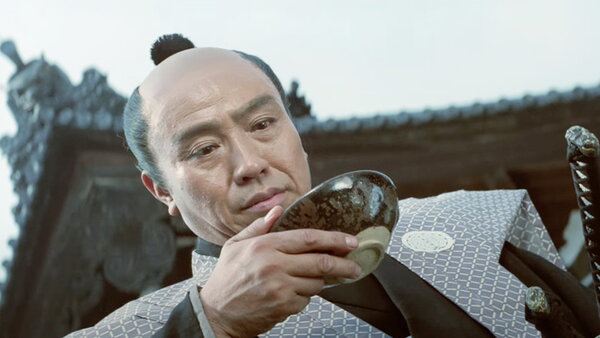
Horror anthologies are usually too uneven to wholly recommend, so Kwaidan is a definite rarity. It helps that it was the product of one director - that being Masaki Kobayashi - and this way, it was a far more consistent work than many horror movies of its ilk. With Kwaidan, Kobayashi adapts several folkloric tales from Japan and blesses these rich stories with some of the most beautiful visuals ever seen in a horror film.
Those coming for scares will be disappointed; this one is all about the vibes, the visuals, and the story. The result is a horror picture unlike any other, and one that's relentlessly compelling and involving... until the very last section, that is.
The first three stories are awesome, but then we get this rushed and pointless fourth section, In a Cup of Tea, which involves ghostly faces appearing in a writer's tea. It's far shorter and weaker than the earlier reels, so much so that one wonders why it was even included. Even more inexplicably, there was a shortened edition of Kwaidan for the original American release, but they didn't cut In a Cup of Tea; they cut the second section, The Woman of the Snow, which is a cracking piece of work.
Nevertheless, In a Cup of Tea only comes at the very end, and it's brief enough to do no significant harm to what is absolutely one of the best horror anthologies ever made.
13. Doctor Sleep - It's Just Not Scary
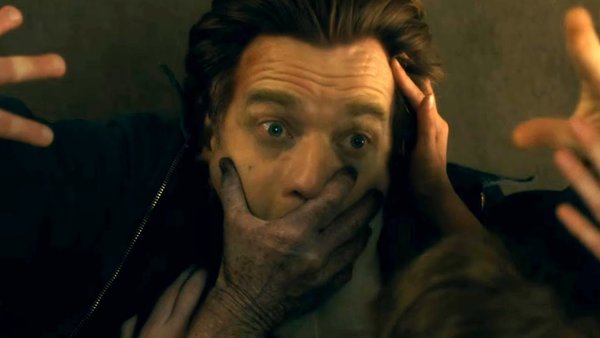
All great horror flicks should be scary, right? Well, not necessarily, and Doctor Sleep, Mike Flanagan's decades-later sequel to The Shining, reaffirms this.
Despite following up one of the scariest movies of all time, Doctor Sleep just isn't frightening at all. There are some thoroughly disturbing moments, including a particular scene involving the death of a child (played by Jacob Tremblay) that apparently reduced many crew members to tears, but in terms of actual scares, there's hardly anything at all. And you know what? It doesn't really matter.
Doctor Sleep works beautifully as a character-driven supernatural drama in which the adult Danny Torrance (Ewan McGregor), now a recovering alcoholic just like his late father, tries to use his supernatural abilities for good and overcome his childhood trauma. The lack of scares might be distracting at first, but Mike Flanagan's brilliant visuals and screenplay, as well as the terrific performances from the entire cast, ensure that this questionable absence is quickly forgotten.
As such, Doctor Sleep joins the club also occupied by works such as Carrie, Get Out, Dawn of the Dead, The Wicker Man, Saw, It (2017), and more: it's a kickass horror movie that isn't actually scary, at least not in the traditional sense of the word.
12. Psycho - The Psychiatrist's Explanation

This here is one of the worst scenes ever to feature in a cinematic masterpiece.
Although now over 60 years old, Psycho has aged unbelievably well, and to this day, it is an extraordinarily powerful and frightening piece of cinema. The shower scene is a strong contender for the best movie scene ever, but virtually every single scene in it is awesome. All of them help to build the world, the characters, the atmosphere of dread, and move the story along. And as for the big scares, they will have entire auditoriums screaming.
There's just one bad moment, one which feels like it came out of a different, far-inferior imitator. That is a massive exposition-dump from a random psychiatrist, who gives this rambling and stilted monologue about Norman Bates' insanity. Nearly everything this guy says is something most of the audience will have worked out for themselves, and in what is otherwise such an intelligent movie, this sure as hell sticks out like a sore thumb.
Thankfully, Psycho jumps right back with a chilling final scene involving the now incarcerated Norman, and the rest of the film is so monumental that it's easy to forget about this scene, as bad as it undeniably is.
11. Dark Water (2002) - It's Too Much Of A Ring Rerun

2002's Dark Water is an absolute Japanese horror classic, not to mention one of the most underrated horror films of this century, and the fairly dismissive reviews from some Western critics really didn't do it justice. Having said that, there is one more-than-fair point they raised: it's too similar to director Hideo Nakata's earlier J-horror classic, Ring.
It's another single mother trying to protect her young child from a creepy female ghost, while various other elements - the tragic backstory of the ghost, the manner of her death, and the general structure of the story - do feel derivative of Ring. In fact, the short story that Dark Water was based on was written by none other than the late Koji Suzuki, who also wrote, you guessed it, the novel of Ring.
If one were to be uncharitable, there is sometimes a sense of Nakata and Co. rehashing the formula that worked so well a few years before. But then again, not every great movie needs to reinvent the wheel. Dark Water is an excellent horror film by any reasonable standard, and it mixes affecting drama with bone-chilling scares to fantastic effect.
10. Suspiria (2018) - The Political Commentary Adds Nothing
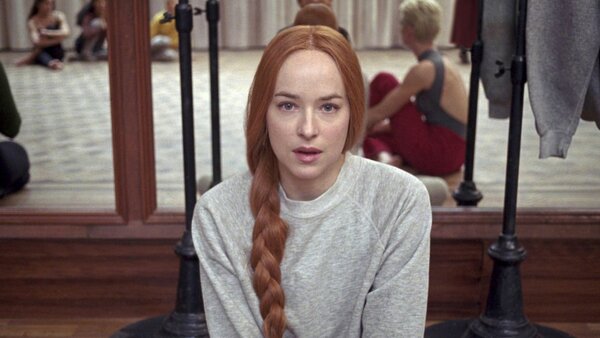
2018's Suspiria is one of the best horror remakes of all time, and a rare one which arguably outdoes the original. It is also, unfortunately, a movie that doesn't always seem aware of just how great it actually is.
This one has got so much going on. It's a visually exquisite, borderline Kubrickan directing tour-de-force from Luca Guadagnino that combines awe-inspiring outbreaks of violence counterbalanced with quiet moments of tenderness, while also benefitting from the committed efforts of a fabulous cast. Oh, and those dance scenes! Those were some of the best dance sequences in any modern film.
All of that was more than enough, but this remake also insists on throwing in a lot of political commentary about Berlin's troubled history, and Guadagnino and his crew never quite manage to make this feel especially relevant to the rest of the story, and it reeked of adding themes just for the sake of it, just to make the movie seem smarter when there was no need. There was already a compelling tale of power, corruption, and infighting within a hidden coven of witches, and these superficial attempts at thematic depth were completely unnecessary as a result.
9. Child's Play - One Of The Most Pointless Twists Ever
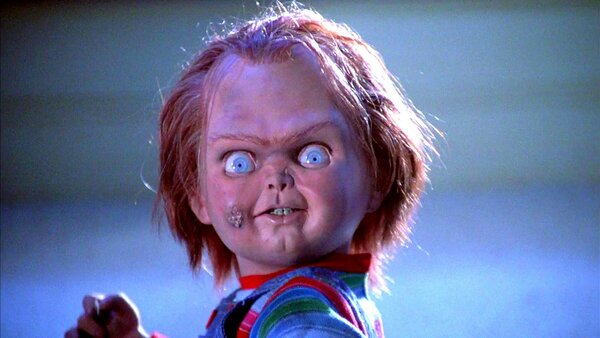
Child's Play is not just one of the best movies in the often-low-quality slasher subgenre, but it also gave us Chucky, a character who's a strong contender for the greatest slasher villain ever. He might be tiny, but he still boots Jason Voorhees into a bin-liner. He's also gone on to headline a surprisingly solid franchise, one which keeps going to interesting new places.
As such, we've got a lot to thank Child's Play for, and it's surprisingly easy to overlook the fact that it features one of the most unnecessary plot twists in horror history. There's this big hand-wringing over whether the unfolding murders are being committed by young Andy Barclay (Alex Vincent) or his new doll, Chucky (voiced by Brad Dourif).
Pretty much everyone will instantly know with cast-iron certainty that Chucky is the culprit. We see a human serial killer (also Dourif) perform a weird voodoo ritual with an identical doll in the opening scene, the marketing pointed in this direction, and also, that doll is bloody creepy, even prior to its possession. Why wouldn't it be the villain?
There was absolutely no need to frame this as a plot twist, and the famous moment where Chucky suddenly comes to life on-screen for the first time would've worked just as well without it. Essentially, plot twists don't get more unnecessary than this one, and it could've sunk a weaker film altogether. Child's Play, however, is strong enough to survive it.
8. Rec - The Plot Holes
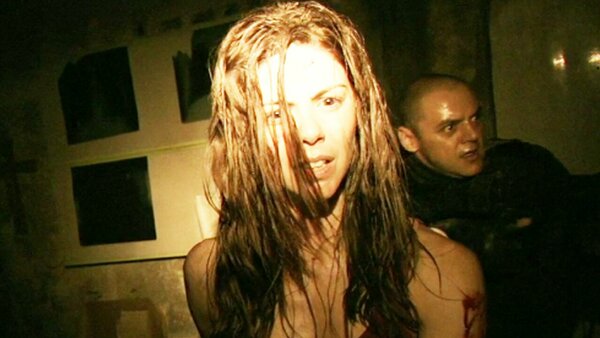
Suspension of disbelief has always been a fundamental part of the moviegoing experience, and pretty much every film you can think of will have some illogical moments here and there. In fact, many great movies don't make perfect sense, but if they really are that good, then viewers will quickly cease to care.
Rec, a Spanish found-footage classic, is an epitomizing example of this. This story of a zombie outbreak in a quarantined apartment block doesn't always make that much sense, and it's difficult not to feel that all that death and destruction could've been avoided had the authorities handled the situation in a more logical way. Most notably, when a lone scientist is sent into the tower block in order to investigate, he is not sent in with any armed back-up, which still feels incredulous.
Still, Rec compensates for this several times over. It's such a terrifying, effective, and immersive nightmare that these gaps in logic are little more than minor distractions. Additionally, Rec came out in the 2000s, an infamously bad time for horror, and most found-footage horrors tend to be fairly weak. As such, when you get a 2000s horror film and a found-footage flick that's actually good, what are a few plot holes?
7. The Birds - The Weak Ending
There's a saying that you don't always remember a whole story, but you'll usually remember how it ends. A terrible ending can sometimes obliterate the entire thing singlehandedly. Sometimes.
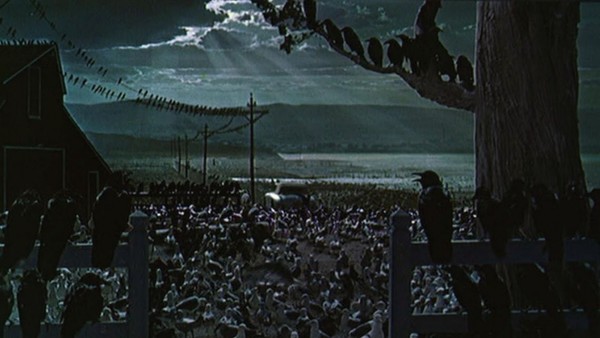
On other occasions, the rest of it is so bloody great that a disappointing conclusion feels like little more than an inconvenience. Such is the case with Alfred Hitchcock's The Birds, a natural horror flick that sees Hitchcock at the peak of his powers. Coming right off the aforementioned Psycho, Hitchcock crafted yet another horror masterpiece, using his consummate command of film language and storytelling to weave an enthralling horror yarn in which everyday birds are suddenly some of the scariest villains in horror history.
But alas, the ending is a total anticlimax. The surviving main characters leave the house they've been hiding in and drive away. Despite being surrounded by birds, none of them attack, and the characters are allowed to drive away. The Birds suddenly ends there, and while ambiguous endings can be good, this one just felt a bit lazy above all else, mainly as the birds just allowing them to leave didn't fit in with what we'd seen from them throughout the rest of the story.
You can put this in the same folder as pictures such as, say, Monty Python and the Holy Grail. It's a mostly magisterial offering that drops the ball in the last moments.
6. The Evil Dead - Goodbye To Characterization

The Evil Dead is a low-budget horror masterpiece. It's a deranged explosion of chaotic carnage and a relentless assault on your senses; the gory deaths, the nightmarish practical effects, the horrible ghouls - they never, ever stop coming.
It's still remarkable that this was produced with hardly any money, which serves as an unquestionable testament to the brilliance of director Sam Raimi and his crew.
This 1981 offering is a fantastic movie all around, although it is a relief that it's less than 90 minutes. Could viewers have taken it for much longer than that? Perhaps not, as this one is a lot. Nevertheless, all of that unhinged bad-taste bloodshed does come at a cost, and that's characterisation.
It might introduce the legendary Ash Williams (Bruce Campbell), but he only became the icon that he is now in the sequel, Evil Dead II. Here, he's a forgettable everyman. And as for the other characters, can you even remember their names? Be honest. Nevertheless, if you can look past the unfortunate absence of memorable characters and treat The Evil Dead as the vibes-based sensory horror that it absolutely is, then you're in for an amazing viewing experience.
5. The Texas Chain Saw Massacre - Amazing Villains, Terrible Heroes

Ingeniously directed and harrowingly intense, The Texas Chain Saw Massacre is one of the most terrifying horror films ever made, and it's one of those mostly-perfect movies with just one huge, glaring flaw. You're likely to love everything about it... except the main characters, who are as bland as tap water.
Sure, one could fairly argue that the focus was more on the scares and antagonists, but even so, it's hard not to feel that these characters could've been better. Well, Final Girl Sally Hardesty (Marilyn Burns) is more fondly remembered, but that's mainly because of Marilyn Burns' stellar performance in the role. On paper, there's virtually nothing to Sally, and her wheelchair-bound brother Franklin (Paul A. Partain) is one of the most irritating horror movie victims ever.
As for the other three travelling with them, many would struggle to even picture them, let alone name them. The only memorable things about them are the ways in which they die. In stark contrast, the villainous characters are fabulous. Leatherface (Gunnar Hanson) is iconic, and he's backed up by a stellar villainous ensemble who are like a grotesque, darkly comedic parody of an American sitcom family. Those guys rock, and they deserved to face off against some better characters.
In a particular example of irony, the 2003 remake actually had better characters; it fixed the biggest issue with the original while being inferior in every other way.
4. The Shining - It Completely Misses The Point

Many films and shows get attacked for being unfaithful adaptations, and this is a debatable issue. On the one hand, it is inevitably frustrating when an adaptation misses the point of what it's adapting, but at the same time, shouldn't anything be judged objectively on its own merits?
Well, regardless of where you stand, here's a movie that proves a terrible adaptation can still be a masterpiece in its own right: Stanley Kubrick's The Shining.
Many will have been shocked to learn that Stephen King, the original novel's author, hated the film so much, but those who've read the book will get it.
In the novel, Jack Torrance is a flawed but decent man who's gradually worn down by his inner demons, his past, and his struggle with writer's block. In fact, King based him partly on himself, as he was battling alcoholism when he was writing The Shining. In the movie, however, Torrance's backstory is thrown out, and he's a far less interesting character who seems kind of sinister from the very beginning.
So yes, it deviates from the amazing source material, yet as a standalone piece, it works beautifully. It's a strong contender for the most technically brilliant horror film ever crafted, and there is perhaps no other psychological horror that burrows into your brain quite like this. Besides, regardless of the questionable choices for the character of Jack Torrance, Jack Nicholson's performance in the role is pure acting perfection, and that has to count for something.
3. The Wicker Man - It Makes No Sense

The Wicker Man, a British folk horror classic from 1973, is filled with plot holes and unanswered questions, ones which audiences are likely to forgive and forget with considerable speed. After all, said plot holes facilitated one of the greatest British horror stories of them all, a haunting and harrowing story of religious hysteria that's still painfully relevant to this day.
The unsettling atmosphere alone could carry this thing for miles, and the fantastic performances and nightmarish ending have helped to weave this one into the stuff of legend. Well, it's also well-known because its appalling Nic Cage remake became a meme, but we don't need to talk about that.
The bottom line is, The Wicker Man is such a powerful and disturbing horror film that'll have audiences far too enthralled to notice just how little sense an awful lot of the story makes, with the villain's horrible scheme relying on many coincidences and on information that would've been hard to obtain while living in an isolated island community.
And even once such things might occur to audiences post-viewing, some unanswered questions and logic gaps feel like a small price to pay for such a phenomenal story.
2. Jaws - The Shark Looks Fake

Jaws is a true masterpiece, and one of the closest things to perfection you can find in this genre. The directing, the performances, the writing, the music, everything about this one is so ridiculously on-point, and given how hellish this one's production was, that is nothing short of a miracle.
One of the biggest problems on set was that the shark models wouldn't work properly, meaning that director Steven Spielberg decided to show the shark as little as possible, which ended up being the best decision he could've made. Firstly, the fear of the unknown and what we can't see sent the suspense levels through the roof, and secondly, the shark model looked fake as hell.
Keeping it off-screen until the final act was definitely for the best because, by the time it does arrive, Spielberg has established such a strong sense of fear and got viewers so invested in the story that they will still feel scared of the shark even though it looks like an oversized bath toy.
Those shark models were never going to be especially effective on their own terms, but Spielberg and Co. cleverly worked around it and made the rest about as good as a movie can be. As such, they compensated for this issue tenfold.
1. It Follows - The Ending SUCKS

And finally, there's It Follows. This particular horror flick has a bloody awful ending, yet most audience members are unlikely to care too much.
The teenage characters come up with this utterly moronic plan to defeat the mysterious entity that is pursuing Jay (Maika Monroe), the story's protagonist. She gets into a swimming pool, and the idea is that the entity will enter the pool, she can get out, and then they'll electrocute it. Err... what were they thinking?
There are so, so many things that could've gone wrong with that plan, and it's a miracle that Jay made it out of that pool alive. Writer-director David Robert Mitchell himself admitted that it was a terrible plan, so it's a mystery as to why he chose this as the movie's climax. Worse still, this finale is not nearly as gripping as the rest of it, and it's followed by a limp cliffhanger ending that isn't terribly satisfying.
Having said all of this, the rest of It Follows is outstanding. A visual masterpiece with an unforgettable electronic musical score, a wickedly smart premise, and a fabulous leading performance from the great Maika Monroe, It Follows is one of the most terrifying and thought-provoking things this genre has produced in the last 30 years. This is another flick that compensates for its biggest flaw many times over, and besides, it was always going to be hard to maintain this unbridled perfection all the way to the very end.