10 Bands Who Should Have Stopped After One Album
When leaving us wanting more would've been enough.

The maxim goes that you have your whole life to write your first album, and about six months to write your second. Thus, a sophomore slump can afflict bands and artists of all genres.
That, combined with all manner of other factors, can lead to disappointing follow ups to smash hit debuts. It’s for the artist to deal with, and if your second album doesn’t work out, start thinking about your third, your fourth, etc.
The music industry is a cruel business, and you need to role with the punches. But what if there’s another way?
What about those bands and artists who might have been better off calling it a day after that first release? Whether it’s due to shoddy workmanship on subsequent releases, or the sheer quality of that magical debut, some acts might just have done their legacy a big favour had they torn up the contract early doors in their careers.
This is purely speculative, of course, and there’s no way of saying how an early bath would have affected these musicians’ reputations. But there’s no shame in keeping the fans wanting more, and sometimes it might just be the best thing to do.
10. Franz Ferdinand

The early noughties were a strange time for the UK indie scene. Every group of thin lads in vintage suits suddenly had a record deal.
The winners were the Arctic Monkeys, who have only increased their status through the tactic of writing good, varied songs. Franz Ferdinand, meanwhile, debuted in 2004 with a stellar album, and have failed to replicate that success ever since.
The self-titled LP is a relic of those days. With so many bands trying to pull off angular art-pop, the Glasgow four piece did better than most. They had the look, the smarts, the swagger - they seemed unstoppable. But what came next just wasn’t the same.
Followup track You Could Have It So Much Better saw the band turning arch and knowing, and they’ve only got deeper into irony ever since.
The thing is, Franz Ferdinand’s music was fun enough without it having to be explicitly comedic. It was well crafted throwback dance rock, with a groove modern mainstream indie has rarely been able to replicate since. They were no doubt having a good time showing off their smarts, but in due course it seemed like the joke was supposed to be on us.
9. Nas

Nas is among the greatest rappers of all time, with terrific technique, a broad scope of concepts, and innovative beats. His discography isn’t without its ups and downs, but he has few out and out duds, and every record tends to offer something interesting.
So why is he on this list? He simply started far too strong. When your career starts with an album like Illmatic, you’re never going to top it. 25 years later, Nas remains defined by his debut, recorded in his teens. It remains one of the most beloved, critically lauded rap records, a classic of a golden age of hip hop.
Rappers from both coasts cite it as a key influence, and due to its sincere, heartfelt content, it has not aged a day (which you can’t say for most ‘90s rap). Changing the game at 19 years of age is a hard act to follow.
It would be unfair to say that Nas should have stopped making music after 1994’s Illmatic, as this would deprive the world of a whole load of good content. But if we’re being realistic, had Illmatic been his sole release, his reputation would likely only be greater today.
8. Coldplay

There’s good money to be made in being mild. By making inoffensive pop rock that fits well over any montage, Coldplay have maintained their status as one of the biggest bands in the world for coming on 15 years now. Had they called it a day after their debut Parachutes, they’d be nowhere near as rich or famous - but a lot better regarded.
Parachutes is, by Coldplay’s standards, a dark, moody, restrained piece. Opening with “Don’t Panic”, Chris Martin’s croon introduces him to the world as a captivating frontman, and the instrumentals are dreamy and rich. The album has little of the bombast that would become Coldplay’s stock in trade.
“Yellow” aims for the anthemic, but there’s no “Fix You”, no obvious festival singalong. Before long they were working with legends like Brian Eno and Beyonce, but Parachutes is a more carefully crafted album. It’s a mile away from the often irritating band we see today.
Would Coldplay trade their success and wealth? Probably not.
When your band is a byword for blandness though, you might look at the choices you’ve made and wonder whether you could've done things differently. No doubt the money goes some way to soothing those wounds.
7. Guns N' Roses

Appetite For Destruction is a hard rock classic, a perfect distillation of mid-80s LA sleaze. The Guns N’ Roses the world first met were dangerous, unhinged. They lived what they sang - life was an endless party, pausing only to hit the studio and lay down further audio venom.
It’s fair to say Guns N’ Roses lost their momentum after their debut. The follow up EP was marred by the regrettable “One In A Million”, a six minute racist, homophobic diatribe. Following this was 1991’s Use Your Illusion 1&2 - nearly two and a half hours of stodge.
The fans, eagerly anticipating the next release, felt jipped, having to buy two records to get their fix, and they were even less happy when they gave the albums a spin. Both feature good tracks, but songs like “November Rain” suck the energy out of an already trying listening experience.
Constant line up changes, the unpredictable behaviour of Axl Rose, and delays to the ultimately disappointing Chinese Democracy haven't helped, but it’s safe to say Guns N’ Roses, in some form or another, can tour Appetite For Destruction forever. Given how indestructible the members have proven to be, they’ll probably do just that.
6. Interpol
In 2002, Interpol were the gloomy guitar rockers we didn’t know we needed. Combining a Joy Division sound with a lothario persona, frontman Paul Banks was like Ian Curtis with a dating app, and their debut Turn On The Bright Lights was a fresh addition to the burgeoning guitar rock scene, combining brooding intensity with arch party tunes.
Interpol have remained in that time period, releasing variations on a theme and maintaining the arty vibes which worked as younger men. Even hardcore fans would concede that their best days are behind them. It is the peril of a great debut, especially one so tied to a moment in time.
Interpol are beholden to their style, and their output has suffered for it. This is the curse of having such a distinctive sound: stick or twist, you’re taking a risk, and sticking hasn’t paid off for Interpol.
They’re still a lauded live concern and their albums tend to be met with a relatively warm reception, but time hasn’t been too kind to the New York outfit. Perhaps they'll mix things up and adopt a mature new direction. Alternatively, in three years’ time it’ll be Turn On The Bright Lights’ 20th anniversary.
5. The Darkness
The problem with jokes is they're less funny the second time. Ask your average Joe how many albums The Darkness put out and you’d receive guesses ranging from two to “who?” But the Lowestoft based hard rockers have in fact furnished us with an astonishing six full length albums over a top heavy 13 year career.
Permission To Land is in its way a good album. “Growing On Me”, "Black Shuck", and the once-ubiquitous “I Believe In A Thing Called Love” are well crafted tunes which hit a sweet spot in their day.
But did anyone need another five records of this stuff? They struck a chord for a while, and were a charmingly unlikely success story. But surely enough’s enough.
They still do the rounds as a live act, and there’s probably still fun to be had from the hits - but there’d be plenty of time to shuffle off to the bar, too.
In mitigation, the latest releases seem to get decent reviews from various hard rock-based publications, so maybe they've still got the goods. When your first release is such an unexpected hit, though, it can be best to thank your lucky stars, and leave it at that.
4. The Avalanches
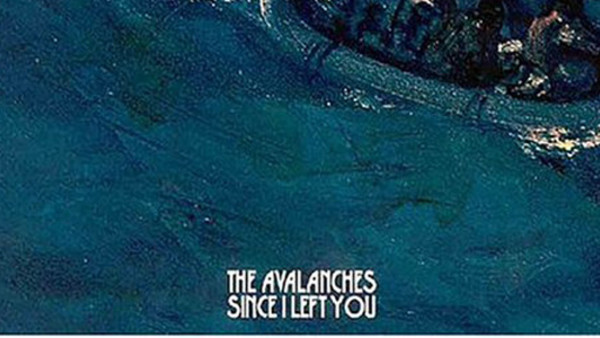
The Avalanches’ 2000 album Since I Left You is among the most innovative and progressive electronic music albums of the early 21st century. Sampling was nothing new, with records like the Beastie Boys’ Paul’s Boutique relying heavily on the practise, but the Australian duo took the art to a new level, creating funky, funny numbers from disparate sources.
The album was a surprise hit, but then what next? For 16 years the answer to that was: not much. Then, three years ago, The Avalanches returned with Wildflower. While it was exciting to receive a new album, ultimately it was more of the same, only not as good.
Horizons were expanded a little with live instrumentation and vocalists on some tracks, like single “Frank Sinatra”, featuring Danny Brown, but otherwise business as usual. There’s no shame in releasing a follow up that doesn’t rise to the levels of an earlier masterpiece, but when you’ve waited 16 years, there can’t help but be disappointment.
The Avalanches’ next move is as yet unconfirmed, but whether they intend on further mastering the art of plunderphonics or taking a step in a new direction, fans will be hoping they don’t leave it until 2032 this time.
3. Sex Pistols

In their brief reign as arch provocateurs of the UK punk scene, Sex Pistols released one album, Never Mind the !*$%, Here's the Sex Pistols. Whether you consider this record a masterpiece or a novelty, its importance is indisputable. Less important? The further dozen albums subsequently churned out in their name.
When you’ve lightning in a bottle like the Pistols, naturally you’ll exploit it, but the Pistols’ posthumous catalogue must rank as some of the least essential music ever put on wax. From live albums to early recordings to a truly audacious three CD box set, there is nothing here you need to listen to.
Best of a bad bunch is The Great Rock 'n' Roll Swindle, the soundtrack to the film of the same name. This features Sid Vicious’ brilliant, snarling cover of “My Way”, as well as some chortling covers of rock and roll classics.
The question of what is and isn’t punk is a tedious one, but the exploitation of the Pistols’ legacy seems far from what the movement set out to represent.
John Lydon has made no bones about his willingness to sell out, but between this and the butter adverts, he's looking less punk by the year.
2. The Strokes
In 2019, it can be tricky to understand why The Strokes were so great. Some simply lump them in amongst the rest of the early noughties indie revolution. Much if not all of this is due to the work that came after 2001’s Is This It, however, as the landmark album remains seminal - the very definition of oft imitated, never bettered.
The debut remains a seamless record, with not a scrap of fat on it. For such a zeitgeist defining album it’s surprisingly timeless, redefining the sound of the city for a new generation. The follow up, Room On Fire, is no means bad, with some choice singles, but the energy had dipped. They didn’t know whether to change things up or not, and compromised on a watered down version of their old sound. The third record’s lead off single, Juicebox, sounds like it belongs on Adam West’s Batman.
The Strokes knew how to party, and lived their rock star dreams. That’s not to suggest that the lifestyle necessarily robbed them of their inspiration. - but Is This It is the sound of hungry, scrappy kids, and in the wake of its success, The Strokes were none of those things.
1. The Stone Roses
The Stone Roses’ debut is a record that defined a genre and inspired countless bands of varying qualities. It remains a favourite of both those who fell in love with it at the time, and a younger generation still discovering it today.
Then came Second Coming. Their sophomore effort is not a disaster by any means: Love Spreads is a classic of their oeuvre, and the Roses should be praised for trying something different. It’s far too long, but a failure it is not. It also isn’t the first album. There was no way they could win.
Trot out another jangly radio friendly record and they’d be accused of lack of ambition. Veer off into a wild new direction and they’d risk haemorrhaging fans. Second Coming was doomed from the off by wild expectations, and the quality of what came before it.
It’s a tribute to the strength of the first album that just about every song from it remains beloved to this day. Second Coming didn’t damage the band’s reputation (though it is a byword for the difficult second album) - but as far as the majority of fans go, there might as well only be one album.