10 Rock Songs That Defined The 90s

It wasn't all perfect, but it was unflinchingly 90s.

When it comes to rock music, the 90s might be most remembered as the decade that exploded grunge all over everything, and that's not necessarily a derogatory statement. Sure, there was heavy dose of melancholy and a sizable dab of sludge working its way through the decade, but it also altered the direction of rock n' roll for many years to follow. Before we move any further, we all need to admit to ourselves that, although this time period was responsible for some truly awe-inspiring rock music--with an influence that can still be felt today--it also gave us a hefty load of pure garbage. Seriously, there was some ridiculously bad music that was allowed to exist, without punishment, for a solid chunk of the 90s. So I should be clear that all of the songs in this article aren't going to be the considered by a lot of you to be the very best of the best. Most of them are good--if not groundbreaking--but it would be irresponsible to suggest that the era isn't defined by at least a couple of questionable tunes. Also, to make this a little easier (and to help ween an overwhelming list of rock songs down to a more manageable size), I've chosen one song from each year to be the designated representative. So rather than fill this whole thing up with the greatest grunge hits of 1992, you'll be sure to find a little more variety. All right then, with the disclaimers out of the way, let's go relive the 90s, shall we?

1990: Warrant - "Cherry Pie"

Now, just hold on a minute. Give me a second to explain before you pick up your pitchforks and track down my home address. I'm sure you're probably thinking, "Why, of all the wonderful rock songs that came out this year, would you choose one that's synonymous with horrible sex puns and a misogynistic music video?" I'll tell you why: BECAUSE THAT'S WHO WE WERE IN 1990. The revisionists among us would like to stuff the whole beginning of the 90s under the "grunge explosion" moniker, but that's not really how it happened. The fact is, in 1990, the music industry was still spinning its wheels. And those wheels were slick with sex. But audiences were starting to feel the first bit of queasiness of a glam rock hangover, and it seemed bands were starting to run out of ideas. Warrant, a reluctant heir to the hair metal throne if there ever was one, had watched their power ballad "Heaven" rise up the charts a year earlier and were ready to prove themselves legitimate hard rock musicians. But the record company had a different idea, seeking another glam rock "anthem" that sounded like Aerosmith's "Love in an Elevator." Lead singer Jani Lane says he spent about fifteen minutes writing the song. He didn't love it, but he appreciated the fact that it gained the band a wealth of attention. (And just regular wealth too, I suppose.) A decade later, however, Lane was less enthusiastic about being known for a song that features the lyric "Swingin' in there 'cause she wanted me to feed her / So I mixed up the batter and she licked the beater." His quote on the matter probably explains how a lot of us feel about his song's unfortunate prominence of the charts: "I could shoot myself in the f*cking head for writing that song." Honorable Mentions: Motley Crue - "Same Ol' Situation," Bon Jovi - "Blaze of Glory," Black Crowes - "Hard to Handle," Aerosmith - "The Other Side"

1991: Nirvana - "Smells Like Teen Spirit"
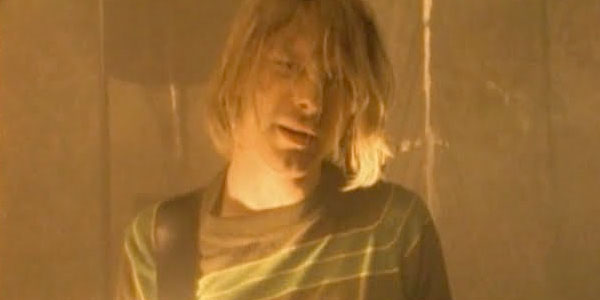
We were angry about something. We just didn't know what, exactly, but we desperately wanted to rebel against that thing that we were mad about. Whatever it was. If you read the lyrics to "Smells Like Teen Spirit," you'll notice that Kurt Cobain wasn't so sure what he was supposed to be rebelling against at the time, either. But we went ahead and made him the face of a defiant generation anyways.
"A mulatto, An albino, A mosquito, My libido..."
What the hell does any of that mean? It. Didn't. Matter. It sounded different. We wanted different. It was a perfect union. In general, grunge music was supposed to be a direct rebuttal to the overly-produced, hollow, sleaze metal that was being dished out in the 80s. But that only makes it more strange that we latched onto "Smells Like Teen Spirit." Because, despite its status as the defining grunge anthem for millions of disillusioned kids, Cobain went into the songwriting process determined to come up with the ultimate pop song. The chords are practically lifted from Boston's "More Than a Feeling," and Cobain was as embarrassed of the song (and its subsequent popularity) as anything he'd ever created. The ironic thing is that we were trying to escape the very thing that Kurt was trying to give us, and in a way, we got what we wanted. Honorable Mentions: Alice in Chains - "Man in the Box," R.E.M. - "Losing My Religion," Metallica - "Enter Sandman," Red Hot Chili Peppers - "Under the Bridge"

1992: Pearl Jam - "Jeremy"

A year had passed since, but we were nowhere near done with the bummer attitudes and unintelligible lyrics. In fact, we were just getting started. Once Nirvana broke out, there was an avalanche of grunge bands that went rolling into mainstream rock radio. Chief among them--at least in the beginning--was Pearl Jam, a group that, like Nirvana, shared a lot of classic rock influences. But their sound was easily molded to fit the doom and gloom narrative we were all holding onto so strongly now, and so of course a song like "Jeremy" was destined to be a success. "Alive" and "Even Flow" had done well enough on rock radio, but it wasn't until PJ released the music video for "Jeremy," which focused heavily on the aspects of bullying and adolescent rage, that Pearl Jam started receiving mainstream attention. You could say that Pearl Jam and Nirvana are two sides of the same coin--Cobain and company brought in the punk ethos while Vedder and his crew provided the hard rock elements, both equally important in defining the "grunge sound"--but there's no doubt that Pearl Jam was establishing its own, distinct identity. Honorable Mentions: Metallica - "Nothing Else Matters,"Guns N Roses - "November Rain," Nirvana - "Come As You Are," U2 - "One"

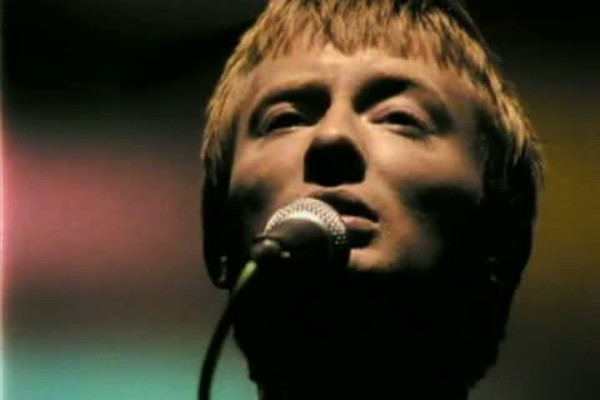
1993: Radiohead - "Creep"

If there was any indication that we had tipped from being a rebellious kind of despondency into all-out depression somewhere in the course of 1993, it's the unlikely success of Radiohead's seemingly on-the-nose ode to obsessiveness and feeling sorry for yourself. When it was first released in '92, "Creep" failed to catch on, and Radiohead swiftly moved onto promoting their next single, "Anyone Can Play Guitar." But rather unexpectedly, "Creep" began to catch fire in Israel, Spain, and New Zealand. Then San Francisco started giving it major airplay. Then radio stations in the rest of the States followed suit. Suddenly, Radiohead had almost no choice but to re-release the single in England. And that's the real story of music fans in 1993. We wanted to be depressed. We thrived on the feelings of heavy-heartedness and melancholia that grunge had taught us all about. And when we didn't get enough of it from our grunge go-tos ("All Apologies" and "Plush" weren't satiating our fix), so we forced a new representative into the role. This, despite the fact that the rest of mainstream radio was pouring out the sunshine and happiness at every possible turn. Honorable Mentions: Stone Temple Pilots - "Plush," Blind Melon - "No Rain," Tom Petty - "Mary Jane's Last Dance," Lenny Kravitz - "Are You Gonna Go My Way?"

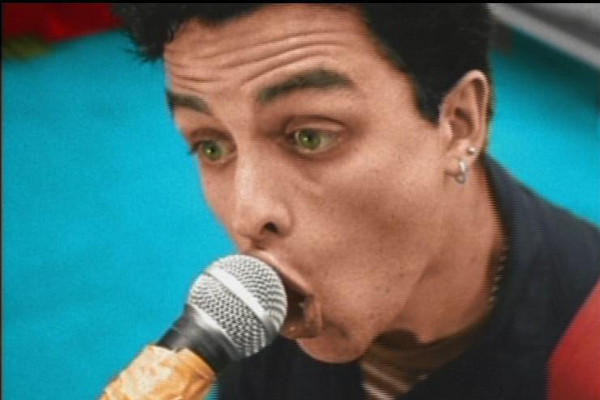
1994: Green Day - "Basket Case"

"Finally, something with a little levity!" That was the feeling shared by a large portion of rock music fans when Dookie came barreling onto the scene. Some of us had grown quite weary of the downer vibes dominating rock radio in the 90s thus far. Not only that, but the death of Kurt Cobain had cast a very dark cloud over the entire year. I think we were all in need of something a little perkier. On the heels of grunge, there was an opening for something equally brash but with a little more zing and pep. Thankfully, Southern California punk was already on the way in, filling that alt-rock hole with some snotty, high-powered, radio-friendly fun. Dookie tackled familiar themes that were favorited among the grunge bands--social anxiety, drug use, loneliness--but did so in a way that was more "turn that frown upside down" than "lock yourself in your room and cry." "Basket Case," in particular, was such a breath of fresh air because it was a frenetic, simple, self-effacing rallying cry that existed, at least it seemed, just for the fun of it. And holy hell was that something people wanted to get behind in 1994. Honorable Mentions: The Offspring - "Self Esteem," Stone Temple Pilots - "Interstate Love Song," Soundgarden - "Black Hole Sun," Beck - "Loser"

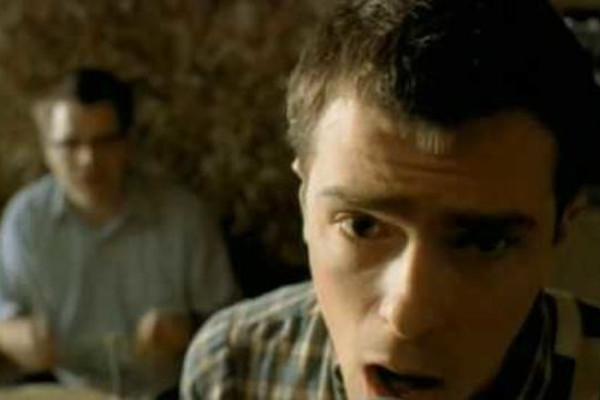
1995: Weezer - "Say It Ain't So"

When Green Day broke through, they brought with them the power pop structures that many emerging alt-rock bands would latch onto. That's not to say Green Day was a direct descendent of Elvis Costello or The Romantics, just that their focus on melody and simplicity above all else made them kindred spirits. And no other group took the ball and ran with it quite like Weezer. By their own admission, Weezer never had a chance at capturing the hearts and minds of rock fans while grunge was the hot thing.
"I remember just being totally shocked at how little people responded to us...We were playing the same songs that eventually became big hits...and we'd play 'em out in the L.A. clubs. They would just be like, 'Go away. We want a grunge band.'"
They were a band that took self-depracation to an even higher level than Green Day, but their sound was so confident--in a quirky, subtle way, but confident no less--that you probably didn't notice right away. That was the other great thing about a song like "Say It Ain't So" and a band like Weezer, you might not have "gotten" them right away, but their sound was so upbeat and precise that you didn't mind listening a few more times to try and figure them out. Honorable Mentions: Bush - "Glycerine," Alanis Morissette - "You Oughta Know," Gin Blossoms - "Til I Hear It From You," Oasis - "Wonderwall"

1996: No Doubt - "Don't Speak"
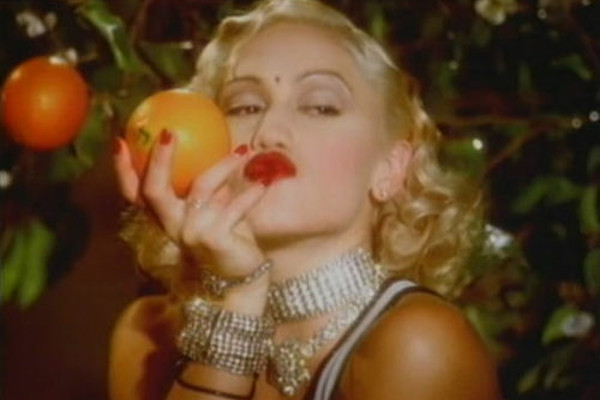
If Weezer's crowning achievement in '95 was proving that power pop was far from dead, then No Doubt's biggest triumph was resurrecting new wave. By mixing the long-dormant genre with a dash of punk and a dollop of ska, No Doubt became a singular representation of the mid-90s. Gwen Stefani was growing into a superstar in her own right, with the media ready to christen her the next Debbie Harry, while her band was busy crafting some of the most memorable songs of the entire decade. Tragic Kingdom was a friendly reminder that, during an era increasingly populated by knock-offs and posers, bands didn't have to compromise their artistic integrity to become a commercial success. They were able to retain their bouncy, funky soul while expanding the boundaries of the genre that they became figureheads for. Although "Don't Speak" might be the least representative song off the world-conquering Tragic Kingdom, no song better exemplifies the mood of that time. The ultimate awkward break-up song--Gwen sings about the heartbreak her ex-boyfriend put her through...while her ex-boyfriend is playing bass guitar in the background--"Don't Speak" paved the way for lighter pop-rock to shine through. We were waving goodbye to the grim, somber first half of the decade and moving onto something a little more sentimental. Honorable Mentions: Smashing Pumpkins - "Tonight, Tonight," Sheryl Crow - "If It Makes You Happy," Everclear - "Santa Monica," Dave Matthews Band - "Crash Into Me"

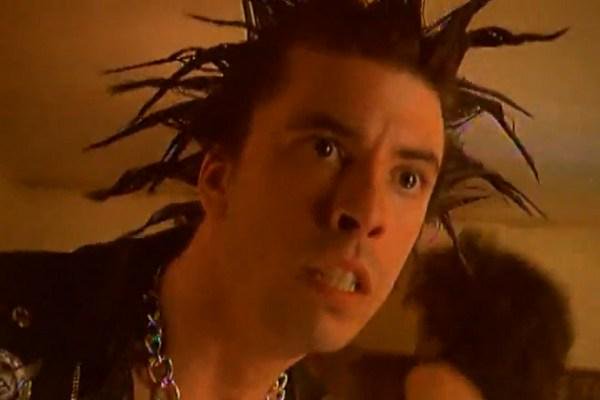
1997: Foo Fighters - "Everlong"

Perfect rock production. That's really what sets this alternative classic apart from the multitude of post-grunge soundalikes that were floating up to the shores in 1997. While far too many people were busy comparing Dave's new band to his old band, Dave was busy writing one of the most epic rock songs of all time. Spaciously layered guitars, razor sharp riffs, a climactic build, and a bombastic finish all easily wrap this up and deliver "Everlong" as the best Foo Fighters track of all time, and maybe even the best rock song from the decade. (No, really.) Written for his new girlfriend shortly after he'd divorced his ex-wife, "Everlong" is a taut and beautiful proclamation of undying love that never quite reaches into schmaltzy territory. There's still an edge to it--a thin layer of dread covering the romantic core--that enlivens the whole song. And that's important, because by the tail end of the 90s, we'd be treated to an endless parade of pseudo alt-rock ballads that tried to do something similar, but without any of the muscle. Or earnestness. A lot of them. An almost unbelievable amount, really. But that's made more bearable by the fact that Dave got there first. And he did it without any of the dewy-eyed pandering. Honorable Mentions: Blur - "Song 2," The Offspring - "Gone Away," Third Eye Blind - "Semi-Charmed Life," The Wallflowers - "One Headlight"

1998: Goo Goo Dolls - "Iris"

There's no getting around it: 1998 was the weepiest, corniest, most emotionally over-the-top year of the decade. When people look back at the decade and talk about how terrible rock music was at times, this is "the times" they're probably talking about. The lightweight pop rock was in full swing, and while most of it was inoffensive (and a handful of it was actually incredible, despite what curmudgeonly old critics say), about half of it was pretty awful. Exhibit A: Goo Goo Doll's "Iris," a song so mushy and bland that it was written for City of Angels, the only movie that could take the premise of Nicolas Cage as a guardian spirit and turn it into something that early-period Meg Ryan would feel comfortable starring in. It's not just that "Iris" is a bad song, it's that it really kicked off a string of solid rock bands cashing in on the "power ballad" sensation that grunge worked so hard to wipe out in the early part of the decade. Soon Aerosmith was following suit with "I Don't Wanna Miss a Thing." It was only a matter of time until "With Arms Wide Open" came to destroy the world. Thanks for nothing, "Iris." Honorable Mentions: Eve 6 - "Inside Out," Third Eye Blind - "Jumper," New Radicals - "Get What You Give," Kenny Wayne Shepherd - "Blue On Black"

1999: Blink-182 - "What's My Age Again?"
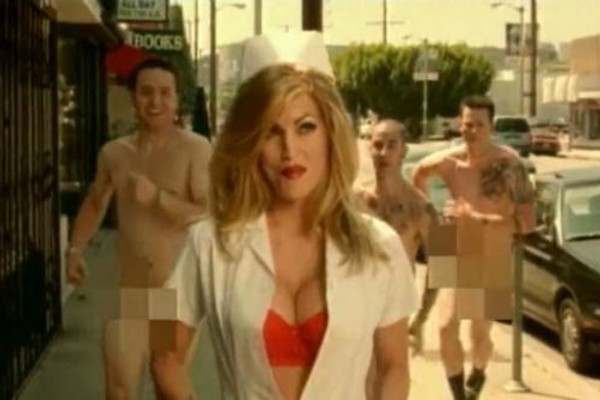
Heading into the new millennium, we'd pretty much had our fill of angst and woe, and were slowly moving past the saccharine ballads that had turned us into big balls of weepiness for the last couple of years. Sure, there was still a bit of anxiety in our blood--mostly linked to an irrational fears that the world was somehow going to end because of a glitch in our computer's numeric system--but we were ready to be distracted from that anxiety in any way possible. Crude humor? Great. Dumb rhymes? Wonderful. Male nudity? Sure. There's no doubt that Blink-182 hit with this song at just the right time. (A couple years earlier they'd have likely been glossed over as an even more immature version of Green Day.) Clocking in at a brisk two and a half minutes, "What's My Age Again?" demanded to be played on loop by ever twenty-something who was insecure about their place in the world and/or felt unable to move out of their adolescent cocoon. Honorable Mentions: Lit - "My Own Worst Enemy," Foo Fighters - "Learn to Fly," Santana feat. Rob Thomas - "Smooth," Blur - "Coffee & TV"

In this post: 
Green Day
 
Posted On: 
Contributor

Jacob is a part-time contributor for WhatCulture, specializing in music, movies, and really, really dumb humor.