10 Times Steely Dan Completely Ran Out Of F**ks To Give

The band's sardonic humor match their personal lives and relationship with music establishment.
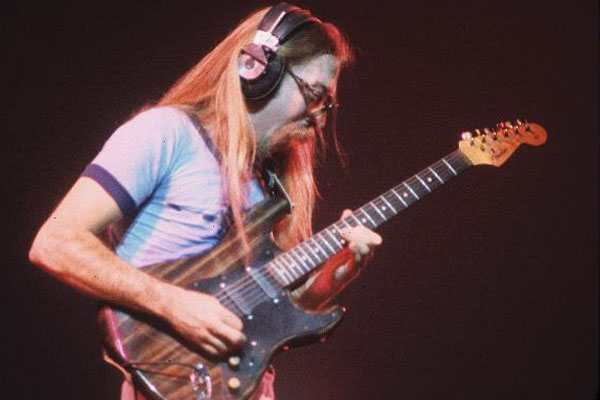
In their review of the classic 1977 album Aja, Rolling Stone dubbed Steely Dan €œthe perfect musical antiheroes for the Seventies.€ To this day, that remains the best description for one of the most mystifying bands in rock history. Often dismissed as muzak by hipsters and punks, the Dan are actually a pretty badass band. It€™s not just that the music is great €“ Steely Dan embodies an ethos that is sardonic, deadpan and anti-authoritarian. Beneath the jazz chords, harmonies and immaculate professionalism, the songwriting duo of Donald Fagen (keyboards, vocals) and Walter Becker (guitars, bass) are a riddle wrapped in an enigma shrouded by angst. If being cool means staying true to an artistic credo, Steely Dan is it, man. When the pop music mainstream was obsessed with hard rock and disco, Becker and Fagen took their cues from Charlie Parker and Duke Ellington. Naturally, such misfits and iconoclasts have their claims to perverse fame outside the musical realm as well. From the music establishment to their own musical contemporaries, Steely Dan has never much cared what anyone else thought of them. They certainly aren€™t for everybody €“ but they don€™t give a f*ck about anybody else.

10. When They Confronted The Rock And Roll Hall Of Fame
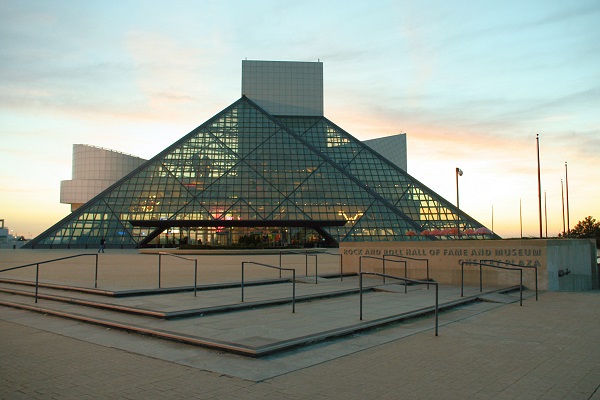
Steely Dan has never had much use for the establishment. When they came up for induction in the Rock and Roll Hall of Fame in 2001, it left a bad taste in their mouth, particularly when they learned that when the Hall inducted Frank Zappa€™s Mothers of Invention in 1998, they neglected to include Jimmy Carl Black, the legendary founding drummer and €œIndian of the group.€ The group also wrote a hilariously demanding letter to the Hall, requesting $1.4 million for some equipment they were donating and compensation for performing at the induction. Becker found out about Black€™s omission from the Hall of Fame from a letter written to him by a fan. In response, Becker said, €œI would like to thank you for bringing to my attention the fact that Jimmy Carl Black has been f*cked over by the Hall of Fame people €“ he is a true sixties icon and as charter member of The Mothers he belongs in there, dammit.€ When it came time to actually accept the award, Becker and Fagen were professional. But Becker left the stage with a subtle chide at the Hall of Fame establishment. Before going off the stage, Becker left with a question, which one audience member got right: €œWho was the original drummer for the Mothers of Invention?€

9. When Walter Becker Lived On An Avocado Farm In Maui

During the group's breakup between their 1980 album, "Gaucho," and their 2000 comeback, "Two Against Nature," Walter Becker lived a life of semi-retirement, and he chose to spend it in a pretty interesting way. Becker moved to Maui and got away from it all. To pass the time there, he ran a small studio and found a second career: avocado farmer. Becker and Fagen, it seems, nearly always remained on friendly and professional terms. Both men released solo studio albums while broken up €“ Fagen more prolifically than Becker, who was presumably absorbed in his laid-back Hawaiian lifestyle. But he still found time, between shifts in the avocado field, to produce Fagen€™s 1991 album Kamikiriad in Maui. Incidentally, these gourmet retirements seem common among rock stars. Maynard James Keenan of Tool has his own line of wine and Ian Anderson of Jethro Tull owns a salmon farm.

8. When They Named Themselves After A Dildo

Most fans know this one. Steely Dan has one of those band names that confuse the general public into thinking it€™s the name of a person, a la Jethro Tull or Marshall Tucker. In actuality, Jethro Tull was an 18th century agriculturalist while Marshall Tucker took their name from a piano tuner. The origin of Steely Dan€™s name is not so quaint. In William S. Burroughs€™s raving beatnik dystopia, Naked Lunch, a character named Mary straps on a rubber dildo to use on the character Johnny. She rather intimidatingly names this instrument the Steely Dan III. According to Mary, Steely Dan I was torn in two by a €œmost terrific vaginal grip€ that could €œcave in a lead pipe,€ which was often done as a party trick. Steely Dan II met with an even more gruesome demise. The name signals Becker and Fagen€™s nihilistic sense of humor and attraction to beatnik counterculture, associating as it so often did with the contemporary jazz scene. But now the next time you hear anyone mention Steely Dan, you can think of literature's most infamous sex toy.

7. When They €œFeuded€ With Owen Wilson And Wes Anderson

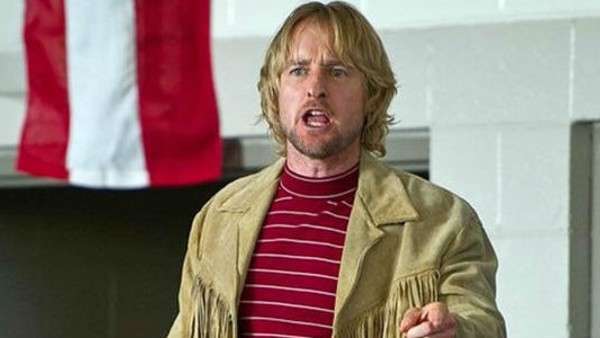
In the early 2000s, Steely Dan had €œfeuds€ with Owen Wilson and Wes Anderson, two men whom Becker and Fagen are clearly big fans of. With Anderson, it started over a letter the duo wrote addressing a decline in certain aspects of the man€™s work. Although critical, Becker and Fagen€™s letter actually raises valuable points. Fans of Anderson€™s came to his rescue, but they missed the subtlety, humor and great appreciation for Anderson€™s work apparent in the letter. Fagen clarified his stance on Anderson in his book, Eminent Hipsters, writing,
€œI think one of the reasons we're intrigued by Anderson is that he seems to be fixated on the sort of geekish, early-sixties adolescent experience that he's too young to have had but that Walter and I actually lived through. And yet he nails the mood precisely, using comic exaggeration and fantasy to do the job.€
With Wilson, it started when Becker and Fagen penned a letter to Luke talking about their worry that Owen€™s career is faltering, that the projects he€™s worked on recently are no good, and that his movie €œYou, Me and Dupree€ rips off thematic content from their song, €œCousin Dupree.€ Wilson responded, €œI have never heard the song €˜Cousin Dupree€™ and I don't even know who this gentleman, Mr. Steely Dan, is. I hope this helps to clear things up and I can get back to concentrating on my new movie, €˜HEY 19.€™€

6. When They Released Aja At The Height Of The Punk Movement
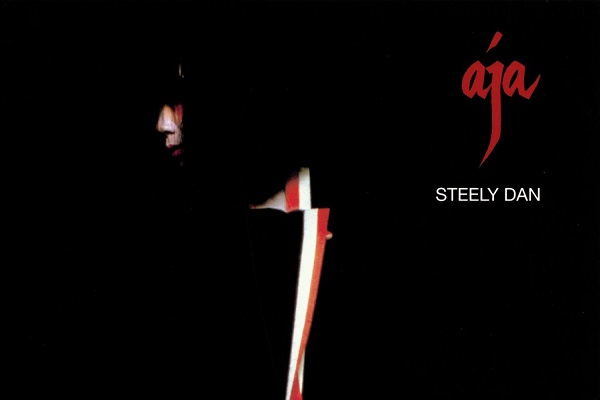
In 1977, punk and new wave were the hottest things on the music scene. Never Mind the Bollocks came out late that year, as did the debut Talking Heads record. Totally unmoved by the current trends, Becker and Fagen created something that was, in its own way, even more defiant: the album that would consummate all their flirtations with jazz and funk, Aja. If future generations remember Steely Dan, Aja will be the first album they€™ll talk about. Featuring just seven tracks, many of which pass the 7-minute mark, the album is smooth as honey, sophisticated, complex, haunting and beautiful. The title track verges on prog rock and features a saxophone solo by one of their highest-caliber guests, Wayne Shorter. Deacon Blues remains one of their most epic loser anthems. Steely Dan definitely gave a f*ck when it came to the production of Aja. It€™s probably their most perfect execution of a concept ever. But what they didn€™t care about was punk and new wave. Despite being seriously out of touch with the dominant mohawk and leather jacket crowd, Aja reached #3 on the US charts, #5 in the UK, and has been certified 2x multi-platinum.

5. When Chevy Chase Jammed With Them

Before Steely Dan became the hit-making machine it€™s known as today, they went through a number of different incarnations and lineups, one of which included the king himself of having no f*cks to give. At Bard College, Walter and Donald formed The Leather Canary with a then-unknown Chevy Chase on drums. Chase and the Dan would go on to have roughly parallel careers. Both share a similarly iconoclastic and acerbic sense of humor. Both were big stars in the late-70s and both rebounded from personal and career slumps in the last decade or so. Chase didn€™t give up on music, either. In 2001 he made his debut as a concert jazz pianist at the Duke University Jazz Festival.

4. When They Won A Controversial Grammy
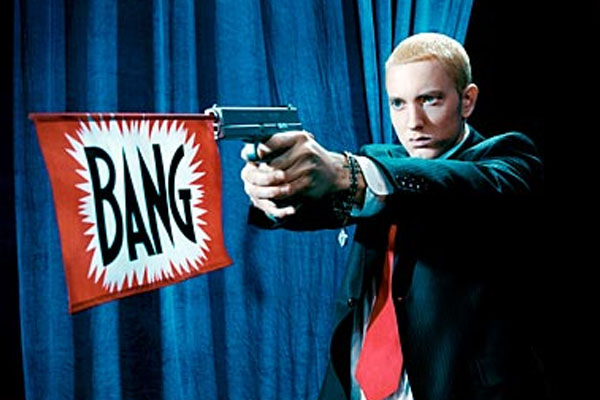
In 2000, €œTwo Against Nature€ was heralded as a comeback for the band, coming out 20 years after the band€™s last album and winning the Grammy for Album of the Year in 2001. But this win has been thoroughly criticized as one of the worst in Grammy history. It edged out Beck€™s €œMidnight Vultures,€ Eminem€™s €œThe Marshall Mathers LP,€ and Radiohead€™s €œKid A,€ all of which were far more significant. But there was one irony to the win that Fagen and Becker took pleasure in. Eminem is widely believed to have been denied the Grammy due to his violent and sexually explicit lyrics. Protests over Eminem were even going on outside the Staples Center as the ceremony happened. €œTwo Against Nature,€ meanwhile, despite being seen as a safer alternative, contained subject matter like incest, statutory rape, drug use, and a man and his mistress plotting to kill his wife. Hiding some of rock€™s most desperate and disturbed lyrics underneath a glossy sound has been the band€™s ongoing prank from the beginning. This time, they got the joke over on a national scale. Remarking on the controversy backstage after the show, Fagen said, €œWe€™d like to thank Eminem for taking the heat.€

3. When They Dropped The Greatest €œF€-Bomb In Rock History

https://www.youtube.com/watch?v=COJXQatf9c0 Nowadays, hearing the €œf€-word in a song is no big deal. But in the 70s, it was used sparingly enough that the few instances of it that do exist €“ The Doors on €œThe End,€ Grace Slick during an appearance on Dick Cavett €“ still have a real potency. Steely Dan belong to this illustrious club of 70s f*ck-sayers, using the word in the coda to the 1973 song, €œShow Biz Kids.€ In the song, Becker and Fagen express their frustration at the California scene they found themselves in: €œShow business kids making movies of themselves; you know they don€™t give a f*ck about anybody else.€ So timeless and catchy was the delivery that Super Furry Animals used the second half as the hook to their 1996 single, €œThe Man Don€™t Give a F*ck,€ repeating it over and over. Actually, everything about the song rules. It contains the most aggressive guitar riffing in band history, with a driving beat and lyrics inspired partly by Lenny Bruce. It also contains a self-reference to a group of hipsters wearing Steely Dan t-shirts, which remarkably didn€™t sound at all dated when Rickie Lee Jones covered the song. And with the long history Steely Dan has of making immortalizing obscure references it makes sense they should preserve themselves in the same amber.

2. When They Dissed The Eagles

In the song €œEverything You Did,€ a typically Dan protagonist discovers his wife has been cheating on him and, in addition to threatening to kill the man, demands she tell him every sordid detail. As the fighting is becoming too loud, he tells the woman, €œTurn up the Eagles; the neighbors are listening.€ Eagles front man Glenn Frey told a story that Becker€™s girlfriend used to play the Eagles all the time, which apparently drove Becker nuts. Nonetheless, despite the sly dig of using Eagles music to cover up a brutal and possibly violent lovers€™ spat, The Eagles returned the favor, so to speak, by mentioning €œsteely knives€ in the hit €œHotel California.€

1. When Fagen Wrote About His Later Career With Brutal Honesty
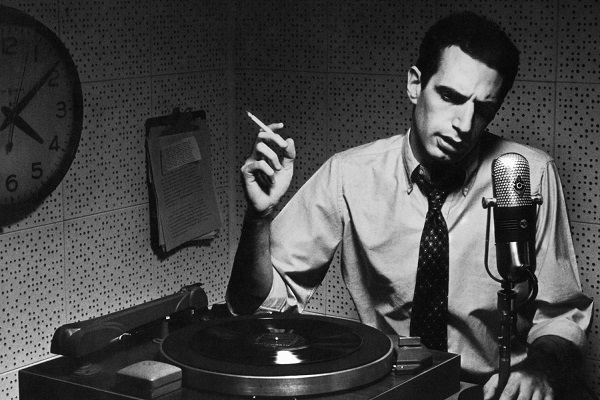
Steely Dan drew a small amount of controversy when they were announced as part of the 2015 Coachella lineup. The festival€™s younger, hipper target demographic generally regards the Dan as boring €œdad rock,€ but it didn€™t stop Fagen from having fun with his position as the cranky old guy. Fagen wrote about the experience of performing at Coachella, and his later career generally, in a series of installments for Rolling Stone. Among the big reveals from the diary, Fagen writes of performing with fellow €œtoken old-guy band€ AC/DC, a band whose name he€™s heard over the years but whose music he's unfamiliar with. He also writes of performing at a private party for the fiftieth birthday of a €œprominent film actor who in the last few years has become a colossal movie star,€ protecting the star€™s anonymity by resorting to initials: R.D. Jr. Much of this kind of material also finds its way into Fagen€™s 2013 memoir, €œEminent Hipsters.€ In a discussion of his later career, Fagen sums up the essence of cold Steely Dan humor, as well as the band€™s no-fucks-to-give ethos, with a bitter reflection: €œTonight the crowd looked so geriatric I was tempted to start calling out bingo numbers€ So this, now, is what I do: assisted living.€ Are you a fan of Steely Dan? Share your appreciation below in the comments thread.

In this post: 
Steely Dan
 
Posted On: 
Contributor
Contributor

Kyle Schmidlin is a writer and musician living in Austin, TX. He manages the news blog at thirdrailnews.wordpress.com. Follow him at facebook.com/kyleschmidlin or twitter.com/kyleschmidlin1.