13 Greatest Albums To Come From The 27 Club

So much tragedy. So much legendary music.
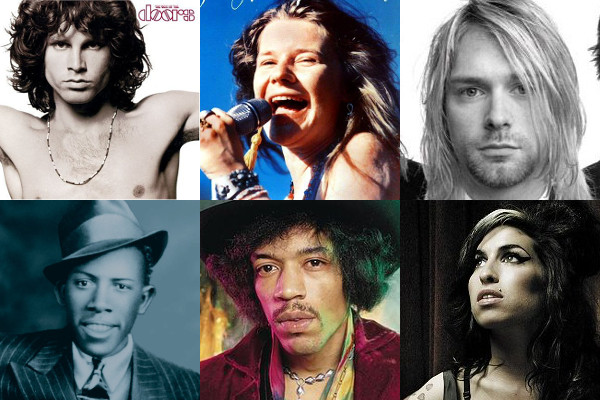
The 27 Club, for those blissfully unaware of this legendary coincidence in rock and roll, is the name given to a collection of musicians who tragically met their end at the tender age of 27. Popularized after the death of Jim Morrison in 1971 - who was the fourth famous 27-year-old musician to die over the course of two short years, after Brian Jones, Jimi Hendrix, and Janis Joplin - The 27 Club has taken more than 50 promising musicians since blues legend Robert Johnson famously kicked off in 1938. Some believe the trend to be a legitimate curse, citing vague supernatural reasons, while other conspiracy theorists cite more sinister explanations for why so many talented figures in the music industry meet their untimely demise at this specific age. It remains one of the most unfortunate coincidences in the history of music, and with each subsequent musician who joins the club, the mystery and myth grow. The only thing we know for sure about The 27 Club is that there's no shortage of iconic, lasting music to come from its members. Indeed, it's a little eerie just how many mind-blowing, classic albums were recorded by the people found in this list. Note: To keep this list from feeling too lopsided, and to give credit to some musicians who are too often glossed over when discussing this group, we're going to limit it to just one album per artist.

13. Grateful Dead - American Beauty (Ron "Pigpen" McKernan)

Experiencing the Dead live would seem to be a much different journey than listening to one of their albums. The Dead made very few great studio albums, simply because their sound rarely managed to translate into structured recordings. In fact, even the most diehard Jerry Garcia fanatic would be hard-pressed to name more than two legitimately great Dead albums. Not so coincidentally, both of those album were released in 1970, and both saw the band abandoning most of their extemporaneous noodling and venturing into more focused roots rock. At first listen, Workingman's Dead sounds like a Crosby, Stills, Nash & Young album. (Or least someone covering some rare CSNY b-sides.) Expanding on those folksier elements, the Dead released American Beauty just a few months later, and it's a more cohesive listen than the previous effort, with the band really sinking into their newfound Americana stylings. From the opening, sure-footed melodies of "Box of Rain" straight through to their most popular radio hit, "Truckin," they sound somehow lusher and looser, finally channeling their rambling tendencies into something of a thesis. The songs retain that endless optimism that the Dead is known for, and on the Pigpen-sung "Operator," that's essential, as it's the last recorded album that features the keyboardist and occasional vocalist in good health. He'd become greatly affected by cirrhosis before passing on due to a gastrointestinal hemorrhage three years later.

12. Stone The Crows - Teenage Licks (Les Harvey)

When one thinks of powerhouse, female blues vocalists from the 70s, the obvious name on the tip of everyone's tongue is Janis Joplin. And while there's no doubting just how big of a gap there is between Janis and most of her peers, the only one other woman who could come close is Maggie Bell, the lead singer of the highly underrated blues-rock outfit, Stone the Crows. With their more playful take on barroom blues, Stone the Crows had a rather enlightened vibe to them that never seemed like it should mix well with their soulful, working-class grit. But it did. Never was their giddily raunchy brand of blues in fuller swing than on their third album, Teenage Licks. The chemistry between Bell and guitarist Les Harvey is entrancing, especially when they momentarily break into big, bad rock melodies, as they do for "Keep On Rollin" and "One Five Eight." Harvey, in particular, is chockfull of surprises, as he deftly moves from the swaggering blooze-rock of "Big Jim Salter" into the effervescent funk of "Mr. Wizard," while still recognizing when he needs to move into the background, hanging out in the background with some soft noodling for their take on Bob Dylan's "Don't Think Twice." Harvey's effortless style of playing was difficult to replace, as the Crows found out after his death during the production of their next album, Ontinuous Performance.

11. Manic Street Preachers - The Holy Bible (Richey Edwards)

Like Nirvana's In Utero, which has become a bit stigmatized and, for lack of a better word, "tainted" by the stains of death, The Holy Bible is an uncompromisingly dark and even depressing album to listen to at times, exacerbated by songwriter Richey Edwards' mysterious disappearance shortly after the release of the album. Though Edwards wasn't officially presumed dead until 2008 and thus, his inclusion as a member of the 27 is a bit tentative, many assumed he'd committed suicide in 1995, and his abrupt disappearance left a dark cloud over his last recorded material. Like his death, The Holy Bible is far from straightforward. Its equal parts provocative and plaintive, as all the best Preachers albums are, but the depths of this one go further under the surface than anything else they'd released before or after it. Most of the songs actively distance their sound from the Brit-pop bands popping up all around them, embracing post-punk aesthetics on "ifwhiteamerica" and "Revol," while dialing up some eerie industrial theatrics on "This Is Yesterday" and "Die in the Summertime." Regardless of the individual track's tone, however, the songs are all united in their cathartic, heart-on-the-sleeve approach.

10. Badfinger - Straight Up (Pete Ham)

There were two versions of Badfinger: The rugged, hard-rocking Badfinger that released anthemic classic rock tracks like "No Matter What," and the precise, heavily-polished power pop Badfinger that produced wistful gems like "Day After Day." The band's third album, Straight Up, introduced the world to the latter version. And though that may seem like a bit of a downgrade, especially to those who prefer their power ballads "November Rain" style, it's actually the most consistently brilliant album Badfinger ever delivered. Principal songwriter Pete Ham was certainly in top form on Straight Up, penning the band's signature song, "Baby Blue," which would pretty much lay the groundwork for their sound going forward. And "Perfection," with it's crisp acoustic melody and simple political message, is an endearing throwback to the peace and love movement that's still relevant today. Unfortunately, it's also a bittersweet reminder of Ham failing to live by his own words and committing suicide in 1975. Elsewhere, though, guitarist Joey Molland does his best John Lennon imitation, channeling "I Feel Fine" and "Revolution" for the album's other highlights, "Sometimes" and "Suitcase," respectively. Thanks to the various songwriting presences (bassist Tom Evans gets a few good punches in there, too), Straight Up never felt stagnant, and maintained a sense of cohesion with Todd Rundgren's flawless production.

9. Robert Johnson - The Complete Recordings

Considered one of the "founding members" of the 27 Club, Robert Johnson is a legendary figure in blues music, with myths about him selling his soul to the devil in exchange for a shot at success remaining popular even today. But behind the mythical tales lies something much more interesting: A collection of fuzzy, technically excellent blues songs that have since evolved into larger-than-life creations. Re-assembled in rigorous fashion, The Complete Recordings is the only collection fans of Johnson need to own, as it contains every song - and every version of every song - the blues master recorded during his short career. From the masterful "Cross Road Blues" to the still ominous "Hellhound On My Trail," both of which remain standards for any burgeoning blues musicians, these recordings are endlessly engrossing, to the point where skipping the alternate takes of any given song still feels wrong. After all, it doesn't matter how many times you hear that revolutionary, boogie bass line in "I Believe I'll Dust My Broom," it's not going to get any less satisfying.

8. Big Star - #1 Record (Chris Bell)

In his only album with the band, Chris Bell helped revitalize the sound of power pop, briefly taking the torch from Badfinger with 1972's near-perfect #1 Record. The sound of jangly guitars and airy harmonies had practically been pushed out of existence by the guitar theatrics and brooding songwriting of late 60s rock bands. Big Star, however, were a bit more whimsical and upbeat in their melodies, rolling through riffs with an easy breezy vibe that was infectious. Big Star's glimmering debut is nearly a greatest hits package already, containing most of the band's biggest tracks, from the indelible guitar hook of "In the Street" to the haunting, Zombies-idolizing "Ballad of El Goodo." #1 Record still stands as Big Star's finest contribution to music, and Bell's presence is what ultimately drives the album through a satisfying journey. Tellingly, the only song not composed by Bell, "The India Song," is a windy, unfocused detour that further proves how vital he was to the songwriting process. Bell left the band after just one album, trying his hand at a solo career before tragically dying in a car crash on his way home from a rehearsal in 1978.

7. The Stooges - Funhouse (Dave Alexander)
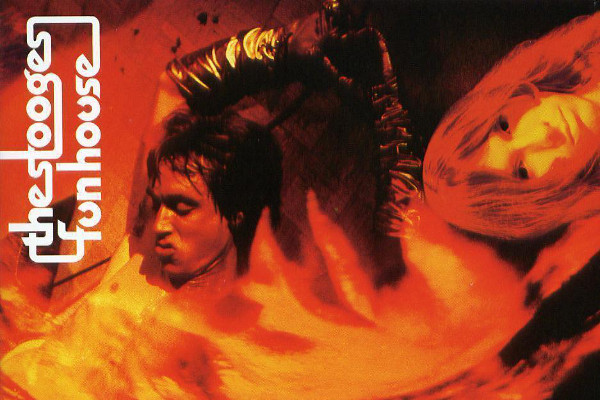
At their absolute finest, The Stooges were a no-frills punk band who sounded dirty and rough. So whereas their debut had production that closely resembled December's Children-era Rolling Stones, and Raw Power favored clever songwriting above earnest and edgy delivery, Funhouse was that sweet spot where The Stooges should have lived in all day. The lo-fi approach does the band a lot of favors, injecting a raucous energy into their already brash style, packing an even bigger wallop than "I Wanna Be Your Dog" or "Search and Destroy." Funhouse is the sound of garage rock evolving into something as-of-yet unrecognizable and oh-so exciting, and at least some of that uniqueness has to be credited to bassist, Dave Alexander, who was fired from the group shortly after this album's release and would die of a pulmonary edema in 1975. Alexander's sleazy low ends gave the melodies a rowdy swagger that was largely lacking in the second wave of punk music. Album opener "Down on the Street" provides the album its chugging heartbeat, with every song after that building on and splintering off its raging chorus. "Dirt" finds the band in relatively uncharted waters, slowing things down to a weird kind of drugged-out menace, and "L.A. Blues" closes things out with a complete aural assault, splattering the walls with fuzzy blasts of guitar and drums. But everything in between is raunchy, howling proto-punk. And it's damn fun.

6. Amy Winehouse - Back To Black

Before it became a weary cautionary tale for aspiring pop songstresses, Back to Black was easily the most influential album of the 00s, promising the return of powerful, passionate female vocalists to the pop scene. The album opener, then a provocative, cheeky number harkening back to the rambunctiousness of early Motown, took on a much darker hue after Winehouse died of alcohol poisoning. Indeed, "Rehab" remains unfavorably tied to the constant car crash she became in the last couple years of her short life, and it can still be an awkward listen. But if you push through that awkwardness, the rest of Back to Black is much easier to swallow, and by the time "Love is a Losing Game" rolls around, Amy's ghosts are gone, replaced by the slinking, confident voice that inspired Adele, Joss Stone, and countless others to come out of the shadows and embrace the sound of neo soul. Her devilish brand of R&B shines brightest on "You Know I'm No Good" and on the title track, with Mark Ronson's production faithfully recalling both Billie Holiday and Mary J. Blige. Winehouse's deep, sultry voice carries each tune to intriguing heights, though, and even otherwise vanilla homages (looking at you "Tears Dry On Their Own") feel bigger than they have any right to.

5. The Rolling Stones - Beggars Banquet (Brian Jones)

Sure, The Stones experienced greater success and acclaim after Jones' unfortunate passing (Sticky Fingers, Exile on Main Street, and Let It Bleed were all released after the multi-instrumentalist's death), but there's not a more pure example of The Stones doing whatever the hell they want - and having it work - than on Beggars Banquet, which is the last album to fully include Jones. Mick Jagger and Keith Richards are in step with each other to such a degree on this album that it's actually a little scary. They could have gone by the name Mick Richards and most fans would have understood and accepted that they'd been stitched together at the hip. Beggars Banquet isn't the most polished album in the band's discography, and hallelujah for that! Because the clean, slick version of the Stones is a useless version of the Stones. So luckily they abandoned some of their more pretentious elements in favor of that bravura blooze stomp. It ends up a beautiful mess, delving into a little swamp blues ("Factory Girl"), a little rock and roll ("Street Fighting Man", and the occasional trip back into their roots of acoustic-based pop-rock ("Dear Doctor"). It may sound a little looser than fans of late-era Stones are accustomed to, but Beggars Banquet is absolutely the finest representation of a band playing to its strengths.

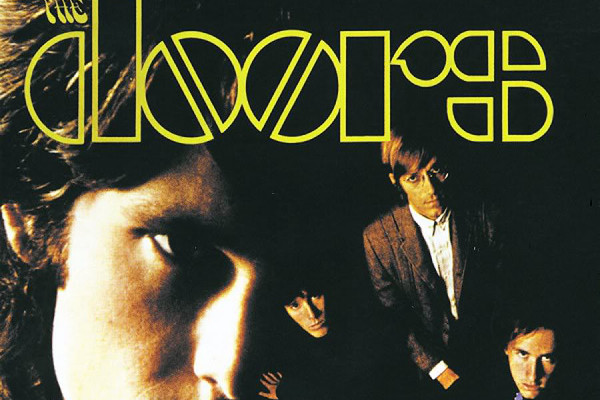
4. The Doors - The Doors

It's not that The Doors necessarily got worse following their debut album, it's just that they set the bar incredibly high for themselves. From the moment "Light My Fire" popped onto airwaves, it was clear that The Doors sounded like no one else making music at the time, but their unusual brand of psychedelic rock would only become more passé with time. Even as the band became more consistent in their ability to generate weird rock and roll, it felt like the gold medal had already been won, and they were constantly running for silver. That's just how perfect their eponymous debut was. Who can blame them for failing to deliver something as distinctly brash as "Break On Through (To the Other Side)" or as rousing as "Back Door Man"? The Doors began their career as a rock and roll band who promised poetry and mysticism along with their surreal melodies, and would spend every subsequent album trying to chase down exactly what that meant. But here they allowed it to just be whatever they thought it was in the moment. And it's better because of it.

3. Nirvana - Nevermind

You can argue that Nevermind is an overrated album, and that it's not even the best album in Nirvana's discography. And, who knows, maybe you're right. But...probably not. Not that their debut, Bleach, doesn't have some very promising moments, and In Utero is certainly the most powerful sounding album of the band's three official LPs, but the craftsmanship and songwriting abilities showcased on Nevermind blow everything else out of the water. Nevermind manages to sound somewhat fresh, even decades later. Not that you can ever go back to the time before "Smells Like Teen Spirit" and "Come As You Are" had been played on a non-stop loop for a dozen years, but most of Nevermind still has a crackling energy to it. Also, Kobain hadn't yet entered his spiteful, overly-complex phase of songwriting, which makes the songs more accessible than the ones he'd pen for In Utero. Whether it's the all-out assault of "Breed" and "Territorial Pissings" or the brooding simmer of "Polly" and "Something in the Way," none of these songs try to be exceptionally challenging. The result is an angsty, acerbic, perfectly-crafted pop record.

2. Big Brother And The Holding Company - Cheap Thrills (Janis Joplin)

Cheap Thrills is the most exciting thing Janis Joplin has ever taken part in, and for that, it deserves a nod as the most essential album in her discography. Yes, her "solo" debut Pearl might be more refined, but slickness was never meant to be a cornerstone of Joplin's music. She was about intense passion, and her backing band, Big Brother and the Holding Company, complimented that with their loose, blooze-rock stylings. Joplin's throat-shredding vocals really bloom, and they're as emotional and naked as they've ever been. The majority of Cheap Thrills finds the powerhouse vocalist screaming to the rafters, belting out fiery choruses on album highlights "Flower in the Sun," "Catch Me Daddy," and, of course, "Piece of My Heart." What's sometimes lost in the legacy of Janis Joplin, however, is the way she could restrain her wild vocal antics when she had to, whether it was to allow Sam Andrews a moment in the spotlight (the rocking opener, "Combination of the Two") or as a means of servicing lighter source material (their unusual cover of George Gershwin's "Summertime"). It's impossible to replicate the kind of raw passion and vocal power Joplin brings to the table, and so it's no surprise that after she left, BBHC took a steep drop off the map. It's just too bad she never had the opportunity to reunite with her old band, passing on in 1970.

1. The Jimi Hendrix Experience - Are You Experienced?

Deciding which Jimi Hendrix album stands alone at the top of the heap is a difficult task, and largely depends on whether you prefer youthful exuberance or tight musicianship. Obviously, Electric Ladyland is the work of a more skilled musician, but it's still his fresh-faced, dynamic playing on Are You Experienced? that continues to influence every dreamer with an amplifier. Hendrix holds back nothing in his guitar attack, throwing everything he knows into the mix. He's the focal point in each and every song, refusing to play in the background, even on softer tracks like "The Wind Cries Mary." A quick browsing of the track list should prove his debut's indelibility: Purple Haze Manic Depression Hey Joe The Wind Cries Mary Fire Foxey Lady Stone Free Red House When you pick up a copy of any Jimi Hendrix Greatest Hits collection, all of those songs are going to be on there. That he was able to come out of the gate swinging with that assortment of stone cold classics is astounding, and only tempered by the fact that he'd already spent a good amount of time touring with the likes of Little Richard and The Isley Brothers. And Hendrix sponged up every nugget of knowledge he could. While traces of Hendrix's "teachers" do show up on Are You Experienced? from time to time, the style is totally unique to Jimi. Rough around the edges, raw at his core, and somehow effortless in the delivery of his pioneering blend of blues, rock, pop, and soul. Pound for pound, there's not a more exciting debut album out there.

Contributor

Jacob is a part-time contributor for WhatCulture, specializing in music, movies, and really, really dumb humor.