20 Best Electronic Albums Of 2015 (So Far)
11. LSDXOXO Sacanagem

10. Future Brown Future Brown
Future Brown's eponymous debut album has become one of the most controversial releases of the year, with only the output of the PC Music label rivalling it in terms of the sheer quantity of think-pieces dedicated to discussing whether or not the record is an example of cultural tourism or a genuine attempt at fusing transnational sounds and styles. Whatever your perspective, this Warp release is a damn good and seriously fascinating album that includes some of the best tunes this year. The production super-group, formed from Fatima Al Qadiri, Nguzunguzu and J-Cush, started the project with the goal of creating instrumental tracks designed for collaboration with some of their favourite vocalists. While several critics have suggested that these producers, who have connections to various art scenes and curators (DIS Magazine in particular), are coming from a position of privilege and "exploiting" the sounds of underground artists and scenes, the album actually treats the collaborators with respect and grants them a public platform that is no different to that provided by the very journalists and bloggers critiquing the record. Future Brown features a remarkable range of styles across its 11 tracks. The lead single Wanna Party, which was released well in advance of the album, fuses ballroom sounds curtesy of MikeQ with trap hi-hats and Nguzunguzu's trademark bells as a platform for a stunning vocal turn from rapper/singer of the moment Tink. It remains arguably her best feature to date. Grime legends like Riko Dan, Roachee, Dirty Danger and Prince Rapid are foregrounded on Speng and Asbestos, with the latter's production actually sounding like a fairly accurate appropriation of grime's sounds - unsurprising, given that J-Cush is an expert of the style and Nguzunguzu and Fatima Al Qadiri have both referenced it extensively in the past. Standout moments include the darkly minimal R&B of Dangerzone, featuring a sexy duet from Kelela and Ian Isiah, the bass-y dancehall of Timberlee feature No Apology and Vernáculo, a track that fuses the merengue influences of guest vocalist Maluca with a sinogrime intro. Some of the best production occurs on the tenser, slower tracks like MVP (with 3D Na'Tee and Tim Vocals) and Room 302 (also featuring Tink), although admittedly the steel drum-led palette of Sicko Mobb feature Big Homie don't really do justice to a great vocal from the Chicago duo. Controversy aside though, this is a must-listen - if only because the production is exceptional, and the highlighted artists are more than deserving of further exposure and exploration.9. Jam City Dream A Garden

8. DWN Blackheart
While Kelela's CUT 4 ME was a landmark release in relation to fusing club experiments with R&B's slinky sexiness, one record emerged this year that somehow topped that album's achievements while simultaneously sounding like the most futuristic album in recent memory: Blackheart. It came from former Danity Kane member and P. Diddy associate Dawn Richard (now known as DWN), which may surprise those that are unfamiliar with her solo work - but it came as no surprise to those that had heard her masterful previous record Goldenheart. Goldenheart was a fascinating piece of conceptual R&B, drawing on a mixture of string sections, synths, club styles, odd percussion, science-fiction references and medieval lyrics that made DWN a critical success. Blackheart, though, is a whole different animal. It takes the club aesthetics and experimental electronic textures that were hinted at on its predecessor and makes them even more explicit, with the album ultimately sounding like a contemporary cyborgian creature, simultaneously intimately organic and digitally mechanical. Richard co-produced the album with Noisecastle III, and the soundscapes of the two artists meld as the record develops. Album opener Noir is effectively an intro track, but it is the most aggressively confrontational opening to any album this year. Richard's heavily-processed voice stands alone, singing "I thought I had it all" in a way that is truly posthuman. It's a vocal technique that is repeatedly and increasingly exaggeratedly employed throughout the album. Calypso is the best dance track you'll hear this year, with weird textures and androgynous distorted vocals floating in and out of a wonderfully propulsive beat. There is so much going on, and the vocals are so utterly odd and inhuman, that the track could easily descend into a mess. That it doesn't is testament to Richard's highly emotional vocals and the technical achievements of the producers working in tandem. On Blow, a slower number which immediately follows the one-two opener of Noir/Calypso, repetition and even stranger layered vocals are employed. There are strange miniatures and experiments dotted around the album: Swim Free is like Steve Reich producing a hip-hop track, with Richard's gorgeous vocals sitting delicately above the minimal soundscape, and Titans is like the harmonies of Destiny's Child if that group had been more interested in avant-garde electronica than soulful R&B. Even interludes like Choices are equal parts utterly strange and totally gorgeous, with the repeated vocal "I choose me" being an excellent summation of how singular and self-defined this album this. The album's centrepiece, Adderall/Sold (Outerlude), is also its absolute highlight, taking on the themes and aesthetics employed elsewhere - odd but virtuosic posthuman vocals, expansive panning effects, experimental textures, rapid shifts in tempo - and rendering a stunning sculpture from them. Blackheart is like nothing else out there. It is proof that much of the best electronic experimentation is occurring in the soulful, sexy world of R&B, and you owe it to yourself to hear this album.7. Lotic Heterocetera

6. Björk Vulnicura/Vulnicura Remixes
Much has been written elsewhere about the lyrical themes of Björk's excellent Vulnicura, arguably her best release in many years. Because this article is primarily about electronic music, it is useful to focus primarily on the textures that Björk and her collaborators Arca and The Haxan Cloak have established on this release, as well as the incredible remixes that the singer has put out since the album dropped. Björk has long elected to work with the most forward-thinking producers around, including collagic innovators Matmos, trip-hop legend Tricky, noise-hop aggressors Death Grips, club legends 808 State and R&B innovator Timbaland, but perhaps her boldest statement to date is her election to enlist underground experimental producer Arca (who also worked on Kanye West's Yeezus and is included further down on this list...) and atmospheric drone-inspired producer The Haxan Cloak to co-produce Vulnicura. While Björk is undoubtedly in control throughout the record, which - despite its innovative sound - remains loyal to her overarching aesthetic, the presence of these two innovative figures cannot be understated. Arca, whose sound is an emotionally-charged hyper-digital aesthetic, provides odd clockwork beats and structures to match the orchestral strings on Stonemilker, as well as minimal but affecting synth, static and drum contraptions on Black Lake, Lionsong and the out-of-this-world weirdness of Notget. The production is genuinely so out-there that it is quite difficult to put into words; it is a patchwork of virtual emotions that defy description. Standout track Family was overseen by The Haxan Cloak, and it is like a crossbreed between the dark foreboding drone that is the producers trademark (discordant strings, static bass sounds and reverberating slow percussion) and the confrontational sensuality of Björk's multi-layered vocal assault/caress. These tracks are allowed to breathe, with most of them stretching to considerable lengths, but there is often so much going on emotionally that they still render the listener utterly breathless. Then there's the remixes, released in two bursts so far (with a third set to follow). Björk ingeniously employed remixers that she knew would rework the tracks with similar themes of emotionality vs. virtuality: alongside a typically dark reworking of Mouth Mantra by Vulnicura's co-producer The Haxan Cloak, there is a karaoke version of Lionsong by Mica Levi (composer of the stunning soundtrack for last year's Under The Skin), a vocal-heavy remix of Family by Katie Gately that serves to amplify the album's cyborgian elements, a terrifying decomposition of History Of Touches by grime newcomer Rabit and, most stunningly of all, a total deconstruction of Notget by Janus' Lotic that completely summarises the themes of both his own work and that of the Icelander's album. Björk continues to be at the forefront of contemporary electronic music, and she maintains a unique ability to reshape the stereotypically cold textures of digital instrumentation into something truly gorgeous and personal.5. M.E.S.H. - Piteous Gate

4. Jenny Hval Apocalypse, Girl
Jenny Hval's Apocalypse, Girl is perhaps the strongest statement of female empowerment yet produced in music. The Norwegian Hval is a provocateur extraordinaire, and this album is her punch-in-the-face to patriarchal tendencies in popular music while simultaneously being one of the most fascinating examples of electronic instrumentation employed in song-writing so far this year. Apocalypse, Girl is filled with gorgeous melodies and catchy songs, but it is concurrently jarring and experimental from start to finish. It is a breathtaking release. There can't have been many pop albums that feature lyrics as deliberately confrontational as those included on Apocalypse, Girl. "I beckon the cupcake, the huge capitalist clit", she states on opener Kingsize. "Metal spikes embrace my spine, my face, my cunt" she sings on Sabbath. "Feminism is over and socialism's over" she reminds the listener on That Battle Is Over. She is foregrounding her sexuality and deliberately sticking a middle finger up to those that would have discussions of women's intimate feelings censored. Satisfaction and sex belong to everyone - not just white heterosexual men. Why, Hval argues, shouldn't she be able to write pop songs about the experience of first becoming sensually attracted to a boy? Why is that only OK when it is a male songwriter? Female sexuality is considered more dangerous in a patriarchal society - it is easier if it is controlled and locked away, with men dictated how women should be portrayed sexually. When Hval speaks on Sabbath about dreaming of being a boy and masturbating over a showering boy (replete with orgasmic yelps), it is a reflection of the discomfiting male gaze that is seemingly entitled to engorge itself on the female figure at every opportunity - as opposed to women, whose intimate feelings are oppressed or labelled as wayward, slutty or "promiscuous". The lyrical themes on this album are deep, and they could be explored in so much depth. Needless to say, Hval's release is utterly brave and groundbreaking, and every word that she speaks is a hammer-blow to the lazy dominant stereotypes of femininity perpetuated by a patriarchal culture. That she manages to fuse such complex ideas with such weird soundscapes is just a bonus really. Every track is a fusion of surreal experiments in composition and multi-layered electronic sounds. Why This?, White Underground and the brief interlude Some Days wouldn't sound out of place on any avant-garde electronic album (were it not for the inclusion of vocals). In fact, Hval's vocal approach - widely varied, and featuring multiple effects - is instantly reminiscent of those of Dawn Richard and Holly Herndon elsewhere on this list. Combining such biting and pertinent themes of gender and identity with a mastery of songwriting and an experimental tendency is no mean feat, but Hval mastered those abilities long ago. Apocalypse, Girl is just a further example of how incredible and vital an artist she is.3. Jlin Dark Energy

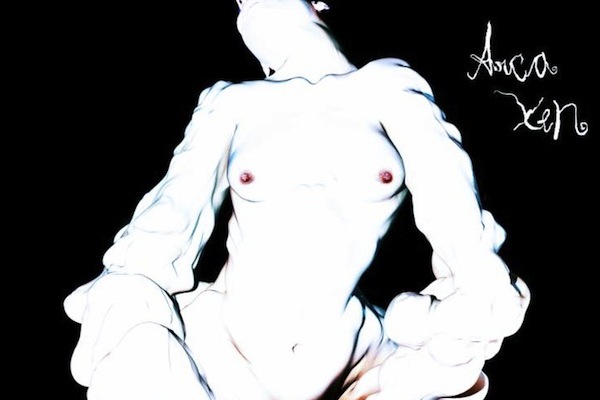
2. Arca Xen: ????? Edition