5 Reasons Why Muse Are The Modern Queen
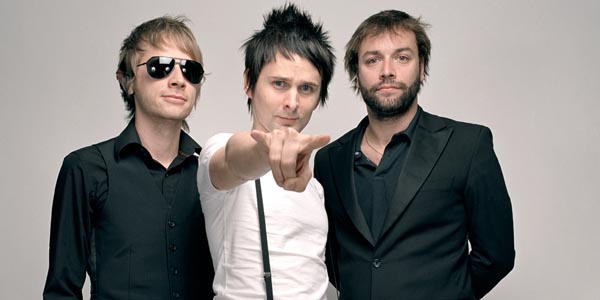
Formed in 1994 in sleepy Teignmouth, Devon, Muse are now one of the most popular and energetic bands on the modern music scene, with six albums released, numerous awards won and hundreds of live shows which wow the watcher to the last moment. Some have claimed that Matt Bellamy, the charismatic lead singer and guitarist of the trio, is the 'Hendrix of his generation'. But others, including this writer, claim something else - that Muse are more akin to a modern version of legendary rock group Queen, who have disappeared from the major music industry since the death of Freddie Mercury in 1991. Even Brian May, the former guitarist of Queen, has claimed that Muse are very similar to the his own former band. Some people may ask why, but there a lot of reasons why Muse are a modern version of Queen, molded and former to create one of the most exciting and energetic acts in the world today - just like Queen where all those years ago.

5. Musical Influences

It is obvious that not only is one bands influenced by another, but also both by classical music from the 18th and 19th centuries. The styles of writing, composition and performance, particularly on albums such as 'The Resistance' from Muse and 'A Night at the Opera' by Queen share a similar feeling and theme - the operatic, dramatic section in Bohemian Rhapsody springs to mind, and the 13-minute epic 'Exogenesis' at the end of the Resistance, all show the same sort of classical, more elaborate sense of musical production that both bands are famed for. In particular, Matt Bellamy has claimed in numerous interviews that he enjoys studying, and to an extent copying, composers like Chopin in the style of his performance. He said in an interview with Yahoo! Music in 2009:
"I've always been quite into classical music and film music and that kind of stuff, and I'm always looking for ways to incorporate that into a rock band into what we do as a three-piece"
Freddie Mercury was a lot less open about his influences, but despite wanting to keep up with the times and arrange music which suited the audience, he wrote complex structures, and elegant chords which would not of been out of place in the music halls and concerts of the 19th century. This is what makes both bands unique and interesting to listen to, in that influences as old and complex as these can be successfully engineered by all members of the bands to create sounds which are both comfortable in the modern eras and very hard to replicate.

4. Musical Style

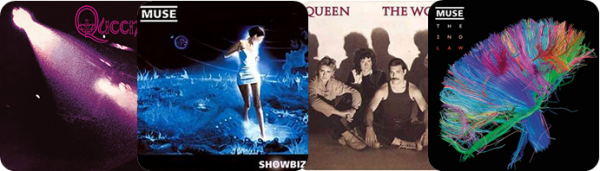
Madness was released in August 2012 as the second single from Muse's album 'The 2nd Law'. Almost immediately, listeners, critics, and myself spotted the similarities between the new single and one of Queen's most famous singles - the tongue-in-cheek 'I Want to Break Free'. Indeed, both songs have a driving bass line, powerful and meaningful lyrics and interludes which are curiously structured and have piercing guitar solos. It is one of Muse's most memorable songs. And it's not just these songs which have similarities to one another. Numerous songs from both bands contain hints to influence of Queen, from Uprising with its pounding solo, to Butterflies and Hurricanes from 2004's Absolution and its intricate piano solo. Indeed, whole albums contain not just collections of individually-written songs (Queen's last three albums were attributed to a collective band effort) but a message to convey or a concept to consider - 1984's The Works, which talks of the threat of technological development, is almost mirrored in meaning by 2001's Origin of Symmetry. Listening to a Queen song and listening to a Muse song, when taking this viewpoint, almost appear to be styled in exactly the same manner.

3. Album Evolution

Another factor which makes both bands similar to one another is the evolution their albums have taken. The Queen of 1986 was unbelievably different from the Queen of 1973, as is the Muse of 2013 almost unrecognizable from the Muse of 1999. The reason for this, primarily, is that as popularity and prestige grew for both bands, new audiences had to be tailored for, new influences were encountered and - as a result - the albums which were produced by both have taken a similar, if not exact, path to one another. For example, Muse's debut album and Queen's debut album are quite similar. Containing songs of love, hate, regret, powered by emotion, which were experienced by members of both bands in 1973 an 1999, it is clear that they started at the same 'simplistic' base (Keep Yourself Alive, Queen's first single, is a great example of encouragement, whilst Showbiz, Muse's first album, pretty much tells a story about, and warns against, social alienation). Fast-forward from these albums to the stadium-filling, complex, conspiracy-fueling albums such as News of the World and the Works, in Queen's case, and Black Holes and Revelations and the 2nd Law, in Muse's case. Albums have gone from disconnected collections of songs to lavishly-created, interconnected journeys through economic collapse, technological control and the threat of revolution. All championed by both bands.

2. The Frontmen

Perhaps one of the biggest indications that Muse are a modern Queen is the men who lead the bands. Not taking anything away from the musical talent and genius that is Dom Howard or Roger Taylor, Chris Wolstenholme or John Deacon, especially Brian May, but there is something about both Matt Bellamy and Freddie Mercury that makes both bands stand out from the rest. The mannerisms, behavior and general feeling which both frontmen convey is strangely similar, so much so that Bellamy should be described more as the Mercury of his generation. Freddie Mercury was famed for his ability to hit the high notes and hold them for incredible amounts of time - listen to Matt Bellamy and the same could be said of him. The way that both men can get a stadium from silence to hysterics with one line, chorus or chord - the Live Aid performance in 1985, where Mercury let out all the stops, is especially famous for this. And Muse's recent concerts have had Matt striding from corner to corner of the stage, wowing stadium-goers and capturing minds with his Mercury-esque voice and showmanship. It is almost as if Freddie Mercury lives on in the curious lead guitarist of Muse. But these reasons alone cannot claim that Muse are a modern incarnation of Queen.

1. Live Performances

What makes the bands so brilliant, so unique, yet so alike to one another is their phenomenal live performances. Having never watched a Queen concert live apart from on video, it is obvious that I was missing out on an incredible experience. May's guitar skills, Taylor's drumming ability, Mercury's singing and Deacons swelling bass lines combined to create a memorable, inspiring set wherever they played, be it in America or Europe, Asia or South America. Queen, in fact, performed in front of 325,000 people in Rock In Rio in 1985, and in front of 75,000 at Wembley in 1986. Safe to say, neither performance has been quickly forgotten.

And the same can be said for Muse. They have recently been voted as the best live band of all time by NME, and with good reason. Maybe they have taken everything Queen did and amplified it another level. The stage design, above all, is more akin to a film than a concert, and as they have got more popular, so the crowds and ambitions have got higher - perhaps reaching a crescendo in 2013 with their epic 2nd Law tour, complete with pyrotechnic explosions and robots on stage. Muse can rightly claim to be an exciting, amazing live band, which more than anything solidifies the connection between themselves and the rock legends that are Queen.

Do you agree with these observations about both bands? Maybe there is another factor which links the two together? Post a comment below!


Contributor
Contributor

Me? I'm 17 years old, from Dawlish, Devon and studying (tirelessly) at Exeter College. I love pretty much anything, am a fan of numerous TV programmes and films, countless books and topics, from Sherlock to the Cold War, Doctor Who to Muse and my ambition is to become a journalist in any field which I have an interest in, and I hope to show my opinions (although varied) to the full.