8 Bizarre Reasons Famous Album Covers Were Rejected
Some of the most iconic covers in the history of music very nearly...weren't.
These days, it's difficult to appreciate just how important album covers were to the music industry. Though still significant, the massive digitalization of music has reduced album art to merely a thumbnail on iTunes or Spotify.
Back when sales were dominated by vinyl records and CDs, album covers were a major part of what drew people to certain music on the shelves in-store. A great album cover might drastically increase the potential for sales, whereas an offensive one might seriously alienate consumers. Much like songs have demos and books have first drafts, album covers have previous iterations, versions that are selected then critiqued and often changed for various reasons. Often, the band's vision doesn't align with the record label's, which causes clashing and compromise. This same process extends for all album art even some of the most iconic covers in the history of music very nearly, well...weren't.8. The Beatles Posed With Raw Meat And Decapitated Baby Dolls
You've only got to take one look at this album cover to understand why it was rejected. While relatively tame in comparison with some of today's popular shock-obsessed artists, it's still bizarre seeing something so provocative coming from The Beatles.
In 1966, after becoming bored and jaded by traditional photo shoots, the band agreed to pose for photographer Robert Whitaker. Whitaker dressed the band in butcher's clothes and arranged them with pieces of meat and bits of plastic baby dolls. The band thought was hilarious, and Paul McCartney began pushing for one of the pictures to become the album cover for their upcoming record. The band saw it as satirical, and McCartney reportedly said that it was their comment on the Vietnam war. Around three quarters of a million copies of Yesterday And Today were printed with the infamous butcher album cover, but when they were sent out to dealers and retailers, the negative reaction was instant. The chairman of EMI records Sir Joseph Lockwood immediately recalled the album, fearing it would damage sales and tarnish their reputation.7. Metallica Wanted To Stick A Dagger Up Your Butt

Kill 'Em All is one of Metallica's most popular albums, so it's amazing to hear it suffered something of an identity crisis. Not only was the album's original cover rejected, but so was its title, too.
Much more on the nose (and honestly, a title with less longevity) the band originally intended the record to be called Metal Up Your Ass. The album cover featured a hand emerging from a toilet holding a gleaming dagger (the implication is obvious). The band's executive producer at the time, Jon Zazula (who founded the record label Megaforce Records) was skeptical of this title and cover, fearing stores simply wouldn't stock the album, so he convinced the band to change it. Reportedly, this change came about when Cliff Burton (the band's bassist at the time) stated in response to the situation: "Those record company fuckers ... kill 'em all!"
6. Bon Jovi Don't Like Pink
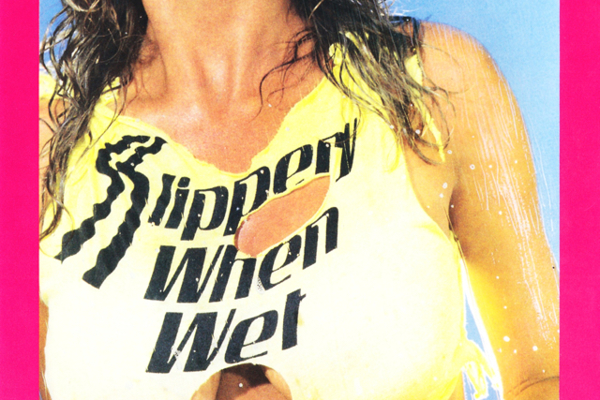
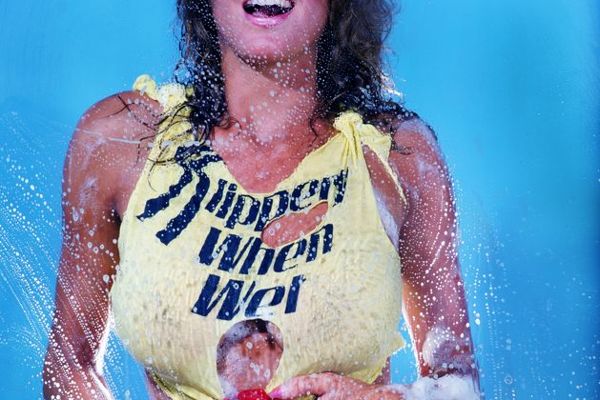
Slippery When Wet was the third studio album by American rock band Bon Jovi, and was released in 1986. The album spawned some of the band's biggest hits, including Livin' On A Prayer and You Give Love A Bad Name, but there was a time when the band's record label Mercury feared it wouldn't get released at all.
The original photograph submitted by the band featured a large-breasted woman being drenched with water from above. In a move that really should have surprised no-one at the time, Mercury executives believed prominent stores wouldn't stock the record because of its sexist cover art (more likely due to the fact that it's in any way sexual) and rejected it. Hilariously, when the album cover was pulled, Jon Bon Jovi himself claimed it was for a different reason entirely. The photograph the band had submitted did not feature the neon pink border that was added by the label. Bon Jovi reportedly disliked this immensely, and called for the art to changed to the wet plastic bag we have today.5. Guns N' Roses Wanted To Comment On Society Through Robot Rape
Holy crap this one is bizarre. Ever wanted to see a robotic rapist about to get minced by a flying monster with a dozen limbs and a big metal tongue? Okay, so when you put it like that, it sounds pretty awesome, but the whole concept is just...strange.
As usual, retailers didn't want anything to do with the original cover for Guns N' Roses Appetite For Destruction, and the art was replaced with the familiar image of the cross with skulls. The band described the original artwork as being "a symbolic social statement, with the robot representing the industrial system that's raping and polluting our environment." Hearing that, it's probably for the best things got switched around, because it sounds like something a teenager would pencil-sketch onto a notepad during a politics class. In a 2011 interview with That Metal Show, Axl Rose claimed that even before all that he had hoped to go with a photograph of the Space Shuttle Challenger exploding, but that was rejected too for being in bad taste.4. Slayer Wanted More Pentagrams

Nails. Blood. Bible.
I don't really think I have to spell out the reason why this one was banned for you. Originally titled Soundtrack To The Apocalypse, metal band Slayer's God Hates Us All (released on September 11th, 2001) faced a tough time when it was revealed to studio execs. Originally, the cover depicted a Bible with bloody nails sticking out of it, which formed the shape of a pentagram. Studio advisers, however, pushed for a different direction. Kerry King, the band's longtime guitarist, wanted more time to develop his idea, but time wasn't granted. This led to King to describing American Recordings as: "a record company with absolutely no idea what the f**k they were going to do. He also described the album art as looking like "a seventh grader defaced the Bible." The album is now available in retailers featuring the bloodied bible, but it features a slip insert covering the original artwork, which is white with four crosses that connect at the base.3. Kanye West Wanted Phoenix Sex
Kanye West having sex with an armless woman on the cover of My Beautiful Dark Twisted Fantasy. What could possibly go wrong? West famously tweeted in 2010 that Walmart (among other retailers in the USA) had rejected the album cover, forcing Roc-A-Fella Records to change the cover before release.
Apparently the album was deemed inappropriate not just because it contained nudity, but because the creature West was having sex with was actually a winged phoenix (therefore, not human). Kanye's response was to cite Nirvana's Nevermind as an example, reasoning that it featured actual nudity yet his album couldn't even feature a painted depiction. Lucky for Kanye, the artist George Condo had cooked up a bunch of other concepts (including Kanye's decapitated head impaled by a sword) so it wasn't hard to chose another one.2. Lynyrd Skynyrd Didn't Want To Be Insensitive

In a rare example of a band themselves actually deciding to change an album cover (and not being pressured by their label), American rockers Lynyrd Skynyrd altered the cover to 1977 release Street Survivors not long after it went on sale.
The original cover depicted the seven band members standing in a street which is wreathed in bright flames, with the buildings in the background also on fire. Tragically, three days after the album's release a plane crashed on its way to Louisiana and killed the pilots, the band's road manager, Ronnie Van Zant, Steve Gaines and Steve Gaines' sister. The band deemed the original artwork to be highly insensitive, and immediately changed it to a more subdued photograph of the band standing against a black background.1. The Beatles Wanted To Get Psychedelic
Undoubtedly one of the most famous album covers of all time, the art for The Beatle's Sgt. Pepper's Lonely Hearts Club Band features a massive range of celebrity and historical figures, set in the background against the members of the band themselves.
But the album very nearly had a completely different (and nowhere near as iconic) look. It was a painting by Dutch design collective The Fool, who were influential in perpetuating the psychedelic style of British music in the sixties. The art features a kaleidoscopic landscape complete with an owl, parrot and peacock, grass mountains, lakes and fireworks. Two large white spaces were left for a portrait of the band and the album's title.The band was advised against this cover by the London art dealer Robert Fraser (or Groovy Bob as he came to be known). Fraser told the band that the artwork simply wasn't very good, and so they decided against it.