Alter Bridge Mark Tremonti Interview: My Champion, Kirk Hammett Hardwired Solos & More
The Tremonster continues to be one of the most outstanding musicians working today.
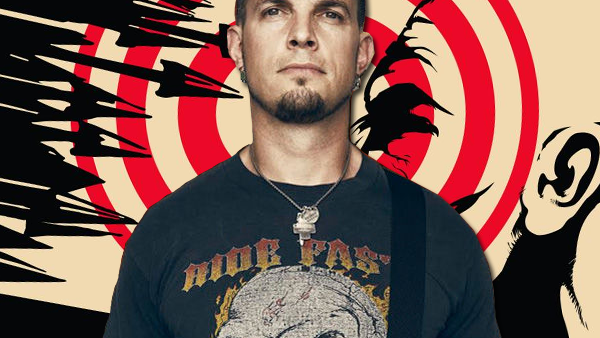
Still touring the immaculate The Last Hero and only a few months before playing just under Aerosmith at Download Festival 2017, the mighty Alter Bridge continue to be one of the progressive and downright impressive bands of our time.
You can check out our full review and track-by-track breakdown of The Last Hero over here (and a followup interview with singer Myles Kennedy here), but most recently, I had the pleasure of once again talking to lead guitarist Mark Tremonti, responsible not only for getting Alter Bridge off the ground after Creed imploded, but also for branching off and forming the supremely ferocious thrash metal outfit, Tremonti.
The latter has allowed Mark to truly flex his speed metal chops like nothing else, further letting him grow as a guitar player, whilst also expanding naturally on both the anthemic, soul-stirring 'Alter Bridge sound', and the down n' dirty, headbang-fuelled anarchy of his most youthful passions.
You can check out Mark's thoughts on everything from writing the band's current single, My Champion, to even what he thought of Kirk Hammett's improvisational approach to the new Metallica album and a TON more.
Enjoy!
8. How My Champion Was Written
Scott Tailford: Back when you guys were releasing Fortress, Myles had mentioned that Addicted to Pain came together fairly quickly, that you knew it was going to be the 'big single'. How did My Champion come to be?
Mark Tremonti: I'd put together some ideas that I was really excited about when I got together with Myles, and it was kinda one of the more mainstream, more upbeat ideas that I had.
What I was bringing to the table was focused around that opening riff, I really enjoyed that. I had a different verse going with it, and the chorus [then] is now the pre-chorus, so when we were sitting down with one another, Myles had an alternate chorus, I through the bridge out there- it wasn't a difficult song to put together, it was just a matter of me and Myles getting together and matching our best ideas.
He threw out that great chorus, it fit perfectly well, and everybody was happy. The parts I had worked on got to survive in the song, and he got one of his favourite choruses along with a verse we both developed. It's a happy outcome when we can both contribute to a song, it's how we like to operate with Alter Bridge.
S.T: In terms of the lyrics, you guys have been through a lot with record labels, writing Ties That Bind about breaking away from various record labels. What or who is My Champion about, and what was the inspiration for the lyrical portion of the track?
M.T: The song is just about the underdog, y'know? About somebody that might not be the strongest individual or the best athlete, or the best at anything, but gets up and stands up for themselves.
When the chips are down, they're going to overcome that adversity.
S.T: That kind of feel really comes across in the solo, it's very up-lifting. How did the solo come together in regards to how much of the song was already recorded?
M.T: The solos always come last, they're kind of like the lyrics; you put the song together and then you attack the final piece, which are always the solos, the lyrics. You never know what the final arrangement is gonna be, and you don't wanna have to 'complete' something and have to redo it, especially when solos and lyrics take a long time to develop.
They can take days, they can take hours. I always try to take advantage of whatever tuning I'm in for a solo, and make it as unique as I can. I started and ended with a couple little phrases that used the DADGAD tuning to my advantage, along with a few different voicings, and then I factored in standard and Drop D tuning.
(From slightly later in the interview) I've just realised when I said DADGAD, it's more like Drop C. That low string is tuned to a C, and the whole guitar goes down a whole step.
7. Advanced Guitar Techniques, Kirk Hammett & Improvisation Vs. Practice
S.T: On Dust I remember talking to you about more advanced guitar techniques, like you were busting out double-stops and hybrid picking. Are those things that you carried forward into My Champion and/or the album overall?
M.T: As far as the right-hand techniques go, yeah there's a couple different sections of the solo where I'm using my middle finger to grab some notes. I do an ascending octave, like four little octaves that I'm doing that on, and then almost immediately after that, there's another on the B and G string where I'm just grabbing the B string with my middle finger and picking the G.
S.T: As a weird comparison to all this, I'm assuming you've heard the new Metallica album (Hardwired... To Self-Destruct, 2016)?
M.T: Yes!
S.T: About 99% of Kirk Hammett's solos were completely improvised. I kinda appreciate having the 'guts' to lay down improvised solos on a record and go with it, but what are your thoughts on the balance of improvisation versus meticulous planning?
M.T: For My Champion, that solo was completely written. When you have alternate tunings, you have to write it, or else you're improvising in an unknown territory (laughs).
I think that's the magic with alternate tunings, you're forced to compose something that's not gonna sound anything like what most people are doing with a pentatonic scale and whatnot, 'cause your scales are modified and you're kinda looking at a blank canvas. All your shapes are different, but that being said I enjoy trying to create something brand new out of the new configuration of how the strings are laid out.
Playing in a different tuning like that [on My Champion], even though it's just the bottom string I like to take advantage of that and really compose something.
S.T: Would you ever try an improvised studio solo? It is a lot harder to do, but would you feel comfortable committing something like that to record, or does it seem kinda crazy?
M.T: I like to practice the hell out of a song before I go in the studio, so I'll have my 'anchors' for things that work. I'll have melodic phrases and whatnot that I like, that maybe follow the vocal melody, and then I'll go in the studio. I'll make sure I've got something solid, and after a couple passes, maybe improvise a little bit to see what turns out to be the best outcome.
Sometimes you improvise sections, they just flow smoother and sound more natural. I never write something and tell myself "No matter what, it's gonna be like this", it's just, I don't like to go in the studio without writing anything, and just feel like, "Well, I'm just gonna let this go to chance and hope for a good day!"
I like to prepare and be over-prepared, and by being over-prepared, give myself the freedom to have extra time to improvise if I want to or not. There's a little bit of both, but I'd say mostly, my solos come together beforehand.
6. The Last Hero's Toughest Solo, Mark's Favourite & B-Side Trivia
S.T: Looking back across your discography, has every album been planned to this degree? And were there any solos or pieces of songs in the past that were hard or challenging to put together?
M.T: When you start a record, I always get out a piece of paper and write down exactly how many solos I'll have to tackle, and then I'll just go through 'em one by one, trying to organise them as best I can.
It's always the first three that are the hardest to do. You're always thinking "Oh god, I've gotta put together 11!" (laughs), and you never think you can do it, but by the time you get through three or four, you start to get the confidence to let it flow and free yourself up.
I can't remember what I started with on this record (The Last Hero), but This Side of Fate was a tough one. It's a very odd tuning, and that's my favourite song on the album, and it's probably my second favourite solo on there.
S.T: Is that the one that has this really cool-sounding 'tapping' technique at the end? It sounds awesome, whatever you guys were doing!
M.T: It's more like an arpeggiated-kinda ending with all the chord changes. I just tried to come up with whatever strange chord voicings I was gonna arpeggiate, through those changes towards the end.
I always really liked that one, but it's funny I didn't even have a hard copy of the new record to know how they finally named the B-side on the record, Symphony of Agony.
I don't know what they call it now (Last of Our Kind), but that's my favourite solo on the record. It's the bonus track, but the wrong title made the album!
It's one of those solos where I had two key melodic sections that I really enjoyed putting together. They worked well together and there's a lot of open strings - there's this little thing I do where I let the B string ring open when the chord changes are going through a certain key change, and then the G string opens up and it gives it this tonality and cool kinda feel.
It was one of those moments where by chance, it all really works well. I was kinda bummed that as the record was finishing up, it was everybody's least favourite song.
Like, "Man, the least favourite song has my favourite solo on it!"
5. Tremonti III Details, Growing As A Guitarist & Outside Influences
S.T: Going forward you've got the next Tremonti solo album too. How's that coming along?
M.T: I'm gonna get writing April 7th for this one, the guys are gonna come by and [start putting things] together. I'd say I'm about 40% of the way on the writing process to get the record out, I just need to get the headstart with the guys and put together what I've worked on so far, then go back on tour and get the record done throughout the year.
S.T: In terms of expanding yourself as a guitarist, do you feel you've at least dabbled in every major technique you'd want to use, or are there different areas of guitar playing you want to look into?
M.T: Ah man, there's like an infinite amount of stuff I want to look into, there's just not enough time to do it. I've been playing a lot lately, really focusing on guitar playing more than ever, just trying to learn as many tricks and licks [as I can].
When I write songs, I try to be in my own bubble and not have any outside influence, just do my own thing and not follow any theory or technique. Just kinda try to 'invent' something instead of picking it up from somebody else.
With guitar lead stuff I like to learn as much as I possibly can from other people, then I try to assimilate that into my playing and try to make it my own style.
S.T: How much do wider influences affect a song, or the parts of a track that have already come together? Do you ever look to movies or books etc. as outside influences you can carry across into the mood and feel of a track in any way?
M.T: Sometimes if I'm writing a song and I had just maybe watched a movie or read a book, sometimes those themes might find their way into a song.
On the first record, Burn it Down was just after I'd seen The Salton Sea (2002), about this guy who had a drug binge for days and days, not sleeping and- I dunno if you remember that movie, but I wrote that song about that.
Not that it was one of my favourite movies of all time, it was just kinda on my mind at the time 'cause I'd just seen it, right when I was writing the lyrics to that song. It was kind of like, the mood of what I was playing kind of fit that.
4. Collaborating With Myles On Each Album Over Time
S.T: Just after The Last Hero came out and I talked to Myles, he mentioned a lot of the album's overall influence came from watching a lot of the news footage of the time, Donald Trump's campaign and everything surrounding the election. Did that conceptual lead mostly come from Myles, or was it something you both came together on?
M.T: When we're putting things together and I'm throwing melodies on the table, we'll all usually have something [to bring]. For instance, Show Me a Leader, I had that lyric, "Show me a leader that won't", and he kinda runs with that theme, and develops the whole rest of the lyric.
When I write parts, I put some of the lyrics in there because I know that the parts that go together might not have the same themes. I don't want to work too hard on the lyrics until the song's arranged, and once it gets arranged, Myles usually finishes up on the majority of the lyrics, because he's the singer. You wanna have your singer believe in what he's singing, y'know! (laughs)
That being said, there's been a lot of songs where I've had a lot more lyrical ideas I did, especially on the first album. As time goes by it's just better to have your singer, and he's such a brilliant lyricist, I'll throw out melodies that have key rhymes - "You've got poison in your veins" or "show me a leader" or something like that, and then he'll finish it off.
Like "This side of fate", I think mine was "This side of face", for example.
3. The Coolest Part Of My Champion & Writing Drop-String Riffs
S.T: Back on My Champion, for all us 'inside baseball' fans, is there one really cool thing about that song that, so far, maybe hasn't been talked about enough or that you can reveal now?
M.T: For me the most unique part of that song is the tuning, being able to do that opening riff with that open string droning- I originally got that tuning and thought it was bizarre, 'cause I was so used to doing the Drop B on the low string, going to C was very strange.
I was sitting down with John Connolly from Sevendust - one of my best buds - and we were talking about tunings and he goes "Well that tuning goes with that Drop C tuning", just the bottom string, so I tried it out and years and years later, I thought why not try that Drop C again, and I came up with the riff.
S.T: Was that the same process as Crows on a Wire too, writing a riff around a specific string?
M.T: Yeah that [song] started with that riff. I wrote it and played it to Myles over the phone, and when we were putting Crows on a Wire together, we had Elvis (Baskette, Producer) saying it sounded a little too much like the Tremonti stuff, like heavier and more aggressive, and he wanted to keep it separated so he kinda gave a little pushback on it.
Then we started throwing out more parts, he started liking it better and we - as a band - knew it would be a great live song, and now it's fun to play live for sure. I'm glad it made the record!
Back when I started going over which solos I was going to do and how many I had to write, I was working on the solo for that song, and it wasn't inspiring to me. The chorus and chords with the solo, it wasn't something where you were gonna have big soaring chord changes so I said "Myles, why don't you do the solo!" (laughs)
I'd attacked it for a good couple of days and didn't come up with anything that was inspiring to me, and I didn't wanna have any filler solos on the record, so I asked if he wanted to tackle it and he came up with something great.
2. Evolving Two Bands' Core Sounds Simultaneously
S.T: Across the rest of 2017, you've got Alter Bridge right under Aerosmith at Download, then straight into another Tremonti album. I imagine you've gotten better at differentiating the two sides of your playing style, but as we've seen tracks like Peace is Broken have that Tremonti speed metal influence, are you going to start writing more anthemic Tremonti stuff?
M.T: The only thing I have planned for the next Tremonti record that I'm hoping for, is I wanna do kind of a two-album thing - one all-heavy like what people expect from Tremonti, and then one that's more stripped down, maybe more melodic than the other stuff.
It's all melodic, but I have a lot of ideas I'll go through and think, "No, that's a little sappier or a little more heartfelt or a little less heavy than fans would expect", but I love it, and I don't want it to go to waste.
This was a band I started because I wanted to get out all the ideas that I never thought I would get out there. I just have so many mellow ideas just as much as the heavy stuff that I wanna get out there, and I always write for myself and not necessarily for people to get into the record.
If I'm satisfied I'm happy, I hope the fans enjoy it as well, but I think if you start writing for other people it never works, but that being said, if I had a record that was all mellow ballads, there'd be some... backlash (laughs).
There'll be one project that's heavy, and one project that's mellow, and see what happens.
1. Writing Instrumentals & Doing More In The Future, Metallica-Style
S.T. You guys once did an instrumental, Ahavo Rabo Taco Salad, for Total Guitar magazine. Would you ever do more instrumentals on Tremonti or AB, or perhaps a whole album like that?
M.T: That was such a huge, huge effort. I've gotta give it up to guys like John Petrucci or whatnot that come up with side projects that are all instrumental, that are just loaded with solos. Because that song took me forever (laughs), it really did, and I don't know if I could do an entire album full of guitar solos.
It was a tough project. I'd like to tackle one, just like how Metallica used to, y'know? Orion, Call of Ktulu, To Live is To Die, those are three of my favourite Metallica songs, maybe do one a record.
S.T: That would be so great! A lot of people don't realise just how much effort goes into writing an instrumental track.
M.T: Yeah man, the toughest thing about it is, it wasn't a proper 'band track', so I was writing it at home, and then when we were doing rehearsals, we had to ask our engineer if he could get out his Pro Tool rig and record it in a rehearsal space. We were never in the studio doing it, so it was kinda like, "Okay, today can we knock out a couple drum takes? Today can we knock out some bass?"
It was kinda just jammin' it in there, and every day I would go home and write another part. Total Guitar had said they wanted to do a feature, like "We'll give you the cover of our magazine if you give us a feature and break it down", and I wanted to come up with something cool.
S.T: Well, I'm gonna put a request in - an instrumental track on the next Tremonti album would be insanely cool, and I guarantee a bunch of the fans would agree.
M.T. Yeah man absolutely, I'll keep that in mind, I'd love to do that.
S.T: Thank you very much for your time, all the best at Download and I'll no doubt speak to you again soon.
M.T: See you there, thanks!
--
There you have it! One of the coolest dudes in music - what would you have asked him if given the chance? Let me know in the comments below!