New Slipknot Album: 10 Things The Band Need To Get Right

One of the most divisive bands on the planet, yet with two members down can the new album even succeed?

Slipknot are now a very different band from the one that burst onto the metal scene back in 1999. They haven't released any material for nearly six years, and since then they've lost two of their founding members; bassist Paul Gray through a drug overdose in 2010 and drummer Joey Jordison - whose willing departure was announced late last year. These details don't exactly bode well for the release of new material, yet the band are indeed working on their fifth studio release, though little is known about it. There's been a good deal of chatter about what the album will be like. Corey Taylor the band's frontman has said that it's going to incorporate aspects of Iowa and Volume 3: The Subliminal Verses, while also taking the band to new grounds €“ in which case, we're in for a treat. But the group have plenty of convincing to do following their frankly unimpressive 2008 LP, All Hope Is Gone. That album wasn't necessarily poor, but it didn't feel like Slipknot. This wasn't the result of some kind of change in artistic direction, they hadn't gone anywhere new with their sound, hadn't added anything nor were they challenging anyone - they had only lost what had made them so special. All Hope Is gone felt bizarrely insincere, it lacked the aggression and the melancholy of its predecessors, adopting more palatable riffs and melodies in place of the frantic, borderline psychotic sounds that had resonated with so many of their fans. Whether or not the now septet can recapture the chaos that fuelled their earlier work is still very much undecided, but if they stand any chance of making their fifth album as game-changing as their first, second or third, then they've got a lot of work to do.

10. New Blood

Obviously, one of Slipknot's greatest strengths was their size. Nine members meant nine brains, nine musicians and thus, more creative and technical flair. With the loss of two of their most influential members, that nine is now seven, and as they have announced that they are looking into bringing others to the project, their biggest task will be introducing the perfect blend of skills and passions to the group. A drummer that can play as superbly as Joey Jordison is one thing, but one that can bring as much to the creative process is something else entirely. Similarly, the band will be hard-pushed to find someone that they gel with half as well as they did with Paul Gray; an individual who can bring balance to the group while still managing to do the band's body of work justice instrumentally. Of course the group could consider the option of not bringing anybody else onto the project, after all most of the writing process has already been completed. Many have made the argument that the band didn't need nine members in the first place, with three percussionists and an often irrelevant DJ, surely the group could make do with seven. That said, Slipknot wouldn't be Slipknot without that element of controlled chaos that comes with having so many band members. Even if some roles seem less important than others, each band musician has proven vital to their work in some way, thus the introduction of new blood has to be handled with care.

9. All Hope Is Not Gone

The band's last outing was a big step in the wrong direction, and if they're to succeed with new material, they'll need to learn from the mistakes that they made with much of that album. Slipknot's first LP was a tour de force of sheer aggression, layered with unnerving samples and fuelled by a torrent of percussion. It was refreshing in a world filled with Limp Bizkits and Mudvaynes to see a darker, messier and more technically-impressive band achieving some level of mainstream success. Their sophomore LP, Iowa, improved upon core elements of their first album, but it was their third outing, Volume 3: The Subliminal Verses, that proved Slipknot were able to break free from the shackles of the nu-metal genre, with their most varied and ambitious work to date. Admittedly, All Hope Is Gone had a lot to live up to, but to fail so spectacularly in meeting those expectations is rare. Everything that had made their work so invigorating in the past was desperately missing from their latest LP. Unimaginative writing, repetitive songs and clichéd lyrics led to what felt like a mailed-0in album; an unnecessary addition to an outstanding body of work. Pit-opening breakdowns, drop-tuned riffs and death-metal percussion should have resulted in an album that was at least on par with their first effort, but the pieces felt forced together, with only a few songs standing out among the B-side fodder. Slipknot had spent a decade escaping the confines of nu-metal, only to release an album that threw them straight back into that drab, uninspiring cell.

8. Make A 'Whole' Album

One of the biggest issues with All Hope Is Gone was that it simply didn't work as an album. There were songs that performed individually like the title track, Gematria (The Killing Name) and Butcher's Hook, but these were spread thinly across the album's length. All Hope Is Gone didn't have enough quality content to fuel its runtime, its singles were crammed into the first few tracks and the transitions between the heavy and the melodic were about as smooth as a chainsaw enema. Worst of all, the album lacked any sense of direction, no clear, consistent message that drove its content and as a result, no lasting impact. If Slipknot are to succeed in producing a fifth studio release that's worthy of their name, then it will need to be a coherent, well-structured collection of material that is consistent in quality, from start to finish. Their debut was unified by its volatility, relentless energy and self loathing €“ it was an unending, seething testament to aggression. Iowa took on a darker tone, adopting more melodic elements without losing an ounce of the rage and fervour that propelled their first effort. While the band changed their sound quite dramatically on their third outing, the whole thing flowed beautifully from thudding brutality to reflective melody without breaking a sweat. Those albums had singles that worked as parts of the whole piece, as well as on their own, and if their fifth is to make a lasting impression, it'll need to do the same.

7. Experiment

The unexpected brilliance of Slipknot's Volume 3: The Subliminal Verses, was in its more daring and experimental tracks. Though the group continued to impress with their heavier songs, they also showed fans a side of themselves that few had seen, a more melodic, albeit equally bleak sound that took critics and fans by surprise. Through tracks like Vermillion and Circle, Slipknot managed to weave acoustic backings, clean vocals and soothing melodies into their tapestry of vehement resentment. The album's closing track, Danger €“ Keep Away, builds upon a disturbing synth leitmotif to deliver the band's darkest song to date, with nary a guitar in sight €“ a desolate, beautiful and audacious ending to an album that pushed the envelope for modern metal. Slipknot need to maintain this level of variety in their music if their upcoming album is to be successful. Furthermore, the group need to avoid the kind of experimentation that led to tracks like Snuff on their last LP, which saw the writers of People=Shit deliver a pathetically soppy power ballad, laden with lines like "I still press your letters to my lips, and cherish them in parts of me that savour every kiss". With a talented DJ in the form of Sid Wilson, and the proven sampler and keyboardist, Craig Jones, the band are well placed to continue the development of their sound, so there's no good reason why they shouldn't deliver on that aspect with their new release.

6. Acknowledge Their Roots

Slipknot have never been easy to pin down to any particular sub-genre of music. They have largely prospered from bringing a wide range of metal off-shoots into each of their albums, from rap metal to sludge, and everything in between. The band would benefit from returning to the music that inspired much of their early work, if they're to retain any of the raw energy that aided their meteoric rise to fame. The best parts of All Hope Is Gone bore aspects of thrash, death and groove metal, yet they were not consistently touched upon throughout the album, instead generally opting for a more 'standard' metal sound. These sonic influences don't need to be the main drive of the album, but the further Slipknot get from their musical roots, the less direct and effective their sound seems to become. Volume 3: The Subliminal Verses managed to deliver the perfect blend of old and new, daring to place acoustic led tracks alongside the cacophonous likes of The Blister Exists, Opium Of The People and Pulse Of The Maggots. Joey Jordison went as far as to describe the album as "if Slayer was tapping on Radiohead". The number of influences that perforated that LP's densely layered sound were innumerable, yet the group were still able to hang on to what made them Slipknot.

5. Learn From Deftones

Nu-metal was essentially a fad; the bands that dominated that scene either died out, or had moved on before things got stale. Deftones have managed to completely escape the nu-metal scene, delivering album after album of atmospheric, inventive metal. I'm not about to suggest that Slipknot should try to emulate the style of Deftones, the result would most likely be an abominable insult to both groups, but the band would benefit from taking a look at the way in which Deftones have managed to attain both stability and longevity. Deftones never really changed their sound that much between each release, they dabbled in trip-hop and glitch with White Pony, went heavy with their self-titled LP and delved into shoegaze, post-metal and dream-pop with their most recent album, Koi No Yokan. But underneath all the maturation and growth, they're the same Californian alternative metal outfit that they've been since 1995. If Slipknot could learn to be as consistent and forward-thinking as Deftones, while maintaining their chaotic elements, then their next album would be a more reigned in, composed effort €“ and if they're to make it to a sixth studio release, then this is a lesson they should learn sooner rather than later.

4. Give Sid Wilson And Craig Jones Some Of The Spotlight
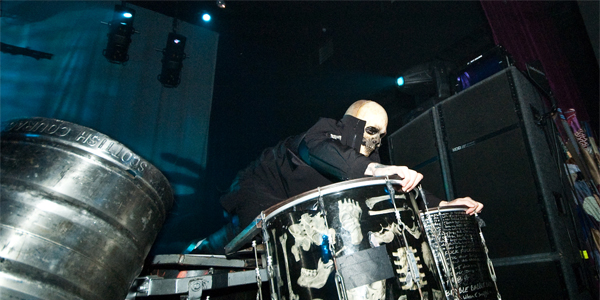
It was always going to be difficult in a nine-person heavy metal outfit to give turntables or samplers any breathing space amidst the apocalyptic percussion and drop-tuned guitars of their bandmates. Sid Wilson, who is on turntable duties made do with jumping off balconies and fighting with colleagues while Craig Jones who handles synths and samples has remained as good as mute to this day. While their input can be heard in much of the group's music, they have never had any stand out moments, solos or tracks to themselves. It would be good to see Slipknot explore this side of their music more fully on their upcoming release, not just because it would showcase their range, but because by placing more emphasis on their electronic components the band stand a chance at reinvigorating their style without having to look elsewhere for inspiration. After all the years, the guys deserve a moment to truly call their own on the upcoming album, and considering how varied the soundscape was on Volume 3: The Subliminal Verses, there's no reason why they shouldn't be able to inject more direct influences into the next LP.

3. Nail The Production

If there was one constantly pleasing aspect of All Hope Is Gone, it was the album's thickly layered production, courtesy of Dave Fortman. Certainly, Rick Rubin did a tremendous job with the band's third effort, which maintained the choppier elements of their first two records while cleaning up the vocals and defining each instrument more fully. Fortman built upon Rubin's foundations, delivering a significantly thicker sound that brought the group's well known percussion to the forefront of the LP. Slipknot need to bring an equally-talented producer with them for their fifth outing. Ultimately however, the band need the kind of producer who can guide the whole creative process, moulding a vision for the final product and crafting a cohesive album that flows logically. So while Fortman continued to refine their sound, he failed to really unite all nine members into the project under one single objective as fully as Rubin did. Listening to All Hope Is Gone in one sitting reveals how much more disjointed and awkward the production is in comparison to their previous efforts, which is why they really need to find the right producer for their next release.

2. Lose The Gang Vocals

Psychosocial was great though, right? Well, in a word, no. It wasn't. Sure, it was catchy, it was heavy and it even had some very interesting lyrical work, but then in come the gang vocals, and i'm instantly reminded of the thuggish, grunting nu-metal acts that died out many years ago. The band have used gang vocals before, especially live, but they've never been as brash and idiotic as they were throughout All Hope Is Gone. Psychosocial was one thing, but it got worse with the track Vendetta, which saw three grown men growling "are you ready for the time of your life?" before delivering the boy-band inspired war chant of "hey!" over and over again in the background. This was undoubtedly Slipknot's worst moment, worse than that godforsaken power ballad that had us all wondering if the nine were simply fucking with us this whole time. It was uninspired, boring and utterly senseless, it reeked of a band that could well be on its last legs, and if it returns in the same mind-numbing form then they might just keel over and die right there in the recording studio.

1. Keep The Aggression

Slipknot received a lot of criticism on their first two albums for an apparent over-reliance on profanity-infused lyrics €“ they cleaned up their act on their third outing and remained radio-friendly on All Hope Is Gone. Despite dropping the 'parental advisory' tag, the band managed to stay just as volatile and aggressive as before. People might think it's time for the group to stop waxing lyrical about how much they hate themselves and the world they live in, but if they totally abandon one of their greatest strengths, then they might as well hang up their masks and kick the metaphorical chair out from underneath themselves. Slipknot don't need to start spewing curse words like there's no tomorrow, they simply need to retain that vitriolic ranting that they're so good at. While they have certainly toned down the visceral imagery of their early work in recent outings, the lyrical content has maintained the same sense of psychotic truculence. That sense of angst felt lost at times in All Hope Is Gone, but thankfully songs like This Cold Black proved that Slipknot still had pockets of hatred left in them, eager to be released in a torrent of nihilistic political commentary. Let's hope they've still got enough in them for their fifth release.

Contributor
Contributor

Eats, drinks, writes – rarely sleeps. Likes: movies, games, football, writing, music and people. Terrified of becoming a real person some day.