Oasis: Every Album Ranked From Worst To Best

Occasionally perfect, occasionally garbage.

Wikipedia
Wikipedia
The general consensus about Oasis is that they came out of the gate strong, then valiantly fizzled, and then turned into complete and utter garbage seemingly overnight. They're the quintessential example of a band "peaking too soon." Few bands have had to deal with the same high level of expectations that Oasis has throughout their tenure atop the Britpop mountain. A lot of that is self-imposed, as the band constantly felt the need to declare themselves the greatest thing to ever happen to music (nay, to the world). But it also had everything to do with how insanely good their first couple of albums were. It must've been maddening trying to top what most people agreed were nearly perfect albums. And you could tell when the band was struggling to outdo themselves versus when they had seemingly thrown in the towel. It was always reflected in the quality of their albums. Before the Gallagher brothers officially parted ways for what is most likely a permanent split (occasional reunion rumors be damned), they gave us a whole lot of music. Some of it great, some of it rubbish, and a fair amount in between.

8. Standing On The Shoulder Of Giants
Epic
Epic
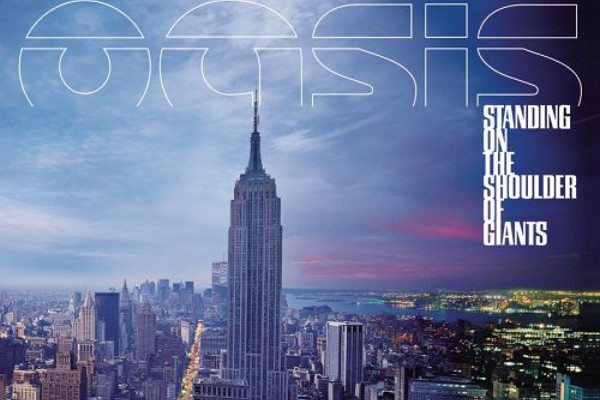
A shining exemplification of how the constant BS between the Gallagher brothers wasn't just a bit of fun fodder for music journalists to pad their pockets with, Oasis' fourth studio album would see two of its founding members leave the band in the middle of the recording sessions. Rather than take a break and try to find replacements for guitarist Paul Arthurs and bassist Paul McGuigan, the Gallaghers and drummer Alan White soldiered on as a trio for the remainder of the recording. And thus, we now have our answer for why Standing On the Shoulders of Giants sounds a little weak and a lot disjointed. Despite the lofty album title, most of the songs fail to reach the heights of even their shoddiest previous efforts, and the album spends far too much time entrenched in mid-tempo, droning territory. This is Oasis for people who would rather listen to Oasis cover Radiohead songs in concert. The only tracks to really get off the ground are "Where Did It All Go Wrong?" and "Roll It Over," which is unfortunate, because those are the closest thing to "classic" Oasis, and only help prove that their experimental trip was overwhelmingly lackluster.

7. Be Here Now

Creation
When the band's third studio album, Be Here Now, arrived in 1997, the world was treated to a softer, more polished Oasis. And just who the hell asked for that? You can rail against the new, electronic direction they went into on future albums, but at least those albums still had balls. Instead, Be Here Now is a largely sappy affair, aiming squarely for maudlin ballads interspersed with self-indulgent guitar wankery. At the time of its release, the press went absolutely gaga over the album, with some praising it as the greatest thing since Sgt. Pepper's Lonely Hearts Club Band. Which...c'mon. Really? Be Here Now carries more weight around its belly than most truck drivers. It seems the band confused runtime with quality and chose to simply let the tape run in the studio and hope that, if they kept playing long enough, they'd hit on something great. And occasionally they did. But the time it takes to actually get to the great parts is a maddening experience. "My Big Mouth" is one of the shortest songs on the album, clocking in at just over 5 minutes, and it spends that entire time rocking the f**k out. It's a welcome reprieve from the rest of the interminable jam sessions. Noel himself has consistently called Be Here Now "bland," and going so far as to label a few of the tracks as "f*****g s**t." Even Liam, in a rare bit of synchronicity with his brother, admitted the album was too long.

6. Heathen Chemistry

Epic
Epic
After the group's disappointing foray into electronica, Oasis decided, possibly because they were tired of getting raked over the coals by fans and critics alike, to make a swift 180 back into the familiar sounds of rock and Britpop. Unfortunately, they couldn't let go of the more psychedelic stylings that bogged down much of the previous album, and so the tight, crisp (and pleasantly acerbic) Oasis was replaced with a messy, bland (and uncharacteristically swagger-less) Oasis. They're somehow trying way too hard to sound like their younger selves, while the muddy instrumentation makes it sound like they're also not trying at all. It's weird. But as we've learned, Oasis isn't really a band that can pull off being weird. Or rather, they don't know how to make weird work for them. Now, to be fair, there is a handful of great Oasis tracks hiding amongst all the muck. "Hung In A Bad Place" and "She Is Love" deserve their place in a Best Of compilation (even though "She Is Love" sounds eerily similar to a Counting Crows song). But even when they make the psychedelic sound compelling, as they do in "The Hindu Times," it's not enough to justify it drenching the whole album.

5. Don't Believe The Truth

Big Brother
Don't Believe the Truth is the sound of democracy at work. For the first time, Noel relinquished the title of Sole Songwriter in favor of a collective approach. It didn't completely work. That's not to say that the communal songwriting process was a complete bust, since album opener "Turn Up the Sun" is the kind of hazy pub rock that Oasis excels at while "Keep the Dream Alive" shows flashes of the cautiously optimistic Britpop that occupied much of (What's the Story) Morning Glory? And both were written by guitarist Andy Bell. The problem is that there's no clear direction for the album's sound. Never has an Oasis album sounded so disjointed. Honestly, you'd be forgiven for thinking that this (and not The Masterplan) is the B-sides collection. There's nothing wrong with cramming a bunch of different styles into one album (hell, that's practically what Oasis built their career on), but Don't Believe the Truth sounds like a band trying (and failing) to find its identity. Which isn't what you want from a band's sixth album.

4. Dig Out Your Soul

Big Brother
Big Brother
Noel has always ferociously defended Oasis' occasional sidesteps into more experimental territory, and will probably go to his grave believing Standing On the Shoulders of Giants is one of the best things the band has ever done. And while that mindset is objectively delusional, he might be onto something when he talks about his fondness for making "absolutely f*****g colossal" albums. It all depends on how they utilize the "multiple orchestras" and other bombastic elements. And on Dig Out Your Soul, they use them very effectively. Recorded at the legendary Abbey Road studios (because why not embrace the constant accusations of Beatles-aping), Oasis crafts another solid collection of pop-rock anthems, this time offering some darker edges than those released in their heyday, but those sinister twinkles make for a fascinating listen. And, for bonus points, the songwriting duties were a bit more split this time around, with everyone besides drummer Zak Starkey getting a song onto the record. The best of the bunch are still Noel tracks, though, with the gritty sexiness of "Waiting For the Rapture" and the Cream-like scorcher "The Turning" firmly taking the reigns.

3. (What's The Story) Morning Glory?

Creation
Creation
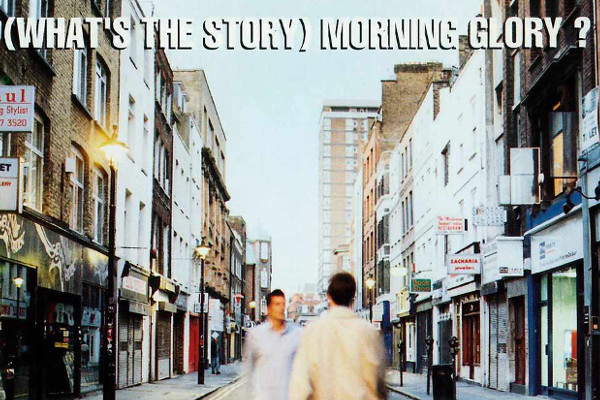
How do you improve on a brilliant, practically flawless debut album? Well, you don't. You simply change course and try to offer something a little different. Whereas Definitely Maybe was the band operating as working class rock and rollers, (What's the Story) Morning Glory? found them determined to sound like the world-famous rockstars they were on their way to becoming. It was a little slicker, a bit more orchestral, and certainly more effects-heavy, but the one major thing Oasis retained from their first go-round was the "don't f**k with me" spirit. They had that in spades, and brought it out time and time again on the arena-rocking "Roll With It," the machismo-dripping blues-rock of "Some Might Say," and aggressive hooliganism of "Morning Glory." But mixed in with the straightforward rock anthems were a few more pensive tracks. And it's in these lighter ballads that Noel Gallagher revealed his true marketing genius. Much of Morning Glory has a sort of well-worn sound to it. Rather than invoke the suggestive echoes of their influences as they had on Definitely Maybe, they became more overt. "Don't Look Back in Anger" doesn't merely recall the Beatles discography, it embeds itself in it. The aforementioned "Some Might Say" doesn't just borrow the vibe of Slade's "Take Me Back Home," it goes through its signature riff note for note. And yes, those blatant appropriations make the album a little harder to swallow as more time passes. But then again..."Champagne Supernova." And "Wonderwall." And "She's Electric." When the individual songs are this great, it's hard to get wrapped up in what they may or may not have borrowed from other bands.

2. The Masterplan

Creation
Is it fair to include The Masterplan in this list, considering that it's not an "official" album, and is merely a collection of B-sides that never made it onto previous albums? YES. Especially when those B-sides are as good (if not better) than most of the A-sides. Besides, those of us in the States never got the chance to listen to these songs when they were released alongside their singles. From the moment "Acquiesce" kicks in, and we hear Liam and Noel trading off vocal duties, we know this is going to be a special experience. Sure, there are a couple of momentary letdowns among the bunch: "Talk Tonight" is an unusual summer campfire song that goes nowhere, and "(It's Good) To Be Free" is hindered by a suffocating sameness. But by and large, The Masterplan is equal parts crisp, charming, dynamic, and above all else, relentlessly engaging. Most bands would murder their pets just to have a shot at writing A-sides as good as these songs.

1. Definitely Maybe

Creation
Creation
It probably sounds like hyperbole to anyone who didn't follow the UK rock scene in the 90s, but when Definitely Maybe appeared (practically out of nowhere), it completely changed the direction music was headed in. The album shot up the charts and flew off the shelves. Suddenly, it was cool to play guitar-heavy rock again. The word "seminal" was pretty much invented for Oasis' debut album. Owing to the classic British rock bands (The Beatles, The Rolling Stones, The Kinks, Sex Pistols), Oasis not only swam in a sea of their influences, but they splashed around in a different one for every other song. It made the entire album exciting and weirdly unpredictable. After you listened to the simply-strummed "Married With Children," you probably didn't expect the fuzzy, foot-stomping blues-rock of "Cigarettes & Alcohol." And even that likely didn't prepare you for the fast, pounding punk of "Bring It On Down." But for a cool down, it's back to the jangly guitars and stoner rock vibes of "Shakermaker." Definitely Maybe was the sound of a band throwing everything against the wall. But the wall was apparently made of thick maple syrup, because every damn thing stuck.

In this post: 
Oasis
 
Posted On: 
Contributor

Jacob is a part-time contributor for WhatCulture, specializing in music, movies, and really, really dumb humor.