10 Haunted Houses That Have Murdered People
However much they pay you to stay there overnight? It isn't enough.
Haunted Houses are dangerous things. And not just those goofy Halloween attractions where a few bucks will grant you access to a pre-fab home full of unconvincing spider webs and spring-loaded-mannequins - although fatal heart attacks and violent retribution have both come thanks to such places - but actual, legit, for real, why-would-anyone-stay-there haunted houses.
Whether or not you believe in ghosts (and there's actually a lot of compelling evidence to suggest that the restless spirits of the dead have reason to walk the Earth, albeit maybe not in the sheets and clanking chains manner you'd expect), there's a rich, tragic history of deaths that can be attributed to hauntings and things that go bump in the night.
There are murders which have been said to be the direct work of these ghouls, the usually docile floating, ephemeral souls turning violent, perhaps as they were in their final moments. Then there are those who, labouring under the belief that ghosts do indeed exist, manage to follow that belief right into an early grave.
As always, take these stories with a pinch of salt - this is the internet, after all - but also bear in mind that many of these cases were widely reported at the time, and have been in the interim as well. One of them even has a Wikipedia article, so you know that it's legit.
10. Indian Black Magic Doesn't End Well
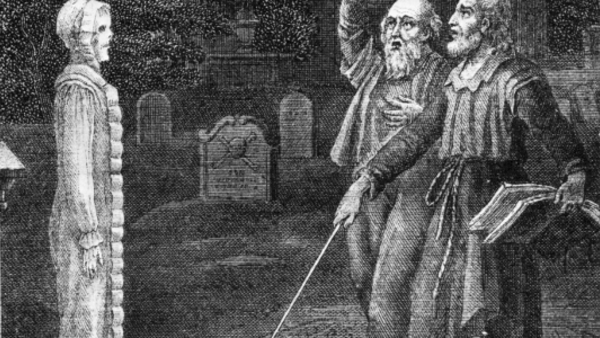
Classically, haunted house stories occur either in English country homes/castles or creepy old American suburban homes. It's a little arrogant to assume the West has a monopoly on horrifying tales of ghosts and death, however. In fact India has its own rich history of paranormal activity and spooky stories, including one from 1835, in the town of Shimla, where an English colonist met a sticky end.
Having built a home in the town in 1830 this Englishman began dabbling in Black Magic (first red flag), as it was popular at the time. After getting deep into the practice he soon started to find his family members beginning to disappear, one by one, with police at a loss to track even bodies down, with no explanation ever given for what happened to them.
A few months later, in 1835, the Englishman was found dead in his study. It later transpired that he had been testing out his Black Magic by cutting out his family member's organs and then trying to bring them back to life afterwards. With spells! Obviously, it never worked. It's said that he was then killed by their vengeful spirits, who haunt the bungalow to this day.
9. The Ghost That Killed
In most cases, a haunting is more of a benign experience. A ruddy horrifying and disturbing experience, to be sure, but not one that involves the victim being put in any sort of immediate physical danger (outside of dying of fright or being clonked over the head by some household detritus should a poltergeist come knocking). That means that when a ghost is said to kill, it's rather a serious matter.
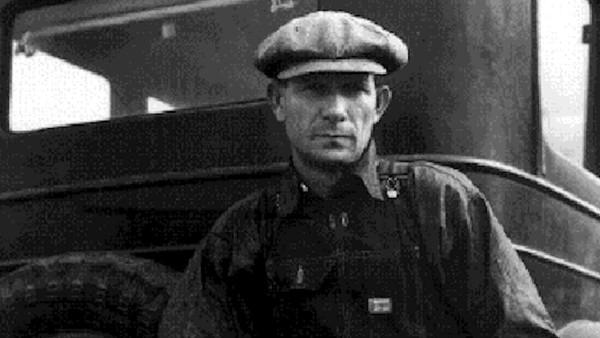
A story that's native to Kentucky, it starts with a man called Carl Pruitt, who strangled his wife with a length of chain after he suspected her of having an affair. Guilt-stricken, he took his own life soon after. He didn't have a great reputation after that: teens used to vandalise his grave, which was emblazoned with...a length of chain.
One kid died in a bike accident after one such bashing of his grave, his bank chain getting entangled round his neck and strangling him during a nasty spill. A man sick of tales of the haunted cemetery took a sledgehammer to the grave, the crunching sound assumed by locals to be the man doing his job; he was later found hung from a chain-link fence. The graveyard has since been replaced with a mall. Not a moment too soon.
8. Don't Go Playing With Ghost Trains
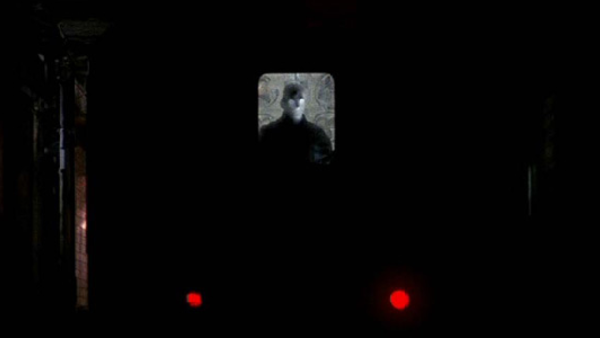
This one is more of a cautionary tale for those interested in the paranormal to be careful with their investigations, than a true death-by-haunting. Depends what sort of causal links you see between the two, perhaps. There's a well known story in Statesville, North Carolina, of a passenger train which toppled off the rails and sent thirty people to their deaths off a high bridge, back in August 27, 1891.
The legend is that, ever since then, if you hang around on the same train tracks on the anniversary of the tragedy you will see a uniformed man with a gold watch, who heralds a spectral re-enactment of the scene complete with the squealing of wheels and the screams of victims plunging to their deaths.
Seeking out that ghost train, in 2010 between 10 and 12 enthusiasts of the paranormal set out to witness what would happen on the 119th anniversary of the crash. What actually happened is that they created a tragedy of their own, not counting on an actual, corporeal train speeding along the tracks towards them. Running back along the rails, all but two survived. The lure of the ghost train was too great.
7. The Ghost That Solved Its Own Murder
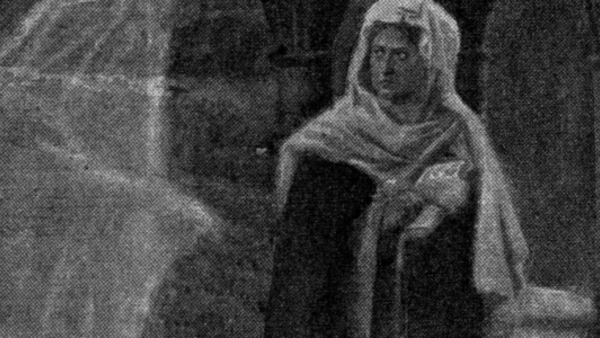
Now here's a weird, apparently true story from history. Elva Zona Heaster Shue died mysteriously in late January, 1897, with the official cause of death being that she had expired during childbirth. Except here mother, Mary Jane Heaster, new that her daughter had not been giving birth when she died in fact, to her knowledge, she hadn't even been pregnant. She would know, they lived in the same house.
All of this is a matter of record: Mary Jane arranged for her daughter's testimony to be heard in court, from beyond the grave, in what became possibly the only official trial in history to involve the use of an accusation from a ghost in what became a murder case. Zona had, indeed, become pregnant out of wedlock some years prior.
When she did marry, it was to the uniformly creepy out-of-towner Erasmus Stribbling Trout Shue. After her death, Zona apparently visited her mother, informing her that Erasmus was an abusive monster who strangled her and broke her neck. The body was exhumed, an autopsy proved that was indeed what happened, and Shue went down for murder. A man killed her, but a ghost solved it.
6. Widow Ghost Kills Ten In Bangkok

The West likes to pretend we're all enlightened and rational and don't bother with the old folk tales and myths of ghost and goblins. But we're still a society where lots of people dodge pavement cracks to save their parents' backs, where horoscopes are printed in every major newspaper, where the betting industry exists. At least in other countries they're honest about their superstitions.
Even when those beliefs get a bit terrifying. A couple of years ago reports began to circle not only of a haunted house that was claiming lives, but a spirit that was roaming around an entire town and indiscriminately murdering its populace. Not quite indiscriminately, actually: they were all young, healthy men who, without explanation, dropped dead.
After the tenth death was claimed in the Thai village of Tha Sawang a spirit medium was drafted in, who claimed that a vengeful 'Widow Ghost' was to blame. He suggested the defence of red clothes hung outside houses, said to scare the bloodthirsty ghoul away. Which rankled given a dissident political group's trademark was red shirts, meaning the town had to deal with two unwanted hauntings...
5. The Hammersmith Ghost Murder Case
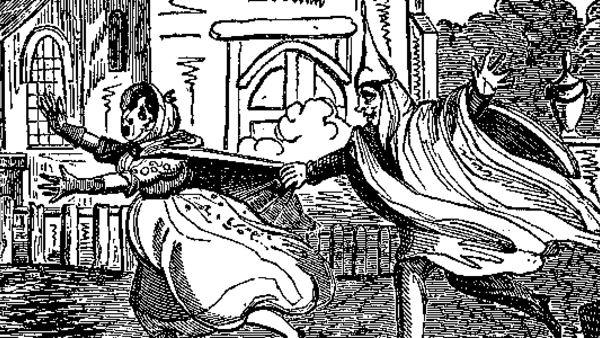
Sometimes, the victims of murder by ghost are (allegedly) actually killed by evil spirits, or else driven to kill because of them. In others, a mistaken belief in a haunting leads to the foundation of a precedent in British law regarding self-defence, and whether people can be considered liable of murder if they committed it as a consequence of a mistaken belief. Such is the story of the Hammersmith ghost murder case.
There had been a number of reports of sightings and even attacks by a ghost - claimed to be that of a suicide victim from the area - in the Hammersmith district of 19th century London. Armed patrols began to get spooked whilst on duty in the area, which is what lead one Francis Smith to shoot and kill plasterer Thomas Millwood. Smith was found guilty.
It was the white smock, trousers and waistcoat of Millwood appearing through the late-night mist, as if an apparition, that caused Smith to open fire. The death sentence for murder was commuted to a year's hard labour for Smith, in light of his mistaking Millwood for the ghost which was never buried, since suicides weren't meant to go in consecrated ground. So he claimed another victim in taking his own life...
4. A John Wilkes Booth Impersonator Killed By A Civil War Ghost
Agreeing to stay in a haunted house is never a good idea. Enough horror movies (and Super Mario spin-offs) have involved such a set-up, with somebody spending a night in a spooky location as a dare, or to get some inheritance, or something. That's mad enough. Even worse an idea is when people decide to stay permanently in houses with histories of paranormal activity.
And yet such reckless regard for the housing market has so far seen two lives claimed by one Chicago mini-mansion, which has since had to slice its asking price to the paltry sum of $159,000. People say that the building is haunted by the ghosts of small children, who will speak and run their fingers through your hair. Creepy.
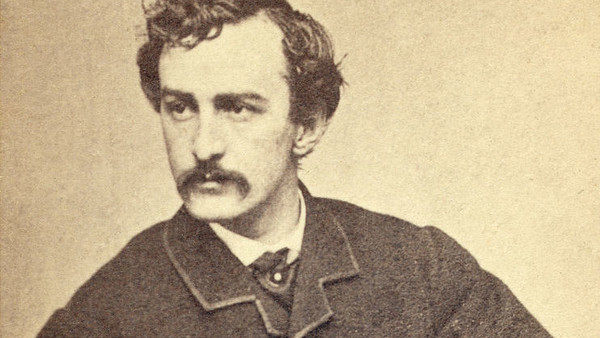
Built in 1882 and previously owned by Civil War Veteran and barbed wire pioneer Hiram Scutt, the mansion has seen two deaths in almost as many years: firstly a college football player was shot there during a party in 2004, and then in 2007 a John Wilkes Booth impersonator somehow saved up enough to buy the place... only to drop dead unexpectedly, aged 38, six months later.
3. The Mark Twain Mystery House

A bronze plaque commemorates the year that American icon Mark Twain lived in a townhouse at 14 West 10th Street in New York, from 1900-1901. To find out more about the Huckleberry Finn and Tom Sawyer writer's time in that deceptively gorgeous building, however, you have to look beyond his work - he was an avowed sceptic and rationalist in a time when spirituality was in vogue once more.
In fact Twain got off lightly during his stay in his Greenwich Village home. During his time there his encounters with the spirits amounted solely to a piece of kindling levitating from a basket next to the fire, which he responded to with a shot from his pistol. Blood appeared on the floor beneath the wood as it clattered to the ground, yet nobody was there.
But it might very well have been Twain who was re-enacting a moment from the house's tragic history. A curse can be said to be on 14 West 10th Street, with some saying that it is haunted by no fewer than twenty-two spirits - all of whom died in that house, some under tragic circumstances. Twain's ghost is said to have joined them, too, perhaps himself a victim of that curse when he died a few years later.
2. Ghost Hunter Stays At Axe Murder House, Stabs Self
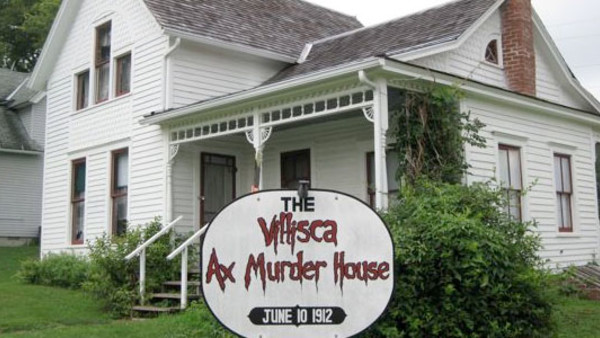
The Villisca axe murders is one of the most infamous unsolved murders in American history, with all six members of the Moore family (plus two house guests) found bludgeoned to death in their Iowa home. All eight victims - which included six children - had suffered severe head wounds from an axe. It's since become a tourist trap, because humans are a morbidly curious species.
One of the explanations for the initial murders was something supernatural, with any potential suspects being acquitted or never found. To this day the Moore residence is said to be haunted, which is probably why they don't down tours past sundown. Still, it was the perfect location for an amateur ghost hunter to spend the night.
A night which ended in said hunter - one Robert Laursen - stabbing himself in the chest. At 1AM ambulances rolled up to take him to hospital and treat the self-inflicted wound, with Laursen claiming he "could not ascribe a motive to his actions." Laursen was lucky; for a house that is steeped in the stories of murder and death, where the restless spirits of eight victims live, he was one of few to leave alive.
1. Nobody Escapes From Alcatraz
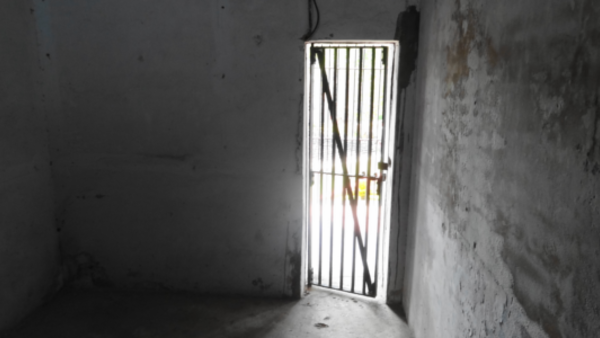
Nowadays Alcatraz is best known as a tourist attraction, or the setting for that Michael Bay film The Rock (obligatory YTMND nod). But when it was in operation it was one of the most formidable, barbaric federal prisons in the United States - which, by the standards of the American justice system, is saying something. In a time before widespread reporting on abusive guards and the like, though, Alcatraz was hell.
One of the many dehumanising practices the island - which, remember, was literally cut off from the outside world by a huge body of water - was its equivalent of solitary confinement. Putting someone in a tiny room with no light or human contact for weeks at a time wasn't enough for Alcatraz. They had The Hole.
It was solitary confinement by a factor of ten, with inmates sent their for minor infractions for weeks, forced to sleep without a mattress in pitch black. Many died there. Some from vicious beatings from the guards, but just as many died under mysterious circumstances - reported as suicides or heart attacks, usually, but often they were preceded by the inmate screaming at somebody who wasn't there, clearly terrified out of their skulls.
Did the isolation get to them? Or is it the alternate explanation: that sitting in the dark, in a room where countless had died before them, they were tormented as much by loneliness as they were by a restless spirit, suggesting the prisoner take the same way out as them...