10 Places Most Likely To Harbour Alien Life
9. Kepler-186f
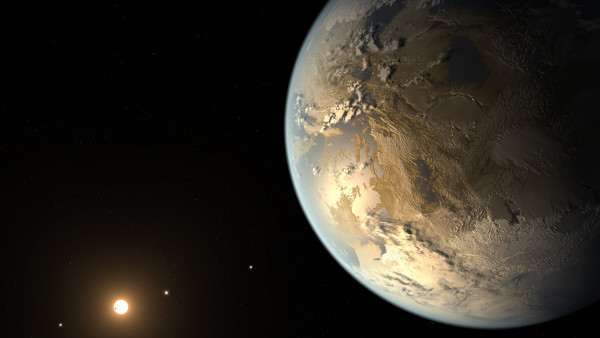
The snappily named Kepler-186f was the first validated Earth-like exoplanet found to be orbiting its star in the habitable "Goldilocks" zone.
Kepler-186f is thought to be no more that 10% bigger than Earth and probably has a rocky surface just like our home planet. It orbits its star, Kepler-186, at the outer edge of the habitable zone but with a much faster year-length of 130 days compared to our 365.
Good news for night owls as it would be a bit darker there as the star that it orbits is roughly half the size and mass of our sun, with the midday sun at roughly the same brightness on Kepler-186f as it is an hour before sunset on Earth.
In our search for alien life, scientists start by searching for planets that are as similar to Earth as possible.This isn't just narrow-mindedness, but just playing the probabilities.
We already know that Earth-like conditions can produce complex and even intelligent life, so it makes for a very good place to start in our search for extra terrestrials. If we just launched straight in looking for life in the form of sulphur-metabolising clouds of intelligent gas, then we wouldn't know the first thing about where to start looking or how to spot it when we find it.