10 Real Pirates Of The Caribbean More Bad-Ass Than Jack Sparrow

The real seadogs, scallywags and gentlemen of fortune.
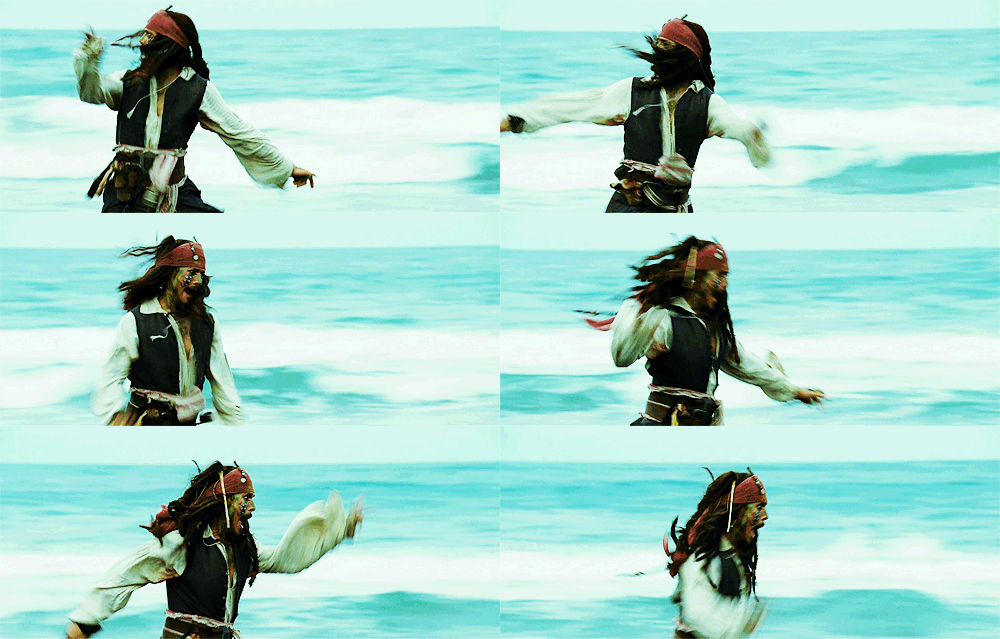
A pirate's life is more dangerous and adventurous than Hollywood would have you believe. The real pirates of the Caribbean were more sinister, brutal and complex than Captain Jack Sparrow and his crew of hapless henchmen. All the stories, books and movies you have lived with have failed to offer any true experience into the plundering, lawless nature of pirates, the struggles they faced against an empire and the tragic nature of their fates. The lives of Captain William Kidd, Edward 'Blackbeard' Thatch and Mary Read offer an adventure quite like no other...

10. 'Calico' Jack Rackham - The Charismatic Coward Behind Captain Sparrow

Often hapless, drunken and cowardly at once, Calico Jack is famed for his flamboyancy as much as his exploits at sea. As the original inspiration behind the similarly characterised Captain Jack Sparrow, Calico Jack was an extravagant dresser and possessed the famed desire for gold and treasure, contributing significantly to the typical perception of pirates in modern pop culture. As the quartermaster of the feared and reckless Charles Vane, Calico Jack demonstrates the key opportunistic quality that defines Disney's Jack Sparrow, as he capitalised on his captain's unpopularity to install himself as captain. Famously, Jack would defy pirate traditions and allow women as crew members, and soon he would marry the fierce Anne Bonny, against the wishes and advice of his crew. Indeed, his days at sea were marred by drunken mishaps, failed captures and a tendency to mysteriously disappear during battle. Calico Jack's greatest contribution to the pirate legacy is undoubtedly his design of the Jolly Roger. The skull and swords sigil has become synonymous with piracy and lawlessness. His design of the Jolly Roger was recently depicted in Starz's 'Black Sails' series, as he sought a symbol to distinguish his crew and strike fear into the hearts of navies and merchants alike.

9. Benjamin Hornigold - Pirate-Turned-Hunter

As portrayed in Assassin's Creed IV Black Flag and the series Black Sails, Benjamin Hornigold's legacy is defined by the abandonment of his pirate brethren. Beginning a life of piracy in the aftermath of the Spanish War of Succession, Hornigold led a life of successful privateering, plundering Spanish merchant vessels and swelling the ranks of his crew - a crew in which he commanded Edward Thatch as quartermaster (a man who would later gain infamy as 'Blackbeard'). Hornigold directed his actions with caution, cooperating closely with the British navy, so as to only attack their Spanish rivals and maintain an aspect of 'legality' surrounding his piratical acts. During this time, he was one of the key figures to establish the Privateer's Republic that reigned in the Bahamas (c. 1706 - 1718), as the islands remained effectively independent of the British empire, fortifying the bay with several armed ships. His apathetic approach to attacking, however, would prove his downfall, as his crew sought greater returns and richer spoils - eventually overthrowing Hornigold as captain, in favour of attacking British vessels. Thus, Hornigold returned to accept the pirate's pardon from the new governor of the Bahamas, Woodes Rogers, who in turn expected Hornigold to help hunt down his former comrades. Although Rogers lauded Hornigold's efforts, they were ultimately in vain, as the pirate-turned-hunter was shipwrecked and killed by a storm.

8. Anne Bonny - The Red-Haired Rebel

Daughter of a successful lawyer and merchant, this red-haired rebel appeared in pop culture video games, televisions shows and in 1945's 'The Spanish Main'. Problematic from the offset, Anne spiralled out of control following the death of her mother at 12 - reportedly stabbing a servant, setting fire to a plantation and marrying a low-born sailor, James Bonny, so as to disfavour her father's hopes. Eventually moving to Nassau with her husband after her father denied her an inheritance, Anne was quick to engage in piracy and abandon her husband, falling into the company of Calico Jack. Whilst her husband, James, became a vital informant for the governor Woodes Rogers, Anne absconded with Calico Jack, married and had a child together, before Jack decided to take her to the seas. Although Jack had a reputation for cowardness, Anne's was fierce and brave and rebellious. As Jack and his crew lay drunk and oblivious to the impending threat of the British navy, intent on capturing the lawless crew, it fell to Anne and her companion Mary Read to hold the ship against the navy. Outnumbered and outgunned, Anne and Mary relented and the crew were captured, sentenced to be hanged. Her last words to Jack were as fierce as expected: "Had you fought like a man, you need not have been hang'd like a dog."

7. 'Blackbeard' Edward Thatch - A Fearsome, Misunderstood Leader

As with the majority of pirates, Edward Thatch a.k.a. 'Blackbeard', was once a privateer of the Queen's navy, who fell out of work following the conclusion of war with Spain, and gained an immortal reputation as one of the most fearsome pirates of history. After parting ways with his disposed captain Benjamin Hornigold, Thatch commandeered a mighty French vessel, equipped her with 40 guns and named her 'Queen Anne's Revenge'. After famously blockading Charlestown, South Carolina and earning a fine ransom in return, Blackbeard briefly retired before returning to piracy. However, his popular reputation as a cruel, wicked fiend is entirely unfounded. Blackbeard was a loyal, wise leader, one of the few who were able to keep control of a crew of thieves and criminals. He instilled fear in crews and captives alike, with his large figure, humourless demeanour and the singed wicks that protruded from his hat. Indeed, Blackbeard appreciated that fear was a greater mechanism of control than love. Ultimately, Blackbeard was amongst the less successful, unambitious pirates, not possessing the ruthless thirst for gold of which his brethren were famed for, yet his reputation and image ensured the navy would move to destroy him. Robert Maynard would eventually spring a trap to ambush the Revenge - hiding a crew beneath deck and springing a surprise, soon beheading Blackbeard for the world to see.

6. Captain William Kidd - Victim Of An Empire
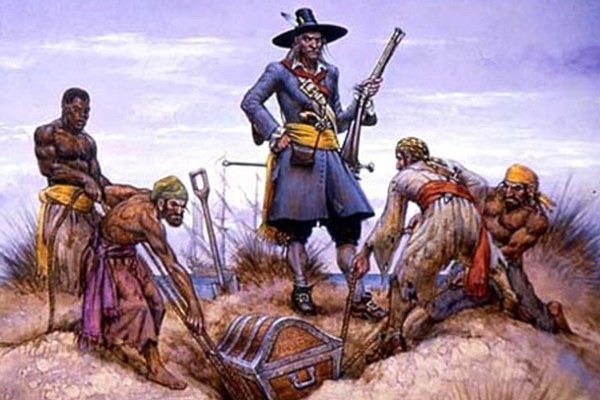
The hidden treasure of Captain William Kidd has inspired musicians, authors and video games alike. From Bob Dylan's '115th Dream', the stories of Mark Twain and the Assassin's Creed franchise, Captain Kidd has made many referential appearances, depicting a thoroughly misunderstood character. Following a successful history of privateering, King William III recruited Captain Kidd to expel a group of pirates from the African island of Madagascar. Having found a vessel and crew, Kidd made perhaps his only mistake, which triggered a cataclysmic chain of events, leading to his ultimate downfall. Upon sailing out of the Thames, Kidd failed to salute a military vessel, instead allowing his crew to slap their arses and mock the vessel. Subsequently, Kidd's crew were punished and pressed into naval service. Kidd, left crewless, was forced to recruit unemployed criminals and pirates as a result, which would prove problematic, as Kidd's cautious, law-abiding approach was undermined by gold-thirsty men with no love for England's laws. Friction with the crew resulted in Kidd relenting to their wishes of piratical acts against the East India Trading Company and French vessels, culminating in his striking and killing the gunner, which would lead to his overthrow. Realising his impending trouble with England, Kidd was said to have buried his treasure to use, but failing, as leverage against any charges - rumoured to have been found off Madagascar.

5. Edward Lowe - Maddness Knows No Ends On The High Seas

Edward Low was known for brutality, torture and an uncontrolled madness of which no pirate could commit. Said to have captured over one hundred vessels in his time, Low is believed to have burned many of them, whilst survivors of his raids report acts of torture of the most brutal nature. Victims were cut, whipped, burned and starved to death, all in the hope that Low would learn of the hidden treasures and ship schedules that would serve his raids. An upbringing amidst a family of convicted thieves from London set the tone for the rest of Low's exploits. However, there was brief hope, having married and settled with a wife, Eliza, in Boston, that Low would live in peace. Following Eliza's untimely death in childbirth, Low descended into the madness he was famous for, taking to the Caribbean and Spanish Maine to raid and pillage. Although, crew members report Low's often-expressed regret about leaving their daughter, Elizabeth, behind in Boston and refused to press married men into service of his crew - perhaps suggesting an element of tragedy behind the madness. Low's fate remains unknown, however - said to have been cast adrift by his own crew, tired of his reckless cruelty, and eventually caught and hanged by the French; or that he successfully evaded capture and lived out his days in Brazil.

4. Charles Vane - Cruel And Vicious

Charles Vane is perhaps the man that Blackbeard's cruelty should be attributed to. A primary antagonist in Assassin's Creed IV Black Flag and subject of dark portrayal in Black Sails, Charles Vane was a tyrannical captain, opposing English and Spanish crews alike, with a penchant for raw brutality towards his crew and enemies. Having refused the King's pardon, Vane successfully smashed a British navy blockade of Nassau by ramming the fleet with an un-manned vessel loaded with explosives, blowing the blockade apart and evading capture. Though skilful and ambitious in his exploits, Vane's disregard for general pirate decorum resulted in his gradual marginalisation aboard his ship, 'The Ranger'. Disobeying the governing articles, known also as 'the code', Vane cheated his crew out of spoils and rights, providing the justification for his quartermaster, Calico Jack Rackham, to organise a mutiny and dispose of a tyrannical leader. Having been marooned on the Bay of Honduras for some weeks, Vane was eventually rescued by a crew, only for his identity to be revealed by an old colleague, demanding Vane pay for his former crimes by handing him over to the British authorities. Vane was one of a number of pirates to be hanged and gibbeted - dipped in tar and hung in a steel cage - much like his quartermaster Calico Jack would experience, and Captain Kidd before him.

3. Sir Henry Morgan - Hero, Villain, Legend
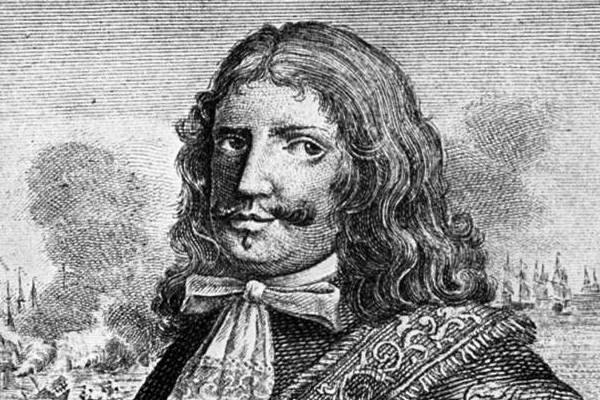
As a man said to have authored the sacred 'Code' of Pirates of the Caribbean, Sir Henry Morgan's reputation as an esteemed and skilled pirate rises above his contemporaries. After a successful career of privateering under his uncle, the governor of Jamaica, Morgan was granted a fleet of 10 ships and five hundred men to capture Puerto Principe, later capturing Portobelo. His successful career against the Spanish strongholds of the Spanish Maine garnered Sir Henry a reputation as a feared pirate. Indeed, he was initially only considered a pirate by the Spanish Crown for years, until a mishap, or perhaps an incident of misinformation, resulted in his accidental violation of the 1670 Treaty of Madrid. As Spain and England sued for peace, Sir Henry's sacking of Panama city threatened to unravel the hard-won peace. In a raid that resulted in many Spanish casualties and far less plunder than expected, Sir Henry was branded a pirate, ordered arrested by King Charles II and sent as a prisoner to England. Yet, he was never imprisoned or punished, but instead soon became a hero after war began again with Spain. He was knighted in 1673, and named lieutenant governor of Jamaica, where he spent the rest of his days, even becoming acting governor from 1680€“82. Sir Henry also provided the inspiration for Captain Morgan's spiced rum and John Steinback's 'A Cup Of Gold'.

2. Mary Read - The Tragic Tale Of A Woman Living The Life A Man

Having been dressed as a boy from childhood by her mother, in the hope of continuing to receive the inheritance owed to her deceased half-brother, Mary was adept at disguises. She joined the military after coming of age, but soon fell in love and married a Flemish soldier, settling down and buying an inn. After taking to the West Indies following her husband's death, Mary was pressed into service by a pirate crew, eventually coming into the service of Calico Jack Rackham. Yet, having been disguised as a man for many years, Mary's identity is soon revealed to fellow female crew member Anne Bonny. Although Anne was married to Calico Jack, Anne was said to have expressed feelings for the disguised Mary, who thought she was falling in love with a dapper man. Mary felt compelled to reveal her true identity upon Anne's expression. Suffering the same fate as Jack and Anne, Mary was captured by the British and sentenced to hanging in Kingston, Jamaica. In accordance with England's laws, however, Mary and Anne 'pleaded their bellies', claiming they were pregnant, gaining a temporary stay of execution until the baby was born. Although speculation continues as to Anne's possible escape, Mary was destined to die of a fever in prison - as illustrated towards the climax of Assassin's Creed IV Black Flag.

1. Bartholomew Roberts - The Charismatic King of Pirates

The most successful pirate of history, Bartholomew Roberts (a.k.a. 'Black Bart') accumulated wealth beyond his more famous contemporaries. Marked for his shrewd, calculating approach to piracy, and an ability to command the loyalty of his vast crew, Black Bart possessed the capabilities of control, strategy and refinement that the other entries have neglected. Believed to have been a finer character - in tastes and in conduct - Black Bart conducted himself with an enigmatic air that commanded respect and fear from his crew. Having been initially captured by a pirate crew, Bart was subsequently elevated to the captaincy after the previous was killed - a tribute to his persuasive character. He used the respect and loyalty of his crew to launch ambitious adventures to take the wealthiest ships and holds of the Caribbean and West Africa, whilst drawing up a strict code of articles to govern the conduct and procedures on board the ship. This controlled approach to piracy was so successful it brought Caribbean trade to a temporary standstill. Struck by a grapeshot from Captain Chaloner Ogle's 'The Swallow', Bart's crew were loyal to the end, weighing his dead body and plunging it into the sea - so fulfilling his final wish to be buried at sea. Stars as the primary antagonist of Assassin's Creed IV Black Flag, and said to have co-authored 'The Code' of Pirates of the Caribbean.

Contributor
Contributor

Writer, day-dreamer, dragon rider.