10 Reasons Greek Mythology Is Messed Up
Romans had to learn how to party from someone.
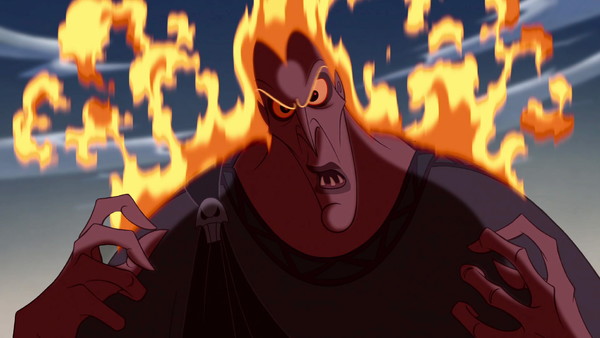
Ancient Greece is the cradle of Western civilization: it nourished the world with literature, poetry, philosophy, mathematics, physics, astronomy, geography, history, medicine, and, of course, a mythology so vast and colourful it remains massively influential today.
Contrary to what many sources have made you believe, almost nothing of its innumerable characters and chronicles is Disney-friendly.
Greek mythology is plagued with sex, violence, death, and aberrances, and they are often so close to each other that it’s hard to say where one ends and another begins.
How was Zeus' love life? What really happened during Odysseus' trip? Almost everything out there has a little known, dark detail: things that were mostly results of a very different way of seeing life. A very untied way. Just ask Freud.
10. In The Beginning Was… Incest

Beginnings are always troublesome. Since humanity became self-aware, it has been constantly looking backwards in order to answer the eternal question: “How the hell did we end up here?” How is this possible at all? What made it possible? Or perhaps, who made it possible?
In default of a completely satisfying disclosure, humans have meanwhile thought out endless stories, but just a few have openly spoken of a little, if important factor, possibly even more important than the inception itself: how it continued and managed to evolve after whatever created it. We know a male and a female are all that is needed to begin building a non-asexual, totally mammalian society, but is it? At what cost? That’s when the thing starts turning tricky.
However, Greeks basically didn’t give a damn about their genesis. They do have a myth dedicated to explain the origin of mankind, but it sounds simplistic and too Biblical (yes, they came first, but the Bible grew very popular over the years) when compared to their tremendous pantheon whose roots alone could sculpt a saga ten times more epic than J. R. R. Tolkien’s.
They didn’t give a damn about telling everything as it is either, so they established an incestuous god as the grandfather of 98% of deities and beings: Chaos shaped Gaia, the primal Mother Earth, who gave birth to Uranus, the sky. Since there weren’t many options around besides primordial forces, both of them got married and had offspring. It was just son’s duty.
9. Family Problems

Unfortunately, things didn’t work out in the family from the very beginning.
The firstlings of mother and son were the Cyclops, who behaved like pre-classical teenagers and rebelled against their father-brother. In those days sending problematic brood to Tartarus was going to be the equivalent of dispatching youngsters to their rooms… for about an eternity. So Uranus established the antecedent of grounding by dumping his unruly one-eyed descendants-sibs into the underworld.
The second-born bunch was the Titans. When Gaia found out what her husband did, she disapproved, literally turning her youngest Titan son, Cronus, against his father. She endowed him with a sickle so he could castrate Uranus at the earliest opportunity. We'll spare the details, but this arguably hasty decision took place.
Then, the story branches out unexpectedly: when Cronus got rid of his progenitor’s genitals, they fell into the ocean and splashed foam and blood which brought forth Aphrodite, the goddess of love and beauty. She now seems less attractive now, doesn't she?
8. From Mother’s Belly To Father’s Belly

Free from paternal control, Kronos occupied the empty throne and continued with the endogamous standards of the family by marrying his sister Rhea. They had six children: Hestia, Demeter, Hera, Hades, Poseidon, and Zeus. However, Kronos knew they would learn from his steps that offshoots and begetters were destined to never carry a healthy relationship, so he did what he had to do and swallowed them all as soon as they were born. Oh, very mature, dad.
Nevertheless, Rhea proved once more that mothers were seemingly the only deities with common sense in the pre-Olympian world and hid his favourite son Zeus before he made it into his father’s esophagus.
Together with his milk brother Pan (whose ancestry is mostly obscure), the Greek version of Romanic Faunus, little Zeus lived in the island of Crete, breastfed by the goat Amalthea. Later, this would cause him to grow mighty as a king and to bring in the cornucopia out of thankfulness (or an accident, since some versions say he broke off one of the goat’s horns while fooling around). A nice detail either way.
7. Zeus’ First Official Act

As an adult, Zeus returned to carry out his retaliation. He sneaked into Kronos’ house, mixed a vomit-inducing substance with his drink and waited for the fireworks.
Zeus then freed Cyclops from Tartarus. They were so grateful that they forged the three main gods’ weapons and talismans (how hard could it be to craft those things be with a single eye?): a helmet of invisibility for Hades, a trident for Poseidon, and a thunderbolt for Zeus. Relying on them, the brothers toppled, not to say murdered, their father with a three-stage plan: Hades, hidden thanks to his helmet, stole Kronos’ weapons, Poseidon then jeopardized the Titan with his trident and Zeus double tapped him with the lightning.
Some say the Titanomachy, when Kronos' progeny tried to get their revenge, lasted ten years. Other sources claim that the struggle didn’t even commence, owing to the fact that all Titans (save Themis and Prometheus, who allied with the Olympians) rushed out, imbued with sudden fear when Pan shouted so loud that he presented the world with the concept of “panic”.
Their leader, Atlas, was punished for their cowardice with the heavy task of holding up the sky on his shoulders, while the rest ended up in Tartarus. The Titanesses were forgiven (someone wanted a harem). Each jolly new king of the world took a big, cheese-dripping slice of it, dividing the sky, the sea and the underworld.
Oh! And Zeus’ first official act during his reign was the rape of Titaness Metis. But, of course, he immediately devoured her when she got pregnant. The thunder god was no fool.
6. Divine Affairs And Other Consequences

The Olympians entered into a new age. Zeus, at the head of them all, didn’t waste his time with formalities: marrying his sister Hera and inbreeding some of the most notorious gods and goddesses, like Ares, proved to be just the entrée. Monogamy wasn’t enough for the electrifying stallion, hence profligacy at any cost became his main priority (emphasis on “at any cost”).
Needless to say, the list of deities grew at lightning speed. Zeus practically gifted half of its pantheon to Ancient Greece, and the worst part is that he came to be more and more inconsiderate with each new affair. In other words, he was a douche, and his wife’s constant reproaches only served to increase his disproportionate libido. Moreover, he was so bursting with, ahem, life that Athena just erupted from his forehead one day.
At some point in this story of adultery and occasional bestiality (Zeus had to disguise as a range of animals in order to escape marital jealousy), Hera convinced Semele, one of his earthling lovers, who was also pregnant, to stop getting him into bed. The god was so frustrated that he volatilized her. Talking about getting over a relationship…
Semele’s baby was nevertheless rescued by Hermes, and he hid him in the one place he knew his father would never suspect: Zeus’ own thigh.
Somehow, he didn’t notice a fetus was developing inside his upper leg, and fortunately so, because three months later oenophiles and Nietzsche acquired someone to worship: Dionysus, the only god with a mortal mother... and the only one who blurred the line between Cesarean and liposuction.
5. More Affairs

Equally noticeable was Aphrodite’s debauchery. She was after all the goddess of love and beauty, so it was just a matter of time before she gave herself over to divine pleasures with the splendid amount of hunks Zeus was providing and terrestrial squires he was ignoring.
Carrying the banner of free love, Aphrodite got involved in the conception of famous characters, sometimes propitiously (like Aeneas, the only survivor of the siege of Troy), sometimes curiously (thanks to Hermes, she begat Hermaphroditus, who had both male and female genitalia), and other times regrettably: with Dionysus she had a cursed-before-birth Priapus, who besides having an oversized, perpetual, but useless erection, was so unsightly and loathsome that he was expelled from Mount Olympus. And you have to have real merits to be thrown out from there, believe me.
Aphrodite even managed to seduce the grumpy god of war. But, like him, she was possessive (a ticklish feature considering her policy). Once this sentiment nagged her to go so far as to make Myrrha, daughter of King Cinyras, fall in love with her father and sleep with him when he was drunk. As soon as he regained consciousness and realized the terrible act committed, he angrily chased Myrrha to kill her, but Aphrodite transformed the incestuous daughter into a myrrh-tree. Deliverance or further punishment, it is unclear.
What happened next was that her bark gave birth to Adonis, who grew up so beautiful that Aphrodite didn’t resist the temptation (how could she?). Ares, in a fit of jealousy, took the form of a wild boar and slew the poor god.
4. Minotaur, But How?

So Zeus was sleeping with every female he had a crush on. Basically he did his thing and Hera subsequently punished her “adversaries” in ways only a goddess could devise. But there was one whose adultery she never found out about: Europa.
She was a pretty young noble who strolled along the beach and was kidnapped by a magnificent white bull. Yes, it was Zeus. He took her to the island of Crete, where they didn’t waste their time. Shortly thereafter, Europa bore Minos.
Minos was raised in the same island of which he would be king. He indeed ruled so wisely he became one of the judges of the dead in the underworld after deceased, but like many good chairmen, he was part of a dark secret during his life: having inherited her mother’s predilection for beautiful bulls, he refused to sacrifice the white specimen Poseidon sent him as a gift from the sea and decided to keep it. Zeus’ brother wasn’t pleased with this decision, therefore he made Pasiphae, Minos’ wife, fall in love with the animal… and what follows is just as bizarre as you might imagine.
Pasiphae commissioned Daedalus, a notorious craftsman, to build a wooden cow with gorgeous legs where she could squeeze into. When the bull looked at the trap, it couldn’t help follow the impulses of its instinct. And the Minotaur came to the world.
Kind of an inverted Trojan horse…
3. Hercules And The Twelve Labours

We now have to talk about Heracles, best known as Hercules, because, well, he was probably the coolest guy in Hellenic mythology, the Greek version of Thor. He came to be the most successful of all demigod heroes, gaining the title of “only son of a mortal mother who became a god” as well as an imperishable place in pop culture.
Among his numerous adventures, he rescued Alcestis, King Admetus’ wife, from the Hades, freed Prometheus from his eternal punishment, wrestled with a river god, and even held up the sky for Atlas (then tricked him into taking the burden again), but his best and most famous tour de force is a dozen labours he brought off at the service of King Eurystheus.
Mostly consisting of epic fights against epic monsters, impossible hunts, years-long expeditions and one grand-scale flush, they are nonetheless permeated with a somber word: penance. They were indeed twelve actions he had to perform so that he could make amends for a terrible damage: when Hera got tired of his endless ventures, she drove him mad and made him kill his nephew, his children and wife. After recovering his sanity, Heracles went to Delphi and was advised by the Oracle to serve Eurystheus for twelve years.
Luckily, he had Iolaus, his nephew and lover, by his side all the time. All of it.
2. The Expedition To Troy Wasn’t Easy As Pie

The Trojan War is perhaps the most recognizable event in Greek mythology -the epic “I want my wife back!” conflict which literally reduced a splendorous city to ashes.
Zeus entrusted Paris, prince of Troy, with the verdict on one of the daily divine issues: a beauty pageant where Athena, Hera, and Aphrodite competed with each other for a golden apple. Nonetheless, because of his indecision the whole thing turned into an auction. Aphrodite’s offer (the love of the most beautiful woman in the world) won and led the other two to promise they would put the “Troy” in “destroy”.
Unfortunately, the woman, Helen, turned out to be married, so Paris just eloped to his city with her. Menelaus, Helen’s husband and king of Sparta, wasn’t happy. Oh boy, he wasn’t.
His brother Agamemnon summoned all Greek governors on Aulis, where they organized a retrieval. But not everyone was willing to go to war just because someone’s partner was missing. Two of the greatest soldiers resorted to little honorable stratagems: Ulysses pretended to be mad and Achilles disguised as a woman. Very clever... if it'd been a Three Stooges gag.
When they were uncovered and convinced, they finally left, but a storm scattered the armada, some got lost and, after a while, they reunited on Aulis again. Then, a new problem arose: there was no wind. Ships couldn’t set sail. The only solution was evident: Agamemnon had to sacrifice his daughter, Iphigenia. After it was done, they left again. It took the Greeks several years to arrive at Trojan land before the actual 10-year war could begin.
Pff, better get another wife, you lunatic.
1. Ulysses’ Hangover

So the war was over. Menelaus returned home along with his wife. Agamemnon did the same, but there he was killed by his wife Clytemnestra and her lover Aegisthus, triggering the antecedent of the Electra complex.
For his part, Ulysses didn’t find his comeback so smooth. He had brief and not-so-brief encounters with the Cicones, the Cyclops Polyphemus, the sirens, the Laestrygonians and even the overly attached nymph Calypso. He was given a bag containing all the winds, except the one that could bring him home. He lost all his men when they ate the wrong cattle. But not everything was pain and yearning in the Odyssey (apparently).
Odysseus and his crew found Aeaea, the island where the sorceress Circe lived. After a treacherous welcome, he was able to free his men from a spell that had turned them into pigs and made sure the sorceress wouldn’t fool with them anymore. Thereafter, he couldn’t help noticing the lavish dinner on the table, said a comfortable “Why not?” to himself and spent a whole year there, eating, drinking, carousing, and satisfying Circe’s exaggerated sexual appetite. As a result, they had a child: Telegonus.
Years later, Telegonus murdered Ulysses inadvertently while searching for him. Realizing what he'd done, he took his body, together with Penelope and Telemachus (wife and son of the deceased), to Aeaea, where Circe made them immortal. Then, Telegonus married Penelope and Telemachus married Circe. You know, the fathers-sons, mothers-sons usual stuff.