10 Strangest Jobs From History

Farting 9 'til 5, what a way to make a living.

Throughout history, professions have flourished then suddenly died out. Some disappeared because technological advances made them redundant, others went because changes in our cultural tastes rendered them superfluous. Most of these dead careers seem alien to our 21st century minds, yet understandable in the context of history. Some however were just plain weird. Like the man who was employed by Henry the 2nd to fart on cue, or the people whose job it was to plan orgies for the Roman elite. There were those who had to whip dogs to stop them interrupting church services, the doctors who ripped live toads apart to heal people, and the kids who had to scavenge for excess cotton in mills and often ended up getting scalped by the looms above them. These and more are some of the strangest things that anyone has ever done to earn a living€

10. Orgy Planner

Today we have wedding planners, town planners, party planners and all manner of other people who can take the arduous task of organising something out of our hands. In ancient Rome they had them too, and one of the weirdest was the Orgy Planner. He was responsible for every aspect of an orgy: from what food and drink was served, to what music was played. They even selected which women (and boys) would attend so guests could have the most enjoyment from the event€™s more important proceedings. If the Orgy Planner was particularly good at his job, he€™d even get an invite to attend. Unfortunately, outside of the upper echelons of society, Orgy Planners were pretty much despised, either because they didn€™t invite people from the lower classes, or because the lower classes saw the whole thing as too opulent and decadent. Gaius Petronius Arbiter, who worked with Nero, was the most famous Orgy Planner, and he is believed to have also written the novel Satyricon, which fictionalised the debauchery that went on during the 5th Emperor of Rome€™s reign.

9. Armpit Hair Plucker

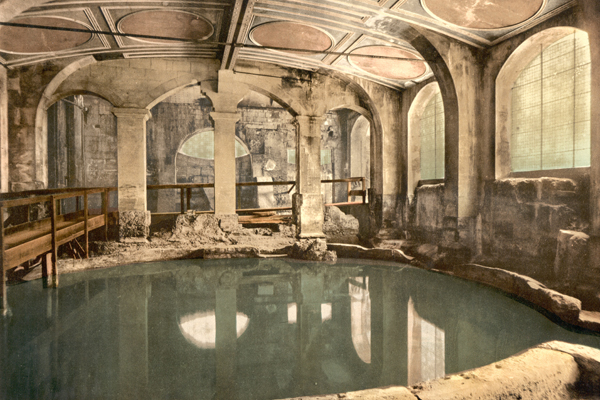
It€™s no secret that the ancient Romans were incredibly vain. They wanted to look their best at all times, particularly when they had to take their clothes off in public. In around 1 AD, this happened more often than you€™d think, and we don€™t just mean orgies. As well as those events of ill-repute, Romans also visited public bath houses regularly, and one source of embarrassment when they were there was the possibility of armpit hair. As we all know, that part of the body can smell pretty bad, so the bath houses employed Armpit Hair Pluckers, to try and help minimise the odour. They used red-hot bronze tweezers shaped like sickles to remove unwanted hair from patrons. You didn€™t have to have any training to do the job, but a strong arm was necessary, as was the ability to minimise your customer€™s pain. Unfortunately you did have to root about in smelly armpits all day long, so it wasn€™t all easy-going.

8. Dog Whipper

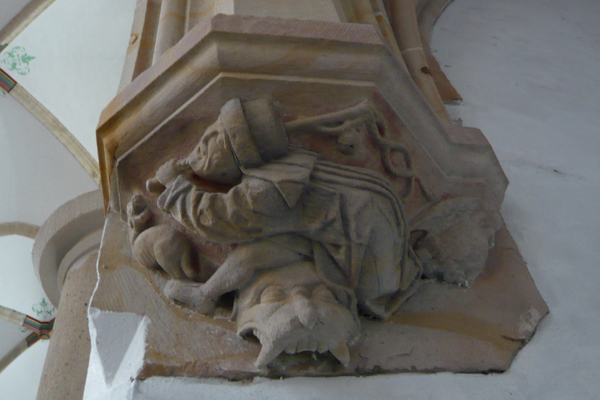
We all remember that one day at school, when a dog got in the playground and everyone went a bit mental. Well that kind of thing has been happening throughout history, and those pesky canines have not just been disrupting kids€™ learning. Between the 16th and 19th centuries, churches had to employ Dog Whippers, whose job it was to stop unruly mutts running in and causing a fuss. A Dog Whipper€™s tools included a three-foot long whip and a pair of tongs, the latter used to remove particularly vicious dogs at a safe distance. It wasn€™t just stray dogs that caused problems either. Members of congregation would bring their best friends along to church, and often they would start fighting with each other. The Dog Whipper would remove them so the service could continue peacefully. In some places the job was not restricted to church grounds, meaning that they were often early versions of animal control officers.

7. Sluggard Waker

In 18th Britain, the church was starting to lose its influence. Many people still went, because they had to be seen to be going, but they often didn't take things too seriously. To counter this, churches employed a Sluggard Waker, who would walk up and down the church aisles ensuring everyone stayed awake. If they saw anyone who was starting to nod off, they would pull out a big stick €“ sometimes called a wand €“ and poke them pretty hard on the head. The wands were long and straight, and not unlike a snooker cue today. Most often they had something similar to a door knob attached to end, a swift clunk of which would quickly jolt the offender back to piety. In some areas of England there were even different types of tips on the wands, which were designated for waking either men or women. One with a brass tip would be shoved into the head of a sleeping gent, while one with a fox tail on the end was used for waking up dozing ladies.

6. Curse Tablet Scribe

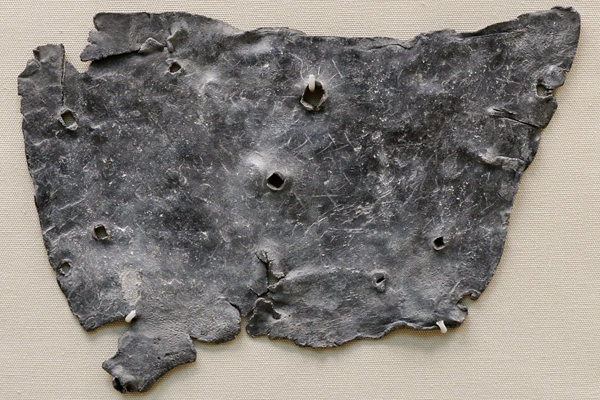
Getting even with your enemies was a serious business in ancient Rome, but if you couldn€™t exact revenge personally, you could always ask on the gods to help you out. The middlemen in this conversation were called Curse Tablet Scribes, and it was their job to spend all day listening to people moan about the various wrongs they had endured. The scribe would then take each person€™s request for vengeance and etch a curse onto a sheet of soft lead, which would be nailed to the wall of the nearest temple. If the curse needed to be extra-effective, it would be written backwards. These curses would wish for all manner of gruesome punishments, including blindness, madness, and the hope that intestines would be eaten away. One of these sheets was discovered in Jerusalem in 2013. The curse is directed at a person called €œlennys€ and appears to be about a legal case: "I strike and strike down and nail down the tongue, the eyes, the wrath, the ire, the anger, the procrastination, the opposition of Iennys".

5. Toad Doctor

Everyone knows about the weird and wonderful medical treatments that doctors used to prescribe (leeches anyone?), but what is less well known is the subset of doctors who specialised in wacky treatments. For example, up until the end of the 19th century, doctors whose primary tools were toads existed. They mostly tackled a skin ailment, colloquially known as €œthe King€™s Evil€, but medically called scrofula. This nasty disease is a form of tuberculosis that most often causes the neck to swell, and it was thought that a king could cure it by touch, hence its name. Kings didn€™t often go about fondling peasants though, and this is where Toad Doctors came in. In an attempt to cure the scrofula, they would put a live toad in a bag and hang it around the neck of an afflicted person. Sometimes the poor toad would get an even rawer deal, and have only its leg torn off to go in the bag instead. People had believed in the supposed healing qualities of the toad since Roman times, but by the late 1800s the tide of public opinion was starting to change. Toad cures were more and more called a superstition, and Toad Doctors themselves were labelled quacks.

4. Stone Eater

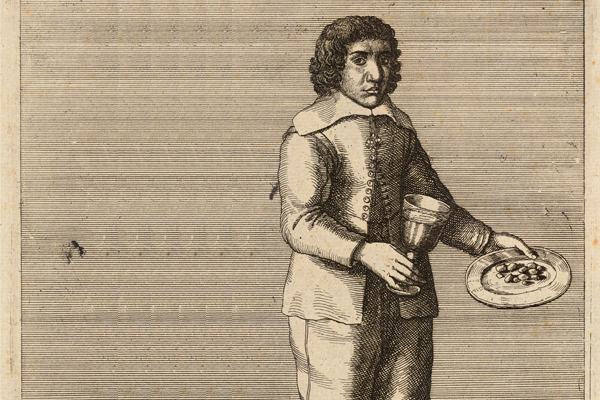
Professional eaters have long been a thing, and it remains a valid €“ if weird €“ profession today. From people who spend their lives participating in hot dog eating contests, to Adam Richman from Man Vs Food, eating food can be a way to make a living. In the Georgian era these professional eaters were common as well, but instead of eating food, they specialised in guzzling something a bit more eclectic €“ stones. Newspapers would advertise Stone Eaters who could eat up to 150 rocks and bear no ill effects. One of the most famous was Francis Battalia, who was said to eat half a peck of stones a day, which roughly translates as 8 pints worth of gravel. The validity of his stone eating was even put to the test, when he was accused of being an imposter, investigated, and cleared of all charges. Whether it was trickery or not, Battalia and other Stone Eaters would still attract crowds of thousands of people, who would marvel at their feats and try and work out how they were achieved.

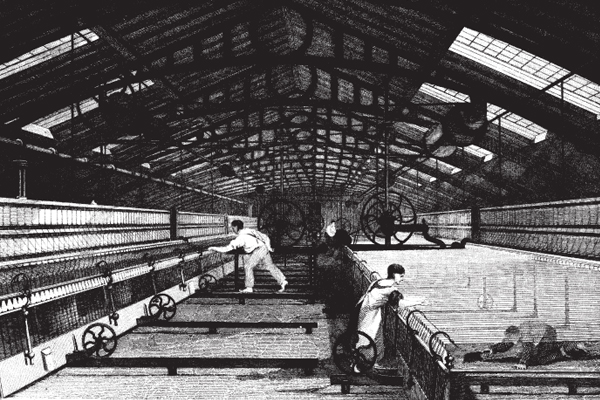
3. Cotton Scavenger

History is littered with stories of young children going out to work, sometimes in shocking and cruel conditions. One of the most dangerous jobs they could have was the work of a scavenger, in the cotton mills of the 18th and 19th centuries. Cotton was such a valuable commodity in those days €“ the American south had declared that €œcotton is king€ €“ that even discarded scraps of it were sought after. Consequently, mills would employ children €“ sometimes younger than ten - as scavengers, tasked with dashing under the spinning mules to retrieve discarded bits of cotton. The people who operated the mules would not stop while the children were underneath €“ they were paid based on how much they produced €“ so injuries were common. Fingers could be lost, children got crushed, and sometimes scalped by the moving machinery. On some occasions, children even died, and at a mill near Cork in Ireland, there were at least six deaths in one four-year period. Various pieces of legislation tried to curb this child employment, but it was not until the Education Act of 1918 that anyone under 14 was officially banned from working in factories.

2. Flyter

It may come as a surprise to some, but the rap battle has its roots in the 5th century. In those times, Flyting was publicly practiced as an entertaining form of insult-hurling. The courts of James IV and V of Scotland employed professional Flyters, who would amuse the royals by systematically insulting each other in verse. These insults would often be of a highly sexual nature, sometimes even veering into the scatological One famous exchange was The Flyting of Dunbar and Kennedie from the early 16th century. Its 128 lines include such gems as:
Gray-visaged gallows-bird, out of your wits gone wild, Loathsome and lousy, as wet as a cress, Since you with worship would so fain be styled, Hail, Monsignor! Your balls droop below your dress.
You can read the whole thing here. Though Flyting was most associated with Scotland, the English practiced it too, most notably to insult enemies. Flyters were commissioned to write offensive verse which would then be directed at opposition armies.

1. Professional Farter
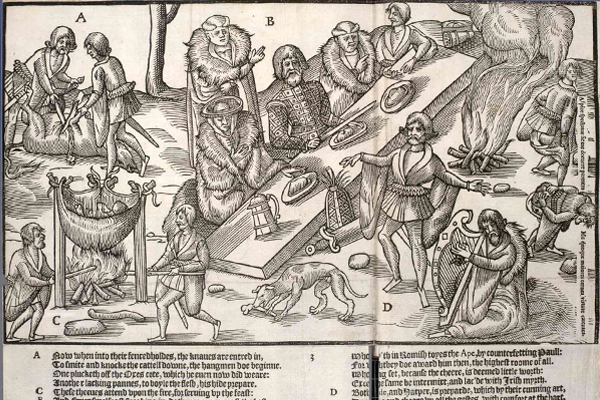
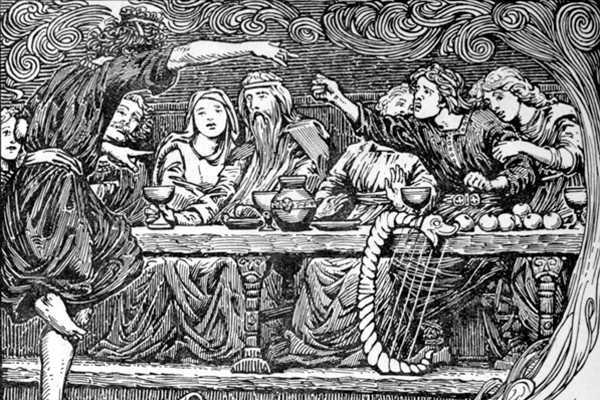
In medieval times, court jesters were required to entertain the upper classes in any way possible. Most commonly this included songs, music, storytelling, acrobatics, juggling, telling jokes, and magic, but in rare instances these minstrels added another string to their bow: farting on cue. Roland the Farter - also known as Roland le Fartere, Roulandus le Fartere or Roland le Petour, Rowland le Sarcere - was one such professional gas-emitter, in the court of Henry the 2nd in the 12th century. He was so good at his job that he was given Hemingstone Manor in Suffolk along with 30 acres of land in recognition of his talents. In his most important duty, he was required to simultaneously perform €œunum saltum et siffletum et unum bumbulum" (one jump, one whistle, and one fart) for the court every Christmas. Unfortunately for Roland, Henry€™s successor Richard the Lionheart was less enamoured with a jester who could fart by appointment. Roland was possibly the last farting jester, but he was by no means the first. As early as the 5th century, St Augustine was writing about them and their ability to €œproduce at will such musical sounds from their behind (without any stink) that they seem to be singing from that region€.

 
Posted On: 
Contributor
Contributor

A man who writes things.