10 Unusual Facts You Didn't Know About The Titanic
Hands up who knew the infamous ship was carrying Dragon's Blood...?
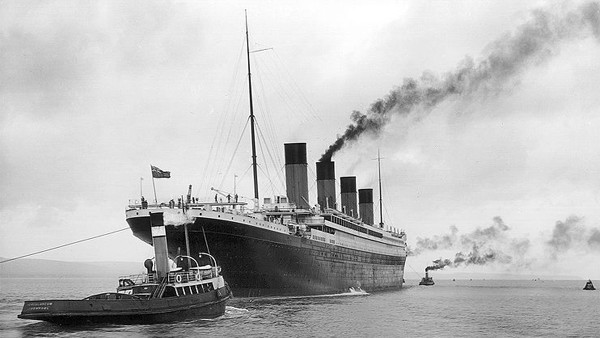
The RMS Titanic was the largest and most luxurious passenger liner of her day, and boasted such on-board luxuries as a gymnasium and Turkish baths. The ship set sail on her maiden voyage from Southampton to New York with 2,224 passengers and crew on board on 10th April, 1912, and it was a journey that would go down in history, for all the wrong reasons.
102 years later the fact that the ship was not carrying enough lifeboats and that the band continued to play as the ship went down are well known around the world, as the ship's story became legend, with movies, books, and a museum dedicated to it. Yet even though it is one of the most famous stories of all time, there are facts and revelations that can still be classed as rare and shocking.
We're celebrating 10 of the the most unusual here...
10. The Nazi Party Made Their Own Titanic Propaganda Movie
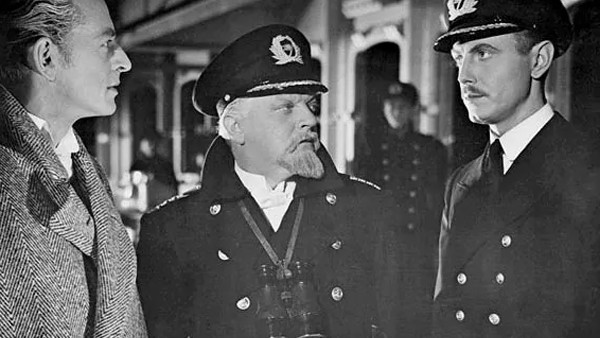
Of all the movies that have been produced about the Titanic, the 1943 Nazi take on the sinking has got to be the most peculiar. The film was commissioned directly by Hitler's Propaganda Minister, Jospeh Goebbels, and was devised to glorify Germany whilst painting the British as greedy and arrogant.
The film's plot deals with the White Star Line planning to sneakily sell their own company's stocks in order to cause stock prices to fall, which they could then buy them back at a reduced rate to make a fortune once the Titanic broke the world speed record.
The film stars a fictional German First Officer named Herr Petersen, who spends the course of the movie trying to convince the greedy British owners to slow the ship down. Somewhat inevitably, he then becomes a true hero during the ship's sinking, helping many brave German passengers to escape, and even heroically diving from the Titanic with a child in his arms moments before the ship disappears beneath the ocean.
Petersen's brave actions are in stark contrast to the portrayal of the British characters in the film, who are all shown to be greedy and uncaring. Ironically, the film was later banned by Goebbels when parallels were drawn between the scenes of third class passengers locked below decks and what was happening in Nazi concentration camps.
9. The Titanic Was On Fire When She Set Sail
In stark contrast to the iceberg that caused the Titanic to sink, the ship also came under attack from another natural hazard in the form of a fire. Upon setting sail from her birthplace of Belfast to collect passengers in Southampton, a fire broke out in one of Titanic's reserve coal bunkers, and continued to burn throughout the ship's maiden voyage despite the crews best efforts to extinguish it.
The fire was finally defeated on the 13th April, 1912, the day before Titanic struck the iceberg, by a combination of wetting the coal with a hose and transferring the burning coal to the ship's furnaces. Many theories have emerged over the years that the fire may have helped contribute to Titanics sinking by weakening the ship's structure, and pushing the ship to excess speed due to the extra coal added to the furnaces.
Whatever the impact, it seems strange to our 21st century minds that a passenger liner would be allowed to sail while a fire raged below decks. This, coupled with the lack of lifeboats the Titanic was carrying, only goes to show that health and safety was pretty much non-existent in 1912.
8. The Titanic Had Some Very Strange Cargo Including Dragon's Blood

As well as its 2,224 passengers and crew, Titanic was also carrying a vast assortment of cargo, which was as wide and varied as its passengers, ranging from cases of champagne to a Renault Type CB Coupe De Ville.
Perhaps one of the strangest items on the ship's cargo list were 76 cases of 'Dragon's Blood'. It's not quite as odd or as sinister as you might think; it is a name given to a bright red plant resin used for dye, medicine, and incense.
Although the blood of fire breathing monsters was not actually aboard the ship, in the wake of the sinking, all manor of rumours sprung up about magical and cursed items that had been hidden in the ship's cargo hold. These rumours included that of a cursed mummy that had been smuggled aboard, the curse leading to the calamity.
7. There Were Only Two Bathtubs To Serve The Entire Third Class
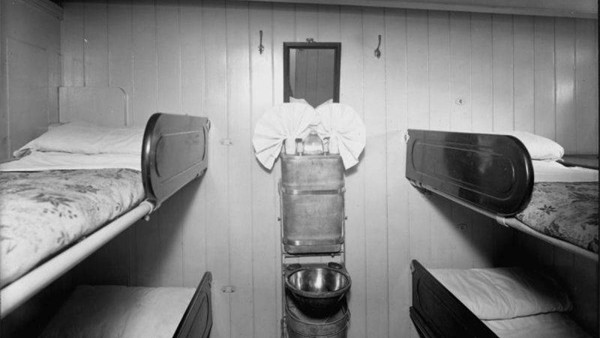
While the Titanic's First Class passengers enjoyed the luxury of spacious state-rooms, a swimming pool, and Turkish baths, the passengers in third class really had it rough. As if the cramped conditions and rats weren't bad enough, there were only two bathtubs aboard to accommodate over seven hundred Third Class passengers.
While these conditions seem atrocious by our modern day standards, for 1912 they were considered amongst the best, and the Third Class accommodation on Titanic was even compared to Second Class accommodation aboard other ships. The Titanic even provided food for Third Class passengers, while it was common in 1912 for passengers of such a rank to bring their own food on ship voyages.
6. The First Movie About The Sinking Was Released 29 Days After the Titanic Sank
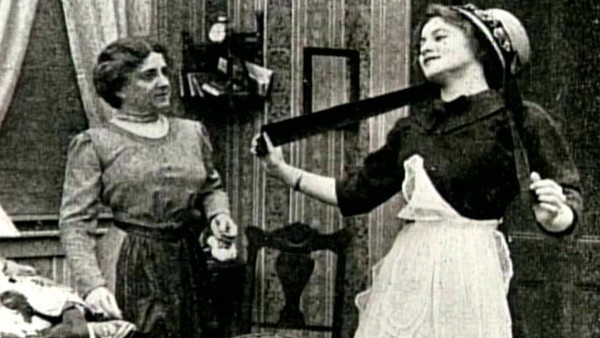
The Titanic disaster has captured the imagination of many film makers for decades, spawning films such as Roy Ward Baker's A Night To Remember and James Cameron's 1997 epic Titanic. Yet the first film to document and dramatise the events of the sinking was released a mere 29 days after the ship had sunk.
Saved From The Titanic starred a young actress, Dorothy Gibson, who had actually survived the disaster. The film sees Gibson playing herself telling fictionalised versions of her parents and fiancé about her ordeal on the ship. Real life footage of icebergs and of Titanic's nearly identical sister ship, Olypmic, were used in the film, while Gibson added to its authenticity by wearing the same dress she had worn on the night of the sinking.
Sadly, the psychological strain of the sinking and re-living it for the film really took its toll on Gibson, and she suffered a mental breakdown not long after the movie's release.
5. Only Three Of Titanics Four Funnels Were Real
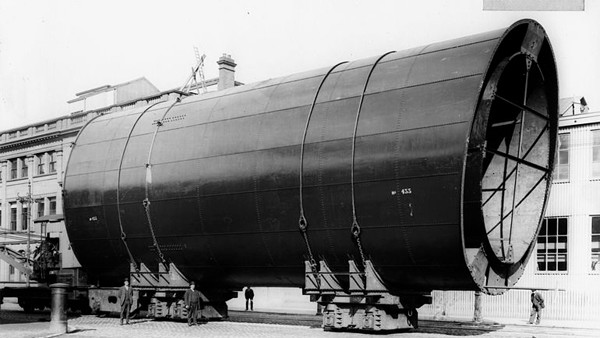
The Titanic's mighty engines were powered by large coal-burning furnaces, and these furnaces produced smoke and excess steam that needed to be safely ventilated away from the ship. This was achieved through the use of smokestacks. The Titanic's design, with four of these monstrous funnels towering above its decks is one that is instantly recognisable around the globe.
However, only three of the four actually worked, with the forth being added merely for aesthetic purposes. When building the Titanic and her sister ship the Olympic, The White Star Line wanted to break its rival Cunards record for the largest passenger liners afloat. Cunard held that title with its ships Lusitania and Mauritania, both of which had four funnels. White Star knew they could have no fewer funnels than their rivals for fear that the ships would not look anywhere near as impressive.
4. After Titanic, The White Star Line Built A Bigger Version, Which Also Sank
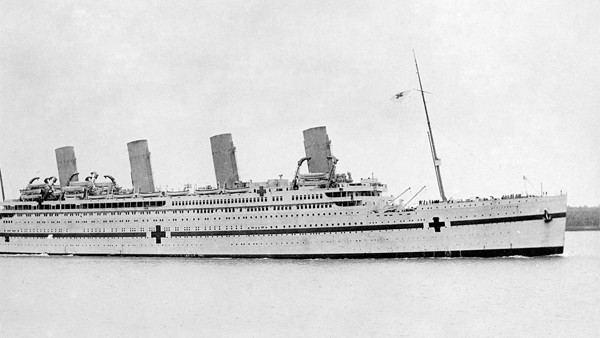
After the tragedy of the Titanic's sinking, The White Star Line reviewed the design of the planned third Olympic-class liner, the Britannic. The ship was now to include the addition of a double hull and the raising of the ship's watertight bulkheads, from E deck all the way up to B deck. The Britannic also had added lifeboat capacity and a far superior method of launching them in the form of new motorised davits. The Britannic would also carry lifeboats with enough space for 3,600 people, more than the maximum capacity of crew and passengers that the ship could accommodate.
The new ship was launched in February 1914 and following the outbreak of the First World War later that year, she entered service as a hospital ship to serve the eastern Mediterranean. Britannic was repainted white with a green stripe and large red crosses to identify her as a hospital ship and not a war ship. On her 6th mission to rescue injured troupes, Britannic hit a mine off the coast of the Greek Island of Kea and sank in 55 minutes, under half the time it took the Titanic to sink, with a loss of 30 lives.
Interestingly, Violet Jessop, a lady working as a nurse aboard the Britannic, was also on the Titanic when it sank. She amazingly survived both disasters.
3. An 1898 Novel Draws Eerie Parallels With The Titanic Disaster
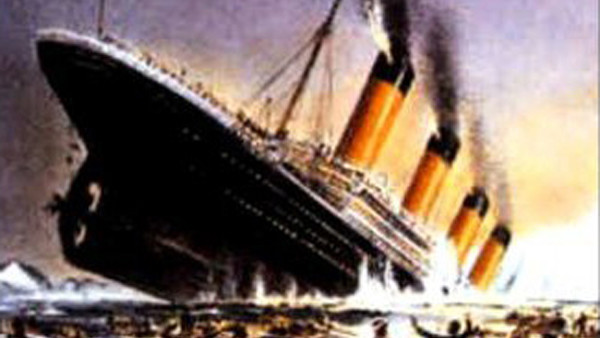
14 years before the Titanic set sail on her doomed maiden voyage, author Morgan Robertson released a novel named Futility that bares a lot of eerie similarities to the events of the Titanic's sinking.
The book tells the fictional story of an unsinkable passenger liner that does the impossible after hitting an iceberg in the North Atlantic, but the similarities don't stop there. Both the ship in the book and the Titanic hit the iceberg on their starboard side, and both were traveling at between 22 and 25 knots.
Furthermore, the Titanic and the fictional ship sank on a night in April, and both sank roughly 400 miles from America. Neither ship had enough lifeboats on board, and their sinkings both resulted in the deaths of over half of the people on board. The story is made all the spookier by the name of the ship in Robertson's novel: The Titan.
2. There Was A Ship Stationed Within Sight Of The Titanic That Did Not Respond To Her Distress Calls
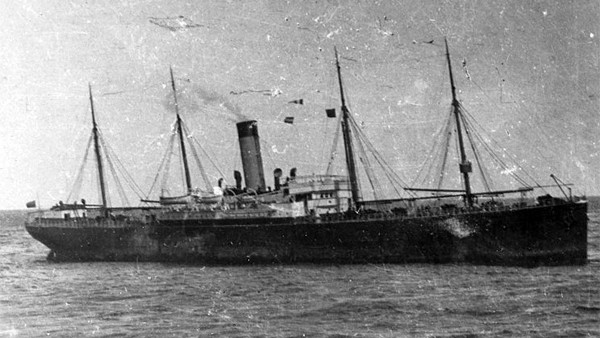
At the inquiry into the sinking of the Titanic, surviving crew members testified that they had sighted the lights of another ship about six miles from where Titanic was in distress. The ship would later be identified as the SS Californian, which had stopped for the night due to the dangers of icebergs in the vicinity.
Fatally, the Californian had also turned off its wireless radio, and its captain had gone to bed. The crew of the Californian admitted to seeing the lights of a ship in the distance but stated that they did not realise that she was in distress until they turned their radio back on the following morning only to learn of Titanic's sinking.
During the sinking, the Titanic fired rockets in a desperate bid to attract the other ship's attention. The standard distress signal of 1912 was to fire rockets at one minute intervals. However, in the panic of the moment, Titanic was firing its rockets erratically and at irregular intervals which led the Californian to conclude the ship they could see in the distance had just stopped for the night to have a party. By 2.30, the Californian's crew noted that the lights of the other ship had disappeared and assumed that it had continued on its way. Had the Californian responded to the Titanic's distress signals, it could have reached the stricken ship in time to have saved a considerable amount, if not all, of the lives lost that night.
1. Titanic's Second Officer Would Go On To Aid With The Dunkirk Evacuation
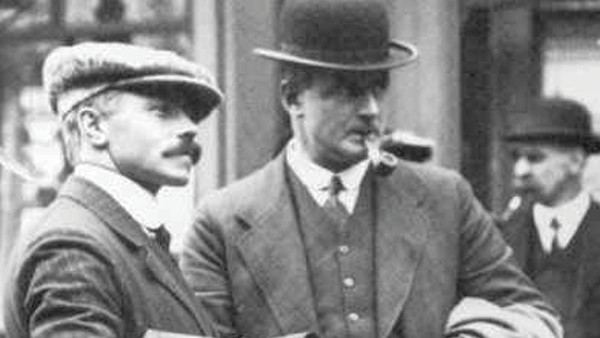
Charles Herbert Lightoller was the Titanic's second officer and remained on the ship helping passengers to escape until the final moments of the sinking. Lightoller survived by swimming to an overturned lifeboat that had floated off the ship as it sank. The second officer took charge of the upside down boat, helping survivors to climb aboard whilst distributing their weight evenly to keep the boat from sinking. His actions helped to keep the boat, and the morale of the thirty people who clung to it, afloat for four hours until rescue finally came.
Lightoller remained loyal to the White Star Line and defended them at the inquiry into the ship's sinking, but unfortunately his association with the Titanic killed his career and he was forced to retire from working aboard ships. He took up a number of other jobs which included inn keeper and chicken farmer but did not give up on the sea, and continued to sail on his own yacht, the Sundowner.
In 1940, Lightoller became involved in another major historical event when he used his yacht to join the flotilla that sailed to rescue soldiers during the evacuation of Dunkirk. Talk about an exciting life.
-
Did you enjoy this article? Share your thoughts below in the comments thread.