21 Fictional Characters Blamed For Real Life Crimes

If in doubt, blame the movies.
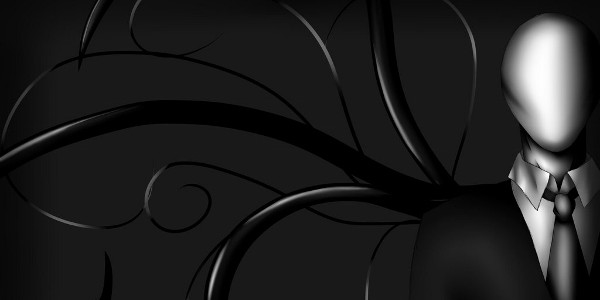
Slenderman is in the headlines after being cited as the reason behind the recent stabbing of a 12 year old girl, by two of her classmates in Wisconsin, who stated that they were trying to "please" Slenderman and were "on their way to his mansion" when they were apprehended. The media reporting of the story has been quick to sensationalise the link to the meme based character. The sorry fact is, that were it not for a connection to a recognisable cultural product a girl being stabbed 19 times and surviving wouldn't ordinarily be a big enough story to have the global coverage this has received. In light of this it seems fitting to look at 21 other characters that have been said to inspire real life crimes. In a lot of these cases cultural products were swiftly marked as the patsy on which to blame society's problems, or even as a means of trying to push forward stricter laws of censorship. Rather than trivialise real-life tragedies this list examines historical cases of this phenomenon and to what extent the characters in question have been simply scapegoated, or even used to enforce an agenda against depictions of violence in entertainment.

21. Tyler Durden

In 2009 19 year old Kyle Shaw turned his obsession with David Fincher's 1999 masterpiece into his own ill-advised Project: Mayhem campaign. Shaw planted homemade bombs in several corporate locations in Manhattan, one of which detonated outside a Starbucks on the Upper East Side. Thankfully no one was injured in the blast, which was said to have only caused damage to the store-front, but the severity of the crime led to calls for Shaw to be imprisoned for 25 years under the Patriot Act. After a plea bargain he was given 3 and a half years. The media of course played up the point-of-interest that Shaw was inspired by Fight Club. Something Shaw fed into himself by turning up at one of his hearings with a black-eye, suffered in an organised fight at Rikers Island Prison.

20. Jigsaw

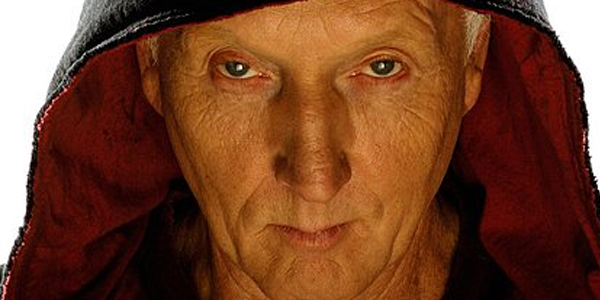
Unsurprisingly Jigsaw has cropped up several times in connection to reported crimes: fortunately none that have yet resulted in murder, but in one case this was only due to a mother having the courage to report her own son and his friend to the police. With the boys being 14 and 15 they have only ever been identified by their first names John and Noor. John's mother reported the boys when she became aware of their plot to kidnap and murder two classmates and a local police officer, which they intended to film, like Jigsaw, in order to gain fame and notoriety. The only connection to Saw seems to be the similarity behind the modus operandi of the co-conspirators, nevertheless the Jigsaw aspect became the story itself.

19. Lestat DeLioncourt

It is not uncommon for fans of the horror genre to fantasise about what it must be like to be a vampire but 25 year old Daniel Sterling took the idea a step further in 1994. After watching Interview With The Vampire with his girlfriend Lisa Stellwagen, he woke her up in the middle of the night to tell her he was going to kill her and drink her blood. Stellwagen ignored him and went back to sleep. Seven hours later Sterling lived up to his promise by stabbing her seven times, and proceeding to suck the blood from her open wounds. Stellwagen miraculously survived, though unsurprisingly the relationship didn't and Sterling was convicted of attempted murder. Given that Sterling said in court that he didn't "blame the movie" it makes this entry a slight misnomer, but obviously the story wouldn't be around to discuss twenty years later, if it wasn't for Lestat's media-led implication.

18. Akasha

Like Daniel Sterling before him Allan Menzies took a fascination with one of Anne Rice's vampire characters to a horrifying, and in this case deadly extreme. Menzies claimed that after watching Queen Of The Damned over 200 times Akasha had began to commune with him, and asked him to commit a murder in order to pledge his soul to hers. Menzies victim was his best friend Thomas McKendrick who he brutally murdered after McKendrick had apparently "insulted" Akasha. Menzies claimed to have drank two cups of his friend's blood and consumed part of his skull, before burying his body in a shallow grave near to his West Lothian home. Menzies attempted to plead diminished responsibility but was convicted of murder, and was later found dead in his cell from an apparent suicide. The Menzies case is clearly an example of delusional psychosis and undiagnosed schizophrenia leading to disaster but as with any case relating to a cultural product, this didn't stop the press sensationalising Menzies as "The Vampire Killer".

17. Oh-Dae-Su

During the gap between the initial wave of shootings and the massacre resuming two hours later, Virginia Tech killer: Seung Hui Cho sent a package containing an 1800 word manifesto and a selection of photos and videos to NBC. One of the photos showed Cho holding a hammer in a similar pose to Oh-Dae-Su in Oldboy, an image that was used widely in the marketing of the film. The similarities were reported by a host of networks and news agencies despite there being absolutely no evidence that Cho had even seen the film. Eventually the connection was dismissed but once again it demonstrated the media's hunger to look for something or someone to blame, whilst seemingly renewing the ongoing agenda against freedom of expression in the arts.

16. Edward Cullen

In 2010 Aaron Homer and his girlfriend Amanda Williamson attacked a homeless man Robert Maley, who they had allowed to stay with them in exchange for sucking his blood. Maley decided he'd had enough of the arrangement and refused to be a donor any more, which enraged Homer enough to attack and stab Maley. When the story broke and it was seen to involve a "vampire" couple, news outlets were swift to start pointing the finger at popular Vamp franchise Twilight, and its TV counterpart True Blood, which was due in some part to the rise in reports of teenagers sucking each other's blood. Bizarrely this put a comparatively tame horror-related tale like Twilight under the same scrutiny as films like Natural Born Killers.

15. Freddy Krueger

The case of Donald Gonzalez, a young Sussex man who went on a knife rampage - killing four people and injuring two others - is another stark example of the authorities being alerted to a potentially dangerous paranoid-schizophrenic, but failing to prevent his illness having tragic consequences. Unsurprisingly the media-reporting of his crimes focussed upon Gonzalez' desire to emulate Freddy Krueger, again arguably using the fiction angle to give the story added interest. Several months before the murders, Gonzalez had declared himself a danger and asked to be locked up. In the days preceding he had ran naked into the streets leaving knives strewn about his kitchen. Considering this, there was probably far more validity in questioning the mental health authorities implication in the crimes, rather than a horror movie bogeyman.

14. Alex Murphy

Serial killer Nathaniel White was responsible for the deaths of six women in the Hudson Valley region of New York in the early nineties. Of his first murder White said "The first girl I killed was from a 'RoboCop' movie... I seen him cut somebody€™s throat then take the knife and slit down the chest to the stomach and left the body in a certain position. With the first person I killed I did exactly what I saw in the movie." White clearly wasn't blaming Robocop, but he did point to the film as some kind of instruction manual, thus ensuring the glare of the spotlight would once again be placed on violence in film.

13. Ghostface

Ghostface has inspired all manner of grisly crimes in his name, ranging from stabbings to rape and murder. One of the most notorious crimes connected to him involved a 24 year old Belgian lorry driver Thierry Jaradin, who was visited by his 15 year old neighbour Alisson Cambier and mistook her friendliness for amorousness. When the girl rejected his advances Jaradin went into the other room and came back dressed in Scream mask and costume, carrying two large kitchen knives, and murdered Cambier by stabbing her 30 times. The fact that Jaradin had no criminal record, or any history of psychiatric problems has for some acted as justification for the edict that "horror movies inspire people to kill". What seems to have been discounted is that the problem lies with the disturbed individual's reception and response to the material, rather than the film itself.

12. Master Chief

The case of Daniel Petric who shot and murdered his parents, killing his mother and wounding his father, represents a case where "being influenced by violent videogames" was used unsuccessfully as a defence. Petric's lawyers claimed that the defendant had a staph infection from a hockey injury, which had left him incapacitated for months and led to him playing Halo 3 eighteen hours a day. Due to this the lines of reality had blurred, leading to the terrible crime. Petric's undoing was the fact that he had placed the murder weapon in his father's hands, an act of premeditation that perceivably invalidated the idea he was under a delusional Halo-influenced spell. Once again the case brought the term "Violence in Videogames" into the fears and concerns of parents, despite there being no proven causal link between the effects of violent games on violent behaviour.

11. Michael Myers

In 1982 several months after the release of Halloween II Richard Delmer Boyer murdered an elderly couple, then tried to blame it on an acid flashback. Boyer claims the flashback gave him the delusional idea he was enacting Michael Myers' killings from Halloween II. Boyer was convicted and remains in prison today. In his later appeals he claims to have taken PCP, speed, cocaine, whiskey and marijuana on the day the murders took place. Considering this, it is difficult to imagine how he could identify an acid flashback amongst the various intoxicants in his system. It is also fair to assume that the effects of the drugs and alcohol were probably more of a factor in him killing, than Richard Rosenthal's follow-up to John Carpenter's masterpiece.

10. Dexter Morgan

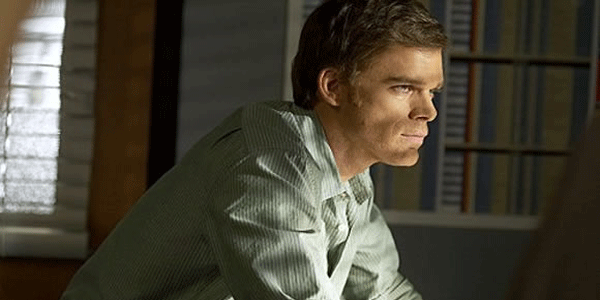
After strangling his ten year old little brother to death in November 2009 17 year old Andrew Conley told authorities that he related to the serial-killer/anti-hero portrayed by Michael C. Hall. Conley was dubbed "The Dexter Killer" by the media but later denounced the connection as media-driven by saying in a television interview "Dexter was just a TV show I watched. The only thing I felt like Dexter was that I felt alone". Conley doesn't even have the distinction of being the only murderer referred to as "The Dexter Killer". Mark Twitchell, who lured his victim Johnny Altinger to his death by using an internet dating ad, also earned the moniker from his obsession with the show. The connection was made all the more concrete by the fact Twitchel had even registered a Facebook account under the name 'Dexter Morgan'.

9. Patrick Bateman

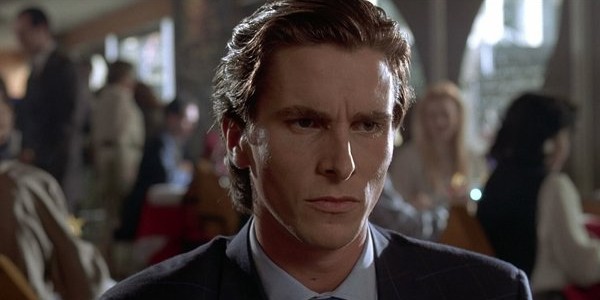
In some cases the perpetrator of an horrific crime doesn't even have to have absorbed the film, book, TV series or game in question for a link to be established. The tragic murder of 14 year old Jaime Gough by his best friend Michael Hernandez was tenuously linked to American Psycho, as on the night preceding the murder Hernandez was discovered to have read several reviews of the film. That Hernandez's obsession had also led to him reading about historical serial-killers and looking at grim images on the internet, didn't prevent the finger being once again squarely pointed at a loosely connected work of fiction.

8. Alex DeLarge

As is well documented, Stanley Kubrick was so appalled by the reports of crimes linked to his 1971 film A Clockwork Orange that he pulled it from distribution in the UK. An over-reaction on Kubrick's part perhaps but considering the crimes included - the murder of a homeless man and a brutal gang rape in which the perpetrators chillingly sang "Singing in the Rain" - he obviously felt the film had a powerful effect on certain susceptible individuals, and felt a responsibility to prevent further horror. Given that there has been no Droog-related crimes since the film was put back into circulation, it could be said to be a phenomenon unique to the time the film was released. That is not to say that Kubrick was right and did stem the film's influence, rather that certain cultural products may inform delusional psychotic episodes, especially when they are in the mainstream spotlight, but banning them is not the answer.

7. Hannibal Lecter

Like Dexter, Dr. Hannibal Lecter has seen several murderers acquire the the title the "real" Hannibal Lecter, which has been a designation applied to killers who pre-date Lecter as well as those who were said to be inspired by him. The influences on Thomas Harris's creation included Ed Gein and most notably Dr Salazar, an incarcerated doctor who treated Harris after he was shot during a visit to a Mexican prison in the sixties. One of the most intriguing "Lecters" to emerge since the character was created was Sture Burgwall, named the "Swedish Hannibal Lecter", who was imprisoned after confessing to murdering and eating over 20 victims. He spent 22 years in prison, until last year it emerged that there was absolutely no forensic evidence and the only basis for Burgwall's conviction was his confession. It later emerged that the "confession" had been taken when Burgwall was being treated with huge doses of benzodiazepines, and had been tortured into confessing to crimes he didn't commit.

6. Travis Bickle

In 1981 John Hinckley junior acted upon his obsession with Jodie Foster by attempting to assassinate President Ronald Reagan. Hinckley said he had committed the crime in order to impress Foster, and was said to have taken his inspiration from Travis Bickle's plot to assassinate a presidential hopeful, in her breakthrough film Taxi Driver. Before settling on the assassination idea Hinckley had conceived of other ludicrous plans to impress the actress including: committing suicide in front of her and hijacking a plane. He was found not guilty by reason of insanity, which caused an uproar in the US, though trying to impress somebody by murdering the president doesn't exactly suggest his mental faculties were fully intact. It also suggests that the problem didn't lie with Taxi Driver but rather in Hinckley's obvious mental illness.

5. Neo

One of the first details latched onto by the press in the aftermath of the Columbine High School massacre was that the killers: Eric Harris and Dylan Klebold wore trench coats and had taken to calling themselves the "Trenchcoat Mafia". As such their appearance was noted as being strikingly similar to the look of Neo in The Matrix. The film had been on general release for 20 days prior to the massacre taking place but there is no evidence that the killers had seen the film, let alone that it was the trigger for such drastic and horrifying inspiration. This tenuous link became synonymous with the reporting of the event. This again put the spotlight on the effect of violence in films and despite having no basis in fact, the association between the film and Columbine was given credence by being repeatedly referenced, and to an extent even endures today.

4. The Joker

On July 20th 2012 James Holmes attended a midnight screening of The Dark Knight Rises armed with multiple weapons, including tear-gas cannisters, a shotgun and a semi-automatic rifle, and proceeded to murder 12 people whilst injuring another 58. Immediately prior to opening fire Holmes was reported to have yelled "I am the Joker", wiping away any notion of the choice of venue for the massacre being a coincidence. Holmes' despicable actions weren't the only crimes perpetrated in the name of the Joker, also in 2012 a school girl in Indiana decided to apply white make-up and slash her cheeks into a smile before attacking her teacher with the same razor she'd just cut herself with.

3. Mickey And Malory Knox

Natural Born Killers holds the dubious accolade of being the film that has most influenced real life murder cases, with over a dozen murder and attempted murder cases directly linked to the film. Unlike The Matrix it was directly cited in relation to Columbine. The killers were confirmed as being fans of the film and both referred to their impending massacre as "going NBK" in their journals. The most notable case outside of Columbine occurred not long after the film's release in 1995. Teenagers Sarah Edmondson and Benjamin James Darras went on a spree, which resulted in the murder of Cotton Mill manager William Savage and another victim Patsy Byers surviving but being left quadriplegic. Savage happened to be a friend of author John Grisham, who publicly backed Byers' lawsuit against director Oliver Stone and Time Warner. The case eventually ruled that Stone and company were protected by the First Amendment, Byers appealed but lost again after it was found there was no evidence to support that the makers of the film wished to incite violence.

2. Chucky

One of the most notable instances of a fictional character being latched upon as a reasoning behind a crime relates back to the horrifying murder of toddler Jamie Bulger in 1993. A copy of Child's Play 3 was found to have just been watched by killers John Venables and Robert Thompson, a factor which led to a revival of the Video Nasties controversy of the early eighties. Led by perennial campaigners against individual freedoms: the tabloid press, there were calls for tighter restrictions on violence in films, and even an outright banning from some quarters. It's interesting that the media latched upon the film rather than focus upon the history of abuse and neglect from the boys' respective parents, who had allowed their children to watch the 18 rated film in the first place. Nevertheless once a supposed connection between the crime and the film was established, Child's Play and its lead character Chucky, would always be synonymous with one of the worst juvenile crimes in British history.

1. Holden Caulfield

Mark David Chapman's obsession with the anti-hero of J. D. Salinger's novel has been the subject of several documentaries and two feature films: The Killing of John Lennon and Chapter 27 (which referred to the events as being an extra chapter in the 26 chapter book). In the build up to assassinating Lennon Chapman re-enacted and interpreted key steps of Holden Caulfield's journey through the New York of the book. After the shooting Chapman remained at the scene of the crime until the police arrived, and on discovery was sat reading the book on the steps of the Dakota building. He was reported to have said repeatedly that the book was "my statement". The book has been controversial and heavily censored in schools and libraries since it was first published but once it was connected to the Lennon murder there were renewed calls for "dangerous" books to be banned outright. To illustrate the complete divide of opinion on the issue, Catcher In The Rye was the most censored but also the second most taught book in American schools in 1981, the year after John Lennon was shot. Like with all the preceding crimes, in reality The Catcher in the Rye was just a small component of John Lennon's murder, yet due to sensationalist journalism it has been used to add to the mythology of the incident. In a way this gives a lot of the perpetrators what they wanted in the first place: to be noticed, to be like their heroes (or anti-heroes as the case may be) and be connected to them in any way possible. It could even be suggested that knowing the public hunger for such detail, once such a connection is made it is exploited to the fullest. We can only hope the next time a film, or game, or book, or TV show, or internet meme is targeted as the cause of an horrendous crime, those who wish to use it to enforce an agenda of banning, censorship and suppressing freedom of speech, continue to be unsuccessful.

Contributor
Contributor

As well as the odd article, I apply my "special mind" to scriptwriting for Comics, Films and Games... Oh and I cut down trees, I skip and jump, I like to press wild flow'rs, I put on women's clothing, and hang around in bars. Follow me on Twitter @DrRobertOtnik