8 Mind-Bending Unanswered Questions About The Universe
No, 42 is not the answer.

We've gotten pretty used to the idea of science providing us with answers.
So far, in the miniscule slice of time that we have been asking questions, we have found answers that would have been inconceivable to even our recent ancestors. We can use science it to tell us what a distant star is made of, what the weather will be like tomorrow, what the gender of your baby will be, and even the age of the universe itself (we think).
There are, however, some questions that are still frustratingly, resolutely, unanswered - perhaps even unanswerable altogether.
Perhaps it's too much to expect to have figured out the deepest mysteries of the universe in the paltry few thousand years that we've been investigating it, much less in the miniscule few hundred years since the development of modern science. In the grand scheme of things, we are barely a blip on a blip on the timeline of existence.
But still, it would be nice to have all the answers.
Well, even if we don't have the answers right now, we're asking the questions, and there are plenty of fascinating, convincing and downright bizarre theories being put forward every day.
8. What Is The Universe Expanding Into?
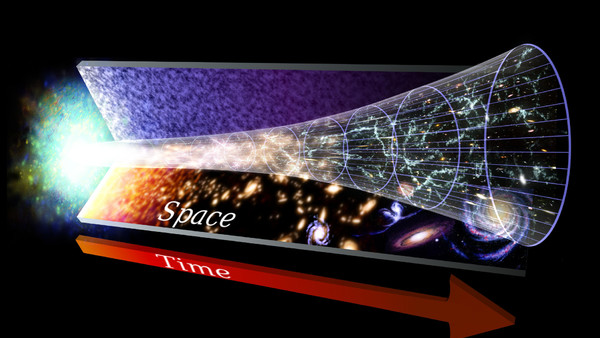
Everyday experience tells us that, when something expands, it has to have a medium to expand into, so surely it stands to reason that, if the universe is expanding, then it must be expanding into something?
Not quite.
First things first, many would argue that the term "expanding" is misleading. The stars and galaxies do appear to be rushing away from one another for sure, but it might be more accurate to say the the space between them is stretching, rather than the universe expanding like a balloon. This seems like a petty distinction to make, but it means that the galaxies are not moving through a medium, they are effectively stationary, but the space between them is greater. Clear as mud?
Anyway, enough of the semantics, what is it expanding into? The answer is, it depends.
If the universe is infinite then the question is nonsense. something that goes on forever can't have an edge or anything "outside" of it.
If the universe is finite then the question is more interesting. The thing is about physicists, is that they have a habit of talking about the universe in terms of 4-dimensional spacetime, which is impossible to imagine, and suggest that the 3-dimensional universe is embedded in an expanding into 4th dimension.
Picture it as though you are a 2-dimensional being on the surface of a 3-dimensional balloon that is being inflated. You can't perceive the third dimension, so from your perspective, everything is moving away from everything else along every conceivable plane and, what's more, there is no "edge". Now scale it up a dimension, and you have yourself the finite, unbound universe expanding into 4-dimensional space.
Although, the simple answer is really "we don't know".
7. What Was Before The Big Bang?
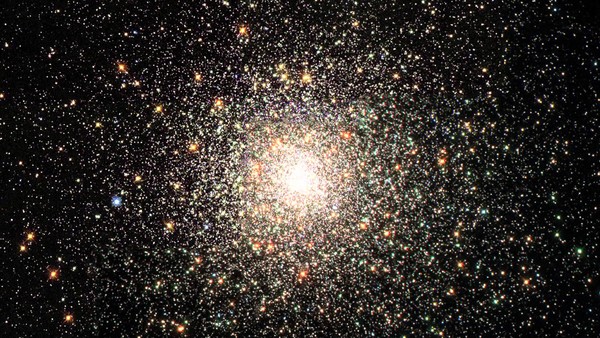
Theologians who have pondered this question have tended towards the "God created time, so there was no 'before'" tact.
Remarkably, many modern physicists would also tend to agree, but for slightly different reasons and, again, we have at least two options.
If time began at the big bang, the, like the question of what the universe is expanding into, the question is nonsense. In relativity, time is said to stop as you approach singularity, so if the universe was at the point of singularity at the big bang, then time would have been at a total standstill too.
Some physicists, however, don't like this explanation. Many physicists, in fact, don't even like the idea of singularities as they're really only representative of the theoretical point at which our mathematics falls apart, as opposed to real things. In fact, there are quantum interpretations of the history of the universe that don't include a "big bang" at all.
There are other theories that suggest that our universe was born inside a black hole in another universe (and that the black holes in our universe are, in turn, belching out their own universes), and some observations of the CMB appear to show the shockwaves form the collision of supermassive black holes before the big bang.
The truth is, though, that we just don't know (spotting a theme?).
6. Will We Ever Find Aliens?
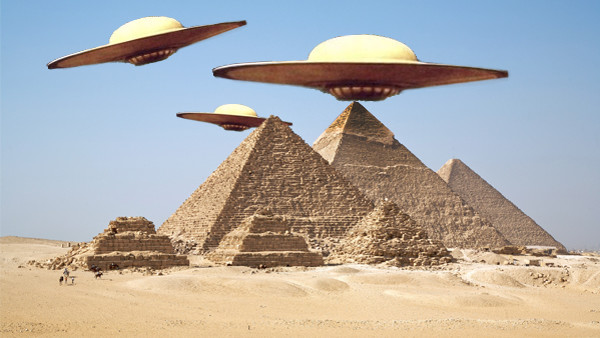
13.82 billion years, the universe came, catastrophically, into being. Roughly 13.8199999 billion years later, a consciousness winked into existence on a tiny planet on the outer arm of the a spiral galaxy and started looking up, wondering why nothing had made contact yet.
Sometimes, when you look around our planet, it seems inconceivable that there couldn't be more like it out there. However, given the sheer scale of not only space but time too, the chances of coming across any little green men suddenly appear to be vanishingly small.
Little green men aside, the estimates for the likelihood of finding any kind of life at all in the universe range from 99.999% certainty to less than 1%, and it all hinges on finding just one single, solitary bacteria somewhere other than Earth.
If we were to find that life has sparked itself into life on, say, Europa, it would immediately double the number of known inhabited planets in the universe. For life to arise once, could still be chance, but for it to arise twice on two different planets (although Europa is a moon, but whatever) drastically increases the probability that life is common as opposed to rare.
If we establish that life is common, it then becomes much more likely, perhaps even inevitable that intelligence would emerge.
All this said, even if the aliens are out there, contacting them is a whole other kettle of fish.
5. Should We?

The next big question that comes into play if we do end up stumbling on intelligent aliens is whether or not we should say hello.
It seems like an obvious choice, why would we purposefully isolate ourselves at the very moment we discover that we are not alone in the void?
It does largely depend on what kind of aliens they are and, if we're being brutally honest, if they're anything like us then we should probably consider steering clear.
Stephen Hawking rocked the boat a while ago by suggesting that we should probably put the kibosh on broadcasting our existence to the galaxy.
He, and a fair few other, think that it could be akin to Christopher Columbus' landing in the Americas, but on an intergalactic scale. Even without the transmission of deadly diseases, the risk that the aliens we discover might perceive us as either a threat, or a bug to be squished, is, for some, too big to take.
Some take a more optimistic view, however, and suggest that the distances between potentially habitable planets are so great, that the chances of anything but a few simple signals getting through, let alone a fleet of warships, are virtually nonexistent.
4. Where’s The Rest Of It?

We should probably get some posters made up or something, because ninety-six percent of the universe is missing.
When scientists tried to tot up the sum total of all the matter and the energy in the universe, they found that they were coming up significantly short.
Dark energy makes up the largest part of this mysterious hidden universe, with scientists estimating that accounts for around 74% of the energy density of the universe. It is essentially an invisible force, a kind of "anti-gravity" that pushes and pulls everything apart.
The other side of the coin, dark matter, is thought to make up 22% of the matter in the universe. The only problem is that it doesn't interact with the electromagnetic spectrum and we have no way of detecting it, we can only infer its presence from its effect on the rest of the universe that we can see, namely the gravitational lensing caused by the warping of spacetime.
To be clear, you need to get the image of an inky kind of matter spread out across the universe, there is nothing necessarily "dark" about dark matter, it's just a placeholder name because we don't have the foggiest gist of any of its qualities (plus the whole not-interacting-with-light thing I guess).
For all we know, the aliens could all be living in the 96% of the universe that we can't detect, with eyes that can see it in all its glory. They might also be pondering the existence of the missing 4% of their universe and wondering just what it could be.
3. What Are Numbers?

Go on then, what are they?
You probably don't go more than an hour at a time without using numbers in some form, but when you think about it, how would you explain them to, say, an alien that has no concept of what they are?
Number are points, squiggly lines, factors, but are they real things or are they simply the best method we have for describing the universe around us? Whilst we're on the subject, there are many who think it's pretty weird that numbers appear to work so well.
So far, the vast majority of reality has proved itself to be computable. We can summarise some of the most complex interactions in the universe, by writing down a few numbers in the right order.
Whilst it's tempting to say that numbers are simply human constructs, there is a good argument to be made that there is something fundamentally quantifiable about the universe, and our numerical representation of that could just be allowing us to glimpse it.
There are also those who view the amazing nature of numbers, not as a happy accident or evidence of man's genius, but as highly suspicious - almost as though someone planned it that way...
2. Is It Real?

It sounds like the paranoid ramblings of an internet conspiracy theorist, but there are a fair few real, proper scientists out there who suspect that reality itself might be an illusion.
There are those, including Tesla CEO Elon Musk, who think that it's a virtual certainty that our universe is actually being simulated by someone else. Their reasoning is this:
In the past 20 years or so of the computer age, we have made such massive strides in the fields of simulated and virtual reality, that it stands to reason that is would be possible for any sufficiently advanced species to create a perfect simulated universe. It would also be perfectly possible that a self-aware computer program would be capable of simulating its own universe in a kind of technological equivalent of Russian dolls. If we accept that this is possible, which it is, then the chances of us being the very first civilisation (i.e. the "real" one) are extremely slim, it's actually much more likely that we are part of the however-many-other subsequent simulations that has been created from the first.
So, is there any evidence for this?
Well, it could just be possible to detect the underlying grid structure of the simulation by studying high-powered cosmic waves. Some also think that the very fact that the laws of physics are so computable, as discussed in the last entry, are an indication that reality could have been programmed to abide by simple rules.
On the flipside, it's possible that this is all a misplaced anthropocentric existential angst.
1. Why Is There Something Rather Than Nothing?
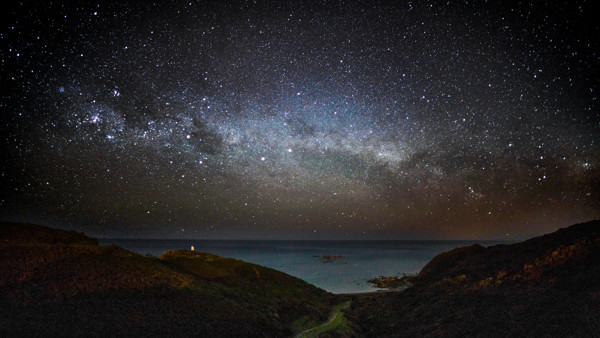
It sounds impossibly wishy washy, but this is a simultaneously precise and all-encompassing question.
We tend to take our existence for granted, because we spend most of it doing things like catching buses and scrolling through Twitter, but the very presence of, not only us, but the universe in general, is reliant on a very specific set of physical laws coming together.
The thing is, there's absolutely nothing about physics that suggests it has to be this way, it's, as far as we know, an incredibly unlikely accident.
We don't know, for example, why there appears to be way more matter than antimatter. The two are created in the same events, and should by all rights, annihilate one another immediately. And yet, here we are, surrounded by a universe made of matter. Had one of the fundamental laws be tuned slightly differently, the universe would never have come into being, matter would have disintegrated, or never formed in the first place.
Obviously, you could argue that, had the universe turned out that way, there would be no one there to observe it. We are only able to question the bizarre serendipity of our situation, by virtue of that serendipity.
Even then, it doesn't make it any less unlikely, and "unlikely" is generally not a scientist's favour word. There may well be an underlying reason as to why a universe should form at all, but for now we'll just have to be thankful that it did.
You could write for WhatCulture Science! Click here to find out how you could get paid to write about what you love.
If science gives you the warm fuzzies, like us on Facebook or follow us on Twitter to stay up to date.