Harry Potter And The Cursed Child: 7 Ups & 3 Downs
Is the new Harry Potter story a blessing or a curse?

The eighth story. Nineteen years later.
That's the billing for Harry Potter and the Cursed Child, which shares the titling and some of the characters of the original series, but not its writer. Although J.K Rowling helped create and oversee the story, it's written by playwright Jack Thorne, and isn't actually a book; it's a script.
Still, that wasn't going to stop Pottermania striking up again. For the first time in almost a decade, fans were queuing up at midnight for a new Harry Potter book, with special events at bookshops across the globe.
The enthusiasm comes not just because it's another - ostensibly the 'eighth' - Potter story, but because the play, which recently opened in London, has been receiving rave reviews. Most fans, though, aren't able to experience it on stage, and so we have the book, to fill the void and tell the tale. Does it stack up to the other stories? Has the magic transferred from stage to page? Let's take a look.
Ups...
7. A Compelling Story

I'll not dive too deep into spoiler territory, but the crux of the story is the relationship between Harry Potter, the adult, and his youngest son Albus Severus, or rather the lack of one between them. There's also the unlikely friendship forged by Albus and Scorpius Malfoy (yes, son of Draco), who become the story's central double act. Finally, it's about time-travel, and, strangely, a plan to save Cedric Diggory.
It sounds like some weird fan-fic, and indeed those criticisms have been levelled at it. However, there's a clear understanding of most of these characters, and the story itself is an incredibly compelling one. Much like the original Potter books had us staying up all night in order to get them finished, this too will have you turning page-after-page long past any reasonable bedtime.
At just over 300 pages it positively flies along, building momentum and with enough narrative twists and turns to keep you needing to read more.
6. Fun With The Concept

Although there may be some issues with how Cursed Child uses time-travel, or more specifically its time-turners, there is one definite positive to come out of it.
As Albus and Scorpius go back and try to change time, they end up stepping on a load of metaphorical butterflies, which has some big repercussions for the future.
It means we're thrown into a couple of alt-worlds, which brings back a number of great characters from the series, and has a lot of fun with the characters being slightly different than we're used to, but with enough of them recognisable - like in one version, Hermione being the most-wanted witch alive in a world ruled by Voldemort, and Dolores Umbridge back and in charge of Hogwarts. Like the best alt-realities, it knows its characters, and knows just how to riff on them.
Even just in the real timeline there are characters popping up that it's fun to revisit, from the minor, like centaur Bane, to Professor McGonagall having a decent part to play in things.
5. The Spectre Of Voldemort

Voldemort is defeated, and the characters of this world have been living in peace for 19 years (and counting, over the course of the story). However, when a wizard is as powerful and dangerous as the Dark Lord, and so tightly connected to the hero, it's almost inevitable that he would rear his head in some way or another.
The story kicks off, from an adult Harry perspective, with fighting Theodore Nott and taking a time-turner (which were supposedly destroyed) from his possession. From there, we hear whispers of giants mobilising, and werewolves going underground. Dark magic is back in play, and the spectre of Voldemort continues to haunt Harry - he starts having his dreams again, and his scar begins to hurt for the first time as an adult.
It makes sense that Voldemort would continue to be a presence in Harry's life, given the two were so entwined, and the way it's done works without ruining the end of their story the first time around. Good still triumphed over evil, Harry still beat Voldemort, but dark magic is going to keep on trying, and the light will have to keep shutting it out.
4. Following The Adult Harry, Ron, and Hermione

The Harry, Ron, and Hermione of today are noticeably different than where we left them (epilogue not included) in the Deathly Hallows. Harry is Head of the Department for Magical Law Enforcement, Hermione is Minister of Magic, and Ron, well, he runs Weasley's Wizard Wheezes.
Although the focus is placed more on the children, the original trio - especially Harry, of course - are a huge part of this new story, and it's interesting to see how they've adapted to adulthood. Harry, great saviour of the wizarding world, has transitioned from being an auror to running the entire office, a natural progression, but one the ends up bogging him down in paperwork - which of course he doesn't do. Hermione, unsurprisingly, ends up as Minister of Magic, a perfect fit for the job, and it's a great little moment when she sorts out Harry's paperwork for him, much like old times.
We don't spend much time seeing Hermione and Ron as parents, which is a little bit of a shame, but we do get to see Harry Potter as a dad. I've seen some complaints about the fact that Harry isn't a very good father, but actually, it makes sense. He never really had a parent figure. His dad died, he lived with the Dursleys, Sirius was tragically taken away from him, the closest he had was Dumbledore, a man who made plenty of mistakes. Of course Harry is going to make them too, and it's better than Harry suddenly being this perfect father, and is at the heart of the story.
3. Scorpius And Albus Are Great

This is a story in the wizarding world, so while it may have Harry Potter in the title, obviously there's a lot of focus on the kids. In particular, Harry's kids. Or just one of them, Albus Severus, and his friendship with Scorpius Malfoy, son of Harry's great rival, Draco.
For anyone worried that this new generation might not be as interesting, fear not: the kids are more than alright. In fact, they've absolutely 'Force Awakensed' it, crafting a new set of characters that you learn about and care for, and setting them alongside the series stalwarts to great effect.
Albus and Scorpius are at the heart of the Cursed Child, and both are fascinating characters that it's a pleasure to spend time with. The first twist is that neither of them are really like you'd expect, knowing what we do about their parents. For all Harry's assurances about telling the Sorting Hat what you want, Albus is put into Slytherin, alongside Scorpius (Malfoys gonna Malfoy).
From their meeting on the Hogwarts Express, which nicely plays on the meeting of the original trio, to their misguided adventures throughout the story, they're a duo with a real, admirable friendship, and feel like the right kids to carry this forward: outcasts, struggling under the weight of who their fathers are. Albus is likeable despite his angst, with a rebellious and inquisitive streak just like his father, while Scorpius is a bright child with a dry sense of humour. Had the pair, or even just one of them, not been right on the money then the entire story would've fell flat; they're a huge part of why it works.
2. It's An Emotional Ride

Harry Potter and the Cursed Child is a fun adventure that nicely barrels along, but that doesn't mean it doesn't take its time to have you emotionally invested as well.
The stakes are what they've always been in Harry Potter - family, friendship, the safety of the wizarding world - and they lead to some moments that, when on stage, could have the sort of impact that leaves audience members with something in their eye. Reports of tears from theatregoers have been fairly common, and thankfully that mostly makes its way across to the book.
There are some truly heartbreaking moments just in conversation, especially between Harry and Albus, and their struggles to understand each other. It also comes with Albus and Scorpius too, as well as playing on feelings based on things we know from the original series, such as Amos Diggory's love for his son, and the relationship between Harry and Dumbledore. Even Draco gets some poignant moments, and it's a credit to the story that it really makes you feel for these characters, regardless of whether they're old or new.
1. It's Great To Be Back In This World
For all of its flaws (which there are a few, and I'll discuss in more detail shortly), it's very easy to go along with the ride Cursed Child takes you on, and it's a story that makes you want to spend time with it.
Part of that is down to the characters and the emotional beats it hits, but those are in turn part of something bigger: that it's just great to be back spending time in the incredible world J.K. Rowling created.
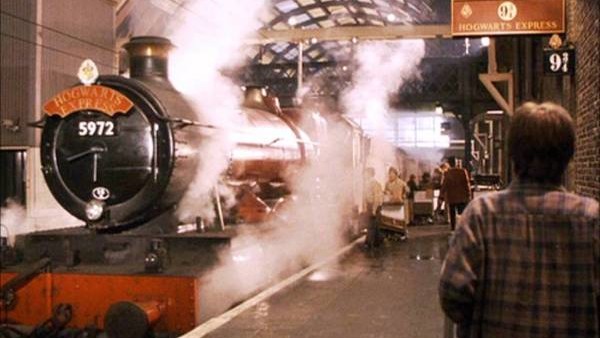
The book starts off at King's Cross, and before long we're on Platform 9 3/4, the Hogwarts Express, watching the sorting ceremony, and we're sucked straight back into the wizarding world, like we've never been away.
In truth, we haven't, not really. Rowling has continued fleshing out the mythology of her universe for years through Pottermore, adding in various backstories and interesting pieces of information. Pottermore, however, doesn't really compare to having a book titled 'Harry Potter and the...' in your hands again (maybe part of that is how difficult Potions lessons are - you just don't get that struggle with a book).
It's a wonderful feeling to be plunged back into the world of magic, and see the return of characters we grew up with now embracing their own adulthood, while experiencing some new corners of it, different spells, in a new way. J.K. Rowling created a universe that was magical in every possible way; a return is more than welcome.
Now, onto those aforementioned flaws.
Downs...
3. Characters Cast Aside (Or Not Even Mentioned)

The Cursed Child juggles various characters, though really split into two distinct groups: the adults - Harry, Ron, Hermione, Ginny, and Draco, and the kids: Albus, Scorpius, and the mysterious Delphi.
Pretty much all of them are great, and whether it's the adults together, the kids together, or the various interactions that take place between them, the storylines are generally very compelling.
The issue comes with the number of characters who end up pushed aside. Out of the other children of the heroic trio, Rose is the only one to really get anything close to significant time. In fleeting moments she's an enjoyable character, and you can clearly sense she's Ron and Hermione's daughter, but we never spend any real time getting to know her.
It's still better than what we get with the others though, as James and Lily Potter, and Hugo Granger-Weasley, barely even exist here, save for the odd reference to James' popularity. Teddy Lupin, who appeared at the end of Death Hallows, goes without a mention. Neville Longbottom gets that much, but nothing more. With the focus on the kids, these didn't need to be key parts of the story, but it would've been nice to see them included more than they are (or aren't, really).
2. Some Meddling With Mythology

Inevitably, complaints have already been raised about the changes to the mythology in the Cursed Child. The story wasn't written by Rowling, and although she did oversee it (and you'd assume have a fair bit of creative control), it would seem that mistakes have slipped in that do jar with what we know of the original series.
The one dominating most of the headlines, and garnering the most complaints, is the use of time-travel. It's not just the time-turners are back in play, despite supposedly being destroyed in Battle of the Department of Mysteries, but the way time-travel works: the newfangled time-turners allow users to go back decades, creating a butterfly effect and alternate timelines. It goes against various, vaguely established rules of time-travel within this universe - which Rowling tried to expand upon via Pottermore, stating you could go back five hours from the future without causing serious damage, but here's it's five minutes in the past, but however far back you like.
There are a few other inconsistencies sure to be niggling away at fans as well. The Polyjuice Potion, for example, is apparently remarkably easy to make now, a far cry from the days of Hermione and co sneaking around and toiling away at it. Ron is closer to being like one of the twins, though that's perhaps to do with his role at the joke shop (and his love for Hermione still shines through). Harry, a Ministry official, interferes at Hogwarts, something Dumbledore was always against.
I don't think they particularly ruin the story, but it's strange to see little errors creep in when Rowling had previously taken so much care in the creation of this world, but perhaps that's because it's not directly from her own quill.
1. It'd Clearly Be Better As A Play
This one really comes down to what you want and expect from the book, and also how it's marketed and packaged.
The fundamental issue with the book is that it isn't a novel at all; it's not constructed as a novel, it's not meant to be a novel, and it isn't written by a novelist. What it is, is a play. And that's pretty clear when you read it. There's a reason reception to the play has been almost unanimous praise and a showering of five star reviews, while the book has had a more mixed reception, and it's because it's meant to be seen, not read.
The problem with that, however, is that for the majority of people reading it, they're doing so as a book, not a script. It's being sold as "the eighth story," and there's an expectation that it should work as well in this medium as it would on a stage. And, well, it doesn't. There are some stage directions, which are weird and wonderful and have you desperate to see it with your own eyes. Most people won't get to experience that though: they'll only have the book, which is obviously a diluted version.
If you can accept that what you're getting is a script, and that it's not a J.K. Rowling novel, then you should have a great time reading it. But if you go in expecting a proper book, you'll be left feeling at least a little short-changed.
What did you think of the Cursed Child? Let us know in the comments.