10 Players Who Did Nothing At Arsenal (But Excelled For Their Country)

Worthless at Arsenal; heroes on the international front.
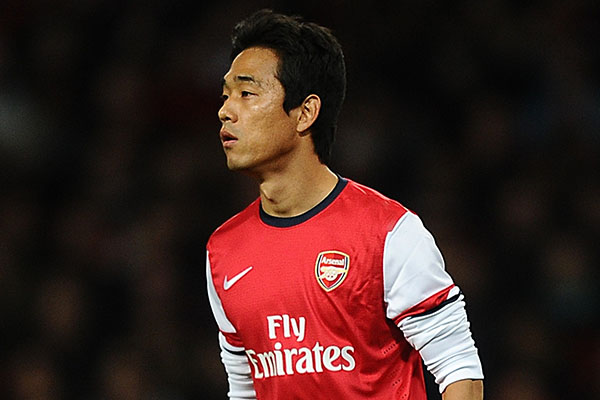
There have been a plethora of footballers who have simply failed to impress at Arsenal. Whether they have simply done nothing in training to warrant game-time for the first-team or they consistently fluff the chances they do get in the starting XI, it's fair to say that Arsene Wenger has had his fair share of duds over the years. However, some of these players can be released. Released from the shackles of club level and reborn as a new player on the international stage. While their profligacy and error-strewn performances have been bemoaned and criticised on countless occasions by the Arsenal faithful, when they are wearing the jersey of their nation, they embrace the added responsibility and become the country's fully-fledged hero. There have been a number of players who simply haven't done much for Arsenal, but throw them an international jersey and suddenly they will start banging the goals in and laying on the assists as if they were going out of fashion. Take a look at the ten players who did nothing for Arsenal but who excelled for their country.

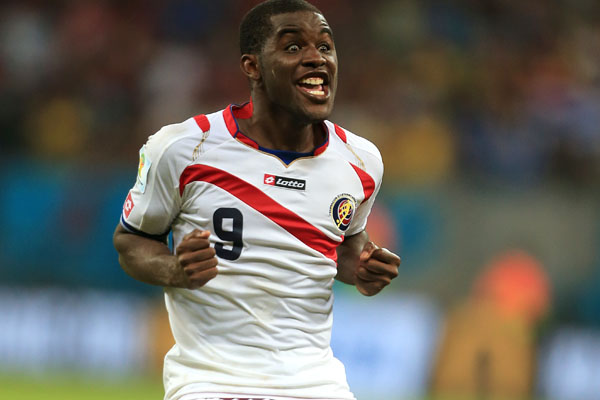
10. Joel Campbell

It€™s not much of a surprise that Joel Campbell is growing impatient waiting for a chance at the Emirates Stadium and is edging for an exit, considering his fine displays on loan at Olympiakos last season and for Costa Rica during the World Cup. Since moving to the club in 2011, the 22 year old has been afforded just three first-team appearances and looks set to move in the January transfer window with Roberto Mancini€™s Inter Milan rumoured to be weighing up an offer for the World Cup star. For a 22 year old to have 38 caps and ten goals for his country is impressive in itself, but his performances in Brazil were a joy to behold as Costa Rica captured the imagination, topping a difficult group before bowing out on penalties in the quarter-finals. Campbell was the man who got the surprise outfit€™s campaign up and running, netting the equaliser against Uruguay before setting up Costa Rica€™s third goal of the game. It€™s something of a surprise how he hasn€™t been given a fair crack of the whip at Arsenal - he€™s certainly proved himself at both Champions League and World Cup level.

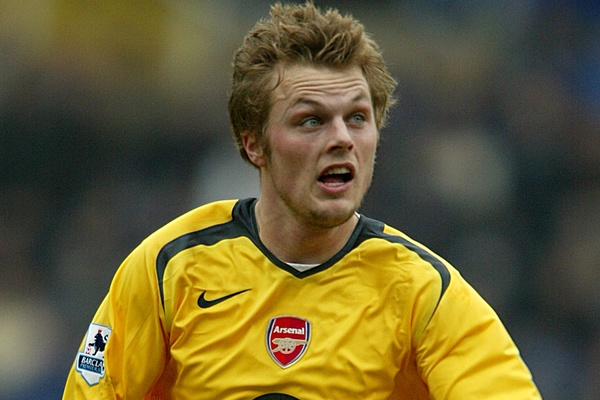
9. Sebastian Larsson

Having played over 100 games for Sunderland, and before them Birmingham City, it seems a long time ago that Sebastian Larsson togged out for the Gunners. However, it did happen on three occasions, having been pinched by the Arsenal scouts as a 16 year old in 2001. In total, he played three League Cup matches, and three Premier League games - bizarrely at centre-back following Sol Campbell€™s erratic loss of form. For Sweden, his contribution has been a lot more noteworthy - for one thing, he has been played in his proper position on the right-hand side of midfield. Having made his debut against Turkey in February 2008, the talented Swede was named in his country€™s squad for Euro 2008 and has remained a mainstay in the side ever since. He started all three of Sweden€™s games at Euro 2012, scoring the second goal in their 2-0 win over France but it wasn€™t enough to see them advance to the next round. To date, the 29 year old has earned 68 caps in the last six years, and has scored on average a goal for every year. While he may not get the acclaim and praise of his €˜fancier€™ compatriot Zlatan Ibrahimovic, he has proved himself a vital cog in the Swedish machine as they embark on various qualification campaigns.

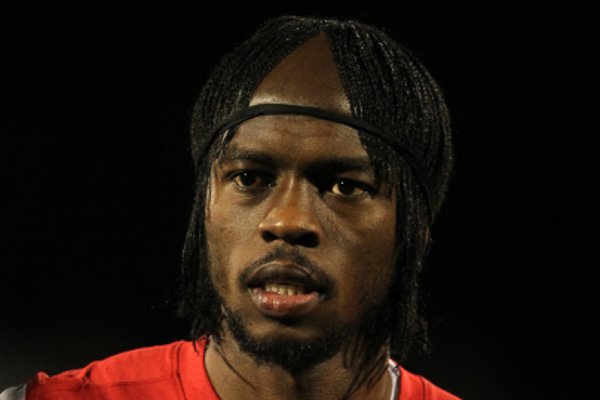
8. Gervinho

Some might decree that it is paying Gervinho a mild disservice to state that he did nothing for the club, having played nearly 70 times for the Gunners between 2011 and 2013. More hard-hitting punters might claim that it isn€™t a harsh enough indictment of a £10.8 million forward who simply forgot how to score even the easiest of chances during a failed stint in England. His Premier League career got off the worst possible start as he was shown a red card for slapping Joey Barton on his debut, and from then on, the next two years of his Gunners career proved to be simply miserable, culminating in an open-goal miss against Bradford City in the Capital One Cup that probably sealed his exit. A return of eleven goals from 63 appearances? Pitiful. For Ivory Coast, however, a different Gervinho seems to take to the pitch. While it was his missed penalty that allowed Zambia to sensationally win the African Cup of Nations two years ago, Gervinho still boasts a healthy goalscoring rate of 18 goals in 60 caps for his country, including two goals in the most recent World Cup.

7. Nicklas Bendtner

It€™s never made much sense how Nicklas Bendtner has managed to consistently fail at club level but thrive so wonderfully on the international scene. With an international goalscoring record of 26 strikes in 63 appearances, one would never have guessed that the same player would boast a career goal return of just 70 goals in 269 appearances. Is it really fair to include the 26 year old Dane on this list, however, considering he has spent a decade with the Gunners, featuring over 170 times for Arsene Wenger€™s men? With just 24 Premier League strikes registered in six seasons with the first-team, the answer is a firm yes. For Denmark, however, he has thrived time and time again. Having made his debut as a fresh-faced 18 year old in August 2006 - making him the seventh youngest player of all time on the Danish team - Bendtner went on to prove his worth, scoring crucial goals in Euro 2008 and World Cup 2010 qualifiers. The former Danish Player of the Year grabbed his first tournament goal at the 2010 World Cup, scoring Denmark€™s equaliser against Cameroon. He would go on to score two more tournament goals at Euro 2012 in a narrow 3-2 defeat against the Portuguese. While he has been viewed as something of a running joke in the Premier League for his profligacy in front of goal and delusions of grandeur, his form for Denmark is certainly no laughing matter.

6. Park Chu-young

Without sounding too cynical, one can€™t help but feel South Korean striker Park Chu-young was brought to Arsenal in 2011 as a commercial ploy to break the Asian market. The former Monaco striker was granted just six run-outs in an Arsenal jersey before taking in a couple of loan spells at Celta Vigo and Watford, and then leaving for Saudi Arabia in the summer of 2014. Apart from a goal in the League Cup against Bolton Wanderers, he truly contributed absolutely zilch for the club. For South Korea, on the other hand, he has been something of a talisman over the years, with an impressive goalscoring record of 24 strikes in 67 appearances. Having scored an own goal against Argentina during the 2010 World Cup, the forward made amends with a stellar free-kick during a 2-2 draw with Nigeria which allowed the Koreans to progress to the next round. However, by the time the 2014 World Cup came around, the formerly lethal hitman was so rusty that he was unable to produce a shot in target against either Russia or Algeria, and was dropped for the final group game against Belgium. Still, with his impressive goalscoring record that he has amassed for his country, he owes them nothing.

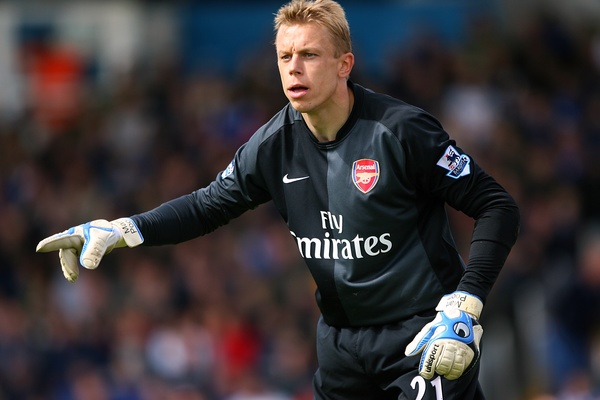
5. Mart Poom

Hands up - how many remember that Mart Poom played for Arsenal? It was a blink-and-you-miss-it moment in Premier League history when the Estonian veteran togged out for the Gunners during the 06/07 season, playing the second half of a League Cup tie against Everton and a goalless draw on the final day of the season with Portsmouth. Drafted in as emergency cover for the likes of Jens Lehmann and Manuel Almunia in 2005, the former Derby County goalkeeper€™s loan move was made permanent that season and he subsequently became the first Estonian to pick up a Champions League runners-up medal having witnessed his side lose to Barcelona in the final. Of course, his contributions for Estonia were a lot more noteworthy. Having made his debut in a friendly against Slovenia in 1992, Poom didn€™t hang up the Estonian gloves until after his 120th cap in June 2009. It was a long and distinguished international career for the Premier League and Championship journeyman, spanning nearly two decades, and although the minnows never managed to qualify for a major international tournament, he will always cherish the honour of having been selected by the Estonian Football Association as the country€™s greatest player of the last 50 years.

4. Andrey Arshavin

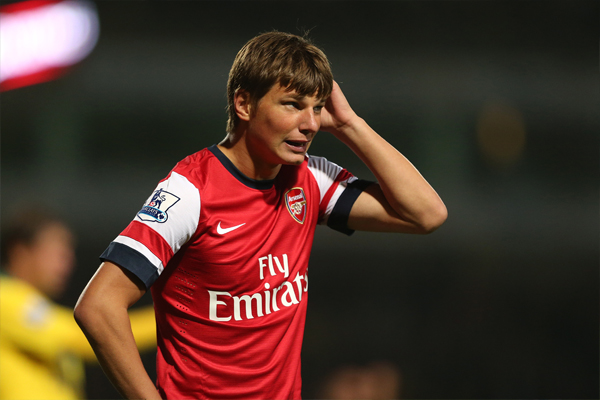
Perhaps it€™s a bit unfair to state that Andrey Arshavin did nothing at Arsenal - after all, he treated the Gunners support to some nice collectors€™ items to stick in their scrapbook. Who could forget that remarkable four-goal salvo at Anfield or that late winner against Barcelona in the Champions League? For the money they paid, however, those moments were few and far between as the sulky Russian failed to live up to expectations having arrived in north London riding the crest of a wave, with half of Europe€™s elite clubs vying for his signature following a wonderful showing at Euro 2008. Although he debuted for the national side in 2002 as an 18 year old, he had to wait six years to taste his first slice of international football following omissions from the squads of the 2002 World Cup and Euro 2004. The diminutive forward certainly took his chance with aplomb, however, proving to be the catalyst as Russia surprised everybody by dumping out in-form Holland to reach the semi-finals of the competition. It speaks volumes about just how good Arshavin€™s performance against the Dutch was, considering that he was ruled out of the first two games of the tournament due to suspension and was largely ineffective in the semi-final against the Spanish, that people still speak about Euro 2008 as €˜his€™ tournament. Arshavin would go on to captain the side to a second-place finish in their World Cup qualifying group but they ultimately lost to Slovenia in the play-offs. By Euro 2012, Arshavin€™s status within the Russian squad had slipped somewhat but he still started all three of their games as they eliminated from Group A. Unsurprisingly due to his decreasing standard of performances, the former Arsenal flop was omitted by Fabio Capello for the 2014 World Cup qualifying campaign. Still, with 75 caps and 17 goals to his name, his Russian career can certainly be called a success.

3. Kim Kallstrom

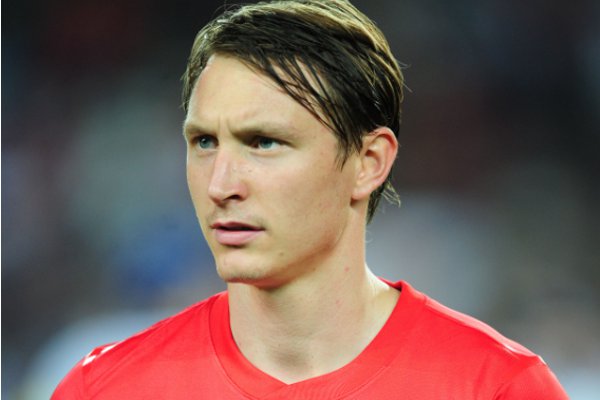
It was a bizarre signing that smacked of sheer desperation - an 11th hour scramble for a player who Arsene Wenger would find was already injured and would have to wait nearly two months to make his debut for the club. The Swedish international togged out for the club just four times during a pretty pointless spell for the Gunners, before returning to Spartak Moscow at the end of the 13/14 season. At international level, however, the man has 114 caps for his country and 16 goals to show for his efforts. Having played at three European Championships and one World Cup, Kallstrom is certainly an experienced international. Perhaps Arsene Wenger had been watching Sweden€™s miraculous comeback from 4-0 against Germany to claw their way back to level pegging in October 2012 - Kallstrom had assisted three of the team€™s four goals in that famous display of courage and mental strength.

2. Giovanni van Bronckhorst

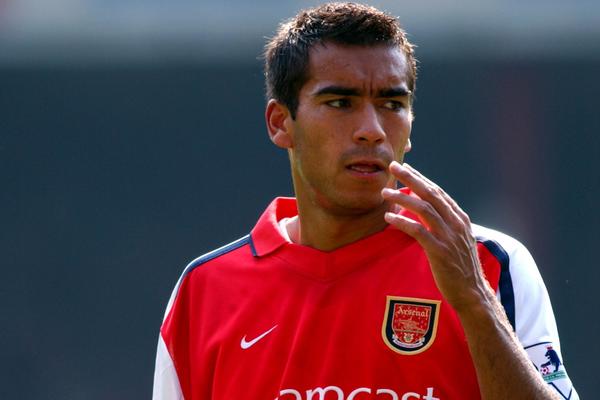
With Emmanuel Petit having left Highbury, a void needed to be filled in the centre of midfield at the start of the 01/02 season. Having signed Rangers man Giovanni van Bronckhorst from Rangers in a £8.5 million deal, Arsene Wenger must have thought he had bagged the perfect partner to complement Patrick Vieira in the centre. However, his time in the capital was marred by a cruciate knee ligament injury which restricted him to just 41 inconsistent league appearances in two seasons before being farmed out on loan to Barcelona for the 03/04 season. For Holland, however, he has been indispensable. Having made his debut for the dutch in August 1996, van Bronckhorst went on to make 106 appearances for his country. While he was part of the 1998 World Cup squad, he saw no game-time and only saw limited action at Euro 2000, but his breakthrough as Holland€™s number one left-back arrived during Euro 2004 under Dick Advocaat. Van Bronckhorst impressed with a series of impressive displays as the Dutch reached the semi-finals, and he proved to be a mainstay in the starting XI for the next six years. The Dutch once again came unstuck against the Portuguese in the 2006 World Cup, with the Barcelona left-back receiving his marching orders in a bad-tempered game that saw a record four red cards dished out. During Euro 2008, he scored and assisted in a 3-0 thumping of world champions Italy during a Euro 2008 clash, as Holland cruised into the next round. Following Edwin van der Sar€™s pre-tournament announcement that he would retire after Euro 2008, van Bronckhorst was selected as the new captain of the side. Having scored a wonder-strike against the Uruguayans in the World Cup semi-final two years later, van Bronckhorst led out his country for the last time in the final.

1. Davor Suker

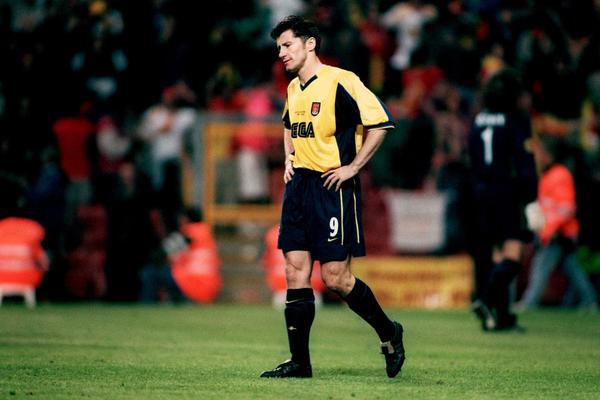
At Arsenal, Davor Suker was a disappointment. His goalscoring exploits for both Real Madrid and Croatia promised much when Arsene Wenger decided to bring him to Highbury in 1999, but the former Sevilla hit-man failed to settle in England, registering just eleven goals in 39 appearances during his sole campaign in north London. A particular lowlight occurred during the 2000 UEFA Cup final, when he appeared as an extra-time substitute and subsequently missed a crucial penalty in the shoot-out against Galatasaray. Having made his debut for the newly-founded Croatian national side in December 1990, Suker quickly established himself as one of the most prolific marksmen in international football. He led Croatia to Euro 1996 with a then-record haul of 12 goals in 10 qualifying matches - a record that would stand for a decade until David Healy surpassed him. He proceeded to score three goals in four matches at the finals, including a wonder strike over Danish goalkeeper Peter Schmeichel, which is still regarded as one of the greatest goals in Euro history. Suker was subsequently named in the Euro 1996 Team of the Tournament. He went on to score five goals in nine appearances as Croatia qualified for the 1998 World Cup, where he truly announced his stardom by scoring six goals in seven matches as the Eastern European side came within a whisker of reaching the final. Suker scooped the Golden Boot as a result and was awarded the Silver Ball award as the second best player at the tournament after the Brazilian Ronaldo. The six-time Croatian Footballer of the Year was also named in the World Cup All-Star Team, and finished as the runner-up for the Ballon d€™Or award that year. While the Croats failed in their mission to qualify for Euro 2000, Suker€™s last tournament came in the form of the 2002 World Cup where he played just 63 minutes before calling time on a fruitful international career. With 69 caps, he is the sixth most-capped Croat of all time, but his true legacy lies with his goalscoring record of 45 strikes - a tally that most likely won€™t be beaten for some time, with former Gunner Eduardo€™s the nearest challenger with 29. So that's a wrap - do you agree? As always, feel free to leave your thoughts and opinions in the comment section below.

Contributor
Contributor

Recent Journalism & New Media graduate. Insatiable thirst for all things football, and hopes to break into the field of sports journalism in the near future. Have made a significantly insignificant playing career out of receiving several slaps around the head for not passing the ball.