15 Mind-Blowing Facts About Wimbledon

The tennis tournament, not the 2004 Kirsten Dunst film you'd all forgotten about.

It€™s the time of year when everyone suddenly becomes a huge tennis fan as the 2015 Wimbledon Championships get underway. It means that the UK's summer has begun. It€™s now time to crack open the Pimms, eat a load of strawberries and then make a mad dash inside because it will inevitably start to rain. The hopes of Britain will once again be placed firmly on the shoulders of Andy Murray - unless he loses and then of course he will return to being Scottish - while Roger Federer looks to break more records. Novak Djokovic will try to defend his title, Serena Williams will continue her bid for a grand slam, and Maria Sharapova€™s harrowing grunts will rupture everyone€™s eardrums. The tournament is a huge part of the sporting calendar not only in England but around the world. Close to 500,000 people will descend upon the home of The Wombles - with an estimated global audience of around 400 million - just to watch people hit a ball back-and-forth over a net. The event has managed to transcend sport and is now revered as much as a British institution and spot for tourists as much as it is tennis enthusiasts. It has an extremely long and storied history, so here€™s a look at some surprising facts about everyone€™s favourite tennis tournament.

15. Rufus The Hawk

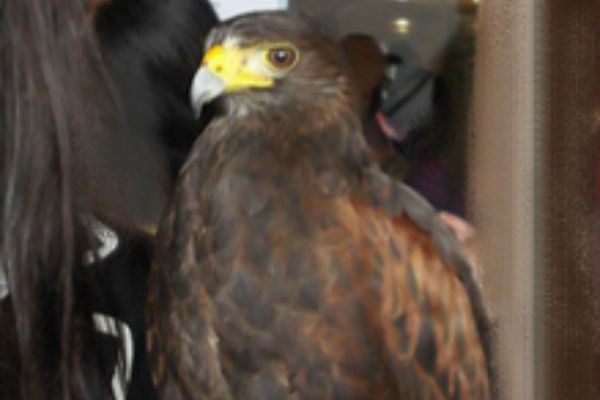
Most weeks throughout the year Rufus, a Harris Hawk, will complete a sweep over Wimbledon€™s courts to ensure that no pigeons roost there, in particular on the roof of Centre Court. During the tournament, his work-time is increased as he flies over every day. Back in 2012 he was stolen, which led to a nationwide outcry and a large media campaign to have him found, which he was just three-days later without any real injuries. Rufus took over the post from Hamish in 2009, and now has his own Twitter account - with 7000 followers - and a security pass. Official title: bird scarer.

14. Dress Code

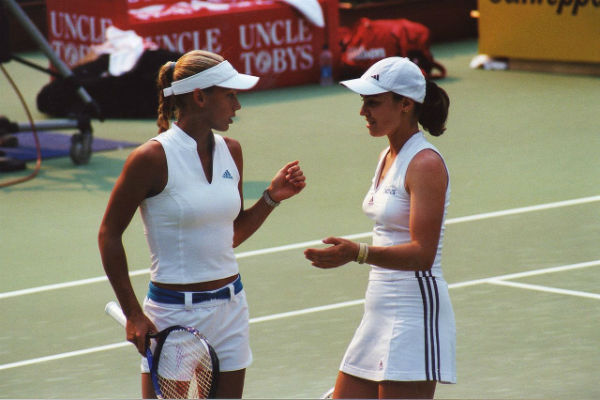
The colour white has become synonymous with Wimbledon, and that is mostly thanks to the rather stringent dress code players have to adhere to. According to the official rules, they must wear attire that is almost entirely white - and that does not include off-white or cream. That includes tops, shorts, caps, headbands, shoes, and even any underwear that may be visible. The referee has to approve what the players wear, and can force them to get changed. Roger Federer has called the dress code €œridiculous€, while Andre Agassi refused to play in the tournament between 1988-1990 largely because of it.

13. Rodent Stops Play

There are often delays in play at Wimbledon, usually caused by rain, maybe an injury, and very occasionally a streaker. The strangest incident, however, arrived in a match between Yevgeny Kafelnikov and Mark Philippoussis back in 1998. Their first-round encounter was actually interrupted by a mouse running onto the court. There was a short break in play before the creature continued on its merry way, and the players got on with the game. It worked in the Aussie€™s favour, as he came out victorious in four sets. Maybe the mouse was just looking for a new home, as in 2001 it was announced that balls from the tournament would be recycled and used as homes for harvest mice. It surely ranks as one of the strangest sporting interruptions, although maybe not as bad as the 2013 LPGA Australian Open, which was delayed due to a number of kangaroos taking to the course.

12. The Longest Match

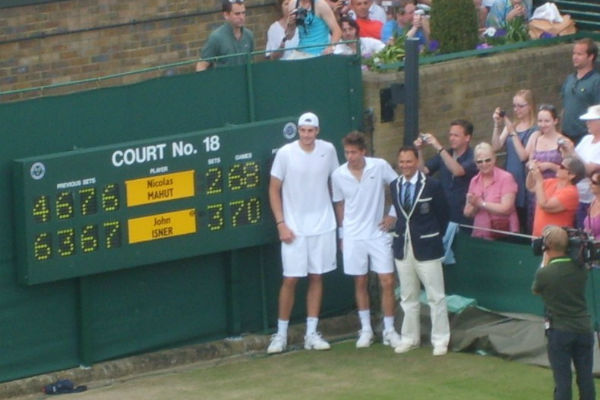
Court 18 is one of the outer courts at Wimbledon, where matches that aren€™t expected to have big crowds and don€™t have the superstar names tend to go. Yet it was the setting for what is now one of the most famous matches in Wimbledon history, and also the longest. Big-serving duo Jon Isner and Nicholas Mahut played out an absolute epic there back in 2010, with a match that lasted 11 hours and five minutes. That€™s even more incredible when you consider that the final set alone took 8 hours 11 minutes to complete, itself longer than the previous longest match. Play was suspended twice due to darkness, meaning it took a total of three days to be played. Eventually it was the American Isner who triumphed over Frenchman Mahut, winning 6-4, 3-6, 6-7, 7-6, 70-68.

11. Yellow Tennis Balls

A tennis ball is instantly recognisable by its bright yellow colour, but that wasn€™t always the case. The balls we€™re all used to seeing today didn€™t actually come into use at Wimbledon until 1986, and before that they were white. The change was made due to the advent of colour television, with yellow tennis balls first coming into use elsewhere in the early 1970s, but also it made life easier for the umpire. Furthermore, during the two weeks of the tournament, it is expected that approximately 54,250 tennis balls will be used.

10. The Youngest Player

Most 13-year-olds have to make do with watching Wimbledon on TV when they get home from school, or playing on a local court with only a daydream of playing at the All England Club. That was not that case for Mita Kilma, however, who became the youngest player ever at Wimbledon back in 1907. Over 100 years later and it is a record that still hasn€™t been broken, nor does it look likely to be at the moment. Meanwhile, Jennifer Capriati is the youngest player to have been seeded in the competition, when she was just 14 years and 89 days old, and Martina Hingis - aged 15 years and 282 days - became the youngest champion in 1996 when she won the doubles. The youngest men€™s singles champion is Boris Becker, who was 17 years and 227 days. Not bad considering they€™re all around the same age of most ball boys and girls.

9. It Does Like Mondays

Wimbledon always begins on the 6th Monday before the first Monday of August. It lasts for 13 days, with only the middle Sunday not having any games played. Generally the schedule has meant that just a two week gap has existed between the end of the French Open and the start of Wimbledon, something many players have complained about, stating that it isn€™t enough time. This year organisers have listened, which has meant that the tournament has started a week later than usual - now on the fifth Monday before August. It€™s a change to tradition, but one that has been very much welcomed by the players, who appreciate the extra time to get used to the switch from clay to grass.

8. The Merchandise

Wimbledon is not just a sporting event, it is an historic tourist attraction and, as such, it is a big business. Like any tourist attraction - and basically anything in London - it has been commercialised in order to take advantage of the fact that there are huge crowds of people willing to spend their money on a souvenir of some description. The most popular are the Championships€™ towels, with almost 30,000 sold during the two weeks. Other common purchases include mini tennis ball keyrings, of which around 15,000 are sold, and over 10,000 umbrellas.

7. Ball Boys And Girls

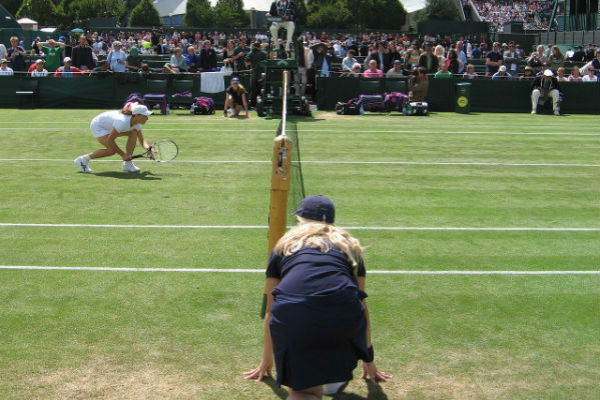
You€™d imagine that there wouldn€™t be much to being a ball boy or girl - known as BBGs - but at Wimbledon there is actually a rather tough selection process to get through in order to get the job. They are selected from a range of schools in the London area, and need to be nominated by the head teacher in order to be considered. Some 700 applications are received each year, with only 250 selected. Once they€™ve received the nomination, they then need to pass a written examination on the rules of tennis. Scoring, line calls, faults, they need to make sure they really know all aspects of the game. After that there is a physical test, which reportedly involves €œa seemingly never-ending medley of star jumps, squat thrusts, high knees and the like.€ There€™s also a lot of sprinting, mastering the art of rolling the ball to your fellow BBG, and of course the risk of being hit was a tennis ball at over 100mph. Still, it beats being stuck in school.

6. It€™s The Oldest Grand Slam

Back in 1877, The All England Croquet Club decided to introduce the game of lawn tennis to its members, and included it in its name, becoming the All England Croquet and Lawn Tennis Club. To celebrate, they held a men€™s singles tournaments in June of that year, and have been done so ever since. At 138 it is the oldest Grand Slam in tennis, with the US Open being founded in 1881, the French Open in 1891, and the Australian Open in 1905, although they didn€™t all become Majors until the 1920s. It is also the only Grand Slam still played on grass, which is of course the original surface of the game (lawn tennis). The US Open changed its surface back in 1974, using clay for a couple of years before deciding on the hard court it still uses today, while the Australian Open was a grass court tournament until 1987, after which it became a hard court.

5. Henman DQ

Despite never winning the tournament, or even reaching the final, Tim Henman is one of the first players to spring to mind when Wimbledon is mentioned. Indeed, it is because of those failures that he is intrinsically linked with the All England Club. Four times he reached the semi-final, carrying the hopes of the nation for over a decade, but was unable to ever make those last couple of steps. Nevertheless, he will still be long remembered and revered at Wimbledon for his efforts. He does, however, have one other link to the Championships. Back in 1995, during a doubles match against Henrik Holm and Jeff Tarango - Henman was partnered by Jeremy Bates - he hit a ball girl in the face by accident, after lashing out at the ball in frustration. This led to him becoming he first player to be disqualified from a tournament in the Open era. He was extremely apologetic about the incident though, and bought the girl flowers to say sorry. Probably the least she deserved given the ball was clocked at 92mph.

4. Strawberries And Cream

Outside of the actual tennis, there is perhaps nothing so synonymous with Wimbledon as strawberries and cream. It is the food of choice if you€™re attending the tournament, almost like a ritual you have to partake in. And, well, most people seem to. It is estimated the around 28,000 kilograms of strawberries will be consumed during the Championships, accompanied by 7000 litres of fresh cream. Most of the strawberries come from Kent, and arrive fresh each day at 5:30am, before being sold for £2.50. In addition to this, there will also be 350,000 cups of tea and coffee sold, a quarter-of-a-million glasses of Pimms drunk, 28,000 bottles of champagne popped, and the players will chew their way through around 15,000 bananas.

3. The Prize Money

Despite being in its 138th year, Wimbledon only continues to get bigger each year, and that is certainly reflected in the increasing prize money on offer. It wasn€™t until 2007 that the prize for the women€™s singles title was made the same as the men€™s, but now that it is both winners can expect to receive £1.88m for victory this year, a record in professional tennis. Overall, there will be a mammoth £26.75m distributed to all players. The men€™s and women€™s doubles winners will receive £325,000, the mixed doubles winners £96,000, while the players who exit the singles competitions in the first round can expect to be consoled for their early departure with a cheque for £29,000.

2. A Colourful History

Wimbledon is now known as one of the most historic and celebrated sporting events around the world, and is watched on TVs by hundreds of millions of people. However, when it comes to its TV audience, it does own a little bit of history from the 1960s. Back in 1967 it became the first ever event to be broadcast in colour in the UK, airing live on BBC2. This helped lead to a greater interest in colour television, and while BC2 was initially the only channel showing such programmes, the success led to BBC1 and ITV following suit. It wasn€™t the last time that Wimbledon would pave the way for new technologies in TV either, as in 2011 it became the first ever programme to be broadcast by the BBC in 3D.

1. During The War

Only twice in the last 138 years has Wimbledon suffered a major delay, and both times there was a rather justifiable reason: World War. There was no tournament between 1915-1918, due to World War I, and similarly it was suspended between 1940-1945 due to the Second World War. During World War II the Centre Court was hit by a total of five bombs, which destroyed over a thousand seats, and the rebuilding work took nine years to complete.

Contributor
Contributor

NCTJ-qualified journalist. Most definitely not a racing driver. Drink too much tea; eat too much peanut butter; watch too much TV. Sadly only the latter paying off so far. A mix of wise-old man in a young man's body with a child-like wonder about him and a great otherworldly sensibility.