10 Utterly Devastating Star Trek Endings That Came Out Of Nowhere
Star Trek knows how to swipe the legs out from under you and shatter your heart with no warning

Crafting an ending that truly devastates is no easy task. For the full impact, one must build the tension as the story goes, allowing the audience to either prepare themselves or be lulled into a false sense of security. Only after perfectly setting the scene does the trap close - and hearts break.
An even more difficult version of this is creating those scenes of devastation that attack like a clever girl in a jungle. In almost sixty years of trying, Star Trek has managed to pull it off quite a few times.
This is more than a case of sticking the landing - this is setting up a scene with such subtlety that the audience is truly blindsided by what happens. We expect one thing, we're delivered another, and we're all the sorer for it.
Star Trek may be one of the greatest ongoing franchises in television and cinema history, but let us never forget that it's like a Rose. Beautiful to look at, yet fully capable of stabbing right under your skin and punishing you for your enjoyment.
10. Shattered Mirror

Shattered Mirror rarely gets mentioned in lists of tragedy, as it is mostly remembered for the dogfight between the ISS Defiant and the Regent's Battlecruiser. Easy to forget, however, is the cold-blooded murder that Jake Sisko witnesses toward the episode's end.
As the Intendant is escaping, she moves to kill Jake, but Jennifer Sisko steps in the way of the blast. Though audiences had only known this version of the character for barely an episode and a half, she represents something so much more to both Jake and Ben.
Both men endured the loss of the Prime version of Jennifer in the Battle of Wolf 359, so to lose her again was almost more than they could bear. To have it happen, once again, in so brutal a fashion seemed cruel beyond measure.
Ben and Jake's embrace over Jennifer's death bed brought what had been, to that point, a fun action-adventure style episode to a dark and sombre close.
9. Eye Of The Needle
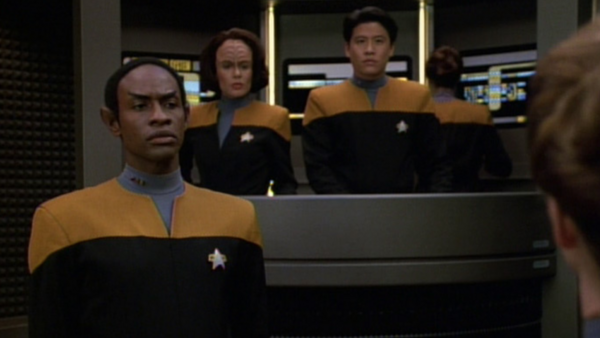
Star Trek: Voyager's main premise was the journey to reach home, with some interpersonal conflict thrown in for good measure. Despite the theme of opposites learning to work together being dropped almost immediately, that constant strive to get home never fades - leading to sad outcomes, more often than not.
Eye Of The Needle depicts the crew's first real chance of getting home - though not to the home they imagined. They encounter a wormhole that leads home - twenty years in the past. The Romulan scientist that they encounter via the viewscreen, Telek R'Mor, offers to transmit personal messages from the crew to their families once time catches up.
However, this bittersweet ending takes a decidedly more tragic turn after Tuvok discovers, via the ship's records, that Telek R'Mor will die four years before Voyager leaves the Alpha Quadrant and that there is no way of knowing if he got to send their messages or not.
As Voyager went on, it is more or less confirmed that he wasn't able to send them. Episodes like Message In A Bottle and Hunters show the crew's elation at contacting Starfleet to let them know that they had survived. It makes Eye Of The Needle an even sadder episode in retrospect, adding weight to that definite downer of an ending.
8. Drone
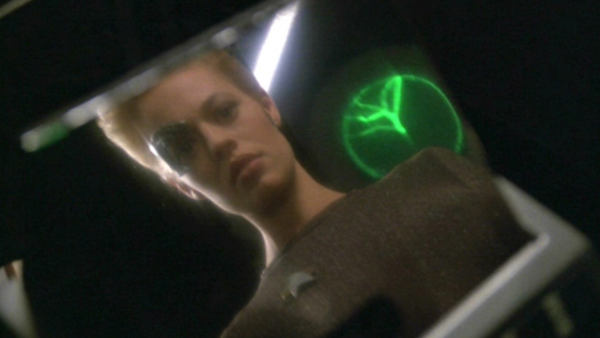
Was anyone ready for Drone? Voyager's fifth season gives us an episode that effectively puts Seven Of Nine in maternal mode, helping raise and care for a rapidly aging 29th-Century Borg Drone. This is barely a year after Seven joins the ship, with many bumps along the journey.
Seven becomes the caretaker here, educating the Drone, who chooses the name One, and helping to guide him to individuality. It is perhaps the best example we've ever seen of the Borg maturation chamber - although this one could easily test positive for steroids.
One's advancements signal the Collective, who send a ship to assimilate him. Though he manages to defeat them with relative ease, the resulting explosion mortally wounds him. He refuses life-saving care, reasoning that his continued presence on the ship will encourage the Borg to send more ships, thus endangering his new family.
It is Seven's pain that we focus on, after One's death (with the tragic 'You will adapt' he says as he dies), when she returns to Cargo Bay 2, looking into a mirror that she had been using to practice her smiles. There are no more smiles for her, not for a long time, and the screen fades to black.
7. The Offspring

How does one truly capture the pain of losing a child? That would be difficult enough, but to then tell the story via a character who is known for not possessing emotions makes it a taller ask. The Offspring attempted to do exactly that, introducing us to Lal, Data's newly constructed child.
One could view Admiral Haftel as the villain in this episode, intent as he is on taking Lal away from Data and the Enterprise. It is Data's emotionless responses to both Haftel and Picard, framed as logical questions, that highlight the irrationality of their fears, and Haftel's interest in studying her at a starbase.
When it looks as though the episode is headed in one direction, it takes a swift turn. Lal begins to shut down as her positronic brain is unable to handle all of the emotions that she feels. That final scene of Data talking to her, unable to feel the love for her that she feels for him, before taking his post on the bridge, is brutal. On the one hand, the audience knows that he doesn't feel any pain at her loss. On the other hand, we know that he will never forget her.
6. Crossfire
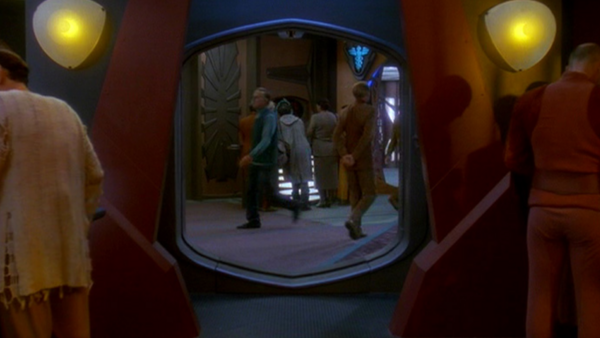
Odo's feelings for Kira had become increasingly obvious as time went on in Deep Space Nine, though it appeared that only Kira herself was ignorant of them. Crossfire sees Kira begin a relationship with Shakkar, her former resistance cell leader, and the current First Minister of Bajor.
The episode starts out in the form of a sweet, romantic tale. Odo has Kira's coffee ready and waiting for her in advance of their weekly meeting, while also ensuring that his spartan office is exactly the way he wants her to find it.
As her relationship with Shakkar grows, Odo's heart, such as it is, begins to break. It takes some tough love from Quark, of all people, to help him get to a point where he can deal with his feelings not being reciprocated. This episode is perhaps an outlier on this list as, rather than the ending being truly depressing, it is much more bittersweet. At this point in time, Odo loves Kira, but she doesn't love him back.
He leaves the bar at the end, seeing her with Shakkar, alone once more.
5. Project Daedalus

Philipa Georgiou may have been the first and biggest named character to meet their maker on Star Trek: Discovery, but Hannah Cheeseman's Ariam may have been the first and biggest loss that the ship endured. She had always been a background character, usually significant in her appearance more than her contribution to each episode's events.
She is part of the away team that investigates Section 31's space station, thus leading to her effective assimilation by Control, the advanced AI program bent on wiping out all organic life in the galaxy. Kudos to Cheeseman, and Sonequa Martin-Green, in this episode, as they make that final scene truly emotional.
Ariam, with what little the audience had known of her, served as a blue-print for humans altered with technology. A life-threatening accident required artificial augmentation, though this led to her infection. In her last moments of individuality, she urges Burnham to do the only thing possible: blast her into space.
Those shots of Ariam's body floating were far more affecting than this writer expected, full of melancholy as she begins to shut down, spending her last moments thinking of her deceased lover - before she herself fades into the void.
4. Tears Of The Prophets

Star Trek: Deep Space Nine's sixth season saw the Dominion War truly explode across our screens. The darker tone of this iteration of the franchise had always allowed for depictions of violence, yet the ending of Tears Of The Prophets was a new departure for Trek.
Jadzia's prayer in the Bajoran Shrine is cut short by a possessed Gul Dukat and jaws dropped in horror as he brutally murders her. Though Trek was no stranger to death, it was both the manner of her dispatch and the treatment of a main character that truly stunned viewers.
The audience was allowed mere moments with her as she succumbed to her wounds on the operating table, and then hearts were shattered as Worf roared up to Sto-Vo-Kor that a new warrior was en route. Sisko's desperation over her coffin, followed by the sad fade-out on the captain scrubbing clams was a downbeat denouement to what had been an otherwise victorious day.
The Chin'toka System fell to Federation forces, but the cost was far too high for those left behind.
3. Lower Decks

Sito Jaxa was introduced in The First Duty. In that outing, she is merely one of the team when Wesley Crusher is called in front of an inquiry into Joshua Albert's death. That episode focuses heavily on Wesley and Nick Locarno, so it was something of a surprise when Jaxa returned in Lower Decks.
The young Bajoran officer was shocked that she was posted to the Enterprise, never truly believing that she would get a fair shot at a career. It was Worf who first helped her believe in her abilities and what she could bring to the ship, so much so that she respectfully stood up to Captain Picard.
The revelation that everyone wanted her to succeed warmed hearts, though this came with a terrible cost. Her mission - accompany a Cardassian double agent back home, then attempt to escape - aimed to bring about the end of hostilities between the two powers. The audience had every reason to believe that she would survive.
Picard's announcement to the crew, informing them of Jaxa's death, was a shocking and devastating moment. We had seen her firmly established as a vital part of the ship, with friends, colleagues, and more rooting for her. It was one of the earliest examples of Star Trek offering a perspective outside of the main cast of characters, and for it to end in such a fashion, it showed a confidence in both the character and her actor, Shannon Fill, which paid off in dividends.
2. Imposters
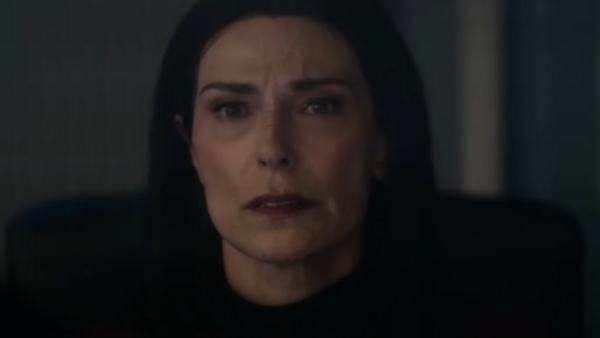
This one hurt and it hurt a lot. Thirty years after Ro Laren and Jean-Luc Picard last saw each other, the former Maquis returned to Star Trek, having been reinstated in Starfleet, rising to the rank of Commander - much to Picard and Riker's surprise.
The scene on the holodeck was everything that fans had been waiting for. Ro and Picard express not just their frustrations with each other, but the heartbreak that each felt about the other's betrayal. Picard saw her defection as betrayal, whereas she felt he was wrong to close the book on her so definitely.
While no body, no death rules are in firm place here, the fact is that the ending of the episode was almost too much to bear. The Changeling infiltrators force Ro into an act of self-destruction, piloting her shuttle into the nacelle of the Intrepid, thus ensuring the Titan-A's escape.
It's horrific. It's quick. It's simply not enough time with this monumental Star Trek character. But, with the dust settled, it is a perfectly bittersweet ending to a story arc - Ro and Picard finally see each other for who they truly are, and it is a beautiful moment wrapped in the pain of the situation they're in.
It very much fits with the rest of this article: no one saw this one coming.
1. Tomorrow And Tomorrow And Tomorrow
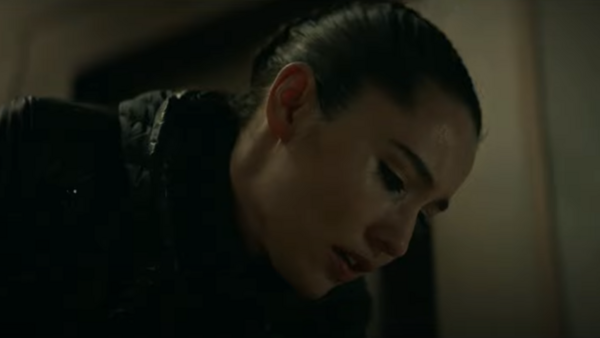
Strange New Worlds threw the audience for a loop when it introduced La'an Noonian-Singh, a new character with an old legacy. She is burdened by everyone knowing her family name and only experiences freedom when transported into the past.
Tomorrow And Tomorrow And Tomorrow pairs her with James T. Kirk - though an alternate version, hailing from a timeline created by temporal shenanigans. Watching La'an thaw to his genuine charm is a treat, even if in the back of the viewer's mind, they know the two must part.
It is how they part - Kirk's death at the hands of a Romulan temporal agent - that truly takes the wind out from under us. They would have to part for the timeline to be restored, but to have the one person whom La'an felt comfortable enough to open up to die in her arms - it was almost too much to bear.
The ending is particularly cold - another temporal agent casually visits La'an, and warns her not to speak about what happened, and that's it. La'an does speak to the Prime version of Kirk briefly, though it is a reminder of what she has just lost.
Time travel episodes can play with the form and kill off characters who are fine the next week - but watching La'an go through that genuine loss was something that, only three episodes into the second season, really came out of nowhere.