10 Best Game of Thrones Adaptation Choices
 The world thought they were mad. Insane. What else besides sheer lunacy could make someone think that adapting George R.R. Martin's epic A Song of Fire and Ice was feasible? We're talking about thousands of pages, dozens of characters, a story that was started almost two decades ago. And yet that is what David Benioff and D.B. Weiss set out to do. Somehow, they succeeded. Game of Thrones was a cultural phenomenon right out of the gate. Now, as season three comes to a close and certain brutalities have occurred, the show has never been more popular. Also, setting aside the series's mass appeal, Game of Thrones is a finely crafted piece of television. Solid acting, immersive art design, smart writing. You name it, Game of Thrones is doing it right. Obviously, they can't just take the words and transfer them to your TV screen verbatim. Some parts are going to get lost, others need to be re-imagined so as to exist properly in a new medium. Benioff and Weiss had a lot of choices to make with this Herculean adaptation. Here are ten of their best decisions...
10. The Hand's Tourney
 In the novel A Game of Thrones, this is a rather prolonged sequence that unfolds over two chapters. We see some great soon-to-be-important characters. Thoros of Myr drunkenly appears, waving around his flaming sword. Jamie Lannister gets a little taste of action, too. All-in-all, a wonderful assortment of characters and some nice world building. During the first season of the show, this scene gets compressed and ends up serving one distinct purpose: the introduction of Gregor Clegane, the Mountain who Rides. His memorable horsemanship and the quick fight with Sandor, his brother, demonstrate that Gregor Clegane is a top contender for Most Evil Sonofabitch in Westeros.
9. The Spider vs. Littlefinger
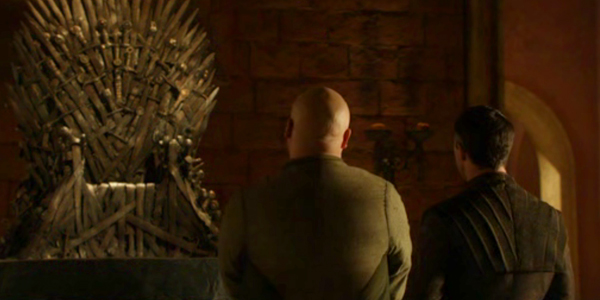 This dynamic is made entirely possible by the not-being-tied-to-individual-perspectives factor (in the novels, every chapter is basically limited to a single perspective from one of eight-to-twelve people), which is responsible for many of Benioff and Weisss successes. As A Clash of Kings and A Sword of Storms unfold, it becomes more and more apparent that Petyr Baelish and Varys are pulling immense strings behind the scenes. We never see anything through their eyes, though, so often it is up to the reader to piece it together (mostly with material from Tyrions chapters). For the television series, this rivalry is played up beautifully. At the end of season one, their final conversation says everything while saying nothing. And what their conflict leads to in season three is terrific. Baelish makes his move towards Sansa, Varys recognizes what hes doing, and that is how the marriage to Ser Loras comes about. Certainly, it doesnt hurt that the two actors are so splendid, either, most especially the scene-stealing Aiden Gillen as Littlefinger.
8. "Blackwater"
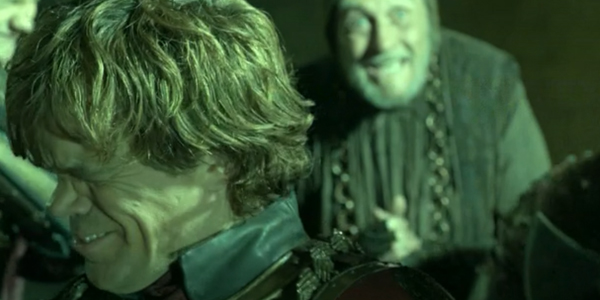 There were times in season two that I found myself rather disappointed. The creators seemed to have bitten off more than they could chew in their attempt to depict such an intricate world filled with so many characters. Pacing dragged, while simultaneously we jumped around between characters too much and didnt get a chance to invest in them. And then came Blackwater, the second-to-last episode. It continued the Game of Thrones "Psycho 9" tradition, where episode nine has the most Holy Snap! moments of the season (both Ned and Robb met their ends in a ninth episode). For this one, we stayed entirely at Kings Landing, and almost all of what we saw was through Tyrions eyes. The battle feels massive, like it belongs in a multi-million dollar blockbuster, not an HBO show. Every major plot point is solidly struck. Peter Dinklages performance is especially striking. Blackwater was without a doubt Tyrions battle, and Dinklages poise, fear and resilience really hammer that home. Blackwater is one of those magical adaptation moments, where what youre watching is just as gripping as the source material it came from.
7. Cerseis Heart-to-Heart With Robert
 Theres a wonderful scene in The Wolf and the Lion, the fifth episode of the first season. Robert and Cersei have a very frank conversation. This doesnt take place in the book, due to the limited perspectives. In this conversation, Robert and Cersei discuss their marriage, and whether or not they were actually in love. The writing and acting are both top notch, and you really get the sense that these people have been married for over a decade and a half. It is easy to forget about Robert, since EVERYTHING starts after his death. In the novel A Game of Thrones, their relationship doesnt seem all that meaningful. But with this added scene, we are presented with an actual marriage, one with many years behind it. Also, Cersei is one of the most despicable characters in A Song of Fire and Ice (and believe me, non-readers, you aint seen nothing yet). Any scene that conjures up a teaspoon of sympathy for her is worth its weight in Lannister gold.
6. The Baratheon B**tard Massacre
 With this sequence, an almost throwaway plot point becomes something powerful. Originally, Cersei was the one who ordered the death of a single infant, the last of Roberts illegitimate children in Kings Landing. This serves the purpose of giving Tyrion even more of a reason to stick it to Janos Slynt (the first of course being Slynts betrayal of Ned Stark). Also, it vaguely indicates that soldiers will probably be in pursuit of Gendry, the Baratheon b**tard that accompanied Arya to the wall. In season twos first episode, the elimination of Roberts true heirs becomes far more explicit, including some serious baby-stabbing. Because we see what is happening to the Baratheon b**tards, Gendrys jeopardy is much richer. Also, by making it Joffrey that gave the order instead of Cersei, the Joffrey/Tyrion conflict is further fueled.
5. Melisandre And The Brotherhood
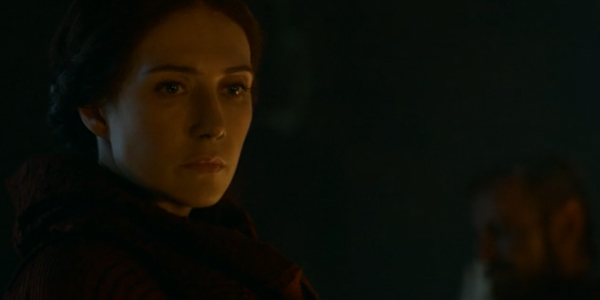 This is something that simplifies the original material while at the same time taking advantage of untapped character possibilities. In the books, Melisandre never goes to see the Brotherhood. There is another one of Robert Baratheons b**tards much closer, and he ends up suiting Melisandres needs. Gendry goes off with the Brotherhood. He pops up again in the fourth book, more in a Oh hey, cool! way than a necessary one. By bringing Melisandre to Dondarrion and his men, an unremarkable character is entirely eliminated and a character with great potential gets more development. Also, having our two Red Priests interact strengthens the mythos of the Lord of Light.
4. Robb Keeping Jamie Lannister On Hand
 In A Clash of Kings, there is a great big Jamie Lannister-sized hole. After being captured, the Kingslayer is kept in a dungeon. He appears only once in the book, when Catelyn releases him. Going practically an entire year without seeing such an important character would have been a misstep, one that Benioff and Weiss found a great way around. Instead of being kept in Riverrun, Jamie is imprisoned at Robbs camp. From a story-perspective, it makes sense. An on-the-move Kingslayer is harder for Tywin to track down. And dynamically, its wonderful. Jamie has a real Hannibal Lecter vibe in these scenes. Also, it enables them to better build up his escape attempt (something that happens offstage in the book), which of course causes the death that eventually loses Robb the Karstarks, and also the war.
3. Tywin Lannister
 A great deal of kudos needs to be heaped upon Charles Dance for his work in this role. An actor with a career three decades long (including the vastly misunderstood Last Action Hero), Dance brings sophistication and steel to this performance. It certainly doesnt hurt that he has such a great part to play. Tywin appears briefly in A Game of Thrones and A Clash of Kings, but it isnt until A Sword of Storms that he becomes a main character. His deer-skinning Jamie-lecturing intro in the television show establishes him perfectly, and some of the second seasons most compelling moments come from watching him interact with Arya at Harrenhal (none of that is in the books, by the way). Because of all that, his authority is felt more strongly in season three. After all, he is basically the most powerful man in Westeros. Thanks to Dance, Benioff and Weiss, this is most apparent.
2. Margaery Tyrell
 Without a doubt, the best example of hindsight adapting so far. In books two and three, Margaery is more plot than character. The reader doesnt see very much of her. In A Feast For Crows, she starts playing a much bigger role, but even then shes rather passive. Benioff and Weiss saw a great opportunity here. After all, House Tyrell is extremely powerful, so the family should be comprised of shakers and schemers (like the Queen of Thorns). Margaery has her sights set on becoming Queen of the Realm, and she knows that wont be simply dropped in her lap. We see some very pragmatic cunning on her part in season two, most especially when shes trying to seduce Renly and when shes making deals with Littlefinger. Her part in season three is even more involved, especially in the way she maneuvers and manipulates Joffrey. Margaery has some major stuff coming, and this great character development will make those events even more impactful.
1. The Rains of Castamere
 At long last, the scene all the Song of Fire and Ice readers were waiting for, both to see the Red Wedding in its terrible glory, and also to watch as the non-readers lost their minds. The big event itself is depicted mostly the same as it is in A Sword of Storms, though there are some smart changes, most notably stabbing Jeyne/Talisa, having Arya witness the killing of Robbs wolf, and the fact that it is Roose Bolton who finishes off Robb, not just some random soldier. Whats even more remarkable, though, is the selection of scenes that precede the Red Wedding. The Sandor Clegane/Arya choice is obvious, but effective. In A Sword of Storms, the real meat of their relationship doesnt come until after the Twins. With the "Rains of Castamere," the interactions between the Hound and Arya make the climax even more crushing. Major action happens elsewhere during this episode, too. Though probably at the same time chronologically, Daenryss scene takes place a hundred and some pages before the Red Wedding, as does Jon Snow breaking cover and almost meeting up with Bran (great changes in those sequences too, such as the role Daario ends up playing in the fall of Yunkai). By moving those scenes into The Rains of Castamere, Weiss and Benioff manage some misdirection. The non-reading viewer thinks something will probably happen at the wedding, but surely nothing all that important, since the episode is already full of importance. And then that viewer gets his or her face blown off. "The Rains of Castamere," an episode that stays true to the source material while coming up with awesome new approaches that suit the new medium. Thats what adapting is all about.