10 Best Sherlock Characters
Due to the terrific writing and stellar performances, Sherlock had many outstanding characters...
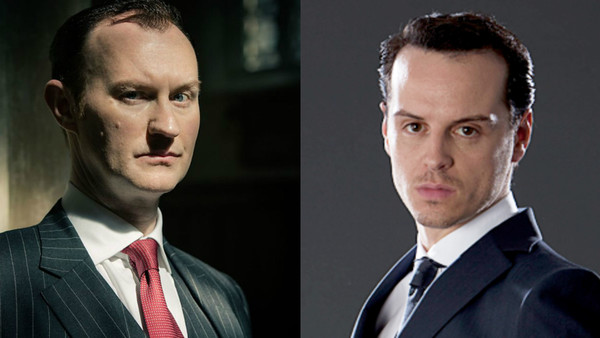
Sherlock was always rife with plot twists, mystery, and suspense, and whilst the show certainly deserves praise for its story, it was the characters that made fans want to watch every episode again and again.
The partnership between Sherlock Holmes and John Watson was undoubtedly the most captivating relationship in the show, but there were plenty of other characters who stood out as well.
The villains of Sherlock were almost always captivating. Even the more far-fetched antagonists felt authentic thanks to some great performances and a string of well-written scripts.
Though the show was based on the stories of Arthur Conan Doyle, Sherlock introduced several completely new characters that – far from feeling out of place – were interesting individuals who were crucial to the episodes they were featured in.
Indeed, one of the greatest strengths of Sherlock was how memorable many of the supporting characters were. Despite the fact there was only thirteen episodes in total, the screenwriters always allowed the secondary characters to make their mark.
As such, there are an abundance of individuals who rank amongst the best characters in the show…
10. Eurus Holmes

There was never any mention of a third Holmes sibling in Conan Doyle’s original stories, and as such, the introduction of Eurus took everyone by surprise.
One of the most interesting aspects of Eurus was her various disguises. In ‘The Six Thatchers’ she became Watson’s temporary love interest, and in ‘The Lying Detective’ she masqueraded as both Watson’s therapist and Faith Smith – the daughter of Culverton Smith.
‘The Final Problem’ then put Eurus front and centre of the show as she subjected Sherlock, Watson, and Mycroft to a series of psychological challenges. Though this episode was far-fetched, Eurus’s dialogue – particularly with Sherlock and Mycroft – was consistently captivating.
Despite the over-the-top nature of her character, therefore, Eurus never failed to be entertaining.
9. Mrs Hudson

From the moment Sherlock and Watson arrived at 221B Baker Street, Mrs Hudson’s interactions with her most disruptive tenants were always fun to witness.
In the first episode she was subjected to a drugs bust from Lestrade and his team, and she quickly learned that such an event was a mere indication of what was to come.
During the course of the show she had to put up with explosions, gun shots, substance abuse, insults and sarcastic remarks, and a string of clients for Sherlock and Watson.
Though Una Stubbs was great at playing the fussy, motherly side of Mrs Hudson, she also excelled when it came to her more confrontational nature. This was particularly noticeable in ‘The Lying Detective’ and ‘A Scandal in Belgravia’, when Mrs Hudson demonstrated she was more than capable of standing up for herself.
As such, she was a great source of both comedy and intrigue throughout the show.
8. Culverton Smith

The quality of Series 4 was a bit up and down, but even those who were disappointed by the final series of Sherlock acknowledged the quality of ‘The Lying Detective’.
At the centre of Sherlock’s penultimate adventure was Culverton Smith (played by Toby Jones), a famous businessman who also happened to be a serial killer. Despite his small size, Smith never failed to intimidate owing to his spine-tingling laugh and his consistently creepy aura.
In the closing stages of ‘The Lying Detective’, Culverton attempted to add Sherlock to his extensive list of murders, and it was during this scene that Jones gave a truly chilling performance. He was totally believable as a man who enjoyed the act of murder and the torment his victims endured whilst in his presence.
In fact, his performance was so good it’s a shame he was only featured in one episode. Still, what we did get from Smith makes him a strong contender for the creepiest villain in the show.
7. Mycroft Holmes

Mycroft had a troubled relationship with his younger brother. Though they were both intellectual titans, the pair of them were constantly at loggerheads.
The various conversations between the two Holmes brothers often led to them trying to intellectually oust one another. Such moments – though quite brief – were always amusing to witness, and it was nice to see Sherlock get outsmarted from time to time as well.
Yet Mycroft was also an intriguing figure in his own right. In contrast to his little brother, the eldest Holmes sibling had a significant degree of power and influence over the British government. Whilst it would have been interesting to learn more about this, such a lack of clarity also gave Mycroft a mysterious and slightly formidable nature that added nuance and intrigue to his character.
He may not have been the adrenaline junkie that his brother was, but Mycroft was still a fascinating individual in his own right.
6. Molly Hooper

Molly Hooper was another character not featured in Conan Doyle’s original stories. Yet she turned out to be one of the most distinctive characters in the show.
She garnered sympathy almost at once owing to her failed attempts to win Sherlock’s affection. Though it was easy to feel sorry for Molly in these situations, it was also rather amusing to witness Sherlock’s response.
Moreover, there was more to Molly than her romantic feelings for Sherlock. She was also highly proficient in her medical profession. Throughout the series she was utilised regularly in a number of key plot points, the most significant of which was when she helped Sherlock to fake his own death.
Part of the reason why the multi-dimensional aspect of Molly worked so well was due to the performance of Louise Brealey. Whatever Molly was feeling at any given time was always clearly broadcast to the viewer with or without dialogue.
Thanks to a considered performance and a well-written character arc, Molly turned out to be the best of the original characters created for Sherlock.
5. Charles Augustus Magnussen

After the death of Moriarty at the end of Series 2, the show needed another great villain to challenge the legendary detective.
Charles Augustus Magnussen – who Sherlock described as the Napoleon of blackmail – may have been different from Moriarty, but he was just as captivating.
Using his momentous intellect, Magnussen was able to store a library of secrets and scandals inside his mind that enabled him to find the pressure point of those he wished to blackmail.
In addition to his mental capacity, Magnussen possessed a chilling aura that made even Sherlock feel uncomfortable. Regardless of his surroundings or who he was with, Magnussen was always calm and calculated.
Sure, his short amount of screen time meant it was impossible for him to be as memorable as Moriarty, but what we did get from Lars Mikkelsen’s character never failed to hook the audience.
4. Irene Adler

Aside from Moriarty, Irene Adler is the most well-known of Conan Doyle’s villains. Though she only physically appeared in one episode of Sherlock, Lara Pulver’s version of this iconic villain made a lasting impression.
Upon meeting Adler, Sherlock was baffled because she appeared to be immune to his deductive reasoning. Whilst he managed to temporarily get around this issue, he ended up drugged and beaten by Adler before she made her escape.
It’s understandable, therefore, why Adler carried such confidence. Like many great characters, however, she was also vulnerable. In the closing stages of ‘A Scandal in Belgravia’, her dominating presence broke as Sherlock managed to get the better of her.
Without a convincing performance, these significant shifts between confidence and fear would not have been convincing. Thankfully, Pulver excelled at all the nuances of her character and was able to pull off one of the better incarnations of Sherlock’s iconic rival.
3. Jim Moriarty

Andrew Scott’s version of Jim Moriarty was a madman. Whenever he was on screen, he projected intelligence, determination, and insanity.
Though he was mentioned in ‘A Study in Pink’, Moriarty did not make an appearance until ‘The Great Game’ – the finale of Series 1. In said episode, Scott’s performance encapsulated his character’s aptitude for chaos perfectly.
Yet the best moments with Moriarty were in ‘The Reichenbach Fall’. The dialogue between Sherlock and Moriarty during this episode was superb. (Indeed, the rooftop scene is a strong contender for the best scene in the show’s history.) Moriarty was a truly terrifying adversary in this episode, and he proved he was willing to do anything in order to beat his nemesis – including taking his own life.
The only negative aspect of Scott’s version of Moriarty was that we didn’t see enough of him. Though he was featured in Series 3 and 4 in flashback sequences and Sherlock’s mind palace, this modern incarnation of Sherlock’s arch enemy should have been in more episodes.
2. John Watson

When Martin Freeman was cast as Doctor John Watson, he was best known for his roles in Love Actually and The Office, and as such, he didn’t seem like the natural choice for Sherlock’s companion. Thankfully, Freeman excelled as Watson.
The best aspect of his performance was how authentically he was able to balance the subtle yet significant nuances of his character.
In the opening scenes of ‘A Study in Pink’, he came across as a quiet, troubled man with no sense of direction. Upon meeting Sherlock, however, he was quickly seduced by the world of crime and adventure.
Though he found a renewed sense of purpose alongside Sherlock, Watson’s arc during the show was by no means a wholly positive one. The emotional suffering he endured after Sherlock’s fake suicide and his wife’s death made him a deeply sympathetic character who was impossible not to root for.
In this sense, Watson was the most humane character in Sherlock. The burdens he bore and his desire to do good were at the heart of why Sherlock was such a successful show.
1. Sherlock Holmes

If there’s ever another modern rendition of Conan Doyle’s stories, whoever is cast in the lead role will have an enormous pair of shoes to fill.
Many of the most memorable moments in the show were those in which Sherlock talked through his deductions, which almost always turned out to be right.
Yet with such intelligence there also came comedy. Sherlock’s general lack of social etiquette and his superiority complex were a frequent source of humour throughout.
As the show continued, Sherlock steadily grew more humane due to his interactions with various other characters. By the final series it was clear he was capable of forming close bonds with others despite his early claim that he was a high-functioning sociopath.
It was this central character arc in tandem with Sherlock’s huge intellect that made him both entertaining and increasingly relatable.
Whilst the screenwriters certainly deserve praise for their exceptional dialogue, it was the performance of Benedict Cumberbatch that really brought this character to life. From the moment he appeared on screen it was clear he was born to play this role.
Who is your favourite character in Sherlock? Share your thoughts below in the comments thread.