10 Best TV Series Based On Horror Movies
What do you do when there is too much horror to fit into just a film?

Horror films often provide great source material for television shows. They are exciting, have larger than life characters, and often have interesting mythology or back stories to them that cannot be fully explored in the duration of a film.
Some shows expand on a premise that while good, was not fully developed in the film, and take the story into a more expanded universe. This can quite often involve discovering more details about secondary characters who proved to be popular with the fans and bringing them to the forefront.
Other films had a great idea but executed it poorly so remaking it into a television show is a chance to get it right and try again by improving on the original. This has often led to shows becoming hits while few people remember the film that inspired it.
TV shows are also frequently used to delve into the origin of a story, explaining details that the film didn’t have the opportunity to answer.
They can flesh out characters to show what happened to them to turn them into who we know from the film. There is also the scope to show what happened after the film ended, answering plot holes or cliff-hangers.
Here are some of the best TV series that are based on horror movies (warning: spoilers!).
10. Freddy's Nightmares (1988 - 1990)

Freddy’s Nightmares was an anthology series that was introduced after the fourth film in the Nightmare on Elm Street series to capitalise on the popularity of the franchise.
Robert Englund reprised his role as Freddy Kreuger, introducing and summarising each story and featuring in some of the episodes.
The show lasted for two seasons, and each episode consisted of two standalone stories (the second usually featured a minor character from the first) set in Springwood with a different cast.
The first episode was produced by Tobe Hooper (Texas Chainsaw Massacre) and acted as a prequel to the first film, telling the story of Freddy’s trial after being arrested for child murder.
Freddy is set free due to not being read his rights, then goes on a killing spree before being burned to death by the rampaging Elm Street parents. The episode ends with Freddy killing the police officer who killed him while he is anaesthetised in the dentist chair.
Freddy featured sporadically in the other episodes, with a lot of the other stories featuring a running theme of dreams and insanity.
In a self-referential episode featuring Freddy’s uninvited attendance at his class reunion, one of his classmates wrote a screenplay about Freddy which he took to Hollywood, implying that the films were just another story in the series.
The show featured mainly unknown actors (apart from Englund) due to budget constraints, but notable cast members included Lori Petty, Bill Moseley, George Lazenby, Jeff Conaway and Brad Pitt.
9. Teen Wolf (2011 - 2017)

Loosely based on the 1985 horror-comedy film, Teen Wolf was a reimagining of the story, a lot darker and with more horror elements than the original.
Whereas the film showed Michael J Fox’s character becoming a werewolf due to inheriting the trait from his father, the TV series starts with Tyler Posey’s character (also called Scott) being attacked and bitten in the forest, after trying to find the mutilated body of a girl killed by an unknown animal.
Scott becomes star of the lacrosse team, which replaces the basketball team in the film, and attracts the interest of the new girl in town (whose family are werewolf hunters). He is helped by his best friend Stiles, and Derek, the werewolf who turned him.
Both the TV show and the film show the benefits to becoming a werewolf, in building the protagonist’s confidence, improving his sporting abilities and his popularity at school.
However, the TV series takes a different direction in that it expands to also show Scott using his new skills to protect his town from supernatural forces. It also features a lot more violence and gore, and has a more frightening tone.
During its six-season run, the show won multiple awards and ended on a high, with the main characters all teaming up to carry on fighting together.
8. The Purge (2018 - 2020)
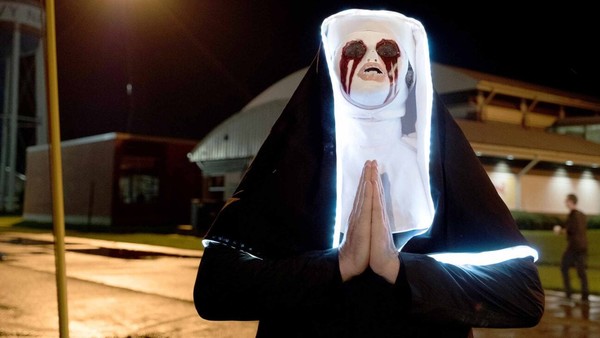
Set in 2027, between the timeline of Anarchy and Election Year, the first season of this series followed new characters experiencing the lead up to the annual purge night from different angles, including a death cult, a revenge mission and a purge party.
The second season focused more on the aftermath of a purge, looking at how people deal with what they have done on the night and what the consequences are.
The series was developed to look more closely at different aspects and concepts that weren’t fully examined in the films as they are set in a longer time period so can show how the event influences life in general.
The concept has only become more relevant over the years, with the New Founding Fathers of America drawing many comparisons to current political issues, showing that you only need one change of government to completely overturn societal values.
The Purge was designed to tackle rising crime rates, unemployment and social unrest, which are all still problems on the rise.
The show examines the themes of social injustice, with poorer people suffering the brunt of the aggression, and richer people feeling like they are immune from it all.
It also looks at how far people will go when they have no boundaries, and what their deepest darkest desires are.
The series was cancelled after two seasons due to dwindling viewing figures.
7. Ju-On: Origins (2020- )
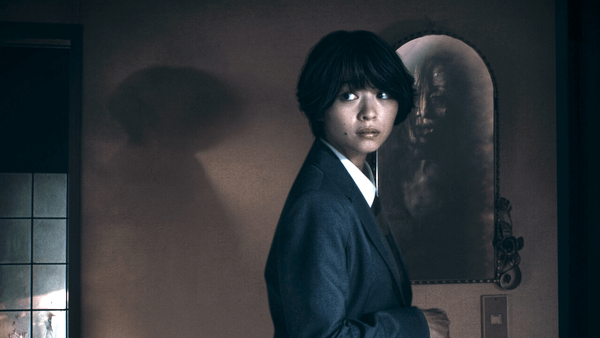
This Japanese series delves into how the infamous curse began, including some horrifyingly graphic attacks and some of the most disturbing baby hallucination scenes since Trainspotting!
The show distances itself from the previous films by claiming to be the real stories that went on to inspire the films. This allows it to disregard the original timeline and characters without further explanation.
Told in an out of sequence timeline, the series is initially confusing, but becomes clearer throughout the six episodes.
The original victim in the house is a woman who is taken hostage and abused, becoming pregnant and eventually dying. She becomes a ghostly woman in white who haunts the house looking for her baby which is the reason why so many pregnant women are victims of the curse.
One of the main characters is a paranormal researcher called Yasuo, who learns he lived in the house as a young child and survived when the rest of his family died as a result of the curse.
The reason he was spared was unclear, but likely to be because of his intention to go on and spread the word about the story of the woman in white. He is asked several times why he is writing the story, but never has a real answer other than he just feels compelled to do so.
The series has a very bleak ending, pulling the last hope that the curse can be stopped away and leading on to the idea that it will continue to afflict occupants in future generations, thus bringing it in line with the films. It has not been confirmed whether any further episodes will be filmed.
6. Scream (2015 - 2019)

The Scream TV series featured different characters from the films but had the same concept of a group of teenagers being stalked by a masked killer for unknown reasons.
A big reason for re-imagining the concept was the advance in technology since the first film which was almost ten years earlier.
Whereas Billy was instantly seen as a suspect in the film because he had a mobile phone, in 2015 everyone has smart phones, so the concept of answering the phone from the killer in your house is expanded to the possibility of being attacked anywhere.
The first two seasons focused on Emma, who was the main target of the Lakewood Slasher. Her group of friends were well thought out, likeable characters and had some complicated relationships that made it easy to imagine any of them being the killer.
The set up involving the mythology of the original Lakewood Slasher Brandon James and his terrifying post-surgery mask helped to keep everyone guessing till the end.
Despite ending Season 2 on a cliff-hanger, the show waited four years then brought a completely new story out for the third season, making it more of an anthology series.
Big names including Queen Latifah, Mary J Blige and Tony Todd were brought on board and Ghostface returned, but the story was concluded in three episodes and there are currently no plans for further seasons.
5. The Exorcist (2016 - 2017)

The Exorcist series serves as a sequel to the original film, ignoring the events of the sequels. It features Geena Davis and Alan Ruck as Angela and Henry Rance, whose family are plagued by demon possession and turn to two very different priests, Father Thomas Ortega and Father Marcus Keane to help them.
In a twist in episode five, it is revealed that Angela is actually an adult Regan MacNeil, the girl from the film. Writer Jeremy Slater has even hinted that the name Angela Rance was chosen because it is an anagram of ‘A Clean Regan’.
The show expands the single issue in the film and explores the relationship between the priests, the role of religion in society and the effects of physical and mental illness on the family.
It uses Regan’s reveal as a link to the film and as the reason why the demon Pazuzu has returned to possess her and her daughter but doesn’t make this the sole issue in the series. We get to see what happened to Regan but also how demon possession affects wider society.
Season two introduced new characters, linked only to season one by the two priests who act as a constant throughout the series, and went on to explore a church conspiracy in the Vatican.
There are further seasons planned, each with a possession story and the same priests, but with different locations and characters making the series more of an anthology.
4. Bates Motel (2013 - 2017)

Bates Motel was created as a prequel/sequel to the film Psycho, with an alternate continuity to that shown in the films.
It depicts a teenage Norman Bates and his mother Norma (beautifully played by Vera Farmiga) and their move to the town White Pine Bay in Oregon after Norman kills his abusive father. They buy the Seafairer Motel with his insurance money, and rename it to the Bates Motel we are all familiar with.
The film only reveals Norman’s psychological disorder as a twist at the end, as the TV show takes the opportunity to delve much deeper into Norman and Norma's relationship, showing what broke the young man and contributed into his descent into madness.
This set up helps us to understand Norman much more, after he kills his mother and takes on her persona as one of his personalities. The addition of a half brother Dylan also adds another layer, bringing a different perspective to the dynamics of the Bates family.
As the show progresses to the events in Psycho, it turns the expected plot on its head, with Norman killing Sam Loomis instead of Marion Crane (played by Rihanna). This is a great twist for fans of the film as it is so unexpected and keeps the story fresh. The show keeps the murder in the shower to pay homage to the original plot.
The ending where Norman is finally killed by his stepbrother gives a neat closure to the series, and sees him returning to be with his mother in death.
3. Ash Vs Evil Dead (2015 - 2018)
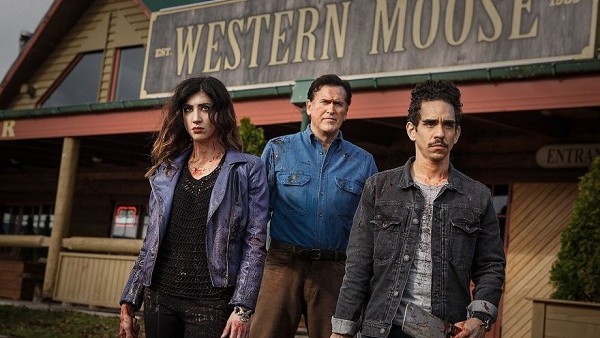
The original Evil Dead team of Sam Raimi and Bruce Campbell joined forces again to create this sequel to the trilogy, and possibly to answer calls for an Evil Dead 4.
Set thirty years after Army of Darkness, it follows what has happened to Ash since returning from 1300 AD. It is quite a depressing premise as Ash is living alone in a caravan, working in a dead-end shop job and drinking alone in bars.
Further episodes reveal how Ash feels guilty that he couldn’t save his friends, his girlfriend and his sister. He was shunned by his hometown when he returned, who dubbed him ‘Ashy Slashy’, believing him to have murdered his friends and dismissing his stories of the Deadites.
When a stoned Ash reads from the Necronomican (which he has been guarding since the third film), the Deadites are released again, and Ash teams up with two of his co-workers Pablo and Kelly to stop them.
Time travel storylines include trips back to the original films, and Ash even manages to get his missing hand back and discovers a long-lost daughter!
Despite being cancelled due to lack of viewing figures, the series had some good character arcs, with Ash finding his confidence again and managing to heal relations with his father and repair his reputation in his hometown.
The three main characters work well together, and the show keeps the feel and special effects (including lots of fake blood) of the original films. Lucy Lawless’s character Ruby is a nice touch, and Ted Raimi gets his usual slot that he gets in all his brother’s productions!
The series finished using a nod to the alternate ending to Army of Darkness where Ash takes too much of a potion and falls asleep, waking up in a post-apocalyptic future.
However, despite cries from fans, all parties involved have dismissed claims of any further entries in the series, and Bruce Campbell has reportedly retired the character for good.
2. Hannibal (2013 - 2015)

Based on the Thomas Harris books and film adaptions, Hannibal focused on Will Graham's relationship with Hannibal Lecter, showing the events that led up to Graham realising Lecter’s true nature.
Graham is sent by his boss Jack Crawford (played by Laurence Fishburne) to have psychiatric sessions with Lecter after being emotionally affected by a murder investigation he is profiling.
The show delves into Graham’s ability to think like a psychopath, and visualise murder scenes using a similar effect shown in Sherlock. These scenes are shot in reverse, showing the events from the point of view of the killer as imagined by Graham.
His association with Lecter is beautifully played out, especially the juxtaposition that Graham has such a deep connection with him, but cannot see what he is, even though understanding psychopaths is his area of expertise.
The series had a great cast, and was well received, but ended earlier than planned after only three seasons due to problems getting the rights to certain characters from The Silence of the Lambs.
1. Buffy the Vampire Slayer (1997 - 2001)

Possibly the most popular television adaption ever, the series was a darker take on the moderately successful 1992 film.
Joss Whedon saw the potential of the concept and realised it could be much improved by making it less comedic and emphasising the horror side. The show also made Buffy a much deeper character and explored more of the mythology of the Slayer, with Buffy’s strength and agility more akin to superpowers rather than just fitness gained from cheer-leading. The humour was still there, it was just more edgy than in the film.
One of the most endearing aspects to the TV show was the relationships between the characters.
Each person had their own issues to deal with, but they all worked together bringing their own strengths to defeat the monsters. The characters were very well developed over the seasons, particularly Willow’s transition into a witch and coming to terms with her sexuality, and Cordelia’s realisation that she liked being friends with people who weren’t the popular crowd.
Another obvious benefit to remaking the film was the advances in special effects, meaning the vampires could be normal looking and blend in until they were about to attack.
Other monsters were also quite terrifying to watch, notably The Gentlemen, in a story that is still regarded as one of the most frightening TV episodes. This episode was especially innovative as it was mostly presented in silence. By contrast, another episode was completely told in song!
After seven seasons, the series ended in typical dramatic fashion as Sunnydale collapsed into the Hellmouth beneath it, leaving the sister show Angel to continue for another year.
Watch Next
Buffy The Vampire Slayer Quiz: How Well Do You Remember Season 1?
