10 Biggest Mistakes In The Walking Dead

The show is awesome, but...
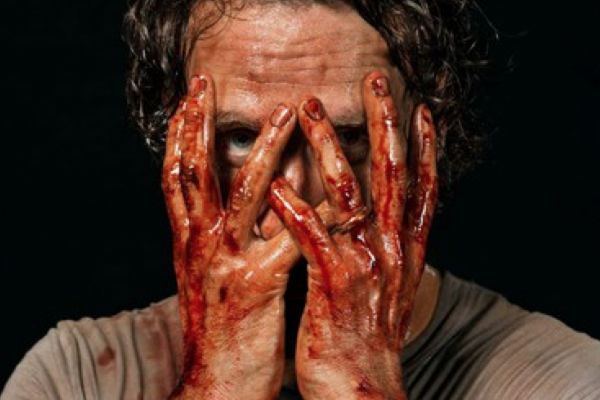
With 17 million viewers in the United States alone (and that doesn't include those who watch it via more illicit means), The Walking Dead is one of the biggest shows on TV, and at its best you can really understand why. When the show is on top form, it is a ferocious blend of action, horror, violence and gore, all happening to a group of characters that you're invested in and care about. There are times when the fact that it's constantly overlooked by the Emmys is just baffling, the acting is on-point, and the special effects are on another level altogether. However, what stops the show from quite reaching the upper echelons of this television Golden Age, the lofty heights occupied by its former AMC stablemates Breaking Bad and Mad Men, is that while it's generally one of the most entertaining programmes on TV, it is also one of the most frustrating. Few shows manage to shock, excite, scare and then really annoy you within one season; The Walking Dead does it frequently within episodes. The reasons aren't quite enough to stop watching, especially not now we're five seasons in, but they do have a tendency to repeat the same mistakes over and over again, and the show would be so much better than it already is if it would actually start to learn from them.

10. Reduced Walker Threat

Despite, at a basic level at least, being a show about a zombie-apocalypse, the biggest threat on The Walking Dead is not the zombies/walkers/biters/whatever you want to call 'em, but the other human survivors, who'll do anything they can to stay alive. However, that doesn't mean that the walkers should be relegated to simply an afterthought. That has happened with too much regularity over the past few seasons, as they've become a more passive presence in the lives of Rick et al. They should be the ominous shadows in the background, the creatures the group were running or hiding from, not daring to make too much noise for fear of attracting them, and a huge threat to their survival. Now they're part of the furniture, killing one doesn't really mean all that much, and while they do still have their occasional uses, they're very much a secondary villain. While it's all well and good having human villains if you can do it properly, the show also needs to find a way to get the walkers back to being a truly terrifying prospect for the characters.

9. Cannon Fodder

The Walking Dead has introduced a huge number of characters over the years, however not many of them tend to stick around for the long haul. There's an insane turnover on the show, with most characters having to die at some point. The problem is that they're introduced and dispatched so quickly that we don't get a chance to really know them, or care about their death, reducing them to little more than cannon fodder and then forgetting about them a week later. Based on this list, an incredible 288 people have died in the five seasons the show has been on. That's a crazily high number, which points to the apocalyptic nature of the show, but how many did you really care about, or even remember? The figure probably isn't even 10% of that. It's maybe 5%. Sure, it was sad to see the likes of Dale and Hershel go, but what about Paul? Oscar? Amy? I'm just picking a few names at random, because they don't really mean anything; they're introduced to be killed off. The fact that all of the characters are at risk is great and constantly means there's an edge to the show, but it loses impact when so many people die and you've barely even registered who they are.

8. The Pacing

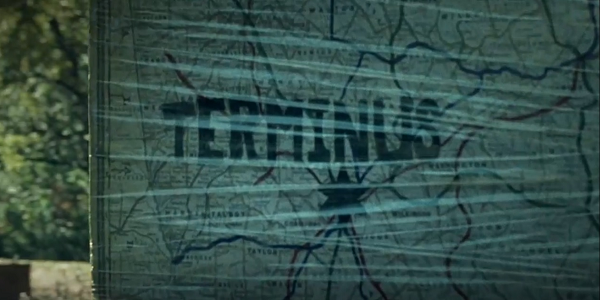
Remember that journey to Terminus? How exciting it felt, that they were going somewhere major, and that all kinds of sh*t was going to go down when they got there, especially after the season 4 cliffhanger. Season 5 was going to spend a good few episodes there, and it was going to be awesome. And then boom, everything was literally blown up, and Terminus was reduced to just one episode. It was misdirection, it made for an exciting episode, but in terms of the larger focus it probably wasn't the best decision. After so much of a season building up to it, one episode - and then another later when Gareth reappeared and was killed - doesn't exactly represent a great pay-off. The show seems to have a habit of a slow set-up, but then quickly burning through the actual plot. Of course, it may seem like the show can't win, as there have been times when it's just needlessly dragged things out, spending episode-after-episode going over the same ground, repeating the same things, and never actually getting anywhere or doing anything. Pacing issues have plagued The Walking Dead throughout the past few seasons (not really counting the first, as it was only six episodes), and while it's often too fast or too slow, it rarely seems to be just right.

7. Killing Beth

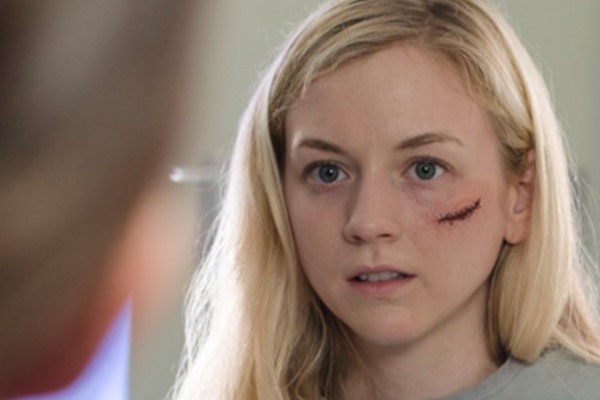
As mentioned previously, there has been a lot of death on the show. An all-caps worthy amount. A LOT. And a few of those we've even cared about, however by-and-large they made sense within the narrative. There have been a couple that didn't though, for example Hershel's at the time was a mystifying decision, not to mention a devastating one. But then in season 5 there was an even more inexplicable death. The show hadn't done too much with Beth up until last year - hell, even her own sister had forgotten about her - but then it really started to make a big push with developing her as a character, and an important one at that. Perhaps that should've set the alarm bells ringing, because naturally she was killed off a few episodes later, after showing signs of becoming one of the most interesting survivors among Rick's group. It certainly provided the shock-factor that they go for in the mid-season finale, but ultimately it just felt like all of the work done on her character - something they don't actually manage all too often anyway (honestly, I do like this show really!) - was wasted and pointless.

6. Underwhelming Villains

The biggest enemies to Rick and co. are not the walkers, but the various other groups of survivors that they encounter on their many journeys. However, these often tend to be on a more individual level than a major threat, or come from within the group themselves in some sort of internal struggle. So for example there was Pete last year, not a typical villain (even though clearly a bad guy), or someone like Shane, who was increasingly unstable but still not a major overarching villain in the traditional sense. The only one of those that the show has really delivered was the Governor, and maybe it shouldn't be any surprise that the best season so far was the third. He was around for the entire season, and was a major threat to anyone who crossed his path, but most importantly was extremely captivating to watch. You weren't sure what he'd do next or how far he was willing to go, but you really wanted to find out. Others haven't been that much of a threat, or were dealt with pretty quickly. Someone like Gareth could have developed into a much more complex, dangerous opponent, but they never really fleshed out his character and dispatched with him pretty swiftly. Thankfully there is one huge villain from the comics on his way at some point between season 6 and the show ending, and he can't really come soon enough.

5. The Governor's Return

As mentioned in the last entry, the Governor is the best villain to appear on The Walking Dead. He was cruel, violent, a total sociopath, but also quite a sad, complex character who had the side that we came to know and hate him for, but also one that made people trust him and follow him. He was the perfect opponent for Rick and the gang, and you were left with no idea who was going to survive the encounters with him. There seemed to be no limit on how far he was willing to go to protect what was his and do what he thought right in his twisted mind, which made him an incredibly dangerous foe, and David Morrissey was absolutely perfect in the role. Even just that scene of him and Rick having a sit-down conversation was an incredibly tense moment of television. The mistake they made was not killing him off, because then immediately the temptation and indeed expectation is to bring him back. They did that for a handful of episodes in season 4, once again going up against Rick, and killing Hershel before finally being killed himself. Sure it was entertaining to watch more of the character, but it didn't really serve any purpose, and left the show back at square one, doing what it really should have done in the season 3 finale.

4. Season 2

The second season of The Walking Dead is probably the most divisive so far, with it causing a lot of strong opinions one way or the other. You either fall into the camp that it was a waste of time, or applaud the pacing of the show and the groundwork it is. Unfortunately, I'm in the former. There's nothing wrong with a show wanting to take time to build its characters, to develop relationships, introduce new people, create interesting and unexpected group dynamics. Season 2 could have done all of that, and it would've been great. Instead it spent 13 episodes with people sitting around at Hershel's farm, generally being a bit miserable, and repeating a bunch of things we already knew about them. There was characterisation insofar as there were characters, and once or twice they might've said something a little interesting. It didn't really have much of a story to tell, really stretching what it did have to breaking point, and while it managed to pull off an exciting season finale, it doesn't really cover up the problems of the preceding twelve episodes. The show has veered dangerously close to this territory a couple of times since (season 4 springs to mind), which once again shows that they don't learn from their mistakes, but can be trusted to use some big explosions to get out of it.

3. Farmer Rick

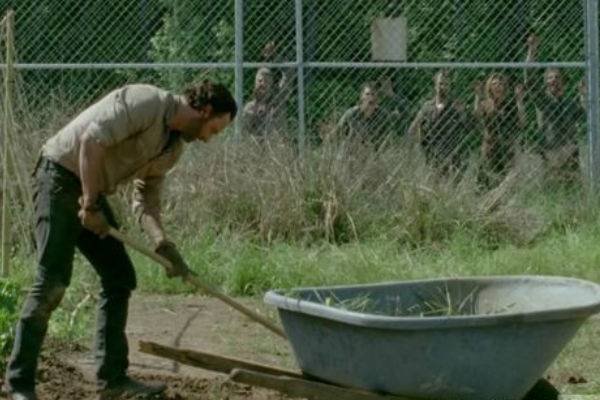
Rick Grimes, the de-facto lead character of the show, has been through a lot of character changes from season-to-season. There's been new-to-this-world Rick, protect-his-family Rick, leader Rick, batsh*t crazy Rick, and the current iteration, which is some combination off all the Ricks we have met so far, but also one much wiser about the way of this world. However, the worst Rick has to be Farmer Rick, from season 4. Instead of leading the group as he should be, killing humans/zombies or whatever other form of badassery needs to be down, he decided to spend some time tending to crops and generally just being a bit of a farmer. He was a much more peaceful character, one not interested in killing or fighting, but as a result he was way more boring. He doesn't need to be the crazed dictator all the time to be interesting, but there's no denying that if Rick is to be the lead character of the show then he needs to have a lot more about him, and it's when the show really allows him to explore those shades of grey that Andrew Lincoln excels in the role, and Rick becomes a much more viable main man as a result.

2. Poor Characterisation

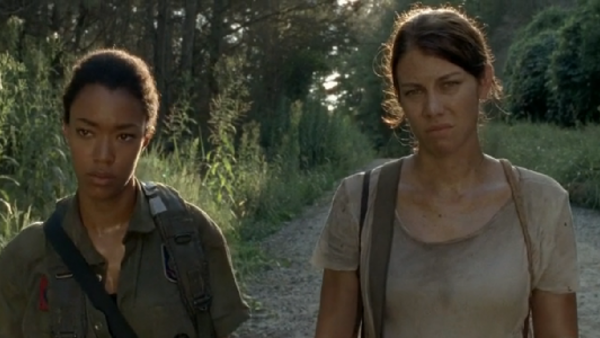
There's a small number of characters who have been well developed, either by accident or design, and have shown considerable growth over the past few seasons. Carol is the most obvious example of this, going from a beaten wallflower figure into one of the most badass characters on the show, up there with the best of 'em in the killing walkers and anything else that gets in the way stakes. Daryl, through sheer force of fan popularity, has grown into a character that's deeper than his quiet nature and rough exterior lets on. Glenn and Maggie tend to come as a pair, and have grown together, and we're very invested in their relationship. Rick has been through more changes than the rest of the characters combined. As for the rest, though, well... what do we really know about them? More to the point, why should we care? There's been an endless parade of characters, and even if some have managed to survive longer than the average lifespan of a secondary character, they haven't really been fleshed out properly. Take someone like Sasha last season, for example. She goes through a couple of tragic losses, with Bob and then Tyreese dying, and we're supposed to buy into her reactions to this, her increasingly miserable and moody persona. Instead, though, either through bad writing or acting (and it would seem the former) she just came off as being bloody annoying. It has been a constant problem throughout the show; outside of those mentioned above, the characters will do one thing one week, and then completely reverse that later on in the season, and there's nothing done to show why this is the case, or gives us a reason to care about them.

1. The Walking Dead Formula

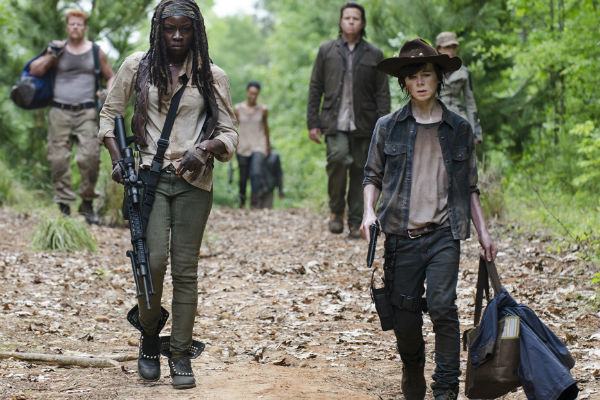
This is a bit of a combination of things already mentioned in this article, but it's such a persistent problem that it can be counted as being a mistake all of its own. The Walking Dead, over the past 5 seasons, has tended to keep on repeating the same cycle over and over again. Rick and his group of survivors will find a place, e.g. the farm, the prison, and then they'll start to get settled there, quickly developing a routine and a way of life. Then there will be some new approaching threat, which they'll talk about for a couple of episodes, and then eventually be forced to deal with. There'll be lots of explosions, gunfire, blood, and violence, and at least one fairly important character will die what is supposed to be a tragic death. This will cause them to walk on aimlessly and miserably for a number of episodes, until they stumble on a sign for a new location, have a brief discussion about whether they should go, ultimately decided yes, and then the circle can begin all over again. Obviously it has worked for the show so far, because it keeps on getting astronomical viewing figures, but the repetitive nature has grown rather tiresome, and it'd be good for them to do something that really shakes it up and offers something completely different, especially given it's going to run for many more years yet.

Contributor
Contributor

NCTJ-qualified journalist. Most definitely not a racing driver. Drink too much tea; eat too much peanut butter; watch too much TV. Sadly only the latter paying off so far. A mix of wise-old man in a young man's body with a child-like wonder about him and a great otherworldly sensibility.