10 Crazy Facts You Just Have To Accept To Enjoy Doctor Who

Facts that will help you to enjoy the bonkers world of Doctor Who...

Willing suspension of disbelief is hugely important in enjoying fiction, particularly when it comes to science-fiction and fantasy. Characters often survive events that should almost definitely kill them, do incredibly stupid things that nobody picks up on, and tend to have dialogue that even the most pretentious Jacobean playwright would find unrealistic. And since it€™s such a bright and fast-paced adventure with all of time and space as its backdrop, Doctor Who requires a great deal more suspension of disbelief than most things. Because, the purely historical stories notwithstanding, the aim of Doctor Who is give realism a hefty kick in the groin. Teaching children about science and history was the original aim but five decades on, the thought process of writing an average episode is pretty much something along the lines €œThe hospital teleported to the moon is great, but it needs a space vampire and rhino monsters€. That€™s Doctor who in a nutshell. Complete and utter wonderful nonsense. Nonsense which can sometimes be hard to swallow if you€™re not prepared for it. A lot of the time, suspending disbelief is something that has to be done on the fly but there are some facts that really help you along. Foreknowledge that will help Doctor Who go down much more smoothly and allow you process the more bizarre moments with a quick €œOkay, that happened€ rather €œWhat the hell was that?€. So while Series 8 is still relatively grounded by Doctor Who standards (apart from the exploding T-Rex in Deep Breath), we€™ve come up with 10 Crazy Facts You Just Have To Accept To Enjoy Doctor Who...

10. There Are Very Few Scientific Explanations

Apart from a brief period towards the end of Tom Baker€™s run where it leaned towards it, Doctor Who has never been anywhere close to hard sci-fi. If you take the general idea of sci-fi as being scientific explanations applied to fictional concepts with attention paid to detail of how the fictional universe would work, then Doctor Who is closer to science-fantasy than science-fiction. Some things do get slight explanations like how the Tardis is bigger on the inside but a lot of the time there is no scientific detail given. We might get a few techno-babble explanations rattled off at top speed that are complete gibberish, or a vaguely cool sounding name like €œNuclear Storm Drive€ but most of the time the approach is €œHere€™s a good concept. Never mind how it works.€ This approach is best summed up by a scene in the 2010 Christmas Special where a flying fish bites the Doctor when he tries to come up with a science-y explanation for how they can fly and how sound affects the atmosphere of their planet. So when you watch Doctor Who, it€™s best to just take all the science stuff on the chin. The really important stuff (especially when it comes to time travel) will get some consideration but usually you€™ll just be left to take all the bizarre stuff that Doctor Who throws at you as it comes.


9. Everyone Invades Earth

Earth must be getting rave reviews in the Michelin Guide of best places to invade. €œAlso known as Sol 3, Earth is an excellent place to plan an invasion for either pleasure or profit. Its indigenous people are easy to kill but also make for excellent slave labour, and the planet has plenty of natural resources to mine after you have crushed any resistance.€ Probably because it€™s regarded as such a primitive planet, pretty much every race you can think of is gunning for the human race. In fact, since 2005, the Earth has suffered some kind of alien incursion no less than two dozen times. Whether it€™s a small group of interlopers or a full scale invasion fleet, the Earth is on the hit list of species all over the universe and for hundreds of thousands of years. That€™s what we get for having a galaxy-wide reputation as planet of the thickos. But obviously the real reason is that an episode set on a council estate with a few prosthetics and a CGI monster is much more cost-effective and easier to write than inventing an entirely new planet. And back in Series 1 of the revival, the BBC was still unsure if the new Doctor Who would take off and hedged their bets by only sending the Tardis as far as Earth€™s orbit. And even that setting was stretched over three episodes.

8. It's The Scariest Kids' Show You'll Ever See

Calling Doctor Who a kids€™ programme in the presence of fans is like poking a honey badger with a big stick but the fact remains that it was specifically created to entertain and educate children. And although the powers that be have done their utmost to classify it as an outright drama in recent years, the fact remains that children are a large part (if not the majority) of the audience. So bring on the nightmares. You will never find a programme aimed so largely at children with such a high level of gruesome and unnerving content. Goosebumps has got nothing on this. Piles of conscious cloned bodies left to rot, a hot air balloon made of human skin, people being torturously converted into unfeeling cyborgs. And that€™s just the body horror end of the spectrum. Doctor Who also has a massive focus on just making things out-and-out terrifying. Show a young child the likes of The Empty Child or Silence In The Library and they won€™t sleep for days. While Doctor Who might primarily be aimed at kids, it never plays down the scarier content for them. In the words of Steven Moffat: €œTraumatise a generation. That€™s what it€™s all about€.

7. New Technology Will Always Go Wrong
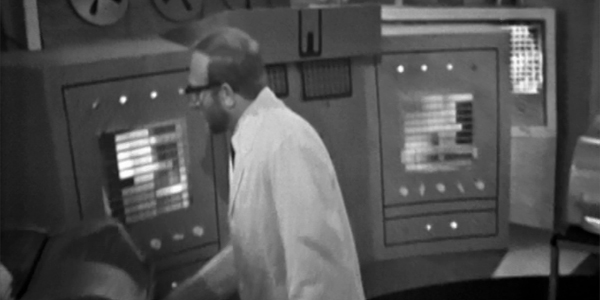
If some kind of fancy new gizmo crops up in a Doctor Who episode, there€™s around a 70% chance that it€™s either going to foul up and start causing deadly mayhem, or that someone or something with a malevolent agenda will use it for their own ends. You could practically set your watch by it. And then that watch will go off the rails and try to kill you. Supercomputers? Check. Medical nano-droids? Check. Hive mind-suppressing technology that allows you to enslave an entire species... okay, that one was a disaster waiting to happen. Basically the rule of Doctor Who and technology is that almost every significant advance is going to kill someone. Which the creators of such advances don€™t help by either stating something like €œNothing can go wrong€, or striking bargains with aliens. And hand-in-hand with new technology causing a mass slaughter is the creator either being killed by it or betrayed by the aliens manipulating it. It€™s pretty much an unwritten law for this kind of plot to end in ironic punishment. It€™s certainly an overused trope both in general and in Doctor Who but it€™s so firmly entrenched in the programme€™s history that it€™s practically a tradition to have it crop up at least once every few years. Which really makes it a miracle that humanity makes it to the year 100 Trillion without suffering some kind of apocalyptic Sky-Net scenario.

6. Death Is Cheap

Despite containing a surprising amount of visceral unpleasantness for a family programme, only Doctor Who€™s one-shot characters seem to get killed off. While we do see a fair few recurring characters get offed, it€™s usually reversed not long afterwards or they still hang around in some way. In fact, the only long-term Companion who has been directly killed off for good was Adric way back in 1982. But even more than anybody else, this applies to the Daleks. Admittedly they don€™t literally get resurrected but we€™ve seen them get supposedly wiped out four times since 1967 only for them to suddenly pop up out of nowhere again when the programme needs a ratings boost. And of course, let€™s not forget the three kings of coming back from the dead: Jack Harkness, the Master, and Rory Williams. All of them have suffered what should be a permanent death at least twice and always come back to life. Rory even gets so blasé about it that he uses suicide to beat the Weeping Angels, automatically assuming that he€™ll come back to life. So while the single episode characters get taken out with extreme prejudice, the Tardis€™s frequent fliers are usually safe. So if somebody snuffs it; then don€™t worry if they€™re a friend, and start running if they€™re an enemy.

5. Most Of Human History Is Because Of The Doctor

When you€™ve time travelled for over a thousand years and make it your business to fight the evils of the universe, you€™re going to affect history at least once. And the Doctor has clearly taken that to hearts because he€™s written himself into human history more times than Forrest Gump. Although a lot of the time he ends dealing with something relatively small scale that doesn€™t affect history, over the course his many lives he has managed to intertwine himself with practically every piece of history you can think of. In fact, the Doctor is either partly or wholly responsible for; the Watergate Scandal, pasta, Yorkshire puddings, the Great Fire Of London, the destruction of Pompeii, and the Shakespeare play Loves Labours Won being lost forever. Hell, he even accidentally caused the spark that began life in the universe after the Big Bang. So another item to add to the list of things to expect from an episode of Doctor Who (and any drinking games related to it) is that the second the Tardis lands in the past, the Doctor is almost definitely going to end up causing whatever piece of history he came to see. And that€™s not even starting on what he does to the future and other planets.

4. The Rest Is Because Of Aliens

But the Doctor doesn€™t have a monopoly on affecting human history. Doctor Who is an equal opportunity meddler when it comes to established events, so the various aliens of the universe get their chance to screw around with history as well. Whenever something odd happens, it€™s usually because of aliens. The Cybermen accidentally wiped out the dinosaurs. The moon landing was orchestrated by the Silence. And of course, Jack The Ripper was never officially caught because Vastra got there before the police and ate him. But then again, it's kind of fitting that aliens have ended up shaping Earth€™s history so much when you consider that the planet only exists because there€™s a spaceship full of giant spider monsters at the centre of it. Why humans owe so much of their history to aliens (yet still take thousands of years to realise they exist) is anyone€™s guess but like the Doctor affecting history, it€™s one of those things that has become such a big part of Doctor Who€™s DNA that it€™s best to just lay back and accept it. But not to think about the Racnoss at the centre of the Earth if you€™re an arachnophobe.

3. There's No Such Thing As Consistency

Rigid continuity and firmly nailed down rules of the universe have never been a priority for Doctor Who. It€™s the absolute enemy of telling a good story and, after fifty-one years and dozens of different writers, gathering together every single rule that the programme has established, and creating some kind of definitive set of guidelines would be like painting the Forth Bridge. While some aspects of Doctor Who lore have persisted for long enough that they€™re almost always followed (like the general idea of fixed and in-flux points in time), pretty much everything else is taken as read but quietly shunted to the side if it gets in the way of a decent story. This also applies to the stories and the tone. Thanks to Doctor Who being (for lack of a better term), an anthology series, practically everything changes week-on-week. In the past few weeks we€™ve zigzagged from organ harvesting robots, to an ethically layered journey through a Dalek, to a swashbuckling Robin Hood adventure. And this is one of the many reasons that Doctor Who persists: it€™s almost impossible for it to get boring and repetitive since pretty much every genre, setting, and tonal approach is fair game without breaking the programme€™s internal logic.

2. The Doctor Never Plans Anything

When the occasion calls for it, the Doctor will rack his brains and come up with a plan well in advance of going anywhere dangerous or doing something with serious consequences. But the rest of the time he€™s happy to just wing it and see what happens. Along with the Sonic Screwdriver, his main weapon is what author Terry Pratchett disparagingly called €œmakeitupasyougoalongeum€. Even if it can sometimes lead to rushed storytelling, it€™s an excellent way of showing just how intelligent and quick-witted the Doctor really is. And, particularly now that the serial format has been left behind, is a vital part of telling a story in such a short space of time. Plus it€™s more exciting to see the Doctor spring into action mentally and come up with a plan on the fly than having him spend two or three twenty-five minute episodes gradually building up a plan and executing it perfectly thanks to extensive planning So because of the very cavalier way the Doctor does things, the stories are very rarely straightforward trips from A to B and often have a very anarchic feel to them. Which can feed very well into storylines like the events of 2010€™s The Girl Who Waited happening mainly because of the Doctor€™s reckless tendencies and lack of forethought.

1. The Sonic Screwdriver Is Just That Good

If it wasn€™t for the Sonic Screwdriver, the Doctor would have run out of Regenerations centuries before he got to Trenzalore. While the issue of it basically being a magic wand has sort of been resolved in recent years with the introduction of Deadlock Seals and the rule that it won€™t work on wood, other than that it can basically do anything. We€™ve even seen it reattach damaged sections of barbed wire. It was originally just a screwdriver but, starting with the Third Doctor€™s era, it evolved to be the constant saviour of both the Doctor and the writers. It€™s like the characters in Harry Potter having spells for any kind of situation imaginable. In fact it got so bad that, in the 1980s, it went the way of K-9 and was deliberately written out so that the writers couldn€™t use it as a crutch anymore. Which wouldn't go amiss these days to be honest. But we€™re never given any kind of explanation as to why it€™s such a nifty bit of technology. It€™s been implied that the Doctor built it but we€™ve also seen other characters with similar devices so who knows where it really came from. It€™s one of those things that it€™s best to just go with and not question or complain about. Unless you€™re having a hissy fit about it being overused of course. If there was ever a science-fiction equivalent of the phrase €œA wizard did it€, it would definitely involve the Sonic Screwdriver. No wonder scientists have been trying to create a real one. What other facts do you have to accept to enjoy Doctor Who? Let us know in the comments section below...

Contributor
Contributor

JG Moore is a writer and filmmaker from the south of England. He also works as an editor and VFX artist, and has a BA in Media Production from the University Of Winchester.