10 Doctor Who "Plot Holes" That Really Aren't
The Fugitive Doctor’s TARDIS looking like a police box? Problem solved!

There’s nothing Doctor Who fans love to hate more than a good old plot hole. But in a world as outlandish as the Doctor’s, do we really need to scrutinize the logic so closely?
After all, this is the show that gave us a sentient universe masquerading as a frog on a chair; the “last pure human”, comprising a brain in a jar and a sheet of skin; actual, literal cat people; and loads more besides.
Accepting this sort of stuff is par for the course, so why should so-called "plot holes" be any different?
Well in fairness, although the world of Doctor Who is one where lots of things are possible, it’s not one where anything is possible. Indeed, sometimes writers will accidentally contradict themselves, or each other. Or sometimes they have no option but to bend the logic a little.
That said, lots of the "plot holes" that people often point out really aren’t that big a deal. In fact, many of them aren't really plot holes at all.
10. Why Wasn’t River Sent Back In Time When Grabbed By A Weeping Angel?

Blink established that a touch from a Weeping Angel sends you back in time. But subsequent Angel stories have proved that this is merely the tip of the iceberg.
In The Time of Angels/Flesh and Stone, we see them grab hold of the Doctor’s jacket (without sending him back in time), then put Father Octavian in a headlock.
The Angels Take Manhattan continues this trend, with Julius Grayle’s Angel grabbing River Song’s arm and not letting go – to the point where she can only escape by breaking her wrist.
Both these cases contradict what we've previously learnt: that Weeping Angels automatically send anything they touch back in time. For some this was a stretch too far, taking the Angels too far from their original premise. But that doesn't make it a plot hole.
Sending someone back in time might be the most gratifying way for an Angel to dispatch their victim – but that doesn’t mean it’s the only way. Indeed, the evidence we’ve seen suggests that Angels have a choice: to feed off the time energy from their victims straight away; or to be more sadistic, and snap their necks.
Far from being a gimmick that reduces the Angels’ power and impact, this development makes them all the more terrifying.
9. Why Weren’t The Silurians Disturbed In The Runaway Bride?

The Empress of the Racnoss proved a worthy opponent for the Doctor in The Runaway Bride, with Sarah Parish putting in a memorable performance.
But should another, older adversary of the Doctor’s have taken centre stage instead?
The story revealed that a spacecraft containing the last of the Racnoss rests at the centre of the Earth, and has done since the planet was formed 4.6 billion years ago. Elsewhere in Doctor Who canon, it’s been established that the Silurians – a race of intelligent reptiles who inhabited Earth before humans – remain in hibernation beneath the planet’s crust.
In The Runaway Bride, we learn of a Torchwood drilling project that managed to reach the Earth’s core. It unwittingly uncovered the Racnoss ship, but completely bypassed the Silurians. How come?
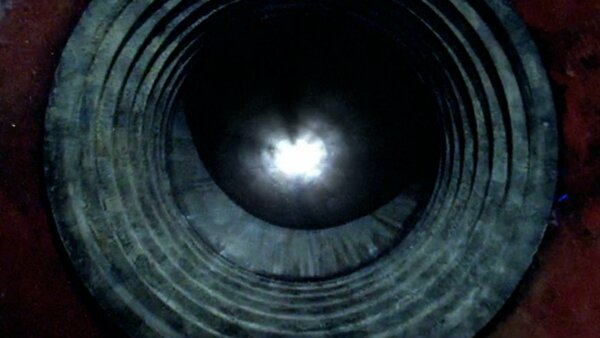
It’s an interesting point, but can be explained away easily.
We’ve seen in various Silurian stories that they're split into different colonies and sub-species, with some parts of the planet more densely populated than others. So, the site Torchwood chose to drill at could easily have been a Silurian blind spot, hence why none were awoken.
That aside, could the Silurians and the Racnoss have ever met? It seems unlikely, but Big Finish have probably done a boxset about it.
8. Why Didn't The Wall Reset In Heaven Sent?

Heaven Sent is one of the most acclaimed episodes of Doctor Who ever made, and with good reason.
The conceit of the constantly resetting Confession Dial is, on the one hand, a work of genius. But is it also one big plot hole?
After all, there’s one room in the Confession Dial castle that doesn’t reset: Room 12, which contains the wall the Doctor must break through to escape. Does this cause the entire episode to fall flat on its face? The episode’s writer, Steven Moffat, would care to differ, going so far as to offer an explanation to Doctor Who Magazine in 2016:
“It’s not a room in the castle, it’s the outer wall of the [Confession] Dial. The clue is that it’s 20 feet of Harder Than Diamond. Why bother making it so hard, if a resetting stone wall would do?”
It's basically a metaphor for every other "plot hole" on this list – the people in charge needed something to be a certain way, so they contrived a way to make it work!
7. Why Do The Series 6 Cybermen Resemble Cybusmen?

The reveal that River Song was Amy and Rory’s daughter created ripples when Series 6's A Good Man Goes To War first aired. But that wasn’t the only thing to blow Doctor Who fans’ minds.
The story’s cold open features a memorable cameo from the Cybermen, with Rory quizzing the Twelfth Cyber Legion for information about Demon's Run.
At first glance, there’s nothing to distinguish these Cybermen from any others we’ve seen in the revived era so far. They adhere to the design established in 2006’s Rise of the Cybermen (colloquially known as ‘Cybusmen’, after the company that made them).
However, there’s one crucial difference: these Series 6 Cybermen lack the Cybus Industries logo on their chests. Instead, they have a plain circular disc.

It’s not something that’s commented upon in the story – or, indeed, in Closing Time, when this new variant reappears. But the implication is that these Cybermen come from our universe, rather than Pete’s World.
So why do they look so similar to their parallel world counterparts?
Well, the clue is in the word ‘parallel’. As we’ve seen in The Doctor Falls, there’s no one origin point for the Cybermen – they get going “everywhere there’s people”.
In other words, these two models evolved independently, and just so happened to end up looking the same.
6. Why Does The Fugitive Doctor’s TARDIS Look Like A Police Box?

Since her debut in 2020’s Fugitive of the Judoon, fans have been arguing about where in the Doctor’s timeline the Fugitive Doctor fits.
In light of developments regarding the Division in Flux (and the Timeless Child story arc as a whole), it’s safe to say that the intention was for her to be a pre-Hartnell Doctor. Even so, many insist that it makes more sense to place her within the main lineup of Doctors (for instance, between Doctors Two and Three), because of one particular plot point.
The very first episode of Doctor Who established that the chameleon circuit on the Doctor’s TARDIS is (at least somewhat) broken – hence why it’s stuck in the shape of a police box. It also established that this was the first time this had happened: that the TARDIS had, prior to this, successfully taken on various other forms.
So if the Fugitive Doctor really is pre-Hartnell, how can her TARDIS possibly look like a police box? At first, it seems too big a discrepancy to reconcile with existing continuity. But with a little imagination, it’s actually very easy to explain.
There’s no reason why the Fugitive Doctor couldn’t have travelled to '60s London herself – or why the chameleon circuit fault couldn’t have been developed earlier, temporarily fixed, then become broken again.
Alternatively, perhaps the TARDIS appeared as a police box for the Thirteenth Doctor’s benefit (and ours).
5. How Could The Doctor Regenerate In The Impossible Astronaut?

The Doctor’s ‘death’ in The Impossible Astronaut is an interesting moment to look back on, for a host of reasons.
For one thing, we now know that it wasn’t actually the Doctor, and that he didn’t actually die – rather, it was the Teselecta taking on the Doctor’s form and simulating his death, in order to maintain the illusion and preserve a fixed point in time.
We also now know, in light of the War Doctor and subsequent developments in The Time of the Doctor, that the Eleventh Doctor was in fact the Thirteenth (i.e. the thirteenth and final incarnation of the Doctor’s original regeneration cycle).
In which case, why did the Doctor begin to regenerate when he was struck by River Song? Why didn’t he just die straight away?
The answer is obvious, but you'd be surprised at the amount of comments we've seen from people who don't understand this one.
The Doctor's ‘regeneration’ was merely another part of the Teselecta simulation. The Doctor had to make everyone (even his best friends) believe that he was actually dead, so the yellow glow was a crucial detail.
And as we saw in Let's Kill Hitler, the Teselecta is capable of adjusting all sorts of exterior settings, from skin tone, to the height of the individual. So it'd be able to whip up a regeneration effect no problem!
4. Why Did The First Doctor’s Clothes Change During Regeneration?

The First Doctor’s regeneration is noteworthy for a number of reasons. But perhaps most intriguingly, it was (until very recently), the only case of the Doctor’s clothes regenerating along with their body.
Putting aside The Power of the Doctor's ending for a moment, how can we square this with established continuity, given that every other Doctor has kept their predecessor’s clothes?
From a behind-the-scenes perspective, the reasoning is clear. When William Hartnell bowed out, the rules of regeneration were still being written (in fact, the process wouldn’t be referred to as "regeneration" until the Third Doctor's swansong).
With a little imagination, we can bend this into an in-universe explanation too. The fact that this was the Doctor’s first regeneration (Timeless Child notwithstanding) points to it being something unique and one-off – perhaps it’s something that happens to every Time Lord when they regenerate for the first time.
This doesn’t explain why the same thing happened to the Thirteenth Doctor, but we're likely to get an explanation for that come the 60th anniversary specials in November!
3. Why Didn’t The Doctor Sense That O Was The Master?

Spyfall Part 1 ends with one of the most jaw-dropping cliffhangers in recent years, with MI6 agent O revealing himself to be none other than the Master. But shouldn’t the Doctor have cottoned on to this much sooner?
Well, it depends which way you look at it.
The Ninth Doctor was adamant that he was the last of the Time Lords, telling Rose that he’d “know” if any others were left. Yet two series later, we’d discover that the Master also survived the Time War, and was very much alive and kicking.
There are two possibilities here: either the Doctor’s Time Lord sixth sense is not as accurate as Nine made it out to be, or the Master’s disguise was so sophisticated that he managed to evade it.
Either way, the Master has been able to dupe the Doctor on so many other occasions – including, but not limited to, Spyfall – meaning that this one instance cannot be a plot hole.
Perhaps the process of stealing a new body, or even regenerating into one, is enough to put the Doctor off the scent? Hence why the Doctor failed to recognise both O and Missy until they revealed themselves to him.
Or perhaps there’s more to it – some sort of perception filter that hides the Master’s identity. This would certainly explain why some of his more obvious disguises have proved so successful. We’re looking at you, Sir Gilles Estram!
2. How Did Amy Open Her Eyes For Longer Than A Second?

One of the many additions to Weeping Angel lore in The Time of Angels/Flesh and Stone is the idea that "the image of an Angel is itself an Angel."
As the Doctor deduces, “We stare at them to stop them getting closer. We don't even blink, and that is exactly what they want. Because as long as our eyes are open, they can climb inside.”
This is what happens to Amy after she stares at an Angel a bit too long. She then has to close her eyes to keep the monster at bay, with the Doctor warning her that if she opens her eyes for more than a second, she will die.
So, what does she do? Why, she opens her eyes to observe the crack in time, of course! This moment appears to stretch on for way longer than a second – so how does Amy live to tell the tale?
Well, elsewhere in the episode, the Angels are shown to be terrified of the crack (hehe). It’s possible that the one in Amy’s mind was so taken aback by the sight that it wasn’t able to manifest itself fully.
We also shouldn’t take the idea of Amy opening her eyes for more than a second too literally. From a behind-the-scenes perspective, there’s clearly some artistic licence taken with this sequence.
And in-universe, the Doctor isn’t always as accurate as they like to think they are!
1. How Did Both Doctors Have A Sonic Screwdriver In The Almost People?

One of the most intriguing elements of The Almost People was the Ganger Doctor: a copy of the original made from living flesh.
At first, the Ganger Doctor appears markedly different from his counterpart, with pale, slimy skin and bloodshot eyes. But once he’s stabilised, he’s identical to the real Doctor, save for one detail – his shoes, which are black rather than brown. Until, off-screen, the two Doctors swap shoes. At which point, the Ganger Doctor has brown shoes and the real Doctor has black ones.
If you think that’s confusing, you should try keeping track of the Doctors’ sonic screwdrivers.
About halfway through the episode, the ‘real’ Doctor (really the Ganger Doctor) throws his sonic to the ‘Ganger’ Doctor (really the real Doctor).
About ten minutes later, the ‘real’ Doctor (really the Ganger Doctor) is shown to possess a sonic screwdriver, despite having given it away.
At the episode’s climax, the real Doctor (really the real Doctor this time!) tosses another sonic to his doppelgänger, which he uses to dissolve Jennifer.
Then after this, the Doctor produces another sonic from his pocket, which he uses to dissolve Amy.
What on Earth is going on here?!
Well, we’ve seen elsewhere that the Doctor’s jacket pockets are bigger on the inside, and that the TARDIS can manufacture new sonics whenever required. There was reportedly a deleted moment where this happened, though why it was cut isn't clear.
Either way, the sonics seen in the episode were, like the two Doctors, distinct, as opposed to being one and the same.
Watch Next
Doctor Who Quiz: How Well Do You Know NuWho?
