10 False Doctor Who Facts You Probably Still Believe
Tom Baker is the longest serving Doctor Who? Yeah, about that...

Doctor Who is one of the most documented and analysed TV shows of all time, and yet there are still untruths and misunderstandings that find their way into the fandom.
Who can forget the "fact" that Doctor Who was all filmed live in the 1960s? That started due to a misunderstanding between Carole Ann Ford and Doctor Who Magazine in an early interview. Doctor Who was filmed as live, but wasn't broadcast as such.
Although it's easy to see how the confusion arose, given William Hartnell's fondness for a fluffed line.
In the age of social media, DVD commentaries, and Doctor Who Confidential, the modern era of the show is surely immune to such confusion, right? Wrong.
Whether it's failing to read irony in a print interview, or a misreading of a fact that snowballs into something else entirely, there are still some false Doctor Who facts that many people believe.
Whether it's Classic, New, or New New Doctor Who, Fake Whos is a persistent problem for the fandom. So allow us to pick apart some common Doctor Who misconceptions.
10. The Identity Of The Woman Is A Mystery

For a show that has a mystery in its very title, it's unsurprising that fans see enigmas in places where there aren't any. Take Claire Bloom's mysterious Woman from David Tennant's final-ish story The End of Time, the identity of whom fans have debated ever since.
Was she Susan? Romana? Or was she, as was intended, the Doctor's mother? While nobody vocalises this fact on screen, Russell T Davies emphasized that she was the Doctor's mother in the expanded version of The Writer's Tale, the book that documents the making of the show during his first era in charge.
This means that Claire Bloom – who was told this fact when she was cast – and David Tennant are playing their one scene together as mother and son.
Although Doctor Who has now complicated matters with the story of the Timeless Child and the Doctor's adoption, Claire Bloom's character is unequivocally whoever the Doctor knew as their mother at this point in their lives.
However, did Steven Moffat ever explain who the woman in the barn was in Hell Bent? The one that serves Capaldi soup? Is that the same character, regenerated after the Master sent Rassilon and Gallifrey back to hell?
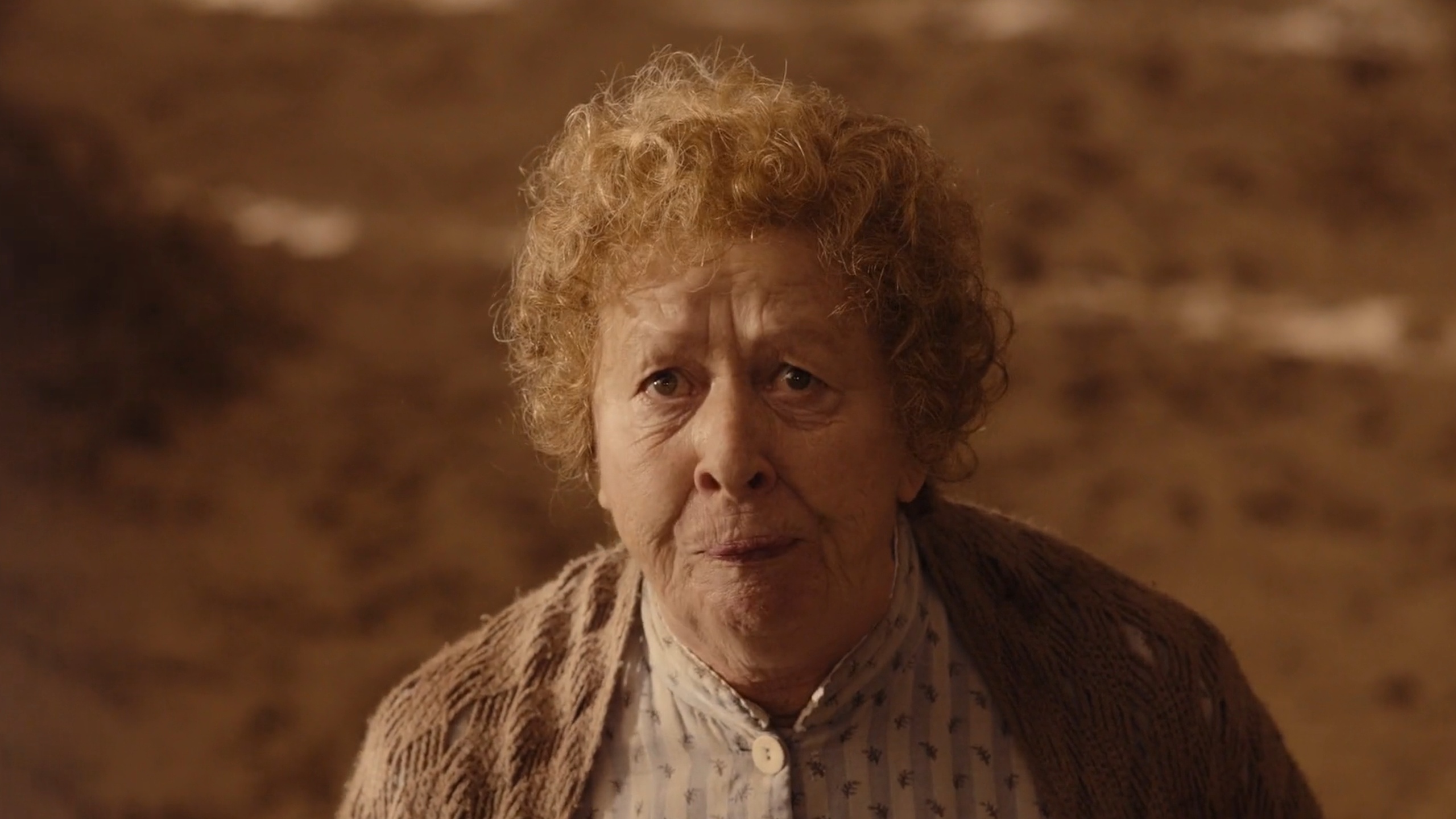
Maybe there's a mystery to be solved here after all.
9. The Paul McGann TV Movie Was A Flop

One of the laziest things trotted out about Doctor Who in the 1990s by American-centric pop-culture websites was that the Paul McGann TV Movie was a "flop".
It's true that, in the US, Doctor Who was overshadowed by an episode of the hugely popular sitcom Roseanne, meaning that it was watched by 5.6 million viewers – a 9% share of the viewing audience on the night.
However, that's not the full story.
In the UK, the TV Movie was a huge deal. There were midnight openings across the country so fans could purchase the new Doctor Who movie on VHS two weeks before it aired on BBC1. Despite this, it still garnered an impressive 9 million viewers upon its broadcast on 27 May 1996.
For context, that's not too far off the 10.81 million viewers who tuned into Rose in 2005, the success of which convinced the BBC that they had a mammoth hit on their hands.
The reason that the TV Movie is seen as a flop is because a series commission was reliant on it performing well in America, which sadly ignores its undeniable success on home soil.
8. David Tennant Was The First To Play Two Different Doctors

There was a lot of talk about David Tennant's record-breaking Fourteenth incarnation in the lead-up to Doctor Who's 60th anniversary. Sitting on countless chat show couches, Tennant nodded along to the assertion that he was the first actor to play two different incarnations of the Doctor.
Except, he wasn't.
Tom Baker beat him to that accolade in 2013 when he appeared as The Curator, who was a retired Doctor wearing the face of an old favourite.
Now, Russell T Davies' wild revelation that bi-generation occurred for every Doctor creates the possibility that The Curator is actually just a retired version of the Fourth Doctor. But until that's confirmed onscreen, Tom Baker remains the first actor to play two different incarnations of the Doctor.
Unless we take into account Sylvester McCoy in a blonde wig and technicolour coat in Time and the Rani. Or Richard E. Grant in The Curse of Fatal Death and Scream of the Shalka. The timelines, they've all gone wibbly!
7. Adric Was The First Companion To Die

When many people think of the first Doctor Who companion to pop their clogs, their brain naturally goes to Adric. After all, he'd travelled with two incarnations of the Doctor and had a dramatic ending, crashing a freighter full of dead Cybermen into prehistoric Earth.
In reality, Adric wasn't the first Doctor Who companion to die, but it's easy to see why people think that.
Firstly, the serial in which not one, but two companion deaths take place – The Daleks' Master Plan – is mostly missing from the BBC archives. Secondly, one of those companions – Jean Marsh's Sara Kingdom – disputes that she's even a Doctor Who companion in the story!
The first of those two deaths was Katarina, the ancient Greek handmaiden who joined the Doctor and Steven at the end of The Myth Makers. Like Adric, Katarina's death also takes place on a spaceship and she also sacrifices herself to save her friends, by opening an airlock and blasting herself and the villain Kirksen into space, so the Doctor can continue his mission.
Well that's alright then!
6. John Lumic Was Rewritten Because Of A Broken Leg

It's not uncommon for Doctor Who scripts to be rewritten in response to backstage changes.
Take the scene in The Pirate Planet where the Fourth Doctor smacks his face off the TARDIS console. It was a late addition to the script to explain the substantial cut on Tom Baker's lip after he was bitten by a dog while filming The Ribos Operation.
Rumour has it that a similar rewrite was done on Series 2's Rise of the Cybermen to accommodate actor Roger Lloyd Pack, after he had broken his leg in an accident at home.
News of Lloyd Pack's injury emerged towards the end of 2005, with reports stating that the scripts for his performance as John Lumic would have to be rewritten.
Months later, while previewing the Cybermen two-parter in the pages of Doctor Who Magazine, writer Tom MacRae said that the character of John Lumic was always written as a wheelchair user, so no rewrites were necessary in light of Lloyd Pack's injury.
Perhaps the intent was to further emphasize the links between this particular genesis of the Cybermen, and the Daleks' notorious creator, Davros.
5. Tom Baker Is The Longest Serving Doctor

Tom Baker was the Doctor between 1974 and 1981, making him the longest-serving Doctor of all time, right? Well... not quite.
While it's certainly true that Baker has the longest run of Doctor Who episodes (172), it gets a bit trickier if you start including actual calendar months. While some may scoff at this distinction, we'd like to point out that everyone counts Doctor Who from 1963 to now as one long run – the longest-running science-fiction TV show of all time!
We conveniently forget that it was off the air for most of the '90s.
So yes, Tom Baker was the Doctor for seven years. However, Sylvester McCoy was technically the Doctor between 1987 and 1996, clocking up nine years in the role.
Paul McGann may have played the role for one night only, but he was the incumbent Doctor between 1996 and 2005, another nine years. He didn't even regenerate until 2013, so doesn't that give us 17 years of the Eighth Doctor?
And yes, wile McCoy and McGann didn't have many onscreen adventures between 1989 and 2005, they were the faces of Doctor Who during that time, adorning the covers of books, Big Finish CDs, and the Doctor Who Magazine comic strip.
Sorry Tom!
4. Classic Doctors Were In The Day Of The Doctor

Obviously those body doubles floating on a cloud at the end aren't the original classic Doctors, but The Five(ish) Doctors strongly hinted that Peter Davison, Colin Baker, and Sylvester McCoy did sneak their way into The Day of the Doctor.
The Five(ish) Doctors was a real highlight of the 50th anniversary, and a great sitcom pitch for the new Disney+ era of Doctor Who. Who doesn't want to see more of Pete, Colin, and Sylv getting into Doctor Who-adjacent scrapes?
After much clowning around in Cardiff, this one-off episode ends with the three classic Doctors standing under sheets in the undergallery. This led some fans to believe they were actually in the episode, standing under those same sheets! But Steven Moffat says they weren't:
"There are things that you don't do to three highly-distinguished actors and one of them is you don't really drape them under a sheet for several hours!"
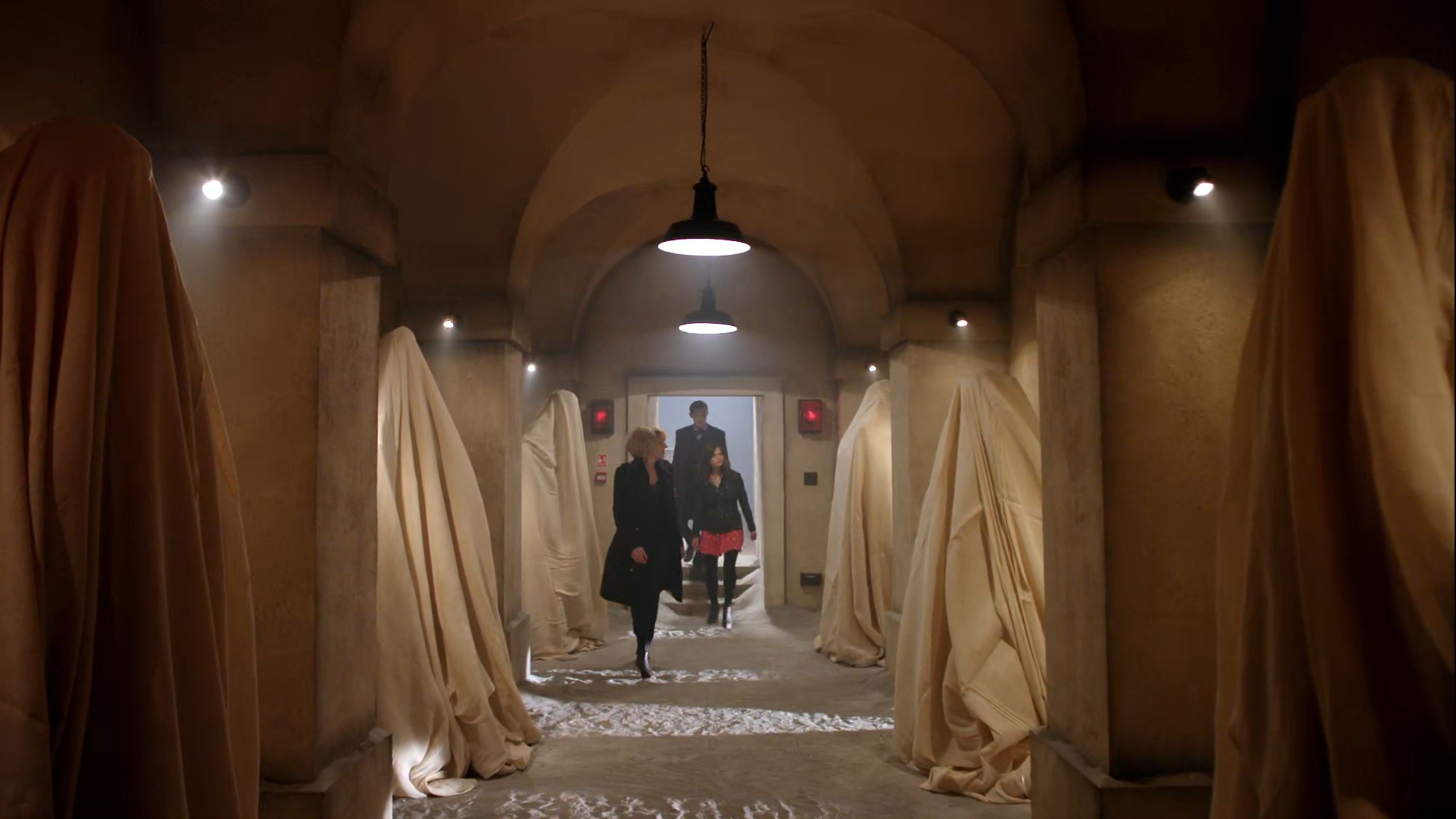
So sure, it's a lie, but I think we all prefer the version of The Day of the Doctor that has Sylvester, Colin, and Peter hiding under dust sheets while Matt Smith walks past.
3. Ten & Rose's New Earth Kiss Was An Ad-Lib

Many fans have forgotten rule number one of any Doctor Who promotional material – The Showrunner Lies. Steven Moffat's wry sense of humour was regularly getting him in trouble with fans who couldn't read irony, and Russell T Davies is no stranger to people taking his words at face value either.
For example, the scene in New Earth in which Rose – while under the influence of Cassandra – gives the Tenth Doctor a passionate kiss. During the online commentary for the episode, RTD notes that it was "completely unscripted".
This prompts much laughter from David Tennant and producer Phil Collinson, not least because it's a joke. However, some fans took it at face value and believe that the kiss was an ad-lib by Billie Piper.
A quick look at the script for New Earth confirms otherwise, however. The scene in question is written by RTD as follows:
"She grabs his collar, yanks him down - Snogs him. Lets go, wipes her mouth like she's eaten fried chicken."
So if you've ever wondered what it's like to kiss the Tenth Doctor, it's not unlike devouring a KFC family bucket.
2. Doctor Who Was Cancelled In 1989

Classic Doctor Who ended on 6 December 1989, with the Seventh Doctor and Ace heading off to cities made of song. While it's true that the BBC had informed the production team that there would be no Doctor Who in 1990, it was never formally cancelled.
Perhaps to avoid the release of another charity single, the BBC never publicly stated that Doctor Who was cancelled. And, in their defence, there was never a point during the '90s where someone, somewhere in the corporation wasn't investigating a way to put Doctor Who back on TV.
Forgetting the Paul McGann TV Movie, there was a planned animated series from Canadian studio Nelvana. When that fell through, Doctor Who was eyed up as a potential movie franchise, sort of like the Paddington of its day.
And from the late '90s onwards, BBC Head of Drama Series Mal Young was exploring the possibility of a new series of Doctor Who. While he wouldn't be successful at first, the work done by him would ultimately pave the way for the 2005 revival.
1. Karen Gillan And Arthur Darvill Didn't Know The Melody Twist

Across many a Reddit post and online forum, it's believed that the identity of River Song was such a big secret that it was hidden from Karen Gillan and Arthur Darvill.
Some fans even believe that Gillan and Darvill only got this information when they were shooting the scene, so that their response was genuine. This is a tactic of beloved social-realist filmmaker Ken Loach, but Doctor Who is not a gritty kitchen sink drama. Unless it's being written by RTD.
While it's true that only Alex Kingston was briefed about her familial links to Amy and Rory far in advance, Karen Gillan and Arthur Darvill did find out before the moment was filmed, as explained by Kingston herself:
"I've even got a feeling that the crew were given different sides, so that they literally did not know until the words were spoken in the scene, and it was only on that day I think, or maybe the night before, that Karen, Arthur, and Matt got given the sides and they were let in on the secret."
So yes, while they were told quite late in the game that they were River's parents, it's not like they were reacting to the reveal in the moment, like viewers were at home.