10 Horror TV Shows That Wasted Incredible Characters
American Horror Story, Squid Game and Stranger Things; their incredible characters deserved better!

Horror television has seen something of a grand revival over the past few decades. From the rise of the twenty-two episode American monoliths to the more recent nuance of the limited Netflix series, the genre has come on leaps and bounds, turning in increasingly complex narratives and earning more than a little prestige.
But we often don't know what we've got until it's gone.
As is the case for many things in life, so it is for fiction. You know how it goes: Perhaps you're getting settled into the latest season of your favourite show, or have binge-watched a new one from dusk 'til dawn, when suddenly that one special character – you know the one – gets their boots blown off.
As a genre, horror has a nasty habit of uprooting, maiming, decapitating or dismembering our favourite characters before their time, with a live-to-die ratio that would have most health inspectors scrambling for the red marker. But it is not always the reaper that takes them. Oftentimes the show's writers, creators and cast have a hand in some serious personnel mismanagement.
Whatever the cause, whatever the symptom, we might never get over the ways in which these shows wasted 10 incredible characters.
10. Augustus Cole - The X-Files

The X-Files has served up some truly mind-warping horrors over the years, but sometimes the earth-bound characters are the ones who leave us wanting more.
Sleepless, from the show's second season, introduces us to Augustus Cole, played by Candyman himself, Tony Todd. As a walking, talking metaphor for the way in which the US treated its soldiers both in-conflict and after they came home, Cole is a veteran of the Vietnam War who was experimented on to remove his sleep, and who consequently possesses the ability to telekinetically affect other people's minds and perceived realities.
He wreaks havoc while fighting a losing battle with sleep-deprived demons, tracking down and killing members of his former squad and those involved in the experiments, proving a force to be reckoned with as he manipulates those around him, causing hallucinations, creating conspiracies and turning everyone against each other.
Unfortunately, Sleepless is a 'monster of the week' episode and Cole was killed off before the credits. But his complexity and tortured psyche have made him enduringly compelling. Whether as an asset for the Bureau, or as an anti-hero using his powers to do some good, he could have been an excellent recurring character.
9. Ellen & Jo - Supernatural

At this point, there are few people who haven't witnessed Sam and Dean Winchester battling angels, demons and all strains of goblin and ghoul. But, along the way, Supernatural has also managed to bring us many memorable supporting characters.
Among these are ass-kickin' mother and daughter duo, Ellen and Jo Harvelle.
Introduced in season two's second episode, Everybody Loves A Clown, the pair become part of the regular recurring cast, resident at the Roadhouse bar; a refuge for demon hunters and rendezvous point for Sam and Dean. Barkeeps and reluctant hunters by trade, the Harvelles have a chequered history with fighting the forces of evil, and Jo's desire to become a hunter, following in the footsteps of her dead father, generates a deliciously conflicted dynamic between mother and daughter.
However, in one of the show's saddest moments, Ellen and Jo sacrifice themselves to destroy the demon Meg's hellhounds. Unfortunately, like any character whose surname isn't Winchester, Ellen and Jo were barely fleshed out before they met their end for good.
Save for a brief return during an alternate timeline episode in season six, we have never seen either of the Harvelles again, and so may never know what the characters could have become.
8. Slappy - Goosebumps

For those of us lucky enough to grow up in the '90s, RL Stine's Goosebumps novel series was one of our key cultural touchstones. These books were also, for many of us, our foundation in horror. And Slappy the Dummy was the series' enduring emblem of sleepless nights and noises in the dark.
In the books, Slappy is a mystical ventriloquist dummy with slick, deep-brown hair, piercing blue eyes, bright red lips and a sinister smile. And, with a brief incantation, he comes to life, ready to enact an evil agenda manipulating and ruining the lives of those around him.
Pity, then, that the TV show the books spawned squandered him on an irritating, ginger nuisance. As a sort of barely animated wooden Carrot Top with a Tweety Pie voice, Slappy clowns around his scenes, inspiring none of the fear the original character drew out of our every pore.
Goosebumps' Slappy was a wasted opportunity at its finest, and the fact that he became a recurring character for the show didn't help a bit. This is one of the few instances where the better way to do the character justice would have been to leave him behind.
7. Twisty - American Horror Story: Freak Show

When Twisty the Clown (John Carroll Lynch) showed up at the beginning of American Horror Story: Freak Show, we may have been forgiven for thinking he was set to be the overarching villain.
With a filthy clown suit, a horrific grin and a mysterious backstory, Twisty stalks the first four episodes of the show, killing and kidnapping families.
His backstory gradually unspools throughout these episodes, and Twisty is revealed to be a tragic figure with a mental disability whose career as a clown was torn apart by jealous and unfounded rumours of him being a child molester. And the reality lurking underneath his mask is even worse. Following a botched suicide attempt, the clown was left with half a jaw, and so he embarked on a vengeful murder spree.
But his reign was never to last.
In a Psycho twist, the writers resolved his narrative and killed Twisty off early doors, before throwing attention to the series' far less interesting primary antagonist, Dandy Mott. The clown's narrative may have been complete as he joined Edward Mordrake's afterlife carnival, but for a character who inspires such intrigue and conflicted emotions in his audience, this could never be anything but a waste.
6. Dracula - Buffy The Vampire Slayer

Buffy The Vampire Slayer is known for treading its own path through horror mythology, turning the Final Girl trope on its head by positioning a blonde cheerleader as its ass-kicking heroine, putting a '90s twist on the vampire myth, unleashing Frankenstein on the college campus, and sometimes even raising the dead.
Perhaps the show's most obvious display of intertextual deference comes in season five's opening episode, the unambiguously titled Buffy vs. Dracula. Here, we are introduced to the Count himself (Rudolf Martin), who has come to Sunnydale seeking to make the Slayer his bride.
Dracula is slathered in mystery and sex appeal, wielding shapeshifting and regenerative powers unlike any other vampire in the show. Contrary to the frequently hell-bent evil of Buffy antagonists, he possesses a charm and anti-hero flexibility in his sentiments that would have made him the perfect fodder for a long and complex arc.
Little did we gentle viewers know, however, Dracula was not the new big bad but merely a disposable monster of the week. Granted, the character has been done to (un)death in a thousand different versions, and the show was at its best when spinning an original yarn, but this version of the Count was tantalisingly cool and pre-loaded with a backstory we never got to witness (Dracula and Spike, anyone?!).
5. Colin - Black Mirror

Black Mirror has enjoyed five seasons of standalone episode success, rarely dipping anywhere beneath excellence, with guest stars from the entertainment world's highest reaches.
One of the show's rare flops came in the form of interactive, feature-length episode Bandersnatch, which centres around the creation of a fantasy videogame in 1984. Etymologically named after the creature from Lewis Carroll's 1871 novel Through The Looking-Glass, but more recently coined from the unreleased 1980s video game of the same name, it encourages the viewer to participate in the in-universe decision making process, altering the fate of the episode's central characters.
Though many derided Bandersnatch as a gimmick with a forgettable cast, Will Poulter's chain-smoking programmer Colin Ritman is a highlight. With bleach-blond hair and a pair of large, thin-rimmed specs, Poulter brings a quiet mastery to the role, never overselling the geek affectation. With his meta awareness of alternate timelines and realities playing into the episode's select-a-quest format, it also makes him a uniquely intriguing character. He just doesn't have an awful lot to do.
Rumours abound that Colin might return – if Black Mirror ever does – but, given that the character has amongst other things been beaten to a pulp and jumped to his death on acid, that will all depend on which Bandersnatch ending is canon.
4. Joe Collie - Midnight Mass

Another blood-soaked Mike Flanagan horror series, Midnight Mass takes place on Crockett Island, a small island community that grows smaller by the year, suffering financially from an oil spill, socially from the absence of God and physically from a whole host of ailments the residents are barely equipped to handle.
The town drunkard, Joe Collie, is a man suffering from a guilty conscience after a hunting accident left one of the island's children in a wheelchair. Played by Robert Longstreet (a Flanagan regular), Joe is a walking contradiction whose journey to sobriety begins to unfold just as he is slain four episodes in.
First he lost his hope, then he lost his dog, then he lost his life. While Joe's death ended up providing fuel to the overall story, as well as a catalyst for the characterisation and gradual descent of Monsignor Pruitt (Hamish Linklater) and Bev Keane (Samantha Sloyan), it is difficult not to feel like we were short-changed.
Longstreet's performance is one of the best in the show, perfectly balancing a shaky, beer-sodden grief with the sense of regret and responsibility he feels for a community that has cast him out. His heart of gold; his gravelly accent; his gruff charm; he could have done so much more!
3. Billy - Stranger Things

Fast approaching its fourth season, the Duffer brothers' retro horror hit Stranger Things has spent the last few years offering viewers an '80s escapism quite unlike anything else on television.
In the fictional town of Hawkins, strange and supernatural things happen to a select group of kids, teens and adults, aided by a psychokinetic girl named Eleven. While all manner of, quite frankly, horrifying monsters have found their way from the Upside Down (a parallel hell dimension bordering ours), the real driving power behind the show is the human characters.
Season two brought us a classic '80s teen villain in the form of Billy Hargrove (Dacre Montgomery), a badass with a muscle car and a violent temper. However, as his character intervenes throughout the main arc, we learn that his aggressive nature stems from a turbulent home life, and the intrigue deepens.
Come season three however, when most of us were expecting the metaphorical fleshing out of Billy's character, he was instead literally fleshed out, operating as a convenient meat-suit for Upside Down big bad, The Mind Flayer. Billy thus becomes little more than a plot device throughout, despite being one of the most interesting, albeit twisted, characters on the show. This season-long possession wastes the character's potential, not only for a deep dive into his personality and past, but also a prospective future, as he is killed off in a last-minute sacrifice.
2. Front Man - Squid Game
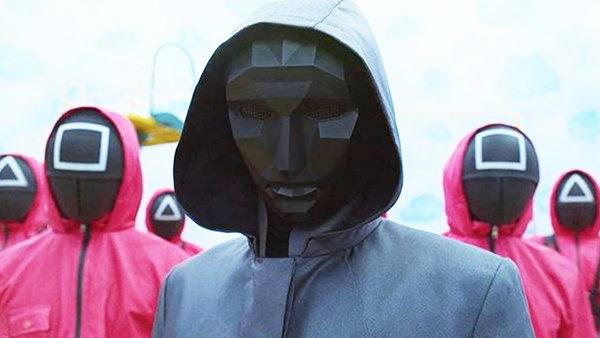
Re-popularising the death game horror sub-genre for Generation Z, Squid Game took our living rooms by storm last year.
One of several major players in the recent South Korean entertainment revival in the West, Hwang Dong-hyuk's hit Netflix show introduced us to a hellish island where children's games are played for a cash-money grand prize and the losing contestants are murdered in cold blood.
Leading this theatre of death is the mysterious Front Man (Lee Byung-hun), a hooded, black-masked figure of terror who oversees a small army of overseers and attendants with a short leash and steely grip. A terrifying presence looming over the games, he is cold and calculated and mysterious to a fault – all in all, the ideal horror villain.
So the writers' decision to supplant his air of mystery with a last-minute, head-scratching reveal was, well, misguided to say the least. Squid Game's penultimate episode reveal that he is actually the brother of Hwang Jun-ho (Wi Ha-joon), the detective who sneaks onto the island searching for his missing kin, breaks the hold the character has over the viewer and reduces him to something of a minor plot point.
Little of the now-unmasked Hwang In-ho is explored thereafter, and alongside the two-dimensional characterisation of the VIPs, all intrigue about why the games are taking place and what the motives of the players' captors may be are extinguished.
1. Doyle - Angel

David Boreanaz absconded from Sunnydale and hit the mean streets of LA as broody vampire turned supernatural detective Angel in the early 2000s, spinning off from the wildly popular Buffy The Vampire Slayer series at the height of its success. Along for the ride were aspiring actress and Sunnydale High alumnus Cordelia Chase (Charisma Carpenter) and a fresh (and spiky) new face in the half-demon Allen Francis Doyle (Glenn Quinn).
Granted visions of future demonic derring-do by the mysterious Powers That Be, Doyle is Angel's right hand man and direct connection to the forces of good, guiding him towards mysteries and getting the gang into all sorts of trouble. Doyle is a fast-talker with a strong Irish brogue, a leather jacket and a heart of gold, providing comic relief and an upbeat counterpoint to Angel's long-suffering, sulking and skulking approach to (the after-) life, all the while forming a budding romance with Cordelia.
Pity, then, that series creator Joss Whedon killed him off midway through the show's first season.
Whedon maintains that he had planned to kill the character in the first couple of episodes, but stories of on-set tensions, made all the worse by Glenn Quinn's tumultuous relationship with a variety of substances and lackadaisical approach to on-set punctuality, suggest otherwise.
Whatever the reason, Doyle was a rich addition to the Whedonverse and a fan favourite, whose surface we barely got the chance to scratch, a fact sorrowfully cemented by Glenn Quinn's own death in 2002.